


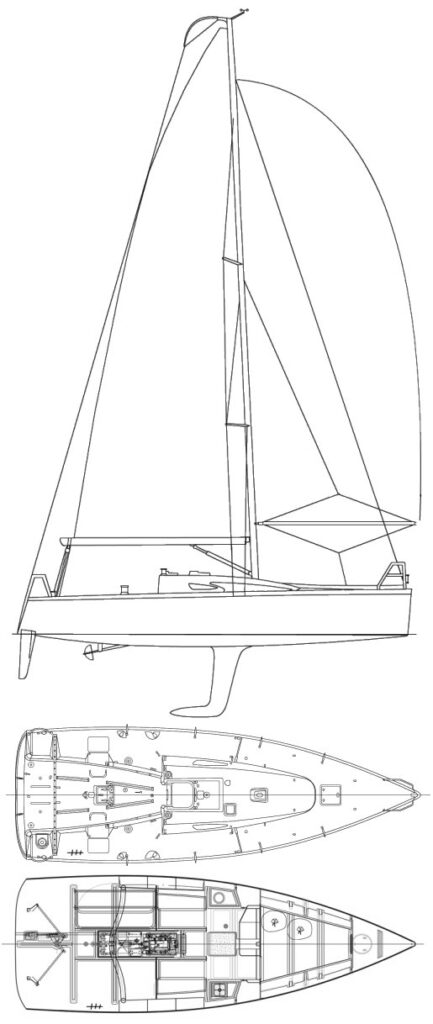
The Beneteau Figaro II is a one-design offshore racing yacht launched in 2003 as the successor to the original Figaro class. It was designed specifically for solo and double-handed offshore racing, particularly the prestigious Solitaire du Figaro race. The Figaro II became popular among professional and serious amateur sailors for its blend of competitive performance, manageable size, and reliability in demanding ocean conditions.
Design and Construction
Designed by Marc Lombard, the Figaro II features a modern fin keel and spade rudder combination for excellent maneuverability. The hull design emphasizes a balance between speed, stability, and seaworthiness. The boat is constructed with a glass-reinforced polyester (GRP) hull and deck, making it sturdy yet relatively light for its size. The fractional sloop rig is designed for easy handling by one or two sailors, with sail controls efficiently led aft to the cockpit. The Figaro II also incorporates features to facilitate safe offshore sailing such as a self-draining cockpit and secure handholds.
Performance
The Figaro II is known for its strong upwind performance and good pointing ability. It performs well in a range of wind conditions, accelerating quickly and maintaining good control in rough seas. Its hull shape and keel design provide a stable and balanced ride, which is important for solo sailors managing the boat alone. While it lacks the foiling technology of newer designs, its classic, well-tuned performance remains competitive in offshore racing circuits.
Comfort and Accommodations
Being a race-focused boat, the Figaro II has a spartan interior designed for functionality rather than comfort. It offers basic accommodations suitable for short-term offshore campaigns, including minimal sleeping quarters, a small galley, and essential storage space. The focus is on optimizing weight and space for racing efficiency, so long-term cruising comfort is limited.
Safety and Practicality
The Figaro II is designed with offshore safety in mind, featuring strong structural integrity and practical deck layout for safe handling in challenging conditions. It is easy to manage single-handed or double-handed, with rigging and sail systems optimized for quick reefing and adjustments. The self-draining cockpit and robust hull construction make it a trustworthy vessel in offshore conditions.
Conclusion
The Beneteau Figaro II remains a highly respected offshore racing yacht, prized for its balance of performance, durability, and manageability. It suits solo and double-handed racers looking for a proven, competitive one-design platform without the complexity of the latest foiling technologies. Its straightforward design and dependable performance make it a favorite for many years of offshore racing campaigns.
Specifications
| Hull Type | Fin w/bulb & dual rudders |
|---|---|
| Rigging Type | Fractional Sloop |
| LOA | 32.18 ft / 9.81 m |
| LWL | 32.00 ft / 9.75 m |
| Beam | 11.33 ft / 3.45 m |
| Displacement | 6,724.00 lb / 3,050 kg |
| Ballast | 2,425.00 lb / 1,100 kg |
| Max Draft | 6.50 ft / 1.98 m |
| Construction | FG w/carbon & airex |
| Ballast Type | Lead + Water |
| First Built | 2003 |
| Last Built | 2018 |
| # Built | 96 |
| Builder | Beneteau (FRA) |
| Designer | Marc Lombard |
| Make | Volvo |
| Model | MD2020 |
| Type | Diesel |
| HP | 20 |
| Fuel | 10 gals / 38 L |
| S.A. / Displ. | 26.76 |
| Bal. / Displ. | 36.06 |
| Disp: / Len | 91.61 |
| Comfort Ratio | 12.79 |
| Capsize Screening Formula | 2.40 |
| S# | 5.96 |
| Hull Speed | 7.58 kn |
| Pounds/Inch Immersion | 1,295.47 pounds/inch |
| I | 42.75 ft / 13.03 m |
| J | 12.42 ft / 3.79 m |
| P | 42.67 ft / 13.01 m |
| E | 15.42 ft / 4.70 m |
| S.A. Fore | 265.48 ft² / 24.66 m² |
| S.A. Main | 328.99 ft² / 30.56 m² |
| S.A. Total (100% Fore + Main Triangles) | 594.47 ft² / 55.23 m² |
| S.A./Displ. (calc.) | 26.78 |
| Est. Forestay Length | 44.52 ft / 13.57 m |
Disclaimer
The considerations and analyses presented regarding the Beneteau Figaro II sailboat are of a general nature and are based on the available information and technical data on this model, interpreted to the best of our knowledge and understanding. It is important to note that the specific characteristics of any particular sailboat may vary due to custom modifications, maintenance performed, and conditions of use over time, among other factors. Therefore, the details and performance of the boat you are considering may not exactly match the information provided here.
We strongly recommend that, before making any purchasing or usage decisions, you conduct a detailed inspection of the boat in question, consult with nautical professionals and other sailors, and consider your personal needs, expectations, and capabilities. Each sailboat may have unique particularities that affect its performance and suitability for different types of sailing and sailors.
The information contained in this analysis should be used as a general guide and not as a definitive reference. Professional evaluation and personal inspection are essential to ensure that the boat meets your specific requirements and expectations.