


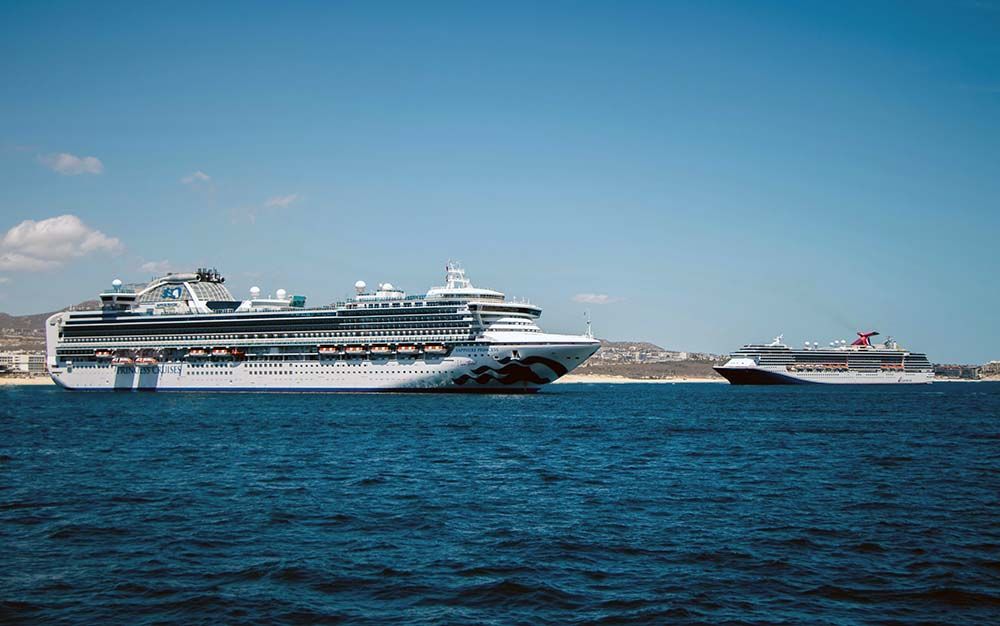
Why the Mediterranean Tops Cruise Bucket Lists
When people dream about cruising the Mediterranean, images of Santorini’s whitewashed houses, Barcelona’s Gothic Quarter, and Rome’s Colosseum often come to mind. Cruise lines like Royal Caribbean, MSC, and Celebrity Cruises highlight the region as a one-stop way to explore Europe’s most iconic ports with all the comforts of a floating hotel.
And it’s true: a Mediterranean cruise offers convenience. You unpack once, wake up in a new city almost every day, and can taste-test multiple cultures in a single trip. For travelers who want efficiency, that’s a huge selling point.
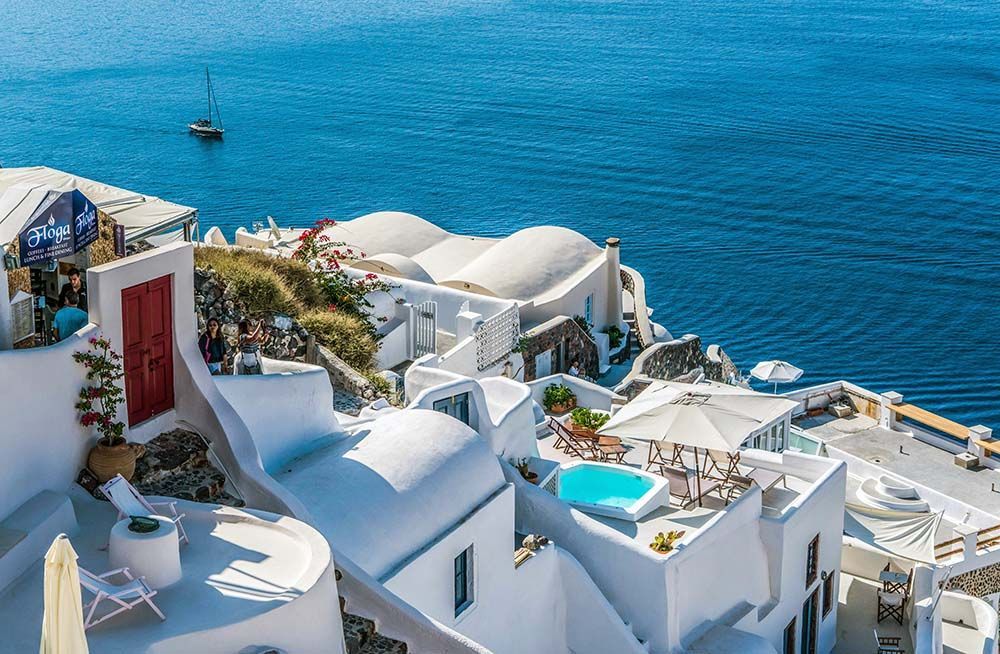
▌The iconic whitewashed houses and deep-blue caldera of Santorini are a staple stop on many Eastern Mediterranean cruises. While breathtaking in photos, cruise schedules often allow just a few hours on the island, highlighting the trade-off between seeing multiple destinations quickly and having time for deeper cultural exploration.
The Other Side of Cruising: What They Don’t Tell You
Still, not everyone is convinced. After reading David Foster Wallace’s famous essay A Supposedly Fun Thing I’ll Never Do Again, I couldn’t help but question whether a cruise might feel less like adventure and more like a floating shopping mall.
Think about it: changing clothes five times a day for different dinners and shows, attending staged events that feel more depressing than entertaining, or queuing with thousands of passengers to disembark in the same port. Stepping off the ship with 3,000 fellow tourists to “see” a city in three rushed hours can make the whole experience feel superficial.
So while cruise lines promise luxury and cultural immersion, the reality might lean closer to performance and mass tourism.

DAVID FOSTER WALLACE
A Supposedly Fun Thing I’ll Never Do Again
In his essay A Supposedly Fun Thing I’ll Never Do Again, David Foster Wallace described the artificial routines and staged entertainment of a cruise as more exhausting than enjoyable. His critique resonates with Mediterranean cruising today: while the brochures promise luxury and immersion, the reality can feel like a carefully managed performance where genuine cultural connection is limited by strict schedules and mass tourism.
What a Mediterranean Cruise Really Offers
Here’s a breakdown of what you can expect if you decide to try:
- Variety of Itineraries: Western Mediterranean (Spain, France, Italy) versus Eastern Mediterranean (Greece, Turkey, Croatia).
- All-in-One Packages: Lodging, meals, and transport bundled—no constant repacking or train schedules.
- Onboard Atmosphere: Shows, casinos, spas, buffets, specialty restaurants. For some, this feels like entertainment heaven; for others, like being trapped in a mall.
- Shore Excursions: Guided tours or self-exploration. But remember—time is limited; often you get just a few hours in each city.
Sample Itineraries
7-Day Western Mediterranean Cruise (Spain, France, Italy)
- Day 1: Depart Barcelona
- Day 2: Marseille, France
- Day 3: Nice, France
- Day 4: Genoa, Italy
- Day 5: Florence/Pisa (via Livorno), Italy
- Day 6: Rome (Civitavecchia), Italy
- Day 7: Return to Barcelona
10-Day Eastern Mediterranean Cruise (Greece, Turkey, Croatia)
- Day 1: Depart Athens, Greece
- Day 2: Mykonos, Greece
- Day 3: Santorini, Greece
- Day 4: Rhodes, Greece
- Day 5: Kusadasi (Ephesus), Turkey
- Day 6: Istanbul, Turkey
- Day 7: Dubrovnik, Croatia
- Day 8: Split, Croatia
- Day 9: Venice, Italy
- Day 10: Return to Athens, Greece
Extra costs like specialty dining, drinks packages, and Wi-Fi can add 20–30% to the advertised cruise price
Who Should (and Shouldn’t) Cruise the Mediterranean
Good fit if you:
- Want to sample many destinations quickly.
- Enjoy structured entertainment and onboard amenities.
- Value convenience over depth.
Maybe skip it if you:
- Crave slow travel and authentic cultural immersion.
- Prefer quiet exploration over crowds and schedules.
- Dislike the idea of paying extra for drinks, excursions, or Wi-Fi.
Small-ship or yacht cruises allow more flexible schedules and longer port stays than mega-ship itineraries
Alternatives to Traditional Mediterranean Cruises
If the idea of a mega-ship feels overwhelming, you still have options:
- Small Ship or Yacht Cruises: Fewer passengers, more flexible stops.
- Ferry Hopping + Boutique Hotels: In Greece, Italy, or Croatia, ferries let you build your own “DIY cruise.”
- Land-Based Travel: Trains and buses connect Mediterranean cities beautifully, letting you stay longer and dig deeper.
Comparison Table: Cruise vs. Land-Based Mediterranean Travel
| Feature | Cruise | Land-Based Travel |
|---|---|---|
| Destinations per trip | Multiple cities in 7–14 days | Fewer cities, but deeper exploration |
| Accommodation | Single floating hotel | Hotels or Airbnbs in each city |
| Flexibility | Low – fixed itinerary | High – choose pace and duration |
| Cost predictability | High – package includes meals and transport | Variable – transport, lodging, and food separate |
| Cultural immersion | Limited – brief stops in each city | High – more time to explore neighborhoods |
| Social environment | Busy, crowds onboard and on excursions | Varies – can avoid crowds |
Tips If You Decide to Go Anyway
- Choose Itinerary Carefully: Eastern Med cruises are often less crowded and more scenic.
- Look at Ship Size: Smaller ships = fewer crowds.
- Plan Independent Excursions: Skip overpriced cruise tours; wander on your own.
- Budget for Extras: Drinks packages, specialty dining, and internet access add up.
FAQs About Cruising the Mediterranean
Is a Mediterranean cruise worth it?
It depends—if you want convenience and variety, yes. If you want deep cultural immersion, probably not.
What’s the best time to cruise the Mediterranean?
Late spring (May–June) and early fall (September–October) for fewer crowds and better weather.
How long is a typical Mediterranean cruise?
Anywhere from 7 to 14 nights, depending on how many ports you want to cover.
Conclusion
Cruising the Mediterranean is not automatically the glamorous, romantic adventure that glossy brochures suggest. For some travelers, it’s an efficient way to tick off bucket-list cities. For others—like me, who can’t shake the suspicion it’s a “floating mall experience”—it feels like trading authenticity for convenience.
The best advice? Weigh the promise of variety against the risk of superficiality. If you go in with clear expectations, you’ll either love the ease or confirm that slow travel is the better way to truly experience the Mediterranean.