


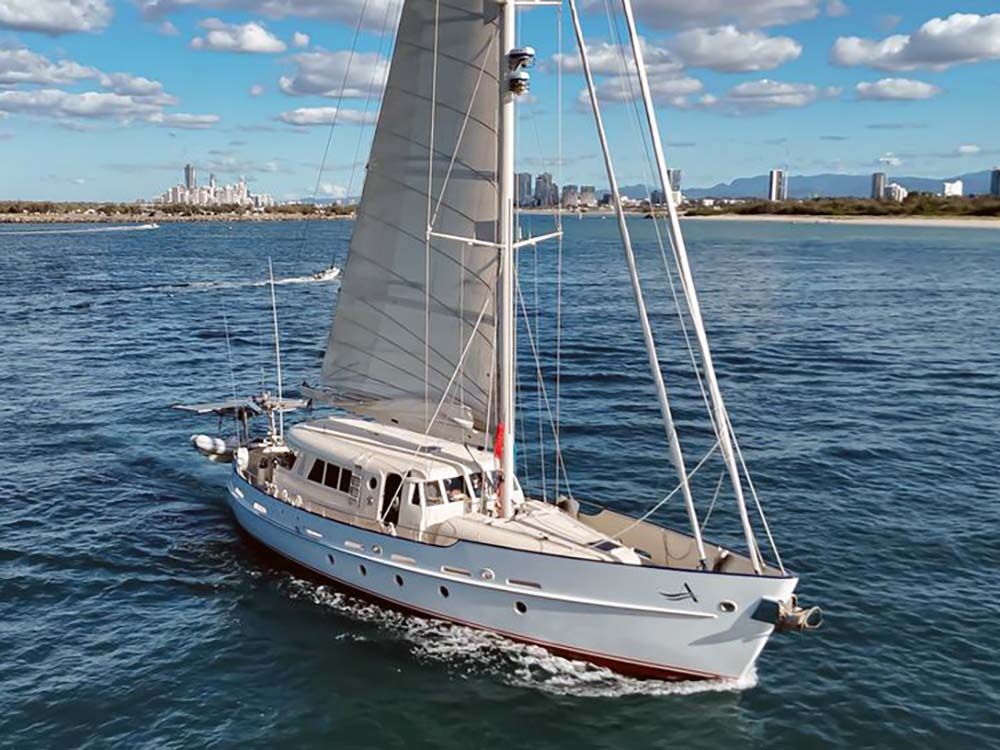
If you’re looking for a used sailboat, you’ve probably come across something called a “motorsailer.” You might be wondering whether it’s an option worth considering, but you’re not quite sure what sets it apart—aside from the obvious clue in the name: a boat that uses both sail and engine power. But wait a minute—isn’t that just a regular sailboat? Let’s take a closer look.
What Is a Motorsailer?
A motorsailer is a hybrid vessel that combines two propulsion systems: sail and engine. At first glance, it might look like a regular sailboat with a motor, but what sets a motorsailer apart is that both systems are designed to be used efficiently and complement each other. In other words, neither is secondary or reserved just for emergencies—both are equally important and useful for handling different sailing conditions.
For decades, these boats were the perfect solution, especially for those seeking a versatile and comfortable option without having to rely solely on the wind. But what’s happened to motorsailers in recent years?
The Evolution of the Motorsailer
The motorsailer emerged as a response to the limitations of traditional sailboats in the early decades of the 20th century. At the time, sailboats were mostly small and not very comfortable, equipped with low-powered auxiliary engines meant only for docking, emergencies, and limited maneuvering.
For sailors seeking greater onboard comfort and a reliable engine to complement the sails, the motorsailer proved to be the ideal vessel.
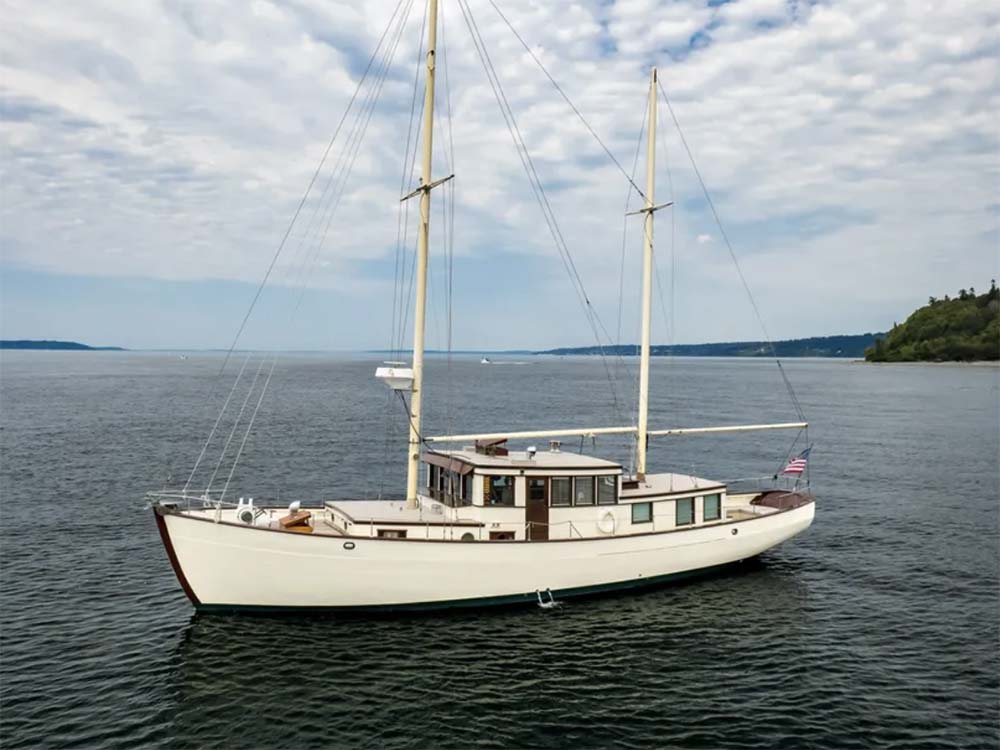
▌Under sail, a motorsailer can function like a conventional sailboat when wind conditions are favorable. Under power, it can propel itself efficiently when the wind isn’t right or when the skipper needs greater control or precision. Pictured: a 1936 beauty.
During the 1960s and 1970s, the motorsailer established itself as a very popular choice for long-distance cruising. Its sturdy design and ability to alternate between sail and engine provided a level of flexibility that lighter sailboats couldn’t offer. While they were slower under sail, the engine made up for that drawback, allowing them to reach their destination without being entirely dependent on the wind.
Another major strength was livability: motorsailers featured more spacious cabins, functional galleys, and comfortable living areas—features that weren’t common in sailboats at the time. This made them the perfect choice for sailors spending long periods at sea or living dockside who didn’t want to sacrifice too many comforts.
The Experience of Sailing a Motorsailer
It can be summed up in one word: flexibility. Aboard a motorsailer, you could enjoy the peacefulness of sailing—feeling the wind and waves without the noise of an engine—but also have the reassurance of knowing the engine was there when you needed it. Yes, it was noisy, but it was also powerful enough to keep you moving when the wind wasn’t in your favor.
This versatility made motorsailers ideal for a wide range of sailors—from those seeking ocean-going adventures to others who simply wanted the freedom to explore the coastline at their own pace.

▌The Fisher 37 is an iconic motorsailer. Built in the United Kingdom since the 1970s by Fairways Marine and later by Northshore Yachts, it perfectly exemplifies what was sought in this type of vessel: robustness, comfort, and the ability to face adverse weather conditions.
What Has Happened to Motorsailers Nowadays?
Although motorsailers were once the preferred choice of many sailors, their production has declined to the point of nearly disappearing. Why? In the last quarter of the 20th century, cruising sailboats began to improve significantly. In the 1980s, for example, advancements in fiberglass technology allowed the construction of larger hulls without compromising performance or safety. At the same time, more sailboats started to incorporate more powerful and efficient engines, capable of providing faster and safer navigation when the wind was unfavorable.
Therefore, what once set motorsailers apart — greater livability and more powerful engines — ceased to be exclusive features, and the need for a boat that was half sailboat and half motorboat became irrelevant in a world where cruising sailboats could fully deliver. This evolution led many manufacturers to stop producing motorsailers as a separate category.
Motorsailers and Other Types of Boats
Although motorsailers have fallen out of favor, there are still those who prefer them and seek them out on the used boat market. Compared to a modern sailboat, an older motorsailer still offers a slower, more relaxed sailing experience that conveys a greater sense of security, with engines that, while not as advanced as today’s, remain reliable for long voyages.
Compared to a motorboat, the motorsailer’s advantage remains unchanged: its ability to sail with the wind when conditions allow. This reduces fuel consumption and provides a more connected experience with nature. While motorboats may be faster and more agile, the motorsailer allows its owners to enjoy the best of both worlds — something many still appreciate.
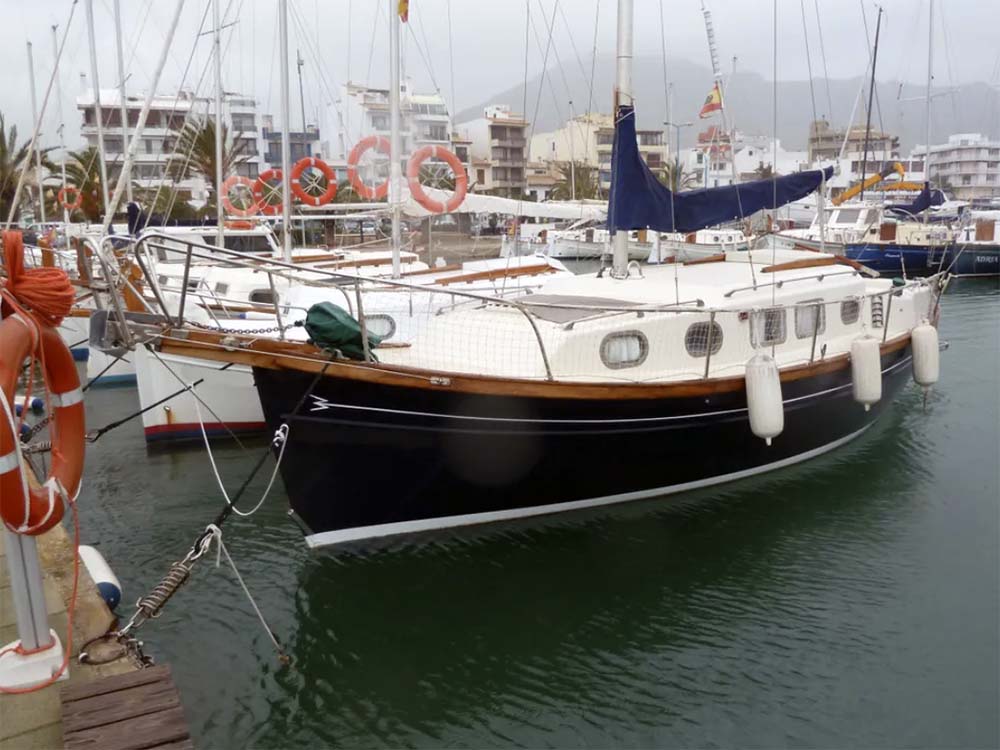
▌The Myabca motorsailers are a notable example of Mediterranean nautical tradition. Although their sailing capabilities were not their main attraction, they offered a solid combination of comfort, stability, and engine reliability. Their classic design, based on the llaüt, characterized by a high bow, rounded stern, and smooth lines, gave them a special character that is still highly appreciated today, especially among sailors in the Balearic Islands.
Does It Still Make Sense to Buy a Motorsailer Today?
The answer depends on what you’re looking for in a boat. On the used market, you can still find motorsailers in good condition, and if you value the stability of their robust design and the combination of engine and sail, they can be a very interesting option. However, it’s important to keep in mind that maintaining a motorsailer is more complex than a motorboat, since you’re dealing with two propulsion systems that require attention.
On the other hand, if you’re looking for a modern boat with higher performance, today’s cruising sailboats can offer you almost everything motorsailers did in their heyday, but with current technology, more modern designs, and greater comforts.
Conclusion: The Motorsailer and Its Place in Modern Boating
The motorsailer was a revolutionary vessel in its time, providing a hybrid solution for sailors who wanted to enjoy sailing without giving up the advantages of a powerful engine. Although their production has declined and modern sailboats have largely replaced them, motorsailers remain an attractive option for those who value their design and versatility compared to a motorboat.