


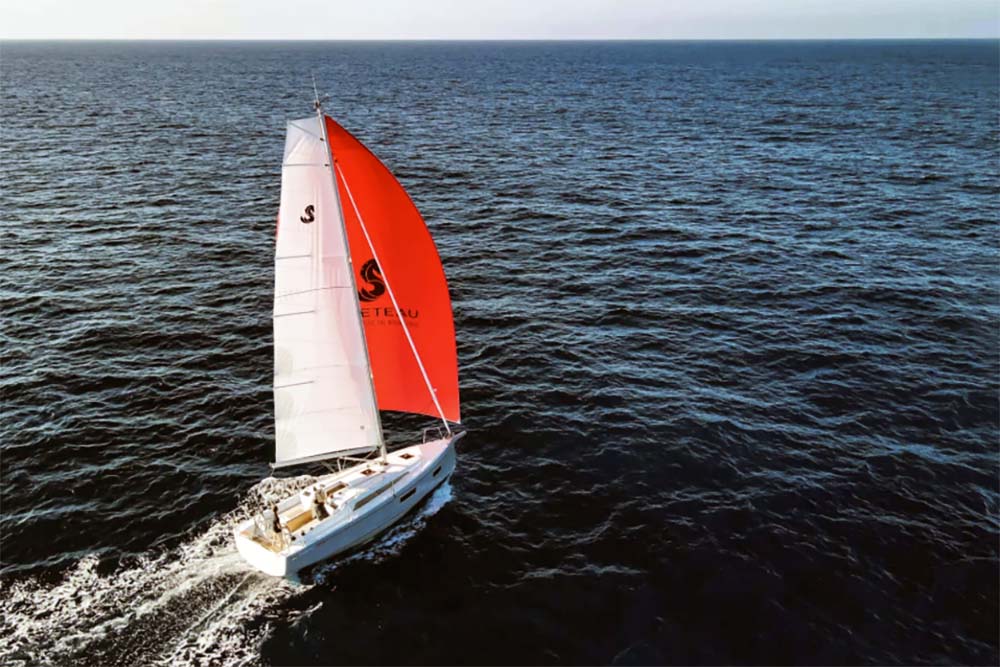
From its origins as a family-run boatyard in 1884 to becoming a global leader in recreational boating, Beneteau has evolved with the times, creating sailboat lines tailored to every style of sailing. Its ranges span from racing boats to cruising yachts designed for life on board. Some series have been discontinued, but they remain a common sight in harbors around the world and on the second-hand market.
What follows is an overview of all its sailboat ranges—both current and historical—highlighting the type of sailor and the style of navigation each was designed for.
Current lines: Oceanis, First, Figaro
| Line | Type of Sailing | Sailor Profile | Typical Length | Notes |
|---|---|---|---|---|
| Oceanis | Coastal and offshore cruising | Families, couples, relaxed sailors | 30 – 56 ft | Comfort and habitability prioritized, ideal for relaxed passages |
| First | Racing and fast cruising | Racers, technical sailors, performance lovers | 13 – 56 ft | Agile design, powerful rigging, also suitable for sport cruising |
| Figaro | Solo ocean racing | Expert sailors, professional racers | 33 ft | One-design class; technical innovation such as foils on the Figaro 3 |
Beneteau Oceanis: For the Family Sailor and Comfortable Cruising
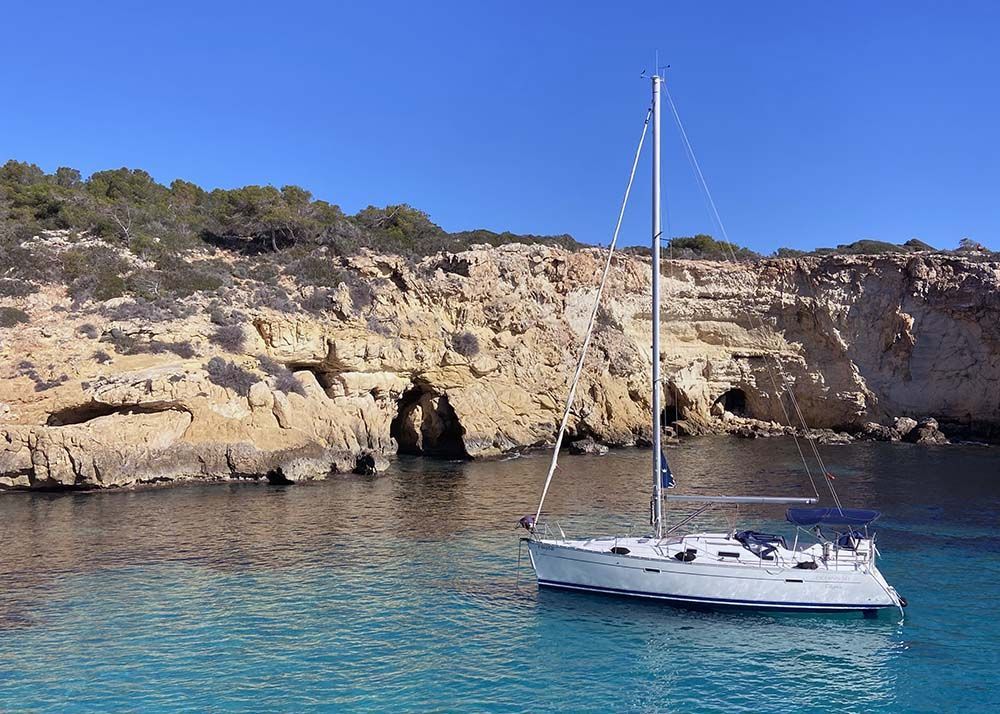
Launched in 1986, the Oceanis series is the quintessential cruising line. Designed for those who prioritize habitability, safety, and comfort, it is aimed at families, couples, or long-distance sailors looking to enjoy the sea without technical complications.
This approach is reflected in several specific design choices: Oceanis boats offer interiors designed for life on board — from fully equipped kitchens to comfortable cabins and spacious bathrooms (within what is feasible on a sailboat, of course). On deck, maneuvering is relatively simple: many models can be handled by a single person thanks to the sail plan layout, accessible winches, and, in more recent versions, self-tacking jibs that, as the name suggests, simplify tacking.
Stability is another strong point, with high freeboard hulls that contribute to comfortable sailing both near the coast and offshore, reducing fatigue on board. This design provides greater reserve buoyancy and less water coming onto the deck in rough conditions, resulting in less heel and more predictable movements. By offering a drier, more stable platform — especially in choppy seas or crosswinds — the physical and mental effort needed to maintain course or move around the boat decreases, which is crucial on long passages.
Current models, such as the Oceanis 46.1 or 51.1, incorporate innovations like retractable keel options and interiors so spacious they sometimes rival those of small catamarans.
Current Status in the U.S. Market
In the United States, the Oceanis series is one of the most popular cruising sailboat lines, both in the new and used boat markets. They are commonly found in major cruising hubs such as the Chesapeake Bay, Florida, and the Pacific Northwest. Models like the Oceanis 411, Oceanis 423, and more recent versions such as the Oceanis 46.1 are highly regarded for coastal and bluewater cruising. Their reputation for comfort, ease of handling, and family-friendly layouts makes them a frequent choice for owners upgrading from smaller cruisers or moving into liveaboard life. A strong dealer network, availability of spare parts, and accessible maintenance services contribute to their popularity and stable resale value.
Beneteau First: For the sporty sailor, racer, or lover of fast cruising
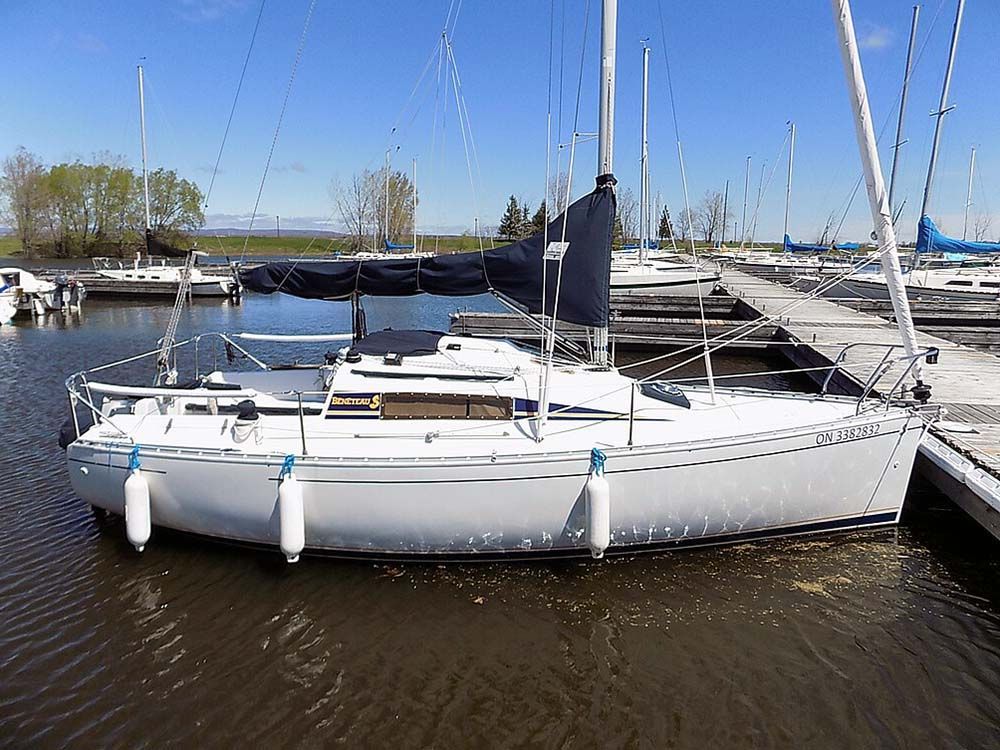
The First range was launched in 1977 with a clear goal: to combine speed and performance with a minimum level of comfort, making fast cruising an accessible and appealing experience. From the very first model, the iconic First 30, these sailboats have targeted sailors with a certain technical profile—people who not only want to reach their destination but also enjoy the process of sailing every leg of the journey.
Their design makes this clear: sleek hulls that cut through waves efficiently, effective appendages such as deeper keels and responsive rudders, and generous rigs that allow for precise sail trimming. These boats invite fine-tuning sails, experimenting with configurations, and reading the wind. That’s why they appeal both to club racers and crews who enjoy performance cruising, seeking the thrill of sailing with strong capabilities without sacrificing life onboard.
Collaboration with renowned designers like Bruce Farr and Farr Yacht Design has been crucial in their development. Thanks to this, the current First models—such as the First 36 and First 44—maintain that sought-after balance: boats that can compete effectively but also serve well for family voyages at a good pace, offering functional space and a sense of control. In short, a range designed for those who want to sail actively without unnecessary complications.
Current Status in the U.S. Market
The First range has a strong presence among American sailors who participate in club racing, performance cruising, and double-handed regattas. Older models like the First 30, First 36.7, and First 40.7 are still highly competitive and regularly seen in racing circuits, especially in regions like New England, the Great Lakes, and San Francisco Bay. The more recent First 36 and First 44 are gaining attention for their dual-purpose versatility—equally at home on the racecourse or during a fast family cruise. Well-maintained units with upgraded rigging and original sails tend to hold their value. The U.S. market appreciates the line’s balance of speed and functionality, and many boats are refitted for dual cruising/racing use.
Beneteau Figaro: For the solo and professional sailor
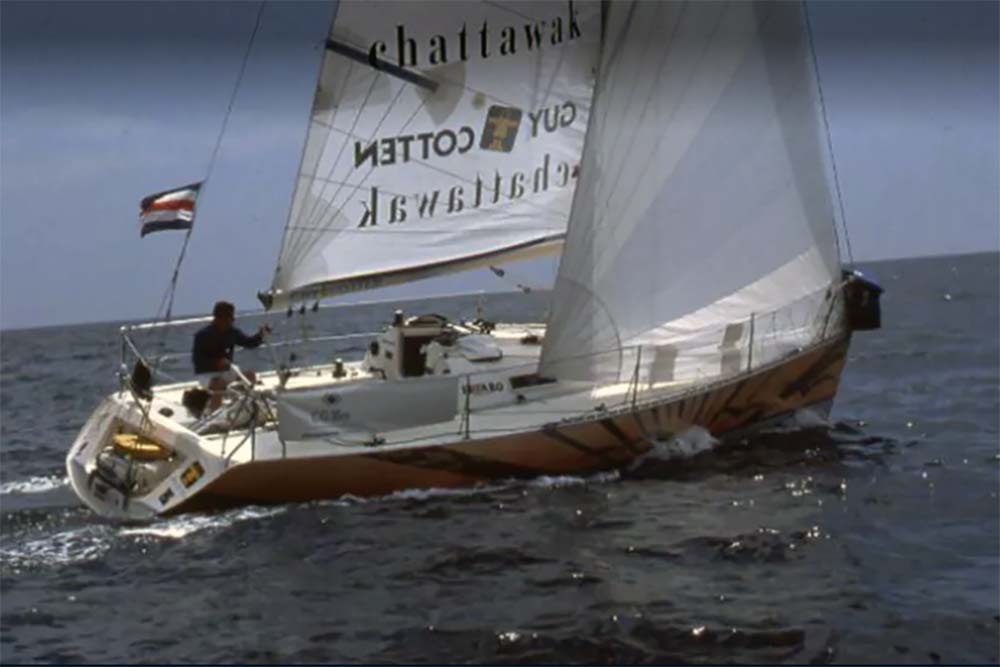
The Figaro series was launched in 1990 with a very clear purpose: to be a one-design class for solo or double-handed ocean races, such as the demanding La Solitaire du Figaro. Since then, it has established itself as a breeding ground for professional sailors and a testing platform for high-level sailing.
As mentioned, these boats are aimed at expert sailors seeking technical performance, precise maneuverability, and reliability in tough conditions. Their design reflects these demands: powerful hulls, rigs optimized for single-handed handling, and electronics designed to get the most out of the boat when sailing solo. Comfort is not prioritized, but great attention is given to balance, course stability, and control during maneuvers.
The current Figaro Bénéteau 3 marks a turning point. It is the first production one-design to incorporate foils, which provide a more dynamic behavior, reduce drag, and improve performance without compromising structural safety. This makes it a high-level technical tool, designed for racers looking to gain experience before tackling challenges like the Mini Transat, the Route du Rhum, or even the Vendée Globe.
Current Status in the U.S. Market
The Figaro line is less common in the U.S. than in Europe but has a niche following among offshore racing enthusiasts, particularly those involved in solo or shorthanded racing. The Figaro 2 has found use in advanced sail training programs and by private owners preparing for events like the Newport-Bermuda Race or the Atlantic Cup. The Figaro 3, with its foiling technology, is slowly gaining ground in elite racing circles on the East Coast, but high technical demands and a limited resale market make it more of a specialist’s choice. These boats are generally appreciated by experienced sailors looking for a high-performance, ocean-capable platform.
Discontinued lines: Idylle, Evasion, Cyclades, Wauquiez, Sense
| Line | Years | Type of Sailing | Sailor Profile | Typical Length | Notes |
|---|---|---|---|---|---|
| Evasion | 1973 – 1985 | Long-range motorsailer | Relaxed sailors, cold climates | 30 – 43 ft | Inside helm, raised pilothouse, more motor than sail |
| Idylle | 1983 – 1989 | Traditional ocean cruiser | Classic sailors, long voyages | 36 – 49 ft | Classic style, wood interiors, ideal for living aboard or charter |
| Cyclades | 2005 – 2010 | Simple cruiser (charter) | Fleet operators, less technical groups | 39 – 49 ft | Very simple, designed for tourist rentals, large capacity |
| Wauquiez Pilot Saloon* | 1997 – 2008 | Premium cruiser | Demanding sailors, long-term cruising | 46 – 56 ft | Raised saloon with panoramic views, handcrafted finishes, refined design |
| Sense | 2010 – 2020 | Modern, innovative cruiser | Owners valuing design and space | 43 – 56 ft | Open plan concept, loft-style interiors, contemporary design |
Beneteau Evasion: For the relaxed sailor with a motorsailer spirit

The Evasion series, produced primarily during the 1970s and 1980s, is characterized by offering motorsailers that combined the best of both worlds: sailing and motor navigation. These boats—such as the Beneteau Evasion 32 or the Evasion 37—feature an elevated, enclosed pilothouse, allowing the skipper to handle the vessel from a protected position sheltered from wind and rain—something highly valued in adverse conditions or cold climates. Additionally, their full-bodied hulls provide excellent stability and generous interior space.
This design makes them especially suitable for sailors who prioritize comfort and safety in all situations. Ideal for those planning to live aboard for extended periods (their name gives a hint), or undertake long-distance cruising in regions with variable weather, these boats offer both the reassurance of a strong engine and the option to sail efficiently when the wind cooperates.
Models like the Evasion 34, in particular, exemplify this balance. Their ability to maintain steady progress under power, combined with a sail plan that can handle moderate winds, makes them appealing for passagemaking without the stress of constantly relying on favorable conditions.
For these reasons, the Evasion series is especially appreciated by sailors in higher latitudes or those who prefer a calm, comfortable pace—such as retirees, couples cruising long-term, or lovers of leisurely sailing—who value versatility, habitability, and protection from the sea.
Current Status in the U.S. Market
The Evasion series remains rare in U.S. waters, but a few units—most often Evasion 29 and Evasion 37 models—can still be found, particularly in the Pacific Northwest, the Intracoastal Waterway, and among the liveaboard community in Florida. Their motorsailer configuration and enclosed pilothouse appeal to sailors who prioritize all-weather cruising and spacious accommodations. While maintenance and upgrades can be a consideration due to age, well-kept examples continue to be valued for their versatility, solid construction, and generous interior layouts. Their motoring capabilities also make them especially attractive in areas with strong currents or unpredictable winds.
- Keep reading: Motorsailers: Outdated Relics or a Smart Choice Today?
Beneteau Idylle: For the traditional sailor, lover of classic ocean cruising
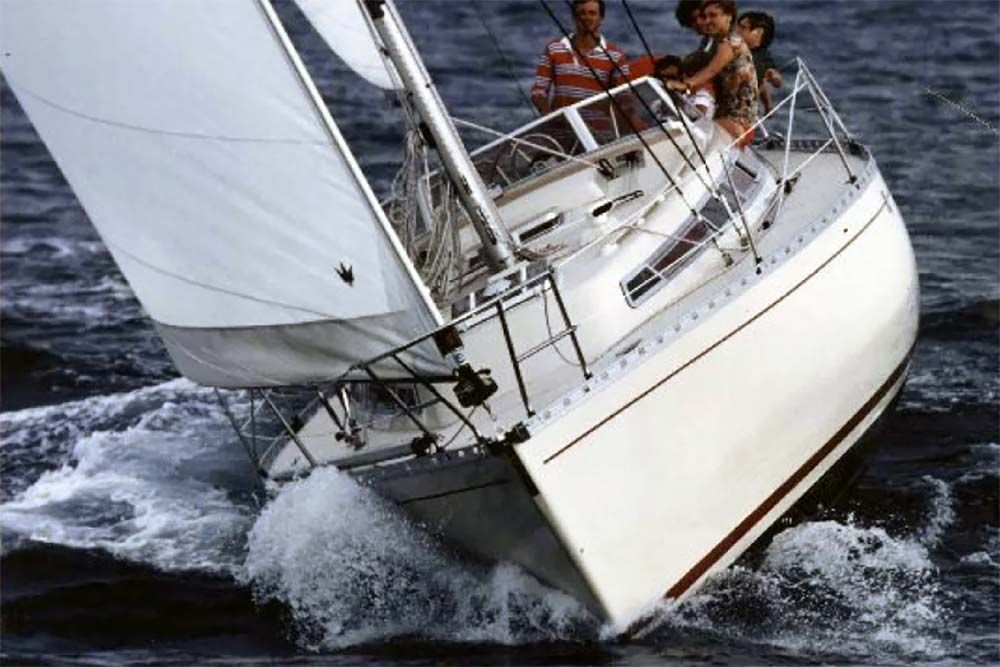
Launched in the 1980s, the Idylle series was Beneteau’s clear commitment to long-range cruising: boats designed to cover miles with comfort, elegance, and reliability. At a time when this type of sailing was still reserved for a few, the Idylle offered a robust and well-equipped alternative for those dreaming of crossing oceans or sailing around the world.
Their hulls, with relatively wide shapes and moderate displacement, provide excellent course stability and good load capacity, making them safe and comfortable for ocean navigation.
Inside, they stand out for their generous interiors: fine woods, spacious cabins, and a sober yet cozy design. These boats were built for living aboard, ideal for families or groups who value both habitability and classic style. The involvement of designers like Germán Frers and Jean Berret brought a balance between moderate performance and classic elegance, exemplified by models such as the Idylle 15.50 and Idylle 11.50.
Although production ceased in the 1990s, Idylle boats remain active on many ocean passages and are still well regarded in the secondhand market, a testament to their durability and the soundness of their approach: sailing far, calmly, and comfortably.
Current Status in the U.S. Market
Idylle sailboats have a small but loyal following among American bluewater sailors and those drawn to traditional, full-time cruising. They are often found in cruising hotspots such as Florida, the U.S. Virgin Islands, and the Pacific side of Mexico. Appreciated for their robust construction, classic aesthetics, and wood interiors, these boats appeal to those seeking a timeless cruiser with ocean-going capability. Resale value remains moderate but stable, especially for larger, well-maintained models like the Idylle 15.50. Their age can require ongoing maintenance, particularly for systems and woodwork, but their build quality makes them long-lasting.
Beneteau Cyclades: For the hassle-free charter sailor
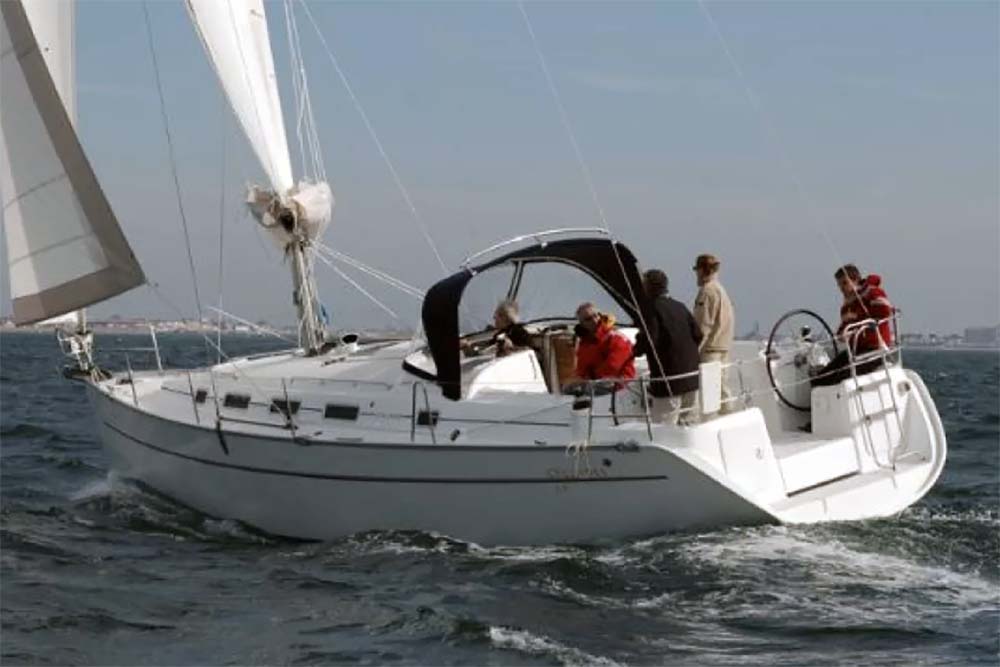
The Cyclades range, produced between 2005 and 2008, was designed specifically with nautical chartering in mind, featuring a clear focus: to offer simple, reliable, and easy-to-handle boats ideal for occasional crews or those without technical experience. Its design prioritizes functionality and accommodation capacity over performance or luxurious finishes.
For this reason, they are especially suitable for groups of friends or families looking for hassle-free sea vacations: spacious interiors with multiple cabins, simplified systems to reduce breakdowns, and easy handling even with small or inexperienced crews. They were highly appreciated by rental companies for combining operational economy with intuitive use, becoming a popular choice for fleets across the Mediterranean. While not known for their sailing performance, they reliably fulfill their main goal: making sailing accessible and comfortable for the general public.
Current Status in the U.S. Market
In the U.S., Cyclades models are mostly found as retired charter boats brought over from the Caribbean or Mediterranean, often entering the market through East Coast ports or Gulf Coast marinas. They are popular among budget-conscious buyers seeking a roomy cruiser for liveaboard use or casual coastal sailing. Although not built for high performance, they are valued for their ease of use, large interiors, and relatively low purchase price. However, buyers are advised to inspect them carefully, as many have seen intensive use in charter fleets and may require system upgrades or cosmetic work.
Beneteau Wauquiez Pilot Saloon: For the discerning and exclusive sailor
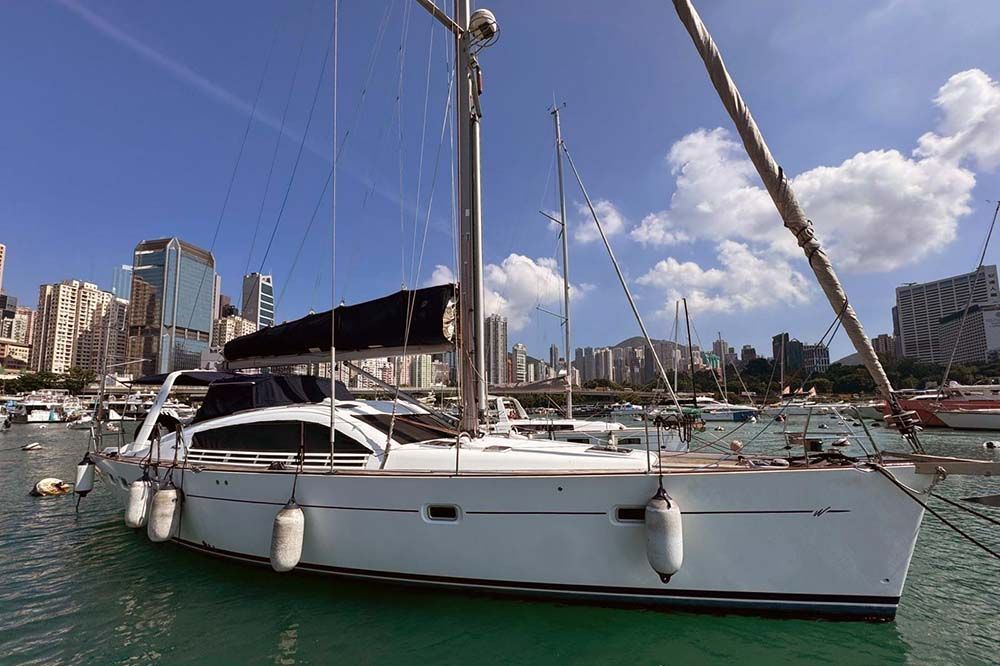
Although Wauquiez has always been a brand with its own identity, it was part of the Bénéteau group for a period of time. Within that context, its Pilot Saloon line stood out by offering a distinctly different approach to high-end cruising: solid, elegant yachts designed with long-term onboard living in mind. The most striking feature was the raised saloon, which not only brought in natural light and panoramic views from the interior, but also enabled a more ergonomic and livable layout.
This type of configuration particularly appealed to experienced sailors looking to combine autonomy, comfort, and performance without compromising on design or build quality. Handcrafted wood finishes, generous storage capacity, thermal and acoustic insulation, and large tanks made them ideal for couples or owners spending months onboard—often on extended passages or in variable climates.
Current Status in the U.S. Market
Wauquiez Pilot Saloons associated with Beneteau-era production are uncommon in the U.S. but attract discerning buyers when available. These yachts are typically found in high-end markets such as Annapolis, Newport, or Seattle. Their raised saloon layout, premium interior finishes, and long-range cruising capability make them a choice for experienced sailors seeking comfort and autonomy. Though maintenance costs can be higher due to their bespoke construction, they retain good resale value and are seen as a premium alternative to mainstream cruisers. Demand is modest but stable, often driven by liveaboard or long-distance cruising aspirations.
Beneteau Sense: For the sailor who values modern design and spaciousness
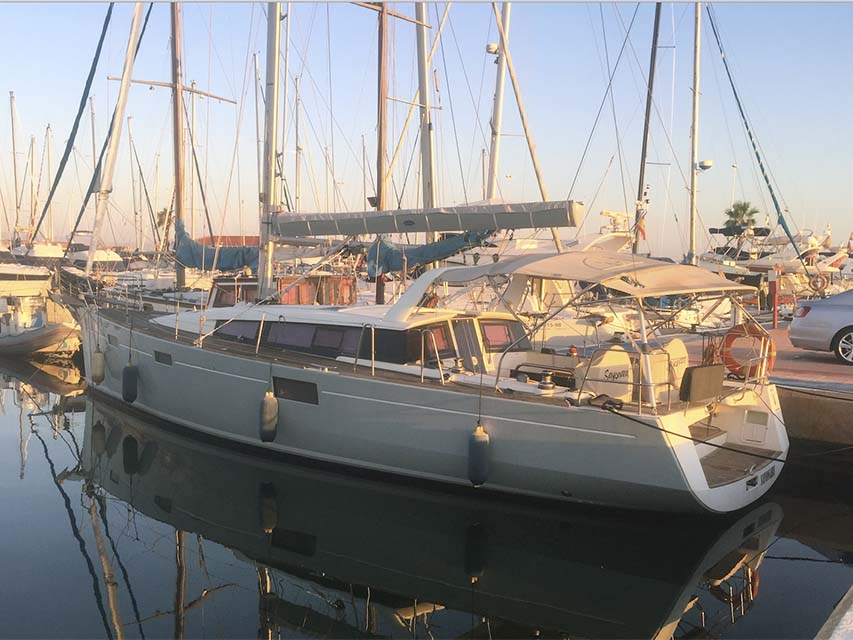
The Sense range, launched in 2010 and produced for roughly a decade, represented a bold new concept in the cruising world. Its approach broke away from traditional layouts: from hull design to interior arrangement, everything was geared toward maximizing comfort and creating an onboard living experience more akin to that of a floating apartment than a conventional sailboat.
Who was it for? Sailors who prioritize livability, modern design, and life at anchor or relaxed cruising. Families, couples, and long-term liveaboards found in this line a comfortable, bright, and functional alternative.
Among its most distinctive features was the elimination of steps between the cockpit and the saloon, making movement on board easier and creating a continuous flow between outdoor and indoor spaces. The galley, placed near the entrance, reinforced the open-plan feeling and turned the entire daytime area into a bright, seamless volume. This was further enhanced by large glazed surfaces, high ceilings, and wide decks ideal for lounging.
While it wasn’t designed for technical or high-performance sailing, the Sense line offered sufficient capability for medium-range passages, combining stability and maneuverability with a level of comfort that redefined cruising design standards.
Current Status in the U.S. Market
The Sense series has carved out a unique niche in the American market, especially among modern cruisers who value open-plan interiors and life at anchor. Popular in regions like Florida, the Bahamas, and Southern California, these boats attract buyers moving up from traditional monohulls or downsizing from catamarans. Their apartment-style layouts, wide beam aft, and minimal steps make them ideal for retirees, liveaboards, or weekend sailors seeking comfort and ease of access. While not tailored for high-performance sailing, they are appreciated for their design-forward approach and livability. Used Sense models—particularly the Sense 43 and Sense 50—are in steady demand on the brokerage market.
Conclusion
Throughout its history, Beneteau has developed a wide variety of sailboats that reflect different approaches to sailing—from models designed for comfortable cruising to vessels focused on performance or long-term life on board. Some ranges have been discontinued over time but remain active on the second-hand market, while others continue to evolve with new technologies and designs. Getting to know them helps place each boat in context and make more informed decisions when buying.
| Sailing Style | Range |
|---|---|
| Comfortable cruising | Oceanis, Sense, Idylle |
| Racing / Performance | First, Figaro |
| Extended liveaboard | Oceanis, Sense, Wauquiez PS, Evasion |
| Charter / Nautical tourism | Cyclades, Oceanis (entry-level models) |
| Classic ocean passage | Idylle, Figaro, larger First models |
| Technical or extreme sailing | Figaro, First SE (First 36, 44), racers |