



The Beneteau First 32, introduced in the early 1980s, is a French-designed cruiser-racer that exemplifies the dual-purpose sailing philosophy of that era. Designed by Jean-Marie Finot of Groupe Finot, it blends spirited performance with livable cruising comfort, targeting sailors who want a yacht capable of racing around the buoys on weekends and cruising the coastlines with family or friends. It was part of Beneteau’s First series — a line that sought to balance speed, style, and seaworthiness in compact packages — and remains a respected boat among sailing enthusiasts who appreciate its vintage charm and versatility.
Design and Construction
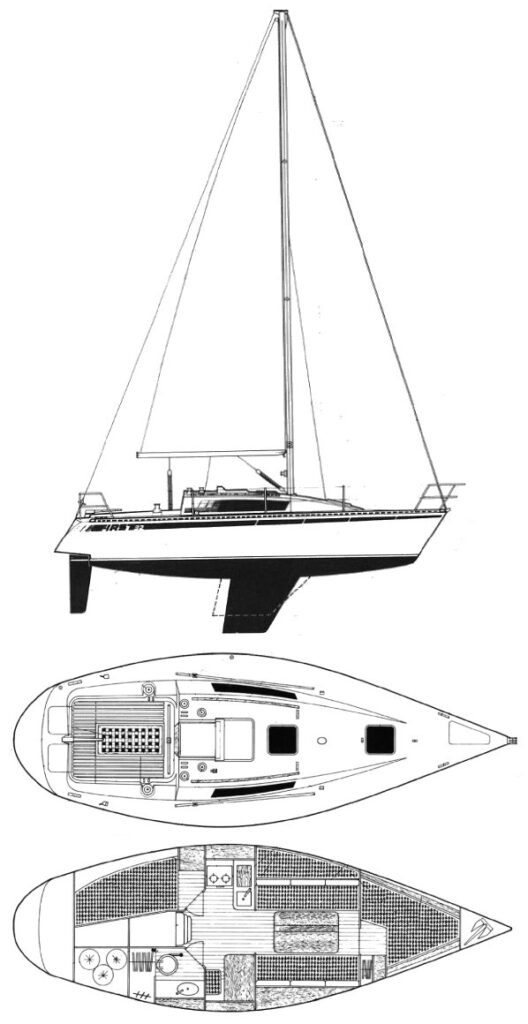
The design of the Beneteau First 32 reflects the principles of light displacement and moderate beam typical of early 1980s racer-cruisers. The hull features a fin keel and spade rudder, allowing for responsive handling and good pointing ability. The relatively flat aft sections contribute to downwind stability and ease of planing in stronger winds. A modest freeboard and low coachroof give the boat a sleek profile, while maintaining reasonable interior volume.
Construction is primarily hand-laid fiberglass with a balsa-cored deck, a common approach at the time that offers a compromise between stiffness and weight. The rig is a masthead sloop, giving the boat a large foretriangle and flexible sail options. The deck layout is clean and functional, with genoa tracks well-placed and halyards led to the coachroof or mast, depending on the version. Overall, the build quality is robust, especially for its time, although like many older Beneteaus, attention to sealing and laminate moisture resistance is important with age.
Performance
Under sail, the First 32 offers a satisfying and engaging experience. Its moderate displacement and generous sail area translate to good light-air performance, and it accelerates quickly in puffs. Upwind, the boat tracks well and points relatively high, thanks to its deep keel and balanced hull shape. In moderate to heavy air, it remains manageable and responsive, though it benefits from timely reefing due to its ample sail plan and limited ballast ratio.
Downwind, the boat is lively and can surf in stronger conditions, especially with a spinnaker. Its helm is well-balanced and provides excellent feedback, giving a sporty feel even in cruising mode. While it won’t compete with modern performance cruisers in absolute speed, the First 32 still delivers a rewarding sail that invites trimming and tuning.
Comfort and Accommodations
Inside, the First 32 provides a surprisingly roomy and practical layout for a boat of its era. Most configurations include a forward V-berth, an aft cabin to port, and a convertible saloon with seating around a central table. The galley is compact but functional, typically with a two-burner stove, icebox, and sink. Opposite the galley sits a basic navigation station.
The finish is simple but warmly nautical, with wood trim and practical storage. Headroom is modest but acceptable for average-height sailors. While not luxurious by modern standards, it is certainly sufficient for weekend cruising or short coastal adventures. Ventilation and light are good thanks to opening hatches and portlights, though these may require upgrading on older models.
Safety and Practicality
The Beneteau First 32 was designed primarily as a coastal cruiser-racer, and its safety features reflect that mission. The cockpit is secure and deep enough to provide comfort underway, with well-placed winches and handholds. The side decks are reasonably wide, and the bow is clear for anchoring or sail changes. A functional, if small, anchor locker supports coastal cruising needs.
From a handling perspective, the boat is well-suited for a small crew or even single-handing with minor modifications. Visibility from the helm is good, and lines can be rerouted for easier cockpit management. However, for extended offshore passages, the boat would benefit from upgrades in tankage, reinforcement, and safety gear.
Known Issues with the Beneteau First 32
As a boat now several decades old, the Beneteau First 32 exhibits some commonly reported issues that stem more from age and original construction standards than outright design flaws. One frequently mentioned concern is deck core moisture, particularly around stanchion bases and hardware attachments. The balsa-cored deck, while strong and lightweight, can absorb water if sealants fail, leading to soft spots or delamination over time.
Another area to monitor is the rudder integrity. Some owners report rudder blade water intrusion, a common issue with boats from this era. It doesn’t always indicate immediate failure, but it requires inspection and potentially costly repair if saturation occurs.
Keel bolts and keel-hull joints also deserve attention. Signs of movement or the infamous “smile” crack at the joint may appear, especially in boats that have been grounded or lifted improperly.
In the interior, electrical systems and plumbing are often outdated or insufficient for modern cruising expectations. Many owners end up upgrading switch panels, lighting, or installing pressure water and better battery management systems.
Conclusion
The Beneteau First 32 remains a well-rounded, rewarding boat that offers both spirited sailing and livable accommodations. Its solid sailing performance, classic lines, and manageable size make it an excellent choice for experienced sailors looking for a capable cruiser-racer on a budget — especially those who appreciate vintage European design and are willing to invest in some refitting. While not ideal for serious offshore cruising without significant upgrades, it excels as a coastal cruiser and club racer. With proper care and modernization, the First 32 can continue delivering memorable sailing experiences for years to come.
Specifications
| Hull Type | Fin w/spade rudder |
|---|---|
| Rigging Type | Fractional Sloop |
| LOA | 32.50 ft / 9.91 m |
| LWL | 27.92 ft / 8.51 m |
| S.A. (reported) | 499.00 ft² / 46.36 m² |
| Beam | 10.80 ft / 3.29 m |
| Displacement | 8,390.00 lb / 3,806 kg |
| Ballast | 3,310.00 lb / 1,501 kg |
| Max Draft | 5.82 ft / 1.77 m |
| Construction | FG (Fiberglass) |
| First Built | 1980 |
| Last Built | 1984 |
| Builder | Beneteau (FRA) |
| Designer | Jean Berret |
| Make | Volvo Penta |
| Type | Diesel |
| HP | 17 |
| Fuel Capacity | 12 gals / 45 L |
| Water Capacity | 53 gals / 201 L |
| S.A. / Displ. | 19.40 |
| Bal. / Displ. | 39.45 |
| Disp. / Len. | 172.09 |
| Comfort Ratio | 18.60 |
| Capsize Screening Formula | 2.13 |
| Stability Index (S#) | 3.36 |
| Hull Speed | 7.08 kn |
| Pounds/Inch Immersion | 1,077.42 pounds/inch |
| I | 40.30 ft / 12.28 m |
| J | 11.90 ft / 3.63 m |
| P | 40.50 ft / 12.34 m |
| E | 12.80 ft / 3.90 m |
| S.A. Fore | 239.79 ft² / 22.28 m² |
| S.A. Main | 259.20 ft² / 24.08 m² |
| S.A. Total (100% Fore + Main) | 498.99 ft² / 46.36 m² |
| S.A. / Displ. (calculated) | 19.40 |
| Est. Forestay Length | 42.02 ft / 12.81 m |
Disclaimer
The considerations and analyses presented regarding the Beneteau First 32 sailboat are of a general nature and are based on the available information and technical data on this model, interpreted to the best of our knowledge and understanding. It is important to note that the specific characteristics of any particular sailboat may vary due to custom modifications, maintenance performed, and conditions of use over time, among other factors. Therefore, the details and performance of the boat you are considering may not exactly match the information provided here.
We strongly recommend that, before making any purchasing or usage decisions, you conduct a detailed inspection of the boat in question, consult with nautical professionals and other sailors, and consider your personal needs, expectations, and capabilities. Each sailboat may have unique particularities that affect its performance and suitability for different types of sailing and sailors.
The information contained in this analysis should be used as a general guide and not as a definitive reference. Professional evaluation and personal inspection are essential to ensure that the boat meets your specific requirements and expectations.