


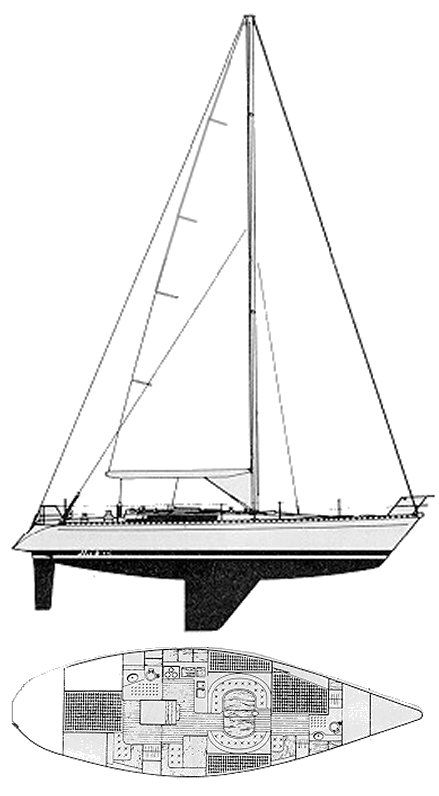
The Beneteau First 456 is a performance cruiser that emerged during a golden era of yacht design in the early 1980s. Designed by the legendary Germán Frers and built by Beneteau in France, the 456 was part of Beneteau’s “First” series — a line that aimed to combine offshore racing performance with bluewater cruising comfort. Targeted at serious sailors looking for a capable and fast ocean-going yacht that didn’t sacrifice interior volume, the First 456 remains a cult favorite among those who appreciate elegant lines, solid construction, and versatility on the water.
Design and Construction
The First 456 features a sleek, low-profile hull with moderate freeboard and a fine entry, hinting at her offshore racing roots. Her fin keel and balanced spade rudder provide responsive handling, while the hull shape reflects a transition between IOR-era designs and more modern performance cruisers. The boat is built with solid fiberglass below the waterline and cored topsides, offering a good compromise between strength and weight.
Rig-wise, the 456 is a masthead sloop with a tall, powerful rig and a generous sail plan. The deck layout is clean, with wide side decks and recessed hatches. Although she has a center cockpit in some versions, most First 456 models feature an aft cockpit, which, combined with the moderate beam, gives a secure working space for offshore conditions. The interior joinery is finished in warm teak, and the build quality — especially for a production boat of that era — is notably high.
Performance
Under sail, the First 456 is a joy to handle. With a generous sail area and a relatively light displacement for her size (around 27,500 lbs / 12,500 kg), she accelerates well in moderate air and handles heavier weather confidently. The long waterline contributes to solid upwind performance, and her fine entry means she slices through chop rather than slamming.
Downwind, she tracks smoothly and benefits from a symmetrical spinnaker for racing or a cruising chute for more relaxed sailing. Her helm is well-balanced, and sailors often comment on how “alive” the boat feels underway. In lighter conditions, the 456 still moves, but her full cruising weight (especially when provisioned) means she benefits from a breeze. Her overall sailing characteristics make her suitable for both passagemaking and performance-oriented club racing.
Comfort and Accommodations
The First 456 offers a traditional yet functional interior, with layouts typically featuring three cabins and two heads. The saloon is spacious, with a U-shaped settee around a solid dining table, and a straight settee to port that can serve as a sea berth. The nav station is generously sized, reflecting the boat’s offshore intentions, and the galley is secure and well-equipped, with ample counter space and storage.
Ventilation is good, thanks to multiple opening ports and hatches. Headroom throughout is generous, and while the interior aesthetics lean toward the classic, the craftsmanship gives it a warm, enduring appeal. For a boat of her time, she is quite livable, even for long-term cruising or liveaboard scenarios.
Safety and Practicality
The First 456’s offshore pedigree is evident in her design details. The cockpit is deep enough to feel secure in rough weather, and the boat’s motion at sea is generally described as predictable and comfortable. The deck layout allows for safe movement fore and aft, and handholds are well-placed below.
From a structural standpoint, her hull is overbuilt by modern standards, with substantial fiberglass layup and robust bulkhead tabbing. Systems access (plumbing, steering, tanks) is generally good, though like many older boats, upgrades may have been made over the years — and their quality can vary depending on the owner. Her tall rig requires attention in heavy weather, but reefing early helps maintain control, and the boat balances well with reduced sail.
Known Issues with the Beneteau First 456
As with many boats of her vintage, most issues with the First 456 stem from age rather than flawed design. However, there are some commonly reported concerns:
- Keel bolt integrity: Over time, keel bolts can corrode or show signs of fatigue, particularly if the boat has had hard groundings. Inspection is critical.
- Core degradation: The deck is cored (often with balsa), so water intrusion from failed fittings can lead to soft spots, especially around the mast step and stanchions.
- Original tankage and plumbing: The aluminum fuel tanks and some original hoses may be prone to corrosion or clogging. Many owners choose to replace these during refits.
- Electrical systems: As with most older boats, outdated wiring can pose reliability or safety concerns unless upgraded.
- Rudder bearings: Some owners report play in the rudder stock or noisy bearings, which should be checked during haul-out.
Most of these are not design flaws but rather reflections of the boat’s age. Boats that have been well-maintained or refitted tend to be very solid and reliable.ather than structural flaws, but proper maintenance is key to preserving the boat’s value and performance.
Conclusion
The Beneteau First 456 is a testament to an era when performance and seaworthiness were blended with elegant design. She appeals to sailors who want a capable offshore cruiser with racing DNA — someone who values both beauty and performance, and who isn’t afraid of a bit of boat work in exchange for quality and character.
While newer boats might offer more volume or contemporary conveniences, few match the 456’s pedigree, sailing performance, and timeless appeal. For the right sailor — especially one looking to venture offshore or take part in classic regattas — the First 456 remains a deeply satisfying choice.
Specifications
| Hull Type: | Fin w/spade rudder |
| Rigging Type: | Masthead Sloop |
| LOA: | 45.50 ft / 13.87 m |
| LWL: | 39.33 ft / 11.99 m |
| S.A. (reported): | 914.00 ft² / 84.91 m² |
| Beam: | 14.08 ft / 4.29 m |
| Displacement: | 26,500.00 lb / 12,020 kg |
| Ballast: | 9,000.00 lb / 4,082 kg |
| Max Draft: | 8.00 ft / 2.44 m |
| Construction: | FG |
| First Built: | 1982 |
| Builder: | Beneteau (FRA) |
| Designer: | Germán Frers |
Auxiliary Power/Tanks (original equipment) | |
|---|---|
| Make: | Perkins |
| Model: | 4-108 |
| Type: | Diesel |
| HP: | 60 |
| Fuel: | 55 gals / 208 L |
Accommodations | |
| Water: | 105 gals / 397 L |
Sailboat Calculations | |
| S.A. / Displ.: | 16.52 |
| Bal. / Displ.: | 33.96 |
| Disp: / Len: | 194.46 |
| Comfort Ratio: | 29.38 |
| Capsize Screening Formula: | 1.89 |
| S#: | 2.71 |
| Hull Speed: | 8.40 kn |
| Pounds/Inch Immersion: | 1,978.67 pounds/inch |
Rig and Sail Particulars | |
| I: | 56.30 ft / 17.16 m |
| J: | 18.14 ft / 5.53 m |
| P: | 49.50 ft / 15.09 m |
| E: | 16.30 ft / 4.97 m |
| S.A. Fore: | 510.64 ft² / 47.44 m² |
| S.A. Main: | 403.43 ft² / 37.48 m² |
| S.A. Total (100% Fore + Main): | 914.07 ft² / 84.92 m² |
| S.A./Displ. (calculated): | 16.52 |
| Est. Forestay Length: | 59.15 ft / 18.03 m |
Disclaimer
The considerations and analyses presented regarding the Beneteau First 456 sailboat are of a general nature and are based on the available information and technical data on this model, interpreted to the best of our knowledge and understanding. It is important to note that the specific characteristics of any particular sailboat may vary due to custom modifications, maintenance performed, and conditions of use over time, among other factors. Therefore, the details and performance of the boat you are considering may not exactly match the information provided here.
We strongly recommend that, before making any purchasing or usage decisions, you conduct a detailed inspection of the boat in question, consult with nautical professionals and other sailors, and consider your personal needs, expectations, and capabilities. Each sailboat may have unique particularities that affect its performance and suitability for different types of sailing and sailors.
The information contained in this analysis should be used as a general guide and not as a definitive reference. Professional evaluation and personal inspection are essential to ensure that the boat meets your specific requirements and expectations.