


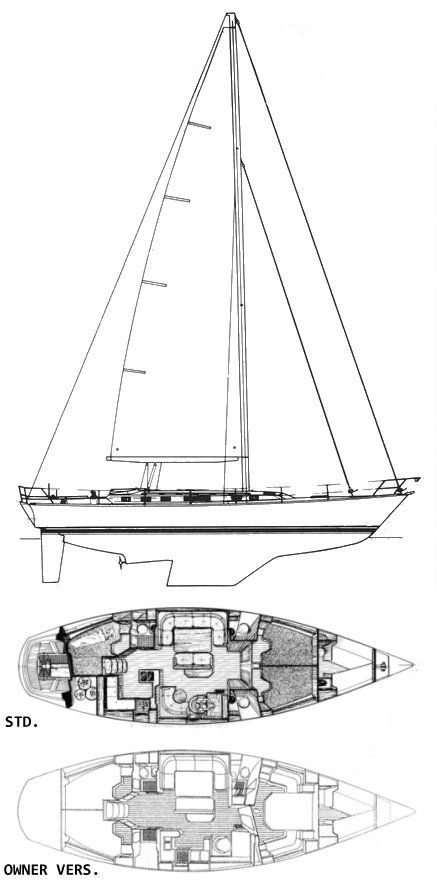
The Beneteau Idylle 1550 was conceived during the 1980s as part of Beneteau’s effort to create a line of comfortable bluewater cruisers under the “Idylle” name, which stood apart from their more performance-oriented First series. The 1550 represents the largest in the Idylle range and is aimed at long-distance sailors who prioritize space, robust construction, and seakeeping over speed and high-performance handling. Designed to serve as a capable liveaboard and passage-making yacht, it appeals to cruising couples, families, or charter operators looking for a proven, ocean-capable platform.
Design and Construction
The hull of the Idylle 1550 is a full-bodied, beamy cruiser with a moderate fin keel and a skeg-hung rudder — a design that balances tracking stability with maneuverability and protection. Constructed in fiberglass with substantial layup thickness, the boat reflects the heavy-duty approach of its time, prioritizing strength and durability over weight savings. The rig is a masthead sloop, straightforward and reliable, with ample sail area for its displacement. Above deck, the design leans toward traditional cruising rather than race-influenced minimalism. Below, the layout emphasizes volume, with generous cabin space and an abundance of stowage.
Performance
Under sail, the Idylle 1550 behaves like a true cruiser. It may not dazzle in light winds or close-hauled racing scenarios, but it offers a stable and predictable ride, especially when the wind picks up offshore. The long waterline gives it respectable hull speed, and the sail plan, though conservative, is well-matched to the boat’s weight and intended use. The skeg-hung rudder provides directional stability that’s welcome during long passages, and while tacking angles aren’t as tight as modern fin-and-spade designs, the boat tracks well and feels solid in a seaway.
Comfort and Accommodations
Where the Idylle 1550 excels is in liveability. With a beam of over 15 feet, the interior is spacious, even by today’s standards. The layout typically includes a large aft master cabin with ensuite, a roomy saloon, a proper nav station, and multiple heads. The galley is seagoing and functional, and headroom throughout is generous. It’s a boat that invites you to stay aboard for extended periods without feeling confined. Ventilation and natural light are adequate, especially with some retrofitting of modern hatches or fans.
Safety and Practicality
Designed with offshore cruising in mind, the Idylle 1550 includes several safety-oriented features. The skeg-hung rudder adds a layer of protection in case of grounding or debris, and the deck layout—while not designed for solo racing—offers secure footing and clear working zones. The cockpit is deep and protected, offering safety in heavy weather. However, some of the deck hardware may be dated by today’s standards and benefit from upgrading for easier single- or short-handed operation. Access to engine and systems is generally good, a plus for long-distance cruisers.
Known Issues with the Beneteau Idylle 1550
Being a boat from the mid-1980s, many of the Idylle 1550s on the market today show signs of age-related wear. Commonly reported issues include original deck core delamination due to water intrusion, outdated electrical systems, and tired interior finishes. While these are not fundamental design flaws, they reflect the need for ongoing refit investment. Additionally, the Perkins engines originally installed are reliable but may now be nearing the end of their service life depending on use and maintenance. Some owners have also found the boat’s weight and traditional rig can make it feel underpowered in light wind unless fitted with modern sails or additional sail options.
Conclusion
The Idylle 1550 is a classic cruiser that prioritizes comfort, durability, and seakeeping over cutting-edge performance. It’s a strong contender for sailors looking to cross oceans at a relaxed pace, or those seeking a spacious liveaboard capable of handling serious weather. While it requires a discerning eye for condition and potential refit needs, it rewards the right owner with a solid and comfortable platform for adventure. Best suited to cruising couples, small families, or circumnavigators who value strength and interior volume over performance metrics, it remains a respected and dependable choice among vintage bluewater cruisers.
Specifications
| Hull Type: | Fin w/spade rudder |
| Rigging Type: | Cutter |
| LOA: | 51.44 ft / 15.68 m |
| LWL: | 37.92 ft / 11.56 m |
| S.A. (reported): | 1,410.10 ft² / 131.00 m² |
| Beam: | 14.67 ft / 4.47 m |
| Displacement: | 33,069.00 lb / 15,000 kg |
| Ballast: | 13,007.00 lb / 5,900 kg |
| Max Draft: | 6.00 ft / 1.83 m |
| Construction: | FG |
| First Built: | 1985 |
| Last Built: | 1987 |
| Builder: | Beneteau (FRA) |
| Designer: | German Frers |
Auxiliary Power/Tanks (original equipment) | |
|---|---|
| Make: | Perkins |
| Model: | 4-236 |
| Type: | Diesel |
| HP: | 85 |
| Fuel: | 132 gals / 500 L |
Accommodations | |
| Water: | 200 gals / 757 L |
| Headroom: | 6.56 ft / 2.00 m |
Sailboat Calculations | |
| S.A. / Displ.: | 21.99 |
| Bal. / Displ.: | 39.33 |
| Disp. / Len.: | 270.75 |
| Comfort Ratio: | 34.05 |
| Capsize Screening Formula: | 1.83 |
| S#: | 1.94 |
| Hull Speed: | 8.25 kn |
| Pounds/Inch Immersion: | 1,987.67 pounds/inch |
Rig and Sail Particulars | |
| I: | 60.04 ft / 18.30 m |
| J: | 20.01 ft / 6.10 m |
| P: | 52.16 ft / 15.90 m |
| E: | 17.39 ft / 5.30 m |
| S.A. Fore: | 600.70 ft² / 55.81 m² |
| S.A. Main: | 453.53 ft² / 42.13 m² |
| S.A. Total (100% Fore + Main Triangles): | 1,054.23 ft² / 97.94 m² |
| S.A./Displ. (calculated): | 16.44 |
| Est. Forestay Length: | 63.29 ft / 19.29 m |
Disclaimer
The considerations and analyses presented regarding the Beneteau Idylle 1550 sailboat are of a general nature and are based on the available information and technical data on this model, interpreted to the best of our knowledge and understanding. It is important to note that the specific characteristics of any particular sailboat may vary due to custom modifications, maintenance performed, and conditions of use over time, among other factors. Therefore, the details and performance of the boat you are considering may not exactly match the information provided here.
We strongly recommend that, before making any purchasing or usage decisions, you conduct a detailed inspection of the boat in question, consult with nautical professionals and other sailors, and consider your personal needs, expectations, and capabilities. Each sailboat may have unique particularities that affect its performance and suitability for different types of sailing and sailors.
The information contained in this analysis should be used as a general guide and not as a definitive reference. Professional evaluation and personal inspection are essential to ensure that the boat meets your specific requirements and expectations.