


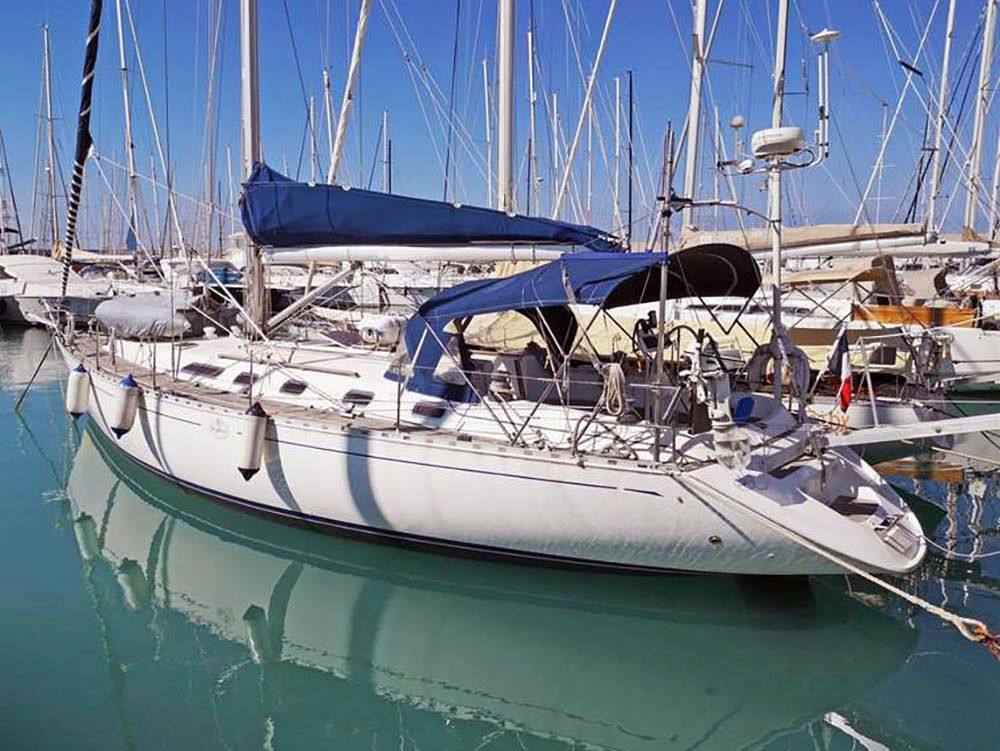
The Dufour Classic 45 is a late-1980s/1990s French production cruiser designed to bridge comfortable offshore cruising and spirited club-level performance. Conceived by J&J (Jeanneau & Jean-Jacques?)/J&J Design and launched by Dufour Yachts in the late 1980s and built through the 1990s, the Classic 45 was aimed at owners who wanted a solid, sea-kindly hull with sensible deck ergonomics and an interior capable of serious cruising yet still competitive when tuned for club races. The model found favor with couples and families planning longer coastal passages, as well as yacht charter operators in Europe and the Caribbean, which has left a healthy supply of well-equipped second-hand boats on the market. Today it remains a sought-after used-boat choice for buyers who prize a balance of seagoing capability, interior comfort and traditional European build quality.
Design and Construction
The Classic 45 follows late-20th-century naval architecture trends for performance cruisers: a moderate to wide beam carried well aft, a fin keel (standard deep or optional shoal) and a separate spade rudder to deliver maneuverability and effective lift. The production hulls are fiberglass (GRP) with a robust structural grid and thorough bonding of bulkheads—typical of Dufour’s approach to stiffness and longevity—while deck cores and fiberglass sandwich construction reduce weight aloft for a lower center of gravity. The standard rig is a masthead or fractional sloop depending on year and market, with a sail plan sized to give the boat drive without excessive reefing in normal offshore conditions. Those design choices yield a yacht that balances structural durability and repairability (GRP repairs are straightforward), while preserving resale value for owners who can show careful maintenance and documented refits.
From a practical-ownership viewpoint, the fin-keel/spade-rudder configuration improves pointing and close-hauled performance but makes keel-bolt checks and rudder-stock inspection essential at survey; the GRP construction simplifies localized repairs but core and deck-fitting bedding quality determine long-term leak performance. In short: a Classic 45 that has been surveyed, with documented keel-bolt checks and sound deck bedding, will typically be a durable hull with reasonable upkeep requirements for an owner who wants blue-water capability without exotic materials or systems.
Performance
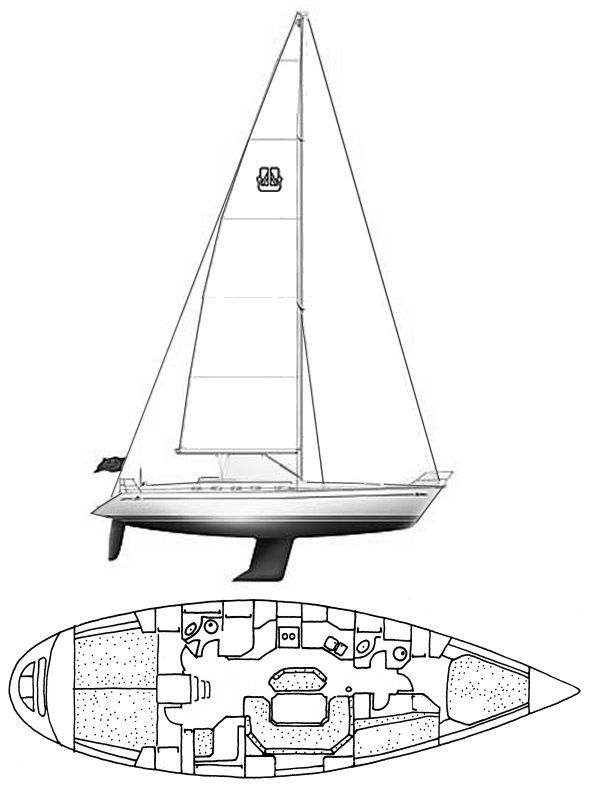
The Classic 45 sails like a large, light-displacement cruiser: it carries momentum well, accelerates briskly in moderate breeze, and rewards trim with good upwind ability for a cruising design. With an LOA just under 46 ft, LWL in the high 30s, a beam around 14 ft and ballast in the 7–8.8-ton range depending on draft, the boat has enough righting moment to carry sensible sail area to windward while remaining comfortable when the sea builds. Owners and professional testers report hull speeds in the high 7s to low 8s (knots) and performance that sits between full-displacement passagemakers and modern high-performance cruisers—fast enough for enjoyable passages, predictable and safe for shorthanded crews.
Compared with contemporaries, the Classic 45 is generally ranked as a cruiser that leans slightly toward performance: not a race-bred thoroughbred, but quicker and more responsive than older heavy cruisers of similar length and more forgiving than purpose-built racer/cruisers when seas are confused. That reputation makes it attractive to buyers who want to mix passagemaking with occasional club racing or faster coastal hops.
Comfort and Accommodations
Belowdecks the Classic 45 reflects Dufour’s intent to offer liveable long-distance accommodation without sacrificing seaworthiness. Typical layouts include three or four cabins, generous headroom in the saloon, a well-appointed galley and sizable tankage—configurations that make extended cruising realistic for couples, families or a small professional crew. Ventilation and natural light are generally good for a boat of its era, and joinery quality tends to be higher than many contemporaneous production builds, which helps the interior age more gracefully.
For owners planning extended life aboard, the Classic 45 is comfortable but not opulent: many used boats have modest owner upgrades (improved refrigeration, modern entertainment/electrical systems, upgraded mattresses and upholstery). Those upgrades are often cosmetic or systems-focused rather than structural, which means a careful purchase can leave a buyer with a very capable cruising home that will remain comfortable for years if condensation and freshwater systems are managed properly.
Safety and Practicality
Deck ergonomics on the Classic 45 favor offshore work: wide side decks, secure handholds and a cockpit designed to shed water and give a sheltered working area under sail. The option of a deeper fin keel improves upwind pointing and ultimate stability, while shoal options ease access to shallow anchorages at the expense of tighter pointing angles. Systems such as larger Volvo or Yanmar engines and substantial tankage for fuel and water are common, which improves autonomy for long passages and reduces dependency on marinas—an important practical factor for cruising owners.
Systems accessibility tends to be good: engine rooms are reachable, tankage and mechanical service points are generally logically arranged and running gear is of a type that an experienced technician can service worldwide. For true offshore passagemaking owners typically fit additional redundancies (twin batteries, upgraded electrics, watermakers or extra fuel) but the stock configuration is already close to what many coastal-offshore cruisers need.
Known Issues with the Dufour 45 Classic
There are no widespread catastrophic design failures widely reported for the Classic 45, but the usual set of issues for boats of this vintage recurs in owner reports and surveys. Important things buyers should watch for include signs of poor bedding around deck fittings and chainplates (leading to leaks), keel-bolt condition (especially on boats that have grounded or not had documented inspections), and any evidence of osmosis on older hulls that may lack modern barrier coats. Electronics and rigging are frequently owner-upgraded, so you may encounter variability—dated nav gear and furling units are common service items.
Commonly recommended improvements include replacing older standing rigging as per age guidelines, upgrading furling systems and winches where wear is apparent, fitting a modern autopilot or refreshed navigation suite, and checking/servicing the propeller and shaft alignment to reduce vibration and drag. In practice most issues are routine maintenance items rather than systemic faults; a thorough pre-purchase survey will typically identify what needs addressing and estimate costs for the buyer.
Market Availability and Pricing in the U.S.
The Dufour Classic 45 is no longer produced and is a used-market item; examples surface regularly through brokers and specialized dealers, including listings that range across Europe, the Caribbean and North America. In the U.S. and Caribbean markets you’ll most often find hulls in Florida, the U.S. East Coast cruising hubs (including the Chesapeake/New England corridor) and occasionally on the West Coast—many boats move between Europe and the Caribbean through brokerage sales, so inventory is geographically mixed. Current advertised asking prices on broker sites and listings vary by year, refit level and location, but reasonable market expectation for well-equipped, survey-clean examples sits roughly in the $95,000–$180,000 band, with lower prices for project boats and higher prices for extensively refitted or lightly used yachts.
In comparative value terms the Classic 45 competes well against similar production cruisers of the era: it can command a premium when well maintained because of its blend of sea-kindly hull, roomy interior and reputation for solid build quality. Market liquidity depends on region—demand is steady in traditional cruising hubs but can be thin inland—so buyers should be patient and sellers should expect geographic factors (transport, VAT/import status) to influence net pricing.
Here is a comparison with three similar models commonly considered by cruisers:
| Model | LOA | Approx. Years | Typical US Used Price | Key Differences |
|---|---|---|---|---|
| Dufour Classic 45 | ≈45.9 ft | Late 1980s–1990s | **$95,000–$180,000** | Sea-kindly hull, offshore tankage options, multiple cabin layouts; European build quality. |
| Beneteau/ Oceanis 461 | ≈46 ft | Late 1990s–2000s | $90,000–$200,000 | Larger dealer support in U.S., modern systems in later years, more spacious deck plans on newer models. |
| Jeanneau Sun Odyssey 45 / 45.2 | ≈45 ft | Late 1990s–2000s | $95,000–$185,000 | Similar European philosophy; often comparable performance with different finish and deck ergonomics. |
| Bavaria 44 / 46 (early 2000s) | ≈44–46 ft | 2000s | $80,000–$160,000 | German build, often more volume and simple systems; generally competitive pricing and broad dealer support in Europe. |
Dufour 45 Classic vs Beneteau Oceanis 461
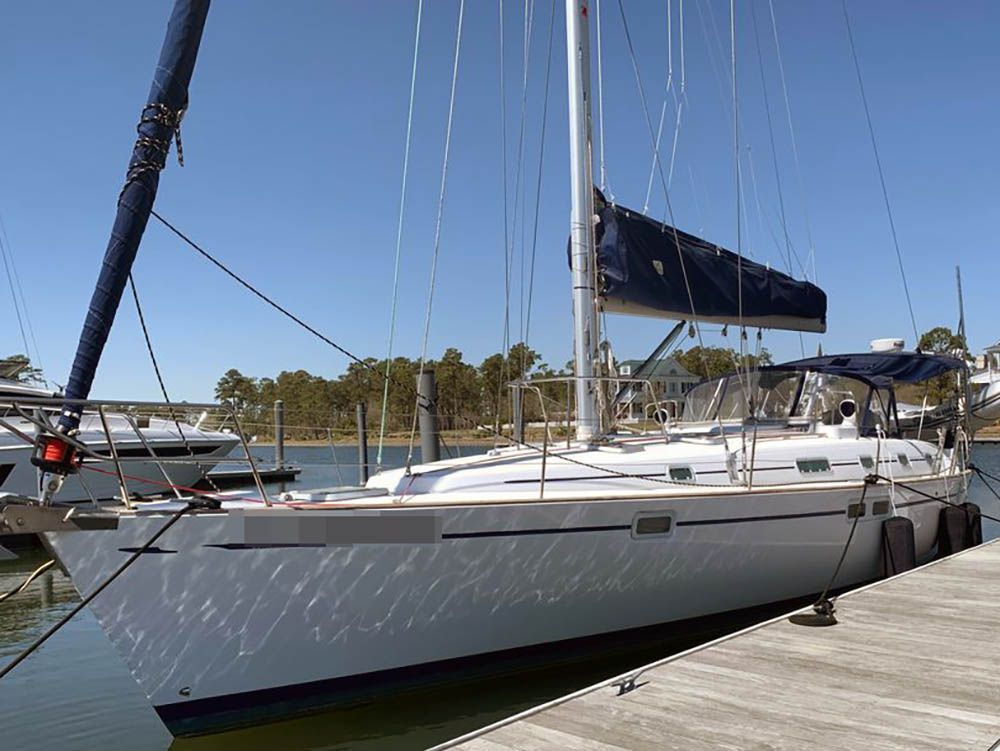
The Classic 45 and Beneteau Oceanis 461 both aim at comfortable offshore cruising, but they express that aim differently: the Dufour emphasizes a slightly more performance-oriented hull form and traditional European joinery, while the Oceanis line moved toward more modern production comforts and modular interior options as Beneteau evolved into the 2000s. Practically, buyers choosing between them will find the Beneteau often offers newer electronics packages and dealer-level support in North America, whereas the Dufour can present better sailing manners for tuned crews and a pleasingly robust feel belowdecks.
In ownership terms the Beneteau may be easier to source certain replacement parts and service in the U.S.; the Dufour’s quality of fit and structural approach can retain value for owners who keep meticulous maintenance records and refits.
► Learn more about de Beneteau Oceanis 461
Dufour 45 Classic vs Jeanneau Sun Odyssey 45
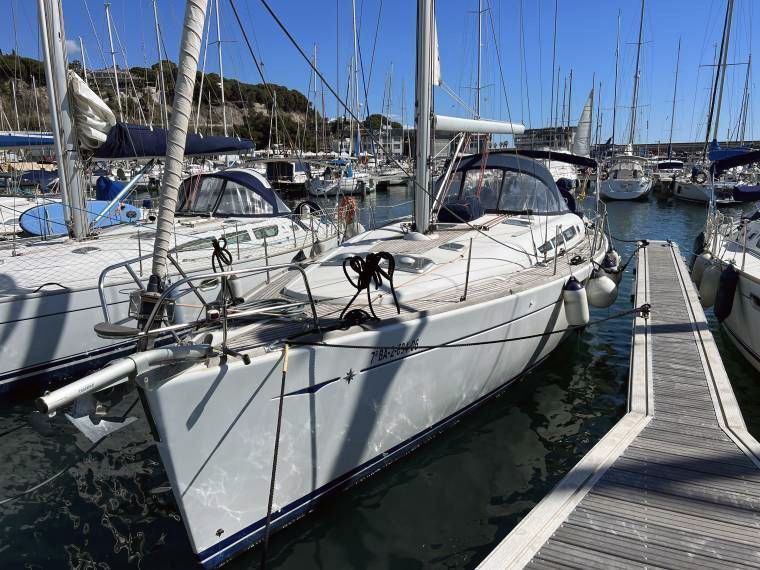
These two are close cousins in concept: both are European builds designed for serious coastal and offshore cruising with sensible sailplans and accommodation layouts. The Dufour Classic 45 tends to be perceived as slightly more performance-oriented under sail and sometimes favors deeper keels and larger engine options, while the Sun Odyssey line emphasizes comfort and ease of handling, with variations that tune the balance toward cruising luxury.
For a buyer focused on passage speed and sailing feedback, the Dufour may be the preferred hull; for someone prioritizing turnkey comfort and potentially easier local service, Jeanneau’s dealer network and interior ergonomics on certain models can be decisive.
► Learn more about de Jeanneau Sun Odyssey 45
Dufour 45 Classic vs Bavaria 44

Bavaria’s 44/46 models from the early 2000s generally offer abundant volume and straightforward systems at competitive prices, leaning toward value and easy cruising rather than performance edge. The Dufour Classic 45 usually shows a bit more attention to hull lines and offshore handling, making it slightly more engaging to sail in stronger conditions, whereas the Bavaria rewards owners with simple systems, roomy interiors and broad aftermarket support in Europe.
Buyers who want more interior volume for the money may favor Bavaria; those who want a more traditionally balanced seagoing yacht with a reputation for capable offshore behavior often tilt toward the Dufour.
► Learn more about de Bavaria 44
Maintenance Costs of a Dufour 45 Classic in the USA
Mooring/Slip fees — Expect wide variation: coastal hubs (New England, SF Bay, Southern California) push toward the higher end, while more remote or inland locations are lower.
Insurance — Influenced by cruising range, declared value and owner experience; blue-water cruising coverage raises premiums.
Engine servicing — Large displacement diesels (50–75 hp typical for the class) are more costly to maintain than small cruiser engines; annual service plus intermittent injector or transmission work drives costs.
Antifouling/haulout — A significant recurring cost; professional haulouts with diagnostics and bottom work are more expensive but preserve resale value.
Standing and running rigging — Standing rigging on a 45-foot yacht is a major periodic cost; sail inventory replacement (especially when upgrading to fully battened mains or laminated headsails) can be substantial.
Electronics & batteries — Modern navigational and electrical upgrades can be a large one-time expense but materially improve safety and the boat’s marketability.
General consumables & repairs — Hoses, seacocks, anodes and small systems repairs add up and should be budgeted annually.
Significant one-time costs buyers commonly encounter are full standing-rigging replacement, a new sail inventory, major electronics refit, or extensive gelcoat and deck-core repairs if past bedding was neglected. The Classic 45 is large enough that professional services are often required for tasks like rigging changes, major engine work or complex electrical refits, though competent owner-mechanics can handle many servicing items to reduce costs. Overall cost of ownership for this size and capability is medium to high, driven largely by haulout, rig and sail costs; however resale of well-maintained Classic 45s tends to be good in cruising hubs, helping justify sensible investments in refit and systems.
Conclusion
The Dufour Classic 45 is a thoughtful blend of seaworthiness, sailing performance and practical cruising comforts. Its strengths are a well-behaved hull that rewards careful sail trim, substantial tankage and engine options for extended cruising, and interior layouts that suit families or couples who plan extended passages. Potential weaknesses center on the usual vintage-boat concerns—deck-fitting bedding, keel-bolt and rudder inspections, and the need to budget for rig and sail renewal—but these are manageable with a proper survey and a prioritized refit plan.
For buyers seeking a real cruising yacht that will handle coastal and near-offshore work with confidence, the Classic 45 is worth serious consideration; it is not the cheapest option to own at this size, but its combination of performance, sea-kindly behavior and European build often gives it solid resale value in active cruising markets. Well-maintained examples represent good long-term platforms for owners who want capable passagemaking without stepping into bespoke, high-maintenance high-performance racing yachts.
Specifications
| Hull Type | Fin w/bulb & spade rudder |
| Rigging Type | Masthead Sloop |
| LOA | 45.92 ft / 14.00 m |
| LWL | 37.42 ft / 11.41 m |
| Sail Area (reported) | 884.00 ft² / 82.13 m² |
| Beam | 14.17 ft / 4.32 m |
| Displacement | 24,180 lb / 10,968 kg |
| Ballast | 8,700 lb / 3,946 kg |
| Max Draft | 7.67 ft / 2.34 m |
| Construction | Fiberglass (FG) |
| First Built | 1988 |
| Builder | Dufour Yachts (France) |
| Designer | J & J Designs / Olivier Poncin |
Auxiliary Power / Tanks | |
|---|---|
| Engine Make / Model | Volvo MD 22 P (Diesel) |
| Horsepower | 60 HP |
| Fuel Capacity | 58 gals / 220 L |
Accommodations | |
| Water Capacity | 120 gals / 454 L |
Sailboat Calculations | |
| S.A. / Displ. | 16.98 |
| Bal. / Displ. | 35.98 |
| Disp. / Len. | 206.01 |
| Comfort Ratio | 27.38 |
| Capsize Screening Formula | 1.96 |
| S# | 2.63 |
| Hull Speed | 8.20 kn |
| Pounds/Inch Immersion | 1,894.61 lb/in |
Rig and Sail Particulars | |
| I | 53.30 ft / 16.25 m |
| J | 17.70 ft / 5.39 m |
| P | 52.80 ft / 16.09 m |
| E | 15.60 ft / 4.75 m |
| S.A. Fore | 471.71 ft² / 43.82 m² |
| S.A. Main | 411.84 ft² / 38.26 m² |
| Total Sail Area (100% Fore + Main) | 883.55 ft² / 82.08 m² |
| S.A./Displ. (calculated) | 16.97 |
| Estimated Forestay Length | 56.16 ft / 17.12 m |
Disclaimer
The considerations and analyses presented regarding the Dufour 45 Classic sailboat are of a general nature and are based on the available information and technical data on this model, interpreted to the best of our knowledge and understanding. It is important to note that the specific characteristics of any particular sailboat may vary due to custom modifications, maintenance performed, and conditions of use over time, among other factors. Therefore, the details and performance of the boat you are considering may not exactly match the information provided here.
We strongly recommend that, before making any purchasing or usage decisions, you conduct a detailed inspection of the boat in question, consult with nautical professionals and other sailors, and consider your personal needs, expectations, and capabilities. Each sailboat may have unique particularities that affect its performance and suitability for different types of sailing and sailors.
The information contained in this analysis should be used as a general guide and not as a definitive reference. Professional evaluation and personal inspection are essential to ensure that the boat meets your specific requirements and expectations.