


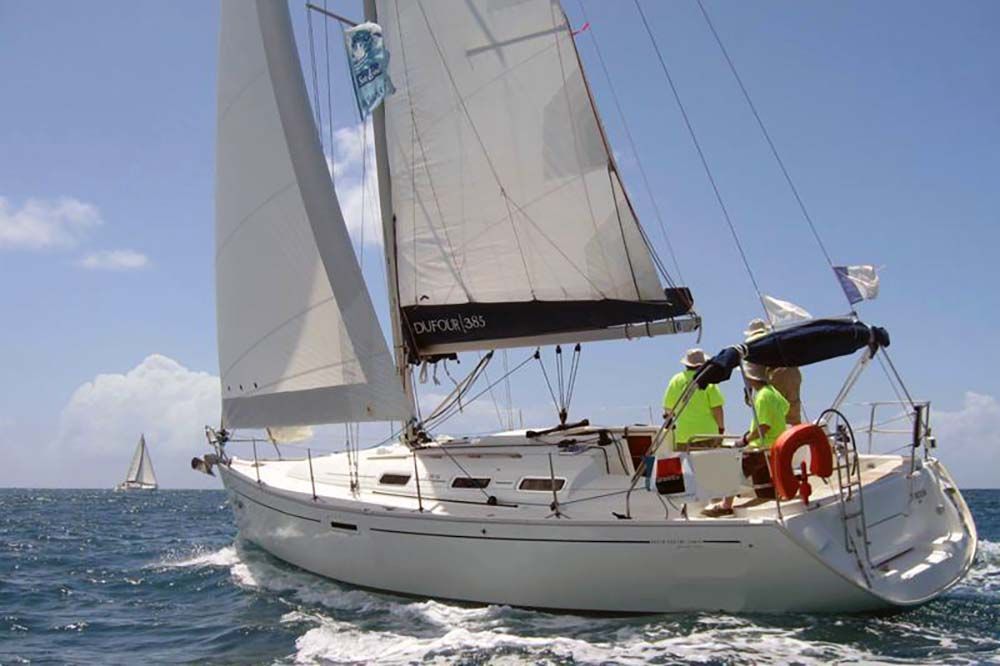
The Dufour 385 Grand Large arrived in the mid-2000s as a purpose-built performance cruiser: a boat conceived to blend comfortable family cruising with sprightly sailing characteristics. Designed by Umberto Felci (with Patrick Roséo noted on some decks and layout options) and built by Dufour Yachts from about 2005 onward, it was intended for owners who wanted a modern, easily handled yacht that still sailed well enough to please an enthusiastic skipper — the typical buyer profile being couples or small families who prize comfort but don’t want to sacrifice passage-making capability. The 385 has never been a mass-market American bestseller the way some U.S. domestic designs are, but it has enjoyed steady demand on the used market, especially among private owners and small-fleet charter sellers in Europe and the Caribbean; North American examples are less common but do turn up via brokers and listings.
Design and Construction
The hull of the 385 is a fairly modern moderate-beam cruiser hull with a fin keel and bulb and a semi-elliptical spade rudder, designed to give a balance of directional stability and responsive helm. It uses a fractional sloop rig — a simple, powerful arrangement that makes reefing and headsail changes manageable for short crews — and most boats were laid up in hand-laminated fiberglass with options for sandwich decks and reinforcements (some listings call out Twaron or additional fabric reinforcements and closed-cell foam for rudder cores). Those choices show Dufour’s intent: structural stiffness where it matters, lighter deck construction for a lower center of gravity, and rig geometry tuned for upwind performance without complicated sailplans.
From an owner’s perspective these construction choices have practical consequences. The glassed, hand-laminated hull and injection-molded sandwich deck resist routine wear and can take impact repairs without exotic materials, which lowers long-term maintenance complexity for a buyer used to standard fiberglass repair shops. The fractional rig and deck layout favor short-handed sailing and reduce the number of heavy headsails to maintain, but standing and running rigging condition remains a key ongoing cost. In naval-architecture terms the boat favors a moderate ballast-to-displacement ratio for stability and a longer waterline for speed potential — design tradeoffs that keep the 385 comfortable at anchor while allowing respectable performance between harbors.
Performance
Under sail the 385 tends to feel lively relative to older cruising designs of similar length: good acceleration in moderate airs, reasonable pointing ability, and a forgiving motion when seas build. In light winds the relatively generous sail area and modern underwater profile give it an advantage over more traditional, narrow-hulled cruisers; with 12–16 knots of true wind she will happily make passage speeds that feel economical rather than merely sedate. In a confused sea or larger swells the hull’s form and weight distribution keep motions controlled, although any 38- to 39-foot cruising yacht will pitch more than a heavier, full-keel blue-water design. Compared with contemporaries it sits toward the “performance cruiser” end of the spectrum — not a racer, but faster and more responsive than many production cruisers built two decades earlier. Owner reports and professional reviews from the launch era praised its balanced helm and easy handling, which is exactly the behaviour many coastal cruisers want.
Comfort and Accommodations
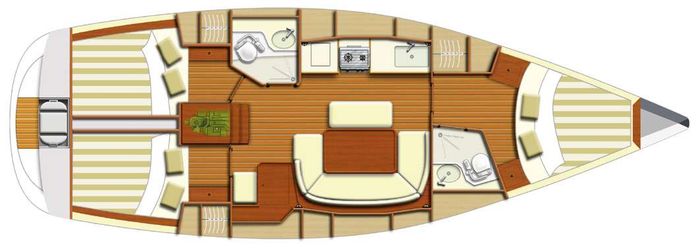
Internally the 385 was laid out to maximize usable living space: a beamy stern section provides roomy cockpit seats and a wide saloon with comfortable settees, and layouts were offered in two- or three-cabin formats to match owner needs. Storage tends to be generous for a 38-footer, with practical locker access and reasonable galley ergonomics for cruising, making it easy to provision for weekends or longer coastal cruises. Ventilation and natural light are usually good thanks to deck hatches and large ports, though like many production boats the finish depends heavily on how each owner maintained or upgraded upholstery, galley equipment and the engine bay. For a couple or small family the 385 is well matched to live-aboard weekends and seasonal cruising; some owners have used it comfortably for extended cruising, but those planning full-time liveaboard life usually invest in upgrades (water tanks, refrigeration, additional insulation) to enhance habitability over the long term.
Safety and Practicality
Deck ergonomics and twin-wheel/center-cockpit options found on some examples make movement on deck straightforward and give good visibility while helming. The fractional rig reduces headsail sizes and simplifies single- or short-handed operation; halyards and reefing lines led to the cockpit are common upgrades that enhance safety for small crews. Access to the water is typical for modern cruisers (transom bathing platforms on some refits), and hardware is generally accessible for routine checks. As-built, the 385 is primarily a coastal to offshore cruiser capable of transits and sea passages with sensible upgrades and good seamanship — it’s not an out-of-the-box offshore passagemaker built to Lloyd’s commercial rules, but many examples have completed serious passages after owners invested in reefing, upgraded electronics and strengthened safety systems. The simplicity of commonly used systems (Yanmar or Volvo auxiliary engines, conventional electrical setups) benefits owners who want equipment that local yards can service.
Known Issues with the Dufour 385 Grand Large
Owners and forum threads converge on a few recurring topics that any buyer should check carefully: gelcoat and small cosmetic blisters on older hulls (always inspect for osmosis in boats that have spent years in warm, wet storage), wear on standing and running rigging approaching the 10–15 year mark, occasional leaks around deck fittings and hatches if bedding has been deferred, and typical diesel-engine wear items that come with age (injector, heat exchanger, exhaust). Hardware such as chainplates and winches should be inspected for corrosion or fatigue on any candidate vessel; electrical and plumbing upgrades are commonly found because many owners modernize instruments and domestic systems over time. Practical, widely recommended improvements include replacing older sails with lighter, updated cuts for improved light-air performance, upgrading autopilot/electronics for safe short-handed cruising, and considering a feathering or folding prop if motoring efficiency and maneuverability are priorities. These are not design-fatal flaws — rather, routine aging and owner choices drive most issues, which is why a professional survey is essential.
Market Availability and Pricing in the U.S.
The 385 Grand Large is no longer in production in the sense of a current new model line; today it is traded on the used market where examples are more common in Europe, the Mediterranean and the Caribbean than in the continental U.S., although North American listings (especially in Canada and occasionally Florida or the Northeast) appear from time to time. Brokers and classified sites show examples asking broadly within $70,000–$140,000 depending on year, refit level and location — many of these listings are European or Canadian, which means buyers in the U.S. should factor transport, import, or commissioning costs into their budgets. Overall it occupies a middle tier in value: typically more refined and (in many cases) better built than bargain-priced domestic racers, but less expensive than newer luxury performance cruisers.
Here’s how it compares to similar models:
| Model | LOA | Approx. Years Built | Typical U.S. Used Price | Main Differences |
|---|---|---|---|---|
| Dufour 385 Grand Large | 38.5 ft | ~2005–2010 | $70,000–$140,000 | Performance-cruiser hull, Felci design, European construction and deck/layout options. |
| Catalina 385 | 38.5 ft | ~2012–2018 | $200,000–$300,000 (younger, U.S. inventory shows examples ~ $229k) | U.S.-market focused, comfortable cockpit and proven dealer/service network; generally newer models ask higher prices. |
| Hunter 38 (or Hunter 380) | ~38 ft | ~2004–2009 | $80,000–$120,000 (typical listings around $89k–$118k) | Domestic U.S. production, often simpler systems and broad parts support; generally value-priced on the used market. |
| Jeanneau Sun Odyssey 39i | 39 ft | ~2005–2010 | $120,000–$145,000 (many U.S. listings ~ $133k–$140k) | European build with emphasis on cruising comfort; similar market position to Dufour but often slightly higher asking prices in U.S. listings. |
Dufour 385 Grand Large vs Catalina 385

The 385’s hull form and European build philosophy places its strengths in a slightly firmer, performance-oriented ride compared with the Catalina 385’s U.S.-domestic focus on cockpit comfort and ease of ownership. While the Catalina often commands higher prices for newer inventory and benefits from a strong U.S. dealer and parts network, the Dufour typically offers a livelier sail and more “European” deck hardware layout that appeals to buyers who value sailing feel over showroom polish.
For a buyer, that means choosing the Dufour if you prioritize sharper sailing and European joinery options; choose the Catalina if you want easier local servicing, a very roomy cockpit for entertaining, and a more U.S.-centric resale market.
► Learn more about de Catalina 385
Dufour 385 Grand Large vs Hunter 38

Compared with the Hunter, the 385 generally presents a more performance-oriented hull and higher-spec European fittings, whereas Hunters of that era were engineered to hit a more aggressive price-value sweet spot with simplified systems and broad dealer coverage. The Hunter will often be cheaper to buy and easier to source parts for in the U.S., but the Dufour typically rewards owners with a stiffer deck/hull feel, somewhat better upwind performance and a finishing level that some buyers find more refined.
In practical ownership terms, pick the Hunter if your priority is lower entry cost and easy local maintenance; pick the Dufour if you want a boat that sails significantly better in light to moderate airs and are comfortable managing parts and refits that may be more Europe-oriented.
► Learn more about de Hunter 38
Dufour 385 Grand Large vs Jeanneau Sun Odyssey 39i
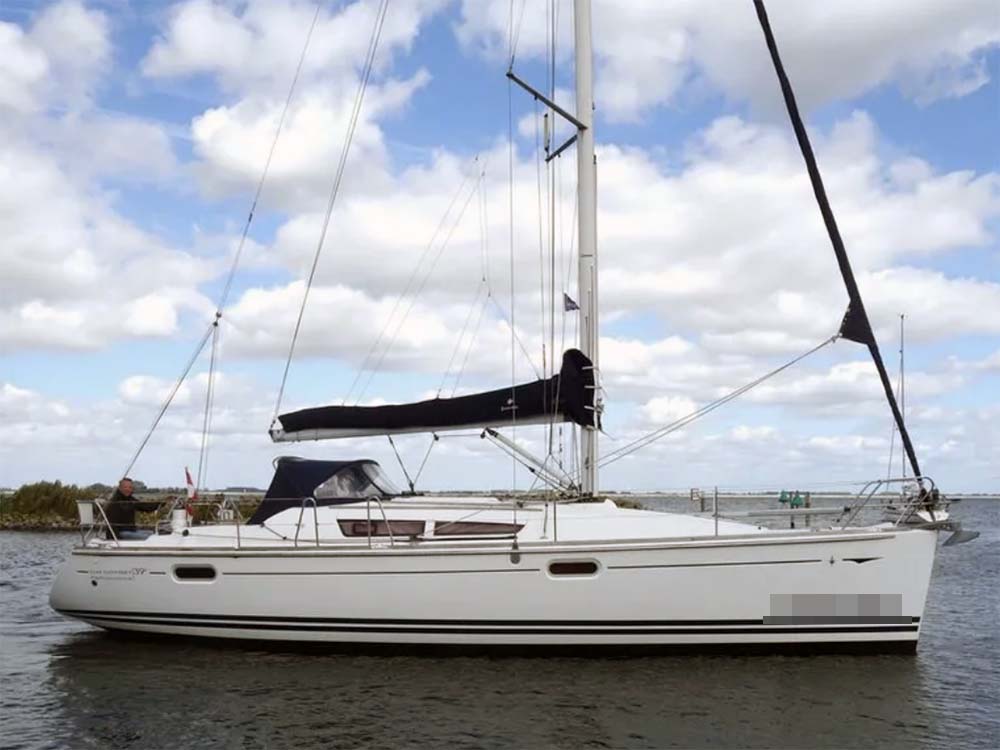
Both Dufour and Jeanneau occupy the European cruiser market with similar build philosophies, but the 39i leans slightly more toward interior volume and cruising comfort while the Dufour 385 leans a touch toward performance in the same size class. The Sun Odyssey’s layouts and dealer support can make it marginally easier for U.S. buyers to find updated systems on American listings, and its used market prices often run similar to or slightly above the Dufour depending on refit.
Buyers who want a slightly more commodious interior and broad showroom appeal may prefer the Jeanneau; those who want a crisper helm and a design that rewards active sailing will find the 385 compelling. Both boats are sensible coastal cruisers; the Dufour may feel more rewarding to a skipper who values sailing characteristics in addition to comfort.
► Learn more about de Jeanneau Sun Odyssey 39i
Maintenance Costs of a Dufour 385 Grand Large in the USA
Typical annual and periodic maintenance costs for a Dufour 385 Grand Large are as follows:
- Mooring / Slip (annual): $3,000–$12,000 depending on region — cheaper in the Southeast or Great Lakes, and higher in California or New England.
- Insurance (annual): $800–$3,000 depending on coverage, cruising area, and owner experience.
- Engine servicing (annual): $400–$1,200 for standard maintenance; more if injectors or the heat exchanger require overhaul.
- Antifouling (every 1–2 years): $700–$2,000 depending on haulout costs, paint type, and labor rates.
- Standing rigging inspection / partial replacement (every 8–12 years): $1,500–$6,000 depending on materials and scope.
- Running rigging and sail repairs or replacements: $200–$4,000 annually; a complete sail replacement typically costs $4,000–$12,000 depending on quality and sail inventory.
- Electrical / electronics upgrades (one-time or cyclical): $1,000–$10,000 depending on scope — such as radar, chartplotter, AIS, or battery system renewal.
- Survey and small repairs (one-time when buying): $2,000–$10,000+ depending on the survey findings and remedial work.
- Winterization and commissioning (seasonal): $300–$1,200 depending on location and services performed.
Regional differences play a major role: marinas and boatyards in California or the Northeast can easily double the total of many line items compared with Florida or the Great Lakes. Significant one-time costs typically include sail replacement, electronics refits, and any structural or cosmetic hull work such as blister repair or repainting.
The Dufour 385 Grand Large is considered moderate in maintenance cost within its size range. Many routine tasks can be handled by an experienced owner, though rigging or engine overhauls are better left to professionals. Given its solid resale market and good construction quality, overall ownership costs tend to be balanced by dependable value retention over time.
Conclusion
The Dufour 385 Grand Large is a coherent package for buyers who want a modern, comfortable cruiser that still rewards active sailing. Its strengths are in a well-balanced hull and rig, good use of interior volume for its length, and construction that keeps long-term repair work within the capabilities of many marina yards. Weaknesses are mostly age-related: the usual suspects (rigging, sails, possible gelcoat/edging leaks) appear on older boats and should be checked by a knowledgeable surveyor. For a couple or small family focused on coastal cruising with occasional longer hops, the 385 is a very sensible choice — it offers better sailing manners than many traditional cruisers of the same era while providing a comfortable interior for practical cruising life.
In practical buying terms, most prospective owners will find it worth seeking a well-maintained example with a recent survey and updated sails/electronics; if you find one priced in the $70k–$140k band and mechanically honest, it represents a good value for coastal cruisers who want European design and a lively sailing experience without entering the high-end market. For coastal cruising and moderate offshore work, the 385 is a solid, pragmatic investment with stable resale prospects when properly maintained.
Specifications
| Hull Type: | Fin w/ bulb & spade rudder |
| Rigging Type: | Fractional Sloop |
| LOA: | 38.45 ft / 11.72 m |
| LWL: | 30.91 ft / 9.42 m |
| Sail Area (reported): | 624.00 ft² / 57.97 m² |
| Beam: | 12.89 ft / 3.93 m |
| Displacement: | 15,388 lb / 6,980 kg |
| Ballast: | 4,299 lb / 1,950 kg |
| Max Draft: | 5.77 ft / 1.76 m |
| Construction: | Fiberglass (FG) |
| First Built: | 2005 |
| Builder: | Dufour Yachts (France) |
| Designer: | Umberto Felci / Patrick Roséo |
Auxiliary Power / Tanks (original equipment) | |
|---|---|
| Engine Make: | Volvo |
| Type: | Diesel |
| Horsepower: | 29 HP |
| Fuel Capacity: | 42 gal / 159 L |
Accommodations | |
| Water Capacity: | 116 gal / 439 L |
Sailboat Calculations | |
| S.A. / Displ.: | 16.20 |
| Bal. / Displ.: | 27.94 |
| Disp. / Len.: | 232.61 |
| Comfort Ratio: | 23.82 |
| Capsize Screening Formula: | 2.08 |
| S#: | 2.26 |
| Hull Speed: | 7.45 kn |
| Pounds/Inch Immersion: | 1,423.63 lb/inch |
Rig and Sail Particulars | |
| I: | 46.01 ft / 14.02 m |
| J: | 14.40 ft / 4.39 m |
| P: | 41.99 ft / 12.80 m |
| E: | 13.94 ft / 4.25 m |
| S.A. Fore: | 331.27 ft² / 30.78 m² |
| S.A. Main: | 292.67 ft² / 27.19 m² |
| S.A. Total (100% Fore + Main Triangles): | 623.94 ft² / 57.97 m² |
| S.A. / Displ. (calculated): | 16.20 |
| Estimated Forestay Length: | 48.21 ft / 14.69 m |
| Mast Height from DWL: | 53.15 ft / 16.20 m |
Disclaimer
The considerations and analyses presented regarding the Dufour 385 Grand Large sailboat are of a general nature and are based on the available information and technical data on this model, interpreted to the best of our knowledge and understanding. It is important to note that the specific characteristics of any particular sailboat may vary due to custom modifications, maintenance performed, and conditions of use over time, among other factors. Therefore, the details and performance of the boat you are considering may not exactly match the information provided here.
We strongly recommend that, before making any purchasing or usage decisions, you conduct a detailed inspection of the boat in question, consult with nautical professionals and other sailors, and consider your personal needs, expectations, and capabilities. Each sailboat may have unique particularities that affect its performance and suitability for different types of sailing and sailors.
The information contained in this analysis should be used as a general guide and not as a definitive reference. Professional evaluation and personal inspection are essential to ensure that the boat meets your specific requirements and expectations.