


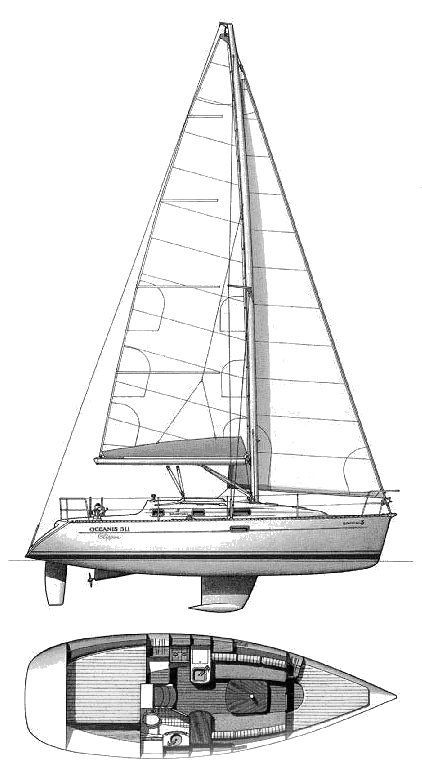
The Beneteau 311, also marketed in some versions as the Oceanis 311 Clipper, is a compact cruiser introduced in 1998 and designed by Jean-Marie Finot of Groupe Finot. This model was created to offer a balance between performance and comfort in a manageable package, ideal for both novice and intermediate sailors seeking an easy-to-handle coastal cruiser with respectable sailing characteristics. Targeted toward cruising couples, small families, or sailors transitioning from smaller boats, the 311 combines a relatively sporty design with the liveability of a small cruising yacht, making it a popular choice on the used boat market to this day.
Design and Construction
The hull of the Beneteau 311 reflects Finot’s experience designing both cruising and racing yachts. With an LOA of 9.83 meters (32.25 feet) and a beam of 3.20 meters (10.50 feet), the boat offers a stable platform with enough internal volume to be comfortable without compromising agility under sail. The hull is constructed of hand-laid fiberglass, with an inner structural grid bonded to the hull for stiffness and durability.
The standard version is equipped with a fin keel and bulb, and a balanced spade rudder, a combination that improves lift and responsiveness while keeping draft moderate (approximately 1.45 m or 4.75 ft). For those cruising in shoal waters, Beneteau also offered a keel-centerboard version, with a swing keel that allows for a draft as shallow as 0.85 m (2.8 ft) when retracted and over 2.5 m (8.2 ft) when deployed, enhancing upwind performance while maintaining access to shallower areas.
Rigged as a fractional sloop, the Beneteau 311’s sail plan is designed for ease of handling, particularly under short-handed conditions. The standard rig is conservative, but with ample tuning and space for a cruising spinnaker or gennaker, the boat can perform surprisingly well downwind.
Performance
On the water, the Beneteau 311 performs with agility and predictability. With a typical sail area around 50 m² (538 ft²) and a displacement of approximately 3,500 kg (7,700 lbs), the Sail Area to Displacement ratio (SA/D) falls in the 16–18 range depending on configuration—indicative of a boat that’s responsive and performs well in light to moderate airs but is not a racer. Claims of an SA/D above 22 are optimistic and not typical of standard models.
Upwind, the boat tracks reasonably well, though its pointing ability is not exceptional compared to more performance-focused designs. It performs best on a reach or broad reach, where it feels lively and nimble. In light air, the fractional rig and moderate displacement allow it to keep moving, and in stronger winds, the hull remains balanced, though reefing early improves comfort and control.
The hull speed is approximately 7.17 knots, which is typical for this size. Motoring with the standard 18 HP Yanmar diesel engine yields a cruising speed around 5.5–6 knots, with a fuel tank of 68 liters (18 gallons) offering decent range for coastal passages.
Comfort and Accommodations
Despite its relatively compact size, the interior of the Beneteau 311 is well laid out and makes efficient use of available space. Most versions come with two cabins—a V-berth in the bow and a spacious aft cabin—alongside a convertible salon that can sleep additional guests. The galley is typically L-shaped with a two-burner stove, sink, and icebox or fridge, while the nav station, though small, is functional.
The head is surprisingly spacious for a 32-foot boat, often including a shower. Storage is adequate for weekend cruising or short-term liveaboard use, and the finish, while not luxurious, is functional and attractive with wood trim and molded fiberglass liners for durability.
With a water tank capacity of 197 liters (52 gallons), the boat is well-equipped for longer coastal trips without requiring constant resupply. Headroom is generous for a boat of its class, with around 6 feet (1.83 m) in the main cabin, depending on model year and version.
Safety and Practicality
The Beneteau 311 was not designed as a bluewater cruiser, but for coastal and near-offshore use, it offers solid safety and practicality. The Ballast-to-Displacement ratio of 31–32% suggests reasonable stiffness and initial stability, especially combined with its moderate beam. The Capsize Screening Formula (CSF) of 2.13 places it slightly above the ideal threshold (<2.0) for ocean crossings, affirming its orientation toward coastal cruising rather than long offshore passages.
Deck layout is ergonomic, with all lines led aft, making the boat easy to sail single- or double-handed. Wide side decks, a protected cockpit, and well-positioned handholds improve safety on deck. The standard wheel steering feels responsive, and visibility from the helm is generally good.
Known Issues with This Sailboat
Most of the issues reported with the Beneteau 311 are typical of production boats of its era and more attributable to age or maintenance practices than design flaws. That said, there are a few commonly observed concerns:
- Rudder bearing wear: Over time, some owners have reported play in the rudder stock or bearings, which can affect helm feel.
- Leaky deck fittings: As with many older boats, improperly bedded or aged deck fittings (especially stanchions and chainplates) can cause localized leaks if not maintained.
- Aging interior liners: The molded headliners and linings can detach or sag over time, particularly in humid climates.
- Keel bolts and grounding: Some keel-centerboard versions have experienced wear in the pivot mechanism or problems after hard groundings.
None of these issues are systemic design failures but should be considered when evaluating a used model.
Conclusion
The Beneteau 311 represents a smart compromise between size, performance, and comfort, making it one of the more versatile boats in the 30–33 foot range. It’s not designed for circumnavigation or extended bluewater sailing, but for coastal cruising, club racing, and weekend getaways, it offers excellent value.
Sailors looking for an easy-to-handle, responsive, and moderately fast cruiser with real accommodations for a couple or small family will appreciate the 311’s balance. While it’s not a heavy-displacement ocean crosser, its thoughtful design, sailing manners, and practical interior continue to make it a compelling choice on the used market, especially for first-time boat owners seeking a capable yet approachable vessel.
👉 Save the full technical sheet of the Beneteau 311 by downloading the PDF version
Specifications
| Hull Type | Fin w/bulb & spade rudder |
| Rigging Type | Fractional Sloop |
| LOA | 32.25 ft / 9.83 m |
| LWL | 28.67 ft / 8.74 m |
| Sail Area (reported) | 539.00 ft² / 50.07 m² |
| Beam | 10.50 ft / 3.20 m |
| Displacement | 7,716.00 lb / 3,500 kg |
| Ballast | 2,425.00 lb / 1,100 kg |
| Max Draft | 4.67 ft / 1.42 m |
| Construction | Fiberglass (FG) |
| Ballast Type | Cast Iron |
| First Built | 1998 |
| Builder | Beneteau |
| Designer | Jean Marie Finot (Groupe Finot) |
| Auxiliary Power/Tanks (Original Equipment) | |
| Make | Yanmar |
| Type | Diesel |
| HP | 18 |
| Fuel Capacity | 18 gallons / 68 liters |
| Water Capacity | 52 gallons / 197 liters |
| Sailboat Calculations | |
| S.A. / Displacement | 22.16 |
| Ballast / Displacement | 31.43 |
| Displacement / Length | 146.17 |
| Comfort Ratio | 17.49 |
| Capsize Screening Formula | 2.13 |
| Hull Speed | 7.17 kn |
| Pounds/Inch Immersion | 1,075.63 pounds/inch |
| Rig and Sail Particulars | |
| I | 40.35 ft / 12.30 m |
| J | 11.35 ft / 3.46 m |
| P | 36.61 ft / 11.16 m |
| E | 13.19 ft / 4.02 m |
| S.A. Fore | 228.99 ft² / 21.27 m² |
| S.A. Main | 241.44 ft² / 22.43 m² |
| S.A. Total (100% Fore + Main Triangles) | 470.43 ft² / 43.70 m² |
| S.A./Displ. (calculated) | 19.34 |
| Est. Forestay Length | 41.92 ft / 12.78 m |
| Mast Height from DWL | 46.58 ft / 14.20 m |
| Additional Notes | |
| Keel-CB version: draft BU: 2.58 ft / 0.8 m, BD: 7.08 ft / 2.15 m; Ballast with CB: 3,085 lbs / 1,400 kg. Same as Oceanis 311. | |
Disclaimer
The considerations and analyses presented regarding the Beneteau 311 sailboat are of a general nature and are based on the available information and technical data on this model, interpreted to the best of our knowledge and understanding. It is important to note that the specific characteristics of any particular sailboat may vary due to custom modifications, maintenance performed, and conditions of use over time, among other factors. Therefore, the details and performance of the boat you are considering may not exactly match the information provided here.
We strongly recommend that, before making any purchasing or usage decisions, you conduct a detailed inspection of the boat in question, consult with nautical professionals and other sailors, and consider your personal needs, expectations, and capabilities. Each sailboat may have unique particularities that affect its performance and suitability for different types of sailing and sailors.
The information contained in this analysis should be used as a general guide and not as a definitive reference. Professional evaluation and personal inspection are essential to ensure that the boat meets your specific requirements and expectations.