


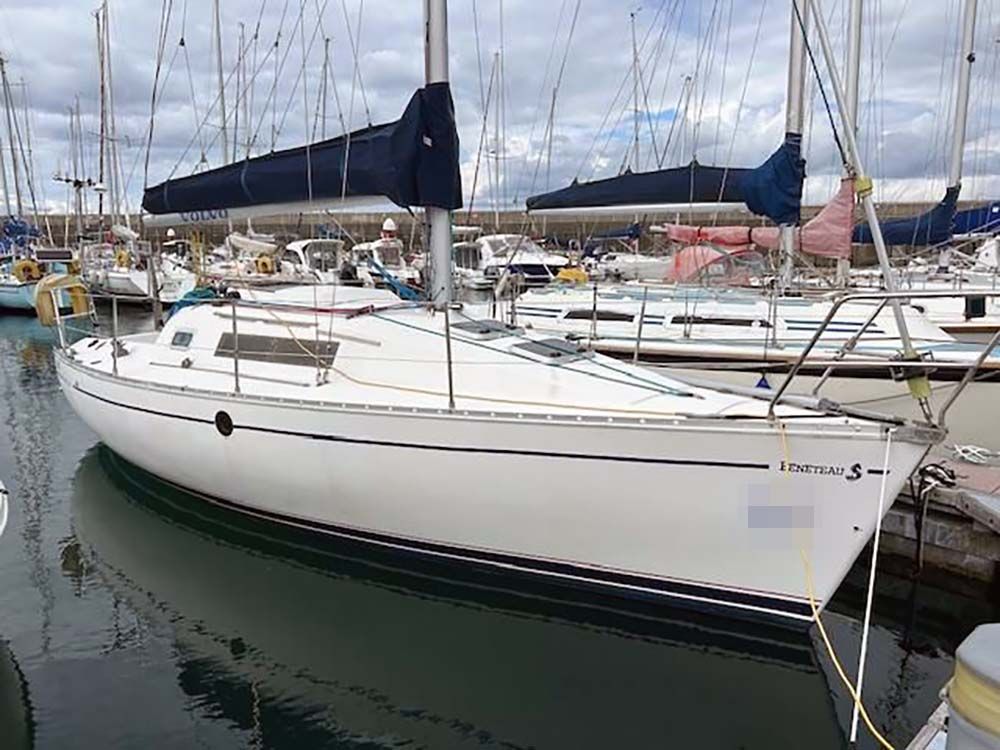
The Beneteau First 285 is a compact performance-cruiser from Beneteau’s well-known First line, conceived in the mid-1980s by Jean-Marie Finot’s Group Finot and built between roughly 1985 and 1993. Designed to sit between club racing and family cruising—light and responsive enough to reward an active helmsman, but with an interior suitable for weekends and short coastal cruises—the First 285 targeted sailors who wanted sporty handling without giving up basic creature comforts. The model sold in reasonable numbers (about 450 hulls) and today shows up most often on the used market as an affordable coastal cruiser for private owners, small families and clubs; it’s less common as a dedicated charter boat but occasionally surfaces in broker listings and regional used-boat inventories among budget-minded coastal cruisers and owners wanting an affordable, manageable 30-foot experience.
Design and Construction
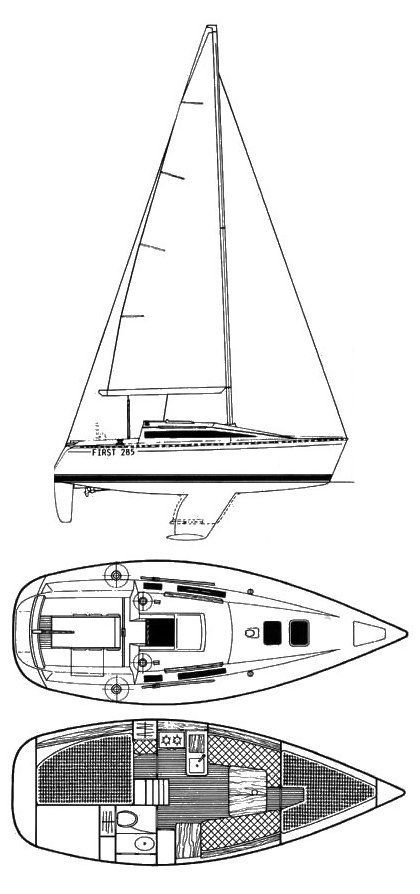
Underneath the deck the First 285 follows a straightforward, performance-oriented formula: a moderate-beam hull with a fin keel and a spade (or internally mounted) rudder, usually carried as a fractional sloop rig. Construction is solid fiberglass for the hull, with production-era Beneteau practices applied to deck and interior joinery; the displacement (around 6,160 lb) and ballast (~2,115 lb) give it a relatively light feel for a 28-footer and a ballast ratio that balances stiffness and weight. The fractional rig concentrates sail area in a larger mainsail and smaller headsail, which simplifies headsail handling and reefing for shorthanded crews while still allowing lively performance with a properly tuned rig. These choices make the boat straightforward to maintain—fiberglass repairs are well understood and widely serviceable—but they also put a premium on checking age-sensitive items (deck core, seacocks, standing rigging) at purchase. In short: the architecture prioritizes agility and ease of handling, with a construction approach that has proven durable where routine maintenance has been performed.
Performance
On the water the First 285 feels more nimble than many heavier 28-footers of its era. Its hull speed is around 6.6 knots and, with a fractional rig and clean underwater profile, it tends to point well to windward and accelerate quickly in puffs; sailors commonly describe it as “lively” rather than sluggish. In light airs it can outperform beamier cruisers that carry more wetted surface; in heavier conditions the fin keel and modest beam help it stay controllable, though motion will be sportier than on a heavier, fuller-hulled cruiser. Its maneuverability—short turning radius and direct rudder feel—makes docking and tight marina work easier for a small crew. Compared to contemporary Catalina and Hunter designs it tends to reward a more active helmsman: you trade a touch of interior volume and ultimate initial comfort for better light-air performance and a more satisfying helm.
Comfort and Accommodations
The interior of the First 285 is compact but sensible for a boat of this size: typical layouts show a forward V-berth, an aft quarter berth or settee, a small but functional galley and a single enclosed head. Headroom in the saloon and maximum interior dimensions are tight for taller people (saloon headroom reported around 6’4”), yet storage and tankage were laid out to support weekend cruising and short-term liveaboard use. For a couple or a small family doing weekend outings, the layout is ergonomic and economical; for full-time liveaboard use you’ll likely find the space limiting and planning upgrades or clever storage solutions necessary. Many First 285s have been modernized by owners—newer upholstery, updated galley appliances and refreshed electronics are common—so the interior you encounter on the market will vary widely with how much the previous owner invested in refit.
Safety and Practicality
From a safety viewpoint the First 285 is straightforward for coastal work: deck hardware is accessible, the cockpit is protective for weather, and the fractional rig reduces the requirement to wrestle large headsails when conditions build. Technical indices (comfort ratio ~17.8; capsize screening formula ≈2.15) place the design squarely as a coastal cruiser: comfortable and safe for coastal passages and offshore day work, but not a blue-water cruiser by modern offshore standards without significant upgrades and an experienced crew. Systems accessibility is generally good on the model—engine bays are compact but reachable—but buyers should check deck/hatch seals, seacocks, rudder bearings and the age of standing rigging, since these are both safety-critical and the items that show wear first on older boats.
Known Issues with the Beneteau First 285
Owners’ forums and owner groups note a handful of repeatedly mentioned items that prospective buyers should inspect closely. These issues fall into three camps:
- age and maintenance: common aging problems include tired standing and running rigging, worn seacocks/hose fittings, and the usual suite of leaks around ports and hatches if original seals have not been renewed; these are maintenance items rather than inherent fatal flaws.
- keel/centerboard variants: some versions feature wing or shoal keels or a centerboard, and the lift-keel/centerboard arrangements (where fitted) need special attention—rudder tips and centerboard trunk wear are known concerns where boats have been dried out on mudflats or left to surge.
- equipment obsolescence: original on-board engines (small diesel 9–18 hp range) and electronics frequently require service or replacement; sails are often past their optimal life on older examples.
Practical buyer guidance: budget for standing-rigging replacement if the mast hasn’t been inspected within the last 10–15 years, inspect the deck core and chainplate areas for softness or water intrusion, and plan on a fresh sail inventory or at least a condition-based sail replacement. Common owner improvements include modern chartplotters, furling headsails (if absent), updated propellers and, in some markets, refastening or renewing chainplates and deck hardware.
Market Availability and Pricing in the U.S.
The First 285 is no longer in production and is sold only on the used market; examples typically turn up sporadically on national broker sites and regional listings, with concentrations showing up in traditional sailing hubs such as Florida, the Great Lakes and the Northeast. Asking prices on public listings vary widely with condition, equipment and region; recent broker and classified examples have shown boats from the low-teens into the high-twenties of thousands of dollars, so a practical market range to expect is $8,000–$30,000 depending on condition, location and refit status. If you compare this to other late-80s/early-90s 28-foot cruisers, the First 285 often represents a good value for buyers seeking sportier performance in a compact package, though boats with recent refits or professional maintenance histories command a premium.
Below is a comparison with similar sailboats from the same era:
| Model | LOA | Approx. years built | Typical US used price | Main differences |
|---|---|---|---|---|
| Beneteau First 285 | 28.2 ft | 1985–1993 | $8,000–$30,000 | Performance-oriented Finot design, fractional rig, lighter displacement. |
| Catalina 28 Mk II | ~28 ft | Late 1980s–1990s | $12,000–$30,000 | Roomier interior, heavier displacement, very common in US coastal markets. |
| Hunter 28.5 | 28.5 ft | Mid-1980s–1990s | $6,000–$20,000 | Beamier, more interior volume, trade-offs in light-air performance vs comfort. |
| Jeanneau Sun Odyssey 28.1 | ~28 ft | 1990s (varies by submodel) | $12,000–$30,000 | European production, similar performance focus on Sun Fast; Sun Odyssey tends toward cruising comfort. |
Beneteau First 285 vs Catalina 28 Mk II
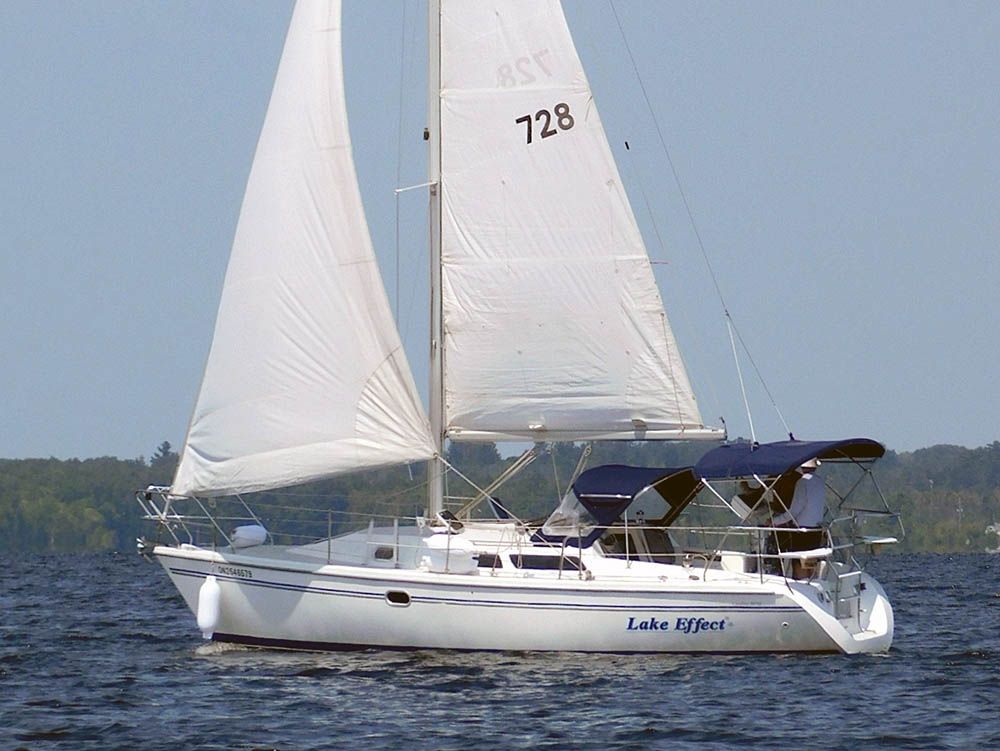
The First 285 leans toward a lighter, more performance-tuned hull with a fractional rig that favors mainsail power and easier headsail handling for shorthanded crews, while the Catalina 28 prioritizes interior volume and a forgiving motion for cruising families. For a buyer focused on lively sailing, better pointing and an engaging helm, the First 285 is the stronger choice; for someone who wants maximum cabin comfort, storage and a softer motion under power and sail, the Catalina often wins.
From a maintenance and ownership perspective, Catalinas are extremely common in U.S. yards (spares and knowledge are plentiful), which can reduce ownership friction; the First 285 may demand slightly more attention to rig and performance gear but rewards that investment with a more lively sailing experience and often a stronger resale appeal among sport-minded sailors.
► Learn more about the Catalina 28 Mk II
Beneteau First 285 vs Hunter 28.5

Compared with the Hunter 28.5, the First 285 typically offers sharper handling and lighter displacement, making it more responsive in light to moderate air; Hunter’s design trades some of that edge for interior beam and perceived comfort. The practical implication for buyers is simple: families or cruisers who value spaciousness and a steadier motion will appreciate the Hunter, whereas owners who prioritize weekend club racing or more spirited coastal performance will prefer the Beneteau.
Maintenance patterns diverge too: Hunters of that era are often fitted out for cruising and may have heavier hardware and simpler sail plans, while the Beneteau’s gear tends to reflect its performance roots—standards like sail condition and rig tension matter more to extract the design’s potential, so inspection focus should match intended use.
► Learn more about the Hunter 28.5
Beneteau First 285 vs Jeanneau Sun Odyssey 28.1

Against Jeanneau’s 28-foot variants, the First 285 sits in similar territory when the Jeanneau is the Sun Fast (performance-cruiser), offering comparable handling and a racing-informed setup; versus a Sun Odyssey (cruising variant) the Beneteau is generally quicker to respond and more rewarding to sail hard. Buyers seeking European design lines and a slightly different deck layout may prefer Jeanneau, while those who want the very particular Finot/Beneteau feel—quick acceleration and a mainsail-driven plan—will favor the First 285.
On the ownership side, Jeanneau Sun Odyssey models often emphasize comfort and systems for cruising, which can reduce refit costs for liveaboard aspirations; the First 285 can require more focused upgrades (sails, rigging, performance appendages) if the buyer wants to keep the boat competitive as a club racer while remaining practical for cruising.
► Learn more about the Jeanneau Sun Odyssey 28.1
Maintenance Costs of a Beneteau First 285 in the U.S.
Below is an annotated (commented) list of typical annual and periodic costs a buyer should expect; numbers are ranges and will vary widely by region, slip type and how hands-on the owner is:
- Mooring / slip fees: $1,200–$8,000 per year — marina slips in high-demand areas (South Florida, parts of California, popular New England harbors) sit at the top of the range; seasonal or mooring ball storage is cheaper.
- Insurance: $300–$1,200 per year — depends on insured value, cruising area and experience; coastal New England or offshore endorsements raise premiums.
- Engine servicing and small diesel maintenance: $300–$1,200 annually — routine oil, filters, impeller checks; expect more after multi-year neglect.
- Antifouling / haul-out: $500–$2,000 per year (or every 1–2 years) — haul, pressure wash, bottom paint and zincs; costs spike if hull work or osmosis treatment is needed.
- Standing and running rigging: $0–$3,500 per year amortized — standing rigging replacement is a periodic major cost (often $1,200–$3,500 every 10–15 years); running rigging and sail repair are ongoing smaller expenses.
- Sails: $0–$6,000+ — a single mainsail or headsail replacement may be $1,000–$3,000 each; a full new inventory for performance cruising can exceed $5,000.
- Winterization / shrink wrap / storage: $200–$1,200 (seasonal) — depends on region; winter storage costs in the northeast push higher.
- Electronics and safety gear: $200–$3,000 amortized — GPS/chartplotter upgrades, VHF, AIS, lifejackets, and EPIRB; owners commonly modernize navigation systems after purchase.
- Routine consumables and small repairs: $300–$1,000 per year — hoses, pumps, small electrical work, varnish and cleaning supplies.
Significant one-time costs to budget for include standing-rigging replacement, a major sail refit, a repower or engine overhaul, and any deck/core repairs revealed on survey. Many owners can handle varnish, basic engine servicing and cosmetic work themselves, which significantly reduces costs, but items like rigging replacement, major electronics installation, or haul-out repairs usually require professionals. Overall, for a 28-foot performance cruiser of this era, expect medium ownership costs—higher than a trailerable daysailer but lower than larger yachts—and reasonable resale potential if the boat is kept in good mechanical and cosmetic order.
Conclusion
The Beneteau First 285 is a compact, thoughtfully designed performance-cruiser that still appeals today to sailors who want an engaging boat for coastal cruising and club racing without a large maintenance footprint. Its strengths are nimble handling, a mainsail-oriented fractional rig that simplifies short-handed sailing, and a hull that rewards tuning and sensible upgrades. Weaknesses are those common to many 30-year-old production boats: systems and sails that often need refreshing, and interior volume that’s limited compared with beamier contemporary cruisers. For a buyer seeking a lively coastal cruiser for weekend trips and occasional club racing, the First 285 represents a strong value—particularly if you find a well-maintained example or are willing to invest modestly in sails and rigging. It’s not the ideal choice for extended blue-water voyaging without substantial refit, but for its size and intended use it offers a satisfying blend of performance and practicality with a resale profile that holds reasonable appeal to sport-oriented buyers.
Specifications
| Hull Type: | Fin w/spade rudder |
| Rigging Type: | Fractional Sloop |
| LOA: | 28.16 ft / 8.58 m |
| LWL: | 24.25 ft / 7.39 m |
| S.A. (reported): | 341.00 ft² / 31.68 m² |
| Beam: | 9.83 ft / 3.00 m |
| Displacement: | 6,160.00 lb / 2,794 kg |
| Ballast: | 2,115.00 lb / 959 kg |
| Max Draft: | 5.25 ft / 1.60 m |
| Construction: | FG |
| First Built: | 1985 |
| Last Built: | 1993 |
| Number Built: | 451 |
| Builder: | Beneteau |
| Designer: | Group Finot |
Sailboat Calculations | |
|---|---|
| S.A. / Displ.: | 16.29 |
| Bal. / Displ.: | 34.33 |
| Disp. / Len.: | 192.84 |
| Comfort Ratio: | 17.84 |
| Capsize Screening Formula: | 2.15 |
| S#: | 2.70 |
| Hull Speed: | 6.60 kn |
| Pounds/Inch Immersion: | 851.75 pounds/inch |
Rig and Sail Particulars | |
| I: | 32.51 ft / 9.91 m |
| J: | 10.30 ft / 3.14 m |
| P: | 31.23 ft / 9.52 m |
| E: | 11.08 ft / 3.38 m |
| S.A. Fore: | 167.43 ft² / 15.55 m² |
| S.A. Main: | 173.01 ft² / 16.07 m² |
| S.A. Total (100% Fore + Main Triangles): | 340.44 ft² / 31.63 m² |
| S.A. / Displ. (calc.): | 16.26 |
| Est. Forestay Length: | 34.10 ft / 10.39 m |
Disclaimer
The considerations and analyses presented regarding the Beneteau First 285 sailboat are of a general nature and are based on the available information and technical data on this model, interpreted to the best of our knowledge and understanding. It is important to note that the specific characteristics of any particular sailboat may vary due to custom modifications, maintenance performed, and conditions of use over time, among other factors. Therefore, the details and performance of the boat you are considering may not exactly match the information provided here.
We strongly recommend that, before making any purchasing or usage decisions, you conduct a detailed inspection of the boat in question, consult with nautical professionals and other sailors, and consider your personal needs, expectations, and capabilities. Each sailboat may have unique particularities that affect its performance and suitability for different types of sailing and sailors.
The information contained in this analysis should be used as a general guide and not as a definitive reference. Professional evaluation and personal inspection are essential to ensure that the boat meets your specific requirements and expectations.