


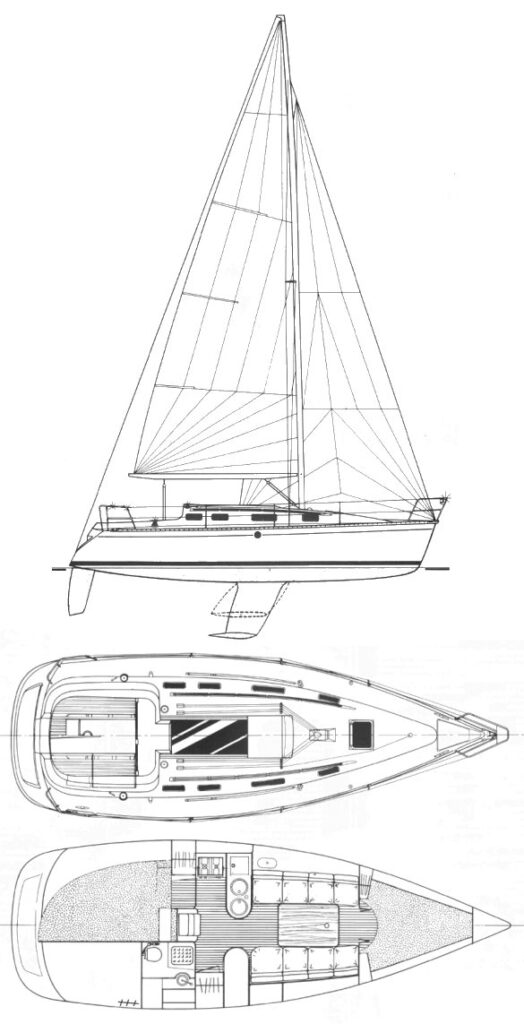
The Beneteau First 310 is a well-balanced cruiser-racer designed for sailors who appreciate both spirited sailing performance and comfortable cruising accommodations. Launched in the early 1990s as part of Beneteau’s renowned First series, it was developed to appeal to recreational sailors who wanted a fast, manageable boat that could double as a capable weekend cruiser. It occupies a niche between pure racing boats and heavier cruising yachts, targeting individuals or couples who sail primarily along the coast but enjoy occasional club racing and longer summer trips.
Design and Construction
From a design standpoint, the First 310 showcases a modern approach to hull shaping and deck layout for its time. The boat features a fin keel with a spade rudder, providing excellent maneuverability and responsiveness under sail. Its hull is moderately beamy, especially toward the aft, enhancing form stability and creating more usable space below deck. The construction employs fiberglass with inner structural reinforcement, offering a good compromise between strength and weight.
The rig is a fractional sloop, favoring a larger mainsail and smaller headsail, which simplifies sail handling while still offering powerful upwind performance. Deck hardware is well laid out, with halyards and control lines led aft to the cockpit for easy single or short-handed sailing. The cockpit itself is deep and secure, with ergonomically positioned seating and winches, indicating attention to practical sail management.
Performance
On the water, the First 310 delivers an engaging and lively sailing experience. In light to moderate wind conditions, the boat accelerates easily and maintains good speed due to its relatively light displacement and efficient sail plan. It points well to windward, thanks to the rig configuration and keel design, and remains balanced on the helm, providing a connected feel to the sailor.
In heavier winds or choppy seas, the hull form offers respectable stability, and the rudder provides reliable control even when heeled. While not intended as a high-performance racing yacht, its responsiveness and agility make it a fun and competent competitor in club races, especially when compared to more purely cruising-oriented designs of similar size.
Comfort and Accommodations
Though compact, the interior of the Beneteau First 310 is surprisingly spacious and thoughtfully laid out. It typically includes a forward V-berth, a double aft cabin, and a saloon with convertible seating, comfortably accommodating up to four people for cruising. The galley, equipped with a stove and sink, is functional for weekend trips, while the nav station and head compartment are well proportioned for a boat of this size.
Interior ergonomics are well considered, with adequate headroom and ample natural light contributing to a pleasant atmosphere. Storage space is modest but sufficient for coastal cruising needs. The joinery and finish are typical of Beneteau from this era — durable, practical, and aesthetically pleasing without being overly luxurious.
Safety and Practicality
Safety features on the First 310 are in line with its intended use as a coastal cruiser with occasional offshore capability. The wide side decks and secure handholds allow safe movement on deck, and the cockpit design protects crew in rougher conditions. The boat is easy to handle with minimal crew, which is ideal for couples or solo sailors.
With reefing lines and control systems accessible from the cockpit, adjustments under pressure can be made quickly and safely. While not purpose-built for bluewater crossings, the boat’s solid build, dependable sailing characteristics, and good design make it suitable for more ambitious passages with the right equipment and planning.
Known Issues with the Beneteau First 310
Like many production boats of its era, the Beneteau First 310 has a few known issues that owners and prospective buyers should be aware of. One of the most commonly reported concerns involves the rudder. Some boats have experienced water intrusion into the rudder blade, leading to internal delamination or swelling over time. This issue is well-documented and, while not universal, often becomes noticeable after years of use, particularly in boats that have not been stored properly or have seen heavy offshore exposure.
Another reported issue relates to the keel bolts. In certain cases, signs of weeping or slight movement around the keel-hull joint (“smile crack”) can develop. While this is not uncommon in aging fiberglass boats with bolted keels, attention should be paid to ensure it doesn’t mask deeper structural problems. Regular inspection and torque checks are advised.
The electrical system, especially in early models, is relatively basic and may be prone to corrosion or outdated wiring configurations. Owners who intend to cruise more extensively often find themselves upgrading panels, wiring runs, or connectors for added reliability and safety.
On deck, the original portlights and hatches may develop leaks over time, particularly if the seals haven’t been replaced. This is largely due to age and UV degradation, but it can affect interior comfort and lead to cosmetic water damage if not addressed.
Lastly, some owners have noted limited holding tank capacity and minimal gray water management systems, which reflects the boat’s orientation toward weekend or short-term cruising rather than extended offshore passages.
Conclusion
The Beneteau First 310 is a versatile and rewarding sailboat that combines fun performance with cruising practicality. Its strengths lie in its responsive handling, thoughtful design, and comfortable accommodations for its size. While not suited to full-time liveaboard or extended ocean crossings, it excels as a coastal cruiser with racing potential, ideal for sailors who want one boat to do many things well.
Despite a few age-related issues and maintenance-sensitive areas, its overall value, reliability, and enjoyable sailing characteristics make it a solid choice for sailors looking for a well-designed and engaging 30-footer that remains relevant and capable even decades after its launch.
Specifications
| Hull Type | Fin w/spade rudder |
|---|---|
| Rigging Type | Fractional Sloop |
| LOA | 31.00 ft / 9.45 m |
| LWL | 28.67 ft / 8.74 m |
| S.A. (reported) | 460.00 ft² / 42.74 m² |
| Beam | 10.58 ft / 3.22 m |
| Displacement | 7,054.00 lb / 3,200 kg |
| Ballast | 1,785.00 lb / 810 kg |
| Max Draft | 5.92 ft / 1.80 m |
| Construction | FG |
| Ballast Type | Cast iron |
| First Built | 1990 |
| Last Built | 1995 |
| Number Built | 496 |
| Builder | Beneteau |
| Designer | J.M. Finot |
| S.A. / Displ. | 20.07 |
| Bal. / Displ. | 25.30 |
| Disp. / Len. | 133.63 |
| Comfort Ratio | 16.03 |
| Capsize Screening Formula | 2.21 |
| Stability Index (S#) | 3.99 |
| Hull Speed | 7.17 kn |
| Pounds/Inch Immersion | 1,083.83 lb/inch |
| I | 37.04 ft / 11.29 m |
| J | 10.83 ft / 3.30 m |
| P | 37.86 ft / 11.54 m |
| E | 12.96 ft / 3.95 m |
| S.A. Fore | 200.57 ft² / 18.63 m² |
| S.A. Main | 245.33 ft² / 22.79 m² |
| S.A. Total (100% Fore + Main) | 445.90 ft² / 41.43 m² |
| S.A. / Displ. (calculated) | 19.46 |
| Est. Forestay Length | 38.59 ft / 11.76 m |
| Mast Height from DWL | 46.60 ft / 14.20 m |
Disclaimer
The considerations and analyses presented regarding the Beneteau First 310 sailboat are of a general nature and are based on the available information and technical data on this model, interpreted to the best of our knowledge and understanding. It is important to note that the specific characteristics of any particular sailboat may vary due to custom modifications, maintenance performed, and conditions of use over time, among other factors. Therefore, the details and performance of the boat you are considering may not exactly match the information provided here.
We strongly recommend that, before making any purchasing or usage decisions, you conduct a detailed inspection of the boat in question, consult with nautical professionals and other sailors, and consider your personal needs, expectations, and capabilities. Each sailboat may have unique particularities that affect its performance and suitability for different types of sailing and sailors.
The information contained in this analysis should be used as a general guide and not as a definitive reference. Professional evaluation and personal inspection are essential to ensure that the boat meets your specific requirements and expectations.