


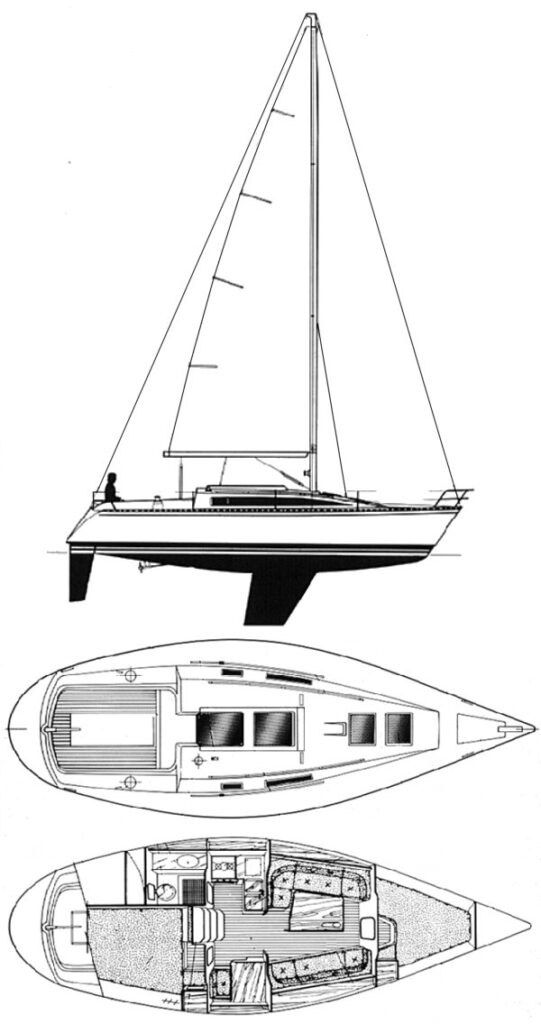
The Beneteau First 325, introduced in the mid-1980s, is a well-balanced cruiser-racer that reflects the evolution of Beneteau’s design philosophy during that era — combining performance-oriented hulls with increasingly comfortable interiors. Designed by Jean Berret, the First 325 was positioned to attract sailors looking for a fast, responsive yacht that could also serve as a capable family cruiser. It sits in the sweet spot of being large enough for extended coastal passages yet compact and simple enough to be handled by a couple or even a singlehander. With its elegant lines, spirited sailing characteristics, and sensible interior, it has become a respected model in the used boat market, particularly for those who appreciate a true sailing experience without sacrificing comfort.
Design and Construction
The First 325 features a sleek, moderately beamy hull with a fin keel and spade rudder — a configuration that prioritizes performance and maneuverability. The hull is constructed of solid fiberglass below the waterline, with balsa-cored topsides and deck for stiffness and weight savings. The deck layout is straightforward and functional, featuring a low-profile coachroof and ample side decks for easy movement. The fractional sloop rig is efficient and allows for good sail control across a range of conditions. The boat has a generous sail area for its displacement, which is reflected in its light-air agility.
In terms of naval architecture, the First 325 draws from the same lineage as many of Berret’s other cruiser-racers — prioritizing a fine entry for good upwind performance and flatter aft sections to promote off-the-wind speed and planing potential. The underbody is well balanced, offering good directional stability without compromising responsiveness.
Performance
On the water, the First 325 is quick and responsive. It excels in light to moderate airs, where its generous sail area and relatively light displacement allow it to sail efficiently when others may be reaching for the engine starter. It points well to windward and has a steady feel on the helm, making it enjoyable for both casual cruising and club racing.
In heavier wind conditions, the boat holds its own, though it benefits from timely reefing due to the relatively high sail area-to-displacement ratio. The deep spade rudder offers excellent control even when heeled, and the keel design provides good grip without excessive leeway. Off the wind, the boat is lively, especially with a spinnaker, and has the ability to surf under the right conditions.
While not a dedicated bluewater vessel, the First 325 is more than capable in coastal and moderate offshore conditions, offering a rewarding sailing experience that rewards good trimming and tactical decision-making.
Comfort and Accommodations
Inside, the First 325 reflects the growing importance of interior comfort during the 1980s. It typically features a two-cabin layout: a spacious forward V-berth and a large double aft cabin, separated by a central saloon. The saloon includes opposing settees and a folding table, allowing for both dining and additional berths. The galley is L-shaped and well-equipped for coastal cruising, with a gimballed stove, icebox, and decent storage.
The navigation station, located opposite the galley, is generous in size for a boat this length, allowing for chartwork and instruments. The head is spacious enough and located conveniently near the companionway, making it easy to access from either cabin or the cockpit.
Finish quality is above average for production boats of its time, with attractive woodwork, thoughtful ergonomics, and adequate stowage. Headroom is comfortable, typically around 6 feet or slightly more, contributing to a surprisingly open feel below deck. Ventilation is enhanced by several opening hatches and portlights, though some owners choose to upgrade these for better performance and sealing over time.
Safety and Practicality
The First 325 is a practical boat from a sailor’s perspective. Its deck layout is clean and functional, with well-placed winches, lines led aft in many models, and secure footing on wide side decks. The cockpit is deep and comfortable, with high coamings and a folding table that makes it suitable for socializing at anchor or sailing in a breeze. The companionway steps are non-slip and the handholds are conveniently placed throughout the cabin, contributing to safety underway.
The boat is designed more for coastal and moderate offshore cruising rather than ocean crossings. Tankage (water and fuel) is modest by today’s standards, so longer passages may require upgrades or more conservative planning. Nonetheless, many First 325s have made ambitious passages in capable hands.
Its ease of handling makes it a favorite among short-handed crews. With upgrades such as a roller furling headsail and lazy jacks or a stack pack, the First 325 becomes an easy-to-manage platform for extended cruising.
Known Issues with the Beneteau First 325
As with many boats from the 1980s, the First 325 is not without its aging challenges, though few are intrinsic design flaws. One commonly reported issue involves deck core moisture, particularly around hardware installations like stanchions and chainplates. This is largely a result of water intrusion over time through degraded sealants. Soft spots and delamination are risks if maintenance has been neglected.
The rudder and keel joint are other areas to inspect. Some boats exhibit signs of the so-called “Beneteau smile,” a crack at the keel-hull joint often caused by minor grounding or flexing over time. This is generally cosmetic but can indicate a need for inspection and rebedding. Rudders may show signs of water intrusion, though failure is rare if addressed early.
Interior elements such as veneer peeling, headliner sagging, or outdated electrical systems may also be present in older models. These are primarily aesthetic or easily upgraded and are typical of boats from this era.
Conclusion
The Beneteau First 325 stands out as an attractive option for sailors seeking a blend of performance and comfort in a manageable package. It sails with verve, handles responsively, and offers a livable interior that punches above its length. While it’s not a purpose-built ocean crosser, it’s a highly capable coastal cruiser and weekend racer that appeals to those who truly enjoy the act of sailing.
Its primary strengths lie in its sailing performance, sensible layout, and classic lines. Potential buyers should be prepared for the usual upgrades associated with aging fiberglass boats, but the underlying platform remains strong. For sailors who value the combination of tradition, speed, and practicality, the First 325 continues to offer an enduring and rewarding sailing experience.
Specifications
| Hull Type | Fin w/spade rudder |
| Rigging Type | Masthead Sloop |
| LOA | 32.48 ft / 9.90 m |
| LWL | 27.88 ft / 8.50 m |
| S.A. (reported) | 440.00 ft² / 40.88 m² |
| Beam | 11.05 ft / 3.37 m |
| Displacement | 9,700.00 lb / 4,400 kg |
| Ballast | 3,747.00 lb / 1,700 kg |
| Max Draft | 5.80 ft / 1.77 m |
| Construction | FG |
| First Built | 1985 |
| Builder | Beneteau (FRA) |
| Designer | Jean Berret |
Auxiliary Power/Tanks (original equipment) | |
| Make | Volvo |
| Model | 2002 |
| Type | Diesel |
| Fuel | 15 gals / 57 L |
Accommodations | |
| Water | 53 gals / 201 L |
Sailboat Calculations | |
| S.A. / Displ. | 15.53 |
| Bal. / Displ. | 38.63 |
| Disp. / Len. | 199.82 |
| Comfort Ratio | 20.89 |
| Capsize Screening Formula | 2.08 |
| S# | 2.54 |
| Hull Speed | 7.08 kn |
| Pounds/Inch Immersion | 1,100.78 pounds/inch |
Rig and Sail Particulars | |
| I | 40.30 ft / 12.28 m |
| J | 12.04 ft / 3.67 m |
| P | 34.80 ft / 10.61 m |
| E | 11.48 ft / 3.50 m |
| S.A. Fore | 242.61 ft² / 22.54 m² |
| S.A. Main | 199.75 ft² / 18.56 m² |
| S.A. Total (100% Fore + Main Triangles) | 442.36 ft² / 41.10 m² |
| S.A./Displ. (calc.) | 15.61 |
| Estimated Forestay Length | 42.06 ft / 12.82 m |
Disclaimer
The considerations and analyses presented regarding the Beneteau First 325 sailboat are of a general nature and are based on the available information and technical data on this model, interpreted to the best of our knowledge and understanding. It is important to note that the specific characteristics of any particular sailboat may vary due to custom modifications, maintenance performed, and conditions of use over time, among other factors. Therefore, the details and performance of the boat you are considering may not exactly match the information provided here.
We strongly recommend that, before making any purchasing or usage decisions, you conduct a detailed inspection of the boat in question, consult with nautical professionals and other sailors, and consider your personal needs, expectations, and capabilities. Each sailboat may have unique particularities that affect its performance and suitability for different types of sailing and sailors.
The information contained in this analysis should be used as a general guide and not as a definitive reference. Professional evaluation and personal inspection are essential to ensure that the boat meets your specific requirements and expectations.