



The Beneteau Oceanis 35 is a modern cruising sailboat that blends comfort, performance, and versatility in a compact yet capable package. Designed by Finot-Conq and introduced around 2014 by the renowned French shipyard Beneteau, the Oceanis 35 was conceived as a coastal cruiser that could adapt to a variety of sailing styles—ranging from weekend getaways to extended family cruises. As part of the Oceanis line, which emphasizes ease of handling and onboard comfort, it targeted sailors looking for a manageable yacht that doesn’t compromise on livability. Over the years, it has gained popularity in the second-hand market, particularly among private owners, sailing schools, and charter operators looking for a reliable, user-friendly vessel. Demand remains steady thanks to its modular interior layout and reputation for forgiving handling, making it a frequent sight in charter fleets and on brokerage listings in both North America and Europe.
Design and Construction
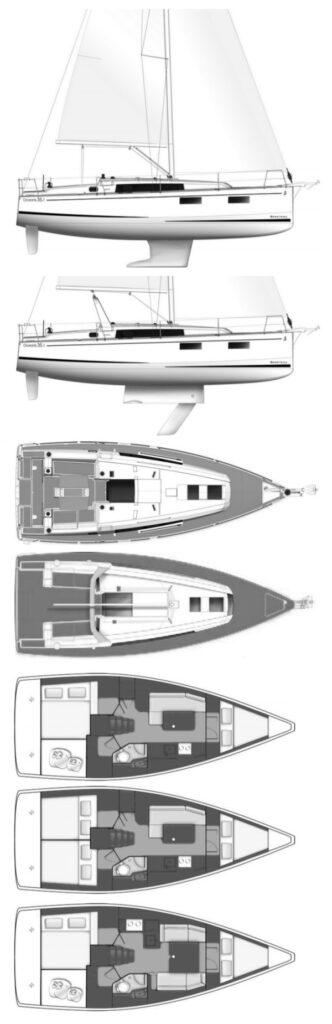
The hull of the Oceanis 35 features a contemporary hard-chine design that increases interior volume and provides better form stability under sail. Its wide beam—carried well aft—contributes to a spacious cockpit and interior while enhancing downwind performance. The standard configuration includes a single spade rudder and a fin keel with a bulb, although shallow-draft options are available. These design elements contribute to both responsiveness at the helm and efficient sailing in moderate conditions, while remaining simple to maintain and repair.
The rig is a fractional sloop, employing an aluminum mast with a deck-stepped configuration and no backstay (using swept-back spreaders for support). This setup simplifies tuning and allows for an open, uncluttered stern. Construction is largely fiberglass with sandwich-core decks and injection molding, contributing to a lighter, stiffer structure while controlling manufacturing costs. Beneteau’s use of structural liners adds strength but may complicate custom repairs. Overall, the boat’s construction prioritizes low maintenance and ease of use, supporting its appeal to hands-on owners and those new to cruising.
Performance
Under sail, the Oceanis 35 is not a racer—but for its class, it performs respectably. In light to moderate breezes, it moves easily, thanks to its beamy hull and light displacement. While it won’t win upwind regattas, it points adequately and balances well, especially with the standard deep keel. The boat is most at home on a reach or downwind, where it tracks confidently and provides a comfortable ride.
In heavier weather, the hard chine adds stability, although the wide beam can lead to early reefing in gusts to maintain control. Compared to similar boats like the Jeanneau Sun Odyssey 349 or Bavaria Cruiser 34, the Oceanis 35 is more comfort-oriented but still agile enough for coastal passages. Sailors often praise its predictability and ease of handling—key traits for shorthanded crews or liveaboard couples seeking less drama when the breeze picks up.
Comfort and Accommodations
The Oceanis 35 was offered with multiple interior configurations, including one, two, or three cabins—an innovative modular approach that made it highly customizable from the factory. Most models in the used market feature a two-cabin layout with a generous head and an open-plan saloon, giving a surprisingly spacious and airy feel for a 35-footer.
Beneteau emphasized natural light and ventilation with multiple hatches and hull windows. The galley is L-shaped and practical, with ample counter space and stowage. Seating and sleeping arrangements are ergonomic and comfortable under way, and headroom is generous throughout.
This boat is well-suited for couples and small families, especially those looking for a liveaboard option without stepping up to 40 feet. The interior materials, while not luxurious, are durable and age decently, although some owners opt for light upgrades after a few seasons. The vessel is versatile enough for weekend cruising or full-season voyages along the coast.
Safety and Practicality
Deck safety is a strong point on the Oceanis 35. The walk-through transom offers easy access to the water and simplifies boarding from a dinghy or dock. Wide side decks with sturdy handholds enhance security when moving forward in rough seas. The cockpit is deep and well-protected, with functional seating and space for a small crew to maneuver without feeling cramped.
Sailing systems are within easy reach from the helm, and the twin-wheel setup allows good visibility and control even when sailing solo. The self-tacking jib is a popular aftermarket upgrade to make singlehanding even easier. While the standard sail controls are adequate, more performance-focused sailors may wish to upgrade winches or add controls for finer trimming.
From a systems perspective, the electrical and plumbing installations are fairly accessible, although the structural liner can make deeper modifications challenging. For coastal cruising and moderate offshore work, the Oceanis 35 is fully capable without significant alterations, though bluewater sailors may consider reinforcing rigging or adding backup systems.
Known Issues with the Beneteau Oceanis 35.1
Like many production boats, the Oceanis 35 has a few known concerns. Some owners report minor leaks around hatches and ports—typically a result of bedding compounds aging or installation inconsistencies. Electrical issues, such as faulty connections or corroded wiring terminals, occasionally arise, especially in chartered models.
The standard propeller on early models is sometimes considered undersized, reducing performance under power, particularly in reverse; many owners have upgraded to a folding or feathering prop for better maneuverability. Diesel engines (typically Yanmar) are generally reliable, though access to the rear of the engine can be tight.
There have also been isolated reports of early signs of osmosis in hulls that were poorly maintained or stored in warm climates without proper ventilation—though this is not systemic. Most of these issues are preventable or resolvable with attentive ownership, and forums and owner groups offer ample support for addressing them.
Market Availability and Pricing in the U.S.
The Beneteau Oceanis 35.1 is no longer in production, having been replaced by newer models in the Oceanis line, but it remains widely available on the U.S. secondhand market. Most listings appear in Florida, the Chesapeake Bay region, and New England, with a smaller concentration in California. Many boats offered are privately owned and well maintained, though ex-charter versions can also be found, especially in Florida. Charter boats often come with higher engine hours and more wear in interiors, but they tend to have updated equipment. Privately owned versions usually present better cosmetic condition and a clearer maintenance history.
As of recent listings, prices for the Oceanis 35.1 in the U.S. range from $130,000 to $175,000, depending on year, equipment, and condition. Compared with its peers, the Oceanis 35.1 offers a strong balance of modern design, comfort, and sailing performance at a competitive price point. Its resale value is stable, supported by Beneteau’s brand recognition and the demand for mid-sized family cruisers. Buyers will find it easier to resell than niche models, as it competes directly with well-known production brands like Catalina, Jeanneau, and Hunter.
Here’s a comparison with similar models:
| Model | LOA | Approx. Year | Typical U.S. Price | Key Differences |
|---|---|---|---|---|
| Beneteau Oceanis 35.1 | 35.0 ft | 2016–2020 | $130,000–$175,000 | Modern interior, good volume, versatile layouts, strong brand resale value. |
| Catalina 355 | 35.5 ft | 2011–2020 | $150,000–$180,000 | U.S.-built, heavier displacement, more traditional cockpit, robust systems. |
| Jeanneau Sun Odyssey 349 | 34.0 ft | 2015–2020 | $120,000–$160,000 | Lighter, twin rudder design, sporty handling, slightly smaller interior volume. |
| Dufour 360 Grand Large | 35.1 ft | 2017–2021 | $140,000–$185,000 | European finish, balanced cruiser performance, higher-end fit and finish. |
Beneteau Oceanis 35.1 vs Catalina 355

The Oceanis 35.1 emphasizes a modern, open-plan interior with multiple layout options, appealing to sailors who prioritize livability and light. The Catalina 355, while slightly more traditional in design, features heavier displacement and a deeper cockpit that many U.S. buyers consider reassuring for coastal cruising. On deck, the Beneteau feels more contemporary with wide transom and swim platform access, while the Catalina leans toward a conservative but robust setup.
In sailing performance, the Catalina provides a more planted ride in heavy weather due to its displacement, but the Oceanis 35.1 is more agile and easier to handle with fewer crew thanks to its rig layout. For resale, Catalina has strong U.S. brand loyalty, but the Oceanis benefits from international recognition, making both models safe bets depending on whether a buyer wants a more classic or modern approach.
► Learn more about the Catalina 355
Beneteau Oceanis 35.1 vs Jeanneau Sun Odyssey 349

These two boats are close competitors, both offering modern French design and twin rudder configurations. The Oceanis 35.1 is slightly larger, with more interior space and better headroom, making it more appealing for liveaboard use or family cruising. The Sun Odyssey 349, on the other hand, is sportier under sail, lighter on the helm, and a touch easier to maneuver in tight harbors.
From a buyer’s perspective, the 349 is ideal for sailors who prioritize sailing dynamics and club racing in addition to cruising, while the Oceanis 35.1 tilts toward comfort and versatility. Pricing overlaps significantly, but buyers seeking a more spacious feel and resale stability will lean toward the Oceanis, whereas performance-oriented sailors might prefer the Jeanneau.
► Learn more about the Jeanneau Sun Odyssey 349
Beneteau Oceanis 35.1 vs Dufour 360 Grand Large

The Oceanis 35.1 and Dufour 360 Grand Large share a similar design philosophy as family cruisers with modern interiors and spacious cockpits. The Dufour, however, emphasizes higher-quality finishes and a slightly more refined aesthetic inside, which may appeal to buyers with a preference for upscale European styling. The Oceanis provides more layout flexibility and tends to be easier to find in the U.S. market.
In terms of performance, both boats balance cruising comfort with decent sailing ability, though the Dufour often earns praise for a smoother helm feel and balanced sail plan. Maintenance costs are broadly similar, but parts and service networks for Beneteau are more extensive in the U.S., giving the Oceanis a practical ownership edge. For resale, the Oceanis holds steady thanks to its availability and brand strength, while the Dufour attracts a smaller but more niche buyer group.
► Learn more about the Dufour 360 Grand Large
Maintenance Costs of a Beneteau Oceanis 35.1 in the U.S.
Annual ownership costs for a Beneteau Oceanis 35.1 fall into the mid-range for sailboats of this size and type. Typical expenses include:
- Mooring/Slip Fees: $4,000–$8,000 per year depending on location (Florida and California at the higher end, Midwest and Chesapeake more affordable).
- Insurance: $2,000–$3,000 annually, influenced by sailing area and boat value.
- Engine Servicing: $500–$1,000 per year for routine maintenance on the Yanmar diesel.
- Antifouling Paint: $2,000–$3,500 every 12–18 months depending on haulout and yard fees.
- Standing Rigging: $6,000–$8,000 replacement every 10–12 years.
- Running Rigging: $500–$1,000 every 3–5 years depending on use.
- Sails: $6,000–$10,000 for a full replacement, typically needed every 8–12 years depending on cruising intensity.
One-time costs may include electronics upgrades ($5,000–$15,000), interior refits, or comfort improvements such as canvas and cushions. The boat is owner-maintenance friendly for routine tasks like oil changes and deck hardware care, but standing rigging and electronics usually require professional services.
Overall, the Oceanis 35.1 falls into the medium cost category for its size class. Its strong resale market in the U.S. helps offset long-term expenses, making it a financially reasonable choice for those seeking a modern, comfortable cruiser with steady demand.
Conclusion
The Beneteau Oceanis 35 stands out as a versatile, comfortable, and manageable cruiser for sailors seeking a balance between performance and onboard living. Its strengths lie in its spacious interior, ease of handling, and practical design choices that cater to both casual and committed cruising.
It’s particularly well-suited for couples or young families interested in coastal cruising, weekend escapes, or even seasonal liveaboard life. While not a high-performance sailing machine or an ocean-crossing tank by default, it’s a thoughtfully designed platform that delivers reliable enjoyment at a fair cost.
For buyers evaluating this model, it’s a worthwhile candidate—especially if found in good condition with modest upgrades already done. The Oceanis 35 may not be flashy, but it’s a solid, underappreciated performer in its class, offering excellent value and a proven track record of satisfying ownership.
Specifications
| General | |
|---|---|
| Keel / Rudder | Fin w/ bulb & dual rudders |
| Rigging Type | Fractional Sloop |
| LOA | 34.28 ft / 10.45 m |
| LWL | 31.82 ft / 9.70 m |
| Beam | 12.20 ft / 3.72 m |
| Draft (Max) | 6.36 ft / 1.94 m |
| Displacement | 13,153 lb / 5,966 kg |
| Ballast | 3,437 lb / 1,559 kg |
| Construction | Fiberglass (FG) |
| First Built | 2017 |
| Builder | Beneteau |
| Designer | Finot-Conq / Nauta Design |
Power and Tanks | |
| Engine Type | Diesel |
| Engine Power | 30 HP |
| Fuel Capacity | 34 gal / 130 L |
| Water Capacity | 34 gal / 130 L |
Sailboat Ratios and Performance | |
| S.A. (Reported) | 585.60 ft² / 54.40 m² |
| S.A. / Displacement | 16.88 |
| Ballast / Displacement | 26.13% |
| Displacement / Length | 182.25 |
| Comfort Ratio | 22.31 |
| Capsize Screening Formula | 2.07 |
| Hull Speed | 7.56 kn |
| S# (Sail Area-to-Displacement Ratio) | 2.75 |
| Pounds per Inch Immersion | 1,387.10 lbs/inch |
Rig and Sail Dimensions | |
| I | 40.83 ft / 12.44 m |
| J | 14.08 ft / 4.29 m |
| P | 40.00 ft / 12.19 m |
| E | 12.83 ft / 3.91 m |
| S.A. Foretriangle | 287.44 ft² / 26.70 m² |
| S.A. Mainsail | 256.60 ft² / 23.84 m² |
| S.A. Total (100% Fore + Main) | 544.04 ft² / 50.54 m² |
| S.A. / Displ. (calculated) | 15.68 |
| Estimated Forestay Length | 43.19 ft / 13.16 m |
| Mast Height from DWL | 51.18 ft / 15.60 m |
Disclaimer
The considerations and analyses presented regarding the Beneteau Oceanis 35.1 sailboat are of a general nature and are based on the available information and technical data on this model, interpreted to the best of our knowledge and understanding. It is important to note that the specific characteristics of any particular sailboat may vary due to custom modifications, maintenance performed, and conditions of use over time, among other factors. Therefore, the details and performance of the boat you are considering may not exactly match the information provided here.
We strongly recommend that, before making any purchasing or usage decisions, you conduct a detailed inspection of the boat in question, consult with nautical professionals and other sailors, and consider your personal needs, expectations, and capabilities. Each sailboat may have unique particularities that affect its performance and suitability for different types of sailing and sailors.
The information contained in this analysis should be used as a general guide and not as a definitive reference. Professional evaluation and personal inspection are essential to ensure that the boat meets your specific requirements and expectations.