


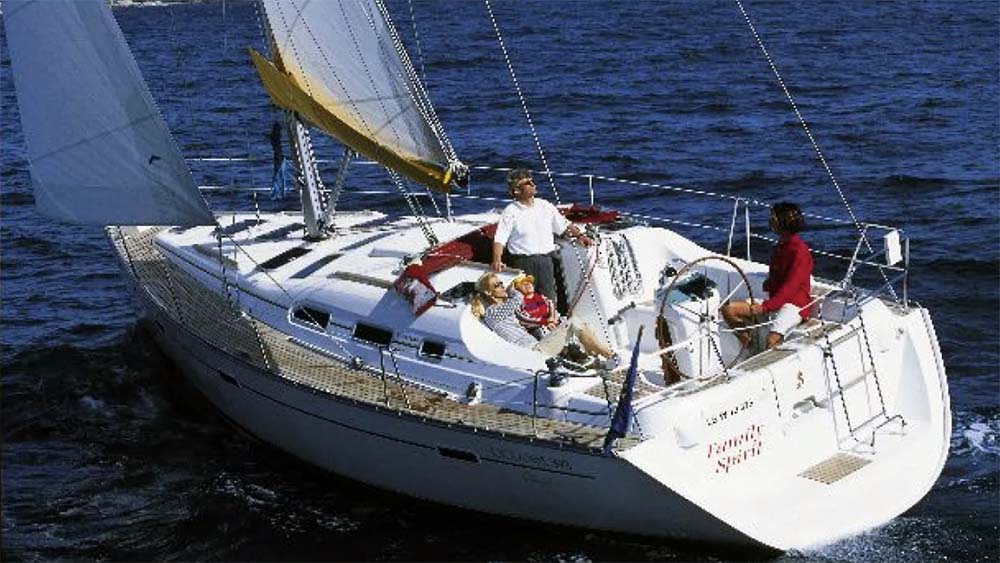
The Beneteau Oceanis 393 is a 39-foot cruising sailboat launched in the early 2000s by the renowned French builder Beneteau, with naval architecture by Berret-Racoupeau. Designed squarely for comfortable coastal and offshore cruising, it targets sailors seeking an easy-to-handle, spacious, and reliable vessel for extended voyages or liveaboard life. With its balance of comfort, sailing ability, and affordability, the 393 has gained popularity on the secondhand market, especially among private cruisers, charter companies, and sailing schools. Its appeal lies in being a full-sized cruiser without the complexity—or price tag—of larger bluewater yachts, making it a favorite among aspiring liveaboards and budget-conscious adventurers.
Design and Construction
The Oceanis 393 features a moderate-displacement monohull with a beamy aft section, shallow underbody, and pronounced volume forward. Its standard fin keel and balanced spade rudder provide a mix of responsiveness and stability, with some models offering a shoal-draft version for thin-water cruising. The hull is hand-laid fiberglass with a solid laminate below the waterline and balsa-core sandwich construction above, a typical but effective method in production yachts of its era, offering a good compromise between weight and strength.
The rig is a masthead sloop with an in-mast furling option commonly found in charter variants. The relatively tall rig and generous sail area keep it lively under sail, though some sailors opt for performance-enhancing upgrades like a full-batten main. The deck layout favors ease of use: all lines are led aft, and wide side decks enhance safety. Interior layouts include two or three cabins with a practical U-shaped galley and abundant storage, reflecting the design’s focus on liveability.
This is a boat designed not for racing but for enduring use, with construction choices emphasizing ease of maintenance, repairability, and residual value. Systems are generally accessible, though some owners report tight access behind the engine or to plumbing runs—a common trade-off in sub-40-foot cruisers.

Performance
Under sail, the Oceanis 393 performs better than many expect from a cruising-focused design. It tracks well upwind and holds a steady course in moderate seas, with a gentle helm feel and respectable speeds reaching 6 to 7 knots on a reach in 10-15 knots of breeze. While not a racer, it benefits from the hull efficiency and sail plan inherited from Berret-Racoupeau’s background in performance designs.
In heavy weather, it remains composed, although like many production boats of its time, it can hobbyhorse a bit in short chop due to its moderate forefoot. Its beaminess adds initial stability but can translate into a snappier motion in confused seas. Compared to similar-length Jeanneau or Hunter models, it often receives higher marks for upwind performance and motion comfort.
It’s a sailboat that rewards attention to trim and balance, offering a satisfying cruising experience while remaining forgiving enough for less experienced crews.
Comfort and Accommodations
Interior design is a strong suit of the Oceanis 393. The living spaces are voluminous for a 39-footer, with generous headroom (over 6’3″ in most areas), good natural light, and a choice of two or three-cabin layouts. The two-cabin version is ideal for couples or liveaboards, offering larger storage areas and a spacious aft head with separate shower. The three-cabin variant, while slightly tighter on storage, is practical for families or chartering.
Ventilation is generally excellent, with multiple opening hatches and ports. The joinery and finishes are in warm cherry or light oak veneers, which tend to age well with moderate upkeep. However, boats that spent time in charter fleets often show more wear—look for reupholstered seating or updated galley components as signs of care.
Overall, the Oceanis 393 is suitable for anything from weekend sailing to months-long liveaboard cruises. It is not unusual to find owners who have sailed them down the East Coast, through the Bahamas, or even across oceans.
Safety and Practicality
Beneteau equipped the Oceanis 393 with several features conducive to safe and practical sailing. The cockpit is deep and well-protected, with a fixed center table that offers bracing in rough weather. The sugar-scoop transom makes water access and boarding easy, though it can feel exposed in following seas without aftermarket modifications.
Movement around the deck is safe thanks to molded nonskid, double lifelines, and inboard shrouds. However, the low boom and optional in-mast furling mean sailors should be mindful of line management, especially when short-handed. The autopilot and windlass systems are generally reliable, though their accessibility for maintenance varies depending on installer choices.
Systems like the electrical panel, tankage, and engine (usually a 40-55 HP Yanmar) are serviceable, though access can be tight behind bulkheads. For long-distance sailors, upgrades like solar panels, watermakers, or lithium batteries are commonly added.
Known Issues with the Beneteau Oceanis 393
Over the years, some common issues have surfaced across the fleet:
- Osmosis: While not widespread, some early models have reported blistering, particularly if poorly maintained in tropical waters.
- Deck Leaks: Aging portlights and deck fittings may leak if not rebedded, especially around the chainplates and traveler.
- Engine Access: Tight service space can make impeller changes and belt adjustments difficult without partial disassembly.
- Electronics: Many original instruments are now obsolete. A refit with modern plotters and AIS is often necessary.
- Rigging: Original standing rigging is likely due for replacement if not already addressed, particularly on boats over 15 years old.
- Structural: Some boats show flexing in the bulkheads or cabin sole, which should be inspected for signs of delamination or fatigue.
Owners often upgrade the propeller (to a feathering model), reinforce chainplate backing, and retrofit solar or lithium power systems to improve cruising performance and autonomyt.
Market Availability and Pricing in the U.S.
The Oceanis 393 is no longer in production but is widely available on the U.S. used market, particularly in Florida, the Mid-Atlantic, and Southern California. Prices typically range from $85,000 to $120,000, depending on condition, layout, and upgrades. Ex-charter versions are common and often well-maintained mechanically but may require cosmetic work. Privately owned examples in excellent condition can command a premium.
In terms of value, it offers a compelling package: more space and offshore capability than a Catalina 36, more refined than a Hunter 386, and less expensive than comparable Jeanneau Sun Odyssey models of the same era.
Here is a comparison table with similar sailboats:
| Model | LOA | Year Built | Typical Price (USD) | Key Differences |
|---|---|---|---|---|
| Beneteau Oceanis 393 | 39.3 ft | 2002–2006 | $85,000–$120,000 | Spacious, cruise-ready, good offshore reputation |
| Catalina 387 | 38.3 ft | 2003–2007 | $90,000–$110,000 | American build, large tanks, simpler systems |
| Hunter 386 | 38.5 ft | 2002–2005 | $75,000–$100,000 | Comfort-focused, less performance-oriented |
| Jeanneau Sun Odyssey 40 | 40.0 ft | 2000–2005 | $90,000–$125,000 | Elegant lines, slightly better upwind handling |
Maintenance Costs for a Beneteau Oceanis 393 in the USA
Typical Annual Costs:
- Slip or Mooring Fees – For a 39-ft boat, expect $3,000–$6,000/year. East Coast (New England, Chesapeake) and Great Lakes are mid-range; Southern California and South Florida are typically the most expensive.
- Winter Storage / Haul-Out – In colder regions, haul-out, winterizing, and storage usually cost $2,500–$3,500/year. Warm-weather areas may avoid this expense.
- Insurance – Generally 1–3% of boat value. With an Oceanis 393 valued around $70k–$90k, annual premiums are $700–$2,700, higher in hurricane-risk regions.
- Engine Service – Routine oil/filter changes, impellers, belts: $600–$1,200/year.
- Antifouling / Bottom Paint – $800–$1,500 annually, depending on whether it’s DIY or professional.
- Sails and Rigging Maintenance – Annual inspection and minor repairs average $500–$1,000; a full rigging replacement (every 10–15 years) can cost $6,000–$10,000.
- General Cleaning & Upkeep – $600–$1,000/year for regular detailing, bottom cleaning, and small consumables.
👉 Total Annual Range: $9,000–$18,000/year, with regional differences and depending on DIY involvement.
Periodic / One-Time Major Costs:
- New Sails: $4,000–$7,000 for a mainsail and genoa.
- Electronics Upgrade: Modernizing chartplotter, autopilot, instruments can cost $3,000–$8,000+.
- Rigging Replacement: $6,000–$10,000 every 10–15 years.
- Refits/Repairs: Structural work (e.g., osmosis treatment, deck repairs, rudder/bearing service) can run $5,000–$15,000+ depending on scope.
DIY vs. Professional Maintenance:
- DIY owners can handle antifouling, oil changes, minor electrical work, and save 30–50% on yearly costs.
- Professional services ensure quality but increase the budget considerably—slip fees and labor in high-cost regions may push annual costs toward the top of the range.
- Most owners adopt a mixed approach: DIY for basics, professionals for rigging, electronics, and haul-out.
For a 39-ft cruising sailboat, the Oceanis 393 carries medium-to-high annual ownership costs. Expenses are manageable for handy owners in moderate-cost regions but rise quickly with professional service and premium marinas.
Resale values are relatively strong in the U.S. market, so while upkeep is significant, the investment is reasonably balanced by long-term value and comfort compared to other boats in its class.
Conclusion
The Beneteau Oceanis 393 stands out as a well-rounded cruising sailboat: comfortable, capable, and relatively affordable. Its strengths include a spacious interior, solid sailing performance, and widespread market availability, especially for those seeking a proven coastal or offshore cruiser without stepping into the 40+ foot category.
While it has its quirks—limited access to systems, aging deck hardware, or outdated electronics—these are typical of its class and age. Most importantly, it remains a sought-after model in the used market thanks to its balanced design and versatility.
For buyers considering an affordable, liveaboard-capable cruiser with proven ocean legs and broad community support, the Oceanis 393 is worth serious consideration. It offers good resale value, a practical cruising setup, and remains a bit of an under-the-radar gem in the 38-40 foot range.
Specifications
| Hull Type | Fin w/ bulb & spade rudder |
| Rigging Type | Masthead Sloop |
| LOA (Length Overall) | 39.33 ft / 11.99 m |
| LWL (Length Waterline) | 35.08 ft / 10.69 m |
| Beam | 13.00 ft / 3.96 m |
| Displacement | 17,152 lb / 7,780 kg |
| Max Draft | 5.08 ft / 1.55 m |
| Construction | Fiberglass (FG) |
| First Built | 2002 |
| Builder | Beneteau (France) |
| Designer | Berret/Racoupeau |
| Displacement/Length Ratio (D/L) | 177.37 |
| Comfort Ratio | 23.95 |
| Capsize Screening Formula | 2.02 |
| Hull Speed | 7.94 knots |
| Pounds/Inch Immersion | 1,629.48 lb/inch |
Disclaimer
The considerations and analyses presented regarding the Beneteau Oceanis 393 sailboat are of a general nature and are based on the available information and technical data on this model, interpreted to the best of our knowledge and understanding. It is important to note that the specific characteristics of any particular sailboat may vary due to custom modifications, maintenance performed, and conditions of use over time, among other factors. Therefore, the details and performance of the boat you are considering may not exactly match the information provided here.
We strongly recommend that, before making any purchasing or usage decisions, you conduct a detailed inspection of the boat in question, consult with nautical professionals and other sailors, and consider your personal needs, expectations, and capabilities. Each sailboat may have unique particularities that affect its performance and suitability for different types of sailing and sailors.
The information contained in this analysis should be used as a general guide and not as a definitive reference. Professional evaluation and personal inspection are essential to ensure that the boat meets your specific requirements and expectations.