


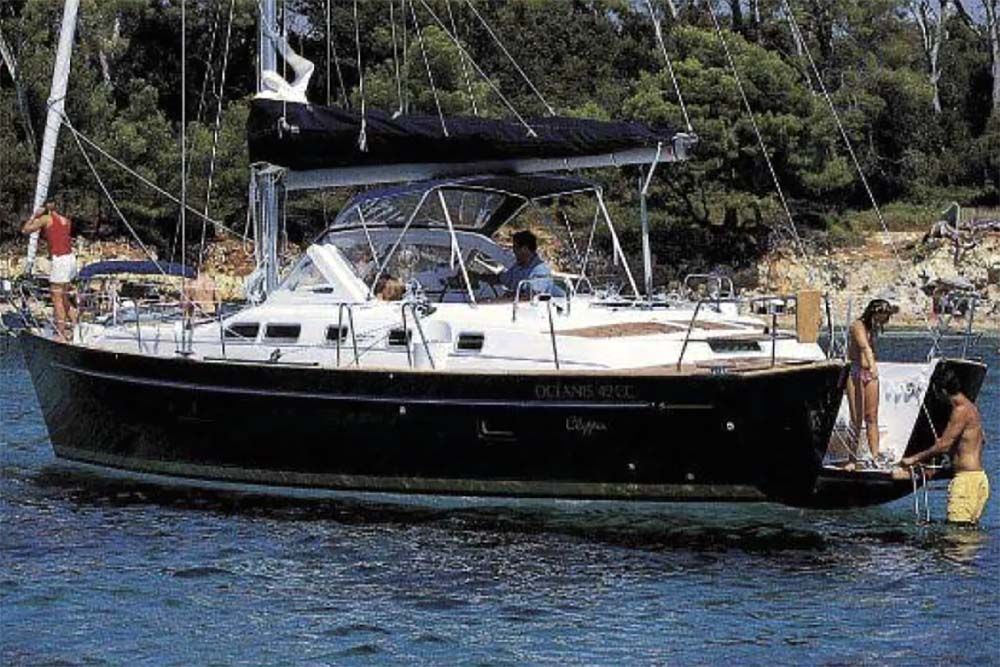
The Beneteau Oceanis 42 CC (Center Cockpit) was introduced in the late 1990s as part of Beneteau’s push to capture the long-distance cruising market with a yacht that blends bluewater capability with coastal comfort. Designed by Groupe Finot, this model was clearly aimed at private owners rather than charter fleets. It offers a true center-cockpit layout that prioritizes interior volume and offshore protection. Built by the renowned French shipyard Beneteau, the 42 CC reflects the brand’s commitment to robust construction and practical cruising design.
Though it was produced for a relatively short period, the model has earned a loyal following on the used market. Today, it appeals primarily to cruising couples or small families seeking an affordable and comfortable platform for extended cruising—especially those planning liveaboard lifestyles or preparing for retirement at sea. The 42 CC remains a popular choice among private owners in the U.S. and Europe, though it’s less common in charter fleets due to its layout and purpose-built cruising features.
Design and Construction
The hull of the Oceanis 42 CC features a moderate displacement and a relatively narrow beam for a modern cruiser, promoting efficiency and stability at sea. It is equipped with a fin keel and spade rudder, offering good balance and responsive handling. The center cockpit configuration not only elevates safety for offshore sailing but also allows for a spacious aft cabin—one of the highlights of this model.
Built with solid fiberglass below the waterline and cored construction above, the boat balances structural integrity with manageable weight. The deck is typically balsa-cored, which helps reduce topside weight but demands careful inspection for water intrusion in older models. The rig is a straightforward masthead sloop, with a single spreader mast and in-mast furling on many units—prioritizing ease over performance. While not a racer, the boat is robust and sensible, emphasizing durability and serviceability—key for long-term ownership and resale value.
Performance
Under sail, the Oceanis 42 CC performs well for its design purpose: cruising. With a sail area-to-displacement ratio around 16.5–17, it offers moderate power. It is not built for aggressive upwind sailing but handles competently in a range of wind conditions, particularly with a full mainsail and headsail in lighter airs. The hull speed is approximately 7.8 to 8 knots, achievable in moderate winds.
Thanks to its long waterline and well-balanced hull, the boat tracks well and feels stable in coastal chop and offshore swells. In heavier seas, the center cockpit offers a dry and protected sailing position, appreciated by short-handed crews. Compared to similarly sized aft-cockpit models like the Catalina 42 or Jeanneau Sun Odyssey 43, the 42 CC trades some agility for improved comfort and interior space—an intentional and reasonable compromise for long-haul cruisers.
Comfort and Accommodations
Interior layout is where the Oceanis 42 CC truly shines. The center cockpit design allows for a large, private owner’s stateroom aft, often with a centerline berth, en suite head, and standing headroom—a rare luxury in this size range. The forward cabin includes a V-berth and second head, making it ideal for guests or family.
The saloon offers generous headroom, a U-shaped settee, and ample storage throughout. The galley is well-designed for offshore use, with good bracing points and a practical L-shape configuration. Ventilation is excellent, with multiple opening hatches and portlights, and natural light is abundant thanks to Beneteau’s use of deck and hull windows.
The interior, typically finished in cherry or light teak veneers, has generally aged well, although some examples may show wear or have been refitted with more modern touches. Many used boats on the market have undergone partial interior refits, especially in the galley or electronics area, to better suit long-term liveaboards.
Safety and Practicality
With its center cockpit layout and high coamings, the 42 CC offers excellent protection from waves and spray—ideal for offshore passages. Movement on deck is safe and secure, with grab rails, wide side decks, and lifelines placed at a reasonable height. Access to the transom is facilitated by a scoop-style stern and swim ladder, though it’s not as generous as modern sugar-scoop platforms.
The boat is easy to handle with a small crew, particularly those with in-mast furling systems and electric windlasses. Engine access is reasonable from under the companionway and side panels, and systems like plumbing and wiring are generally straightforward—important for DIY maintenance. Many owners praise its simplicity and logical system layout.
Overall, the 42 CC is well-suited for both coastal cruising and moderate offshore passages without major modifications, making it a versatile option for experienced or aspirational cruisers alike.
Known Issues with the Beneteau Oceanis 42 CC
Like many production cruisers of its era, the Oceanis 42 CC can suffer from deck core moisture if fittings were not properly sealed over time. Routine surveys often highlight soft spots near stanchions or deck hardware. Osmosis is uncommon but not unheard of in poorly maintained hulls.
Engine access is decent, but older Yanmar diesels (typically 55–75 HP) may show wear after 2,000–3,000 hours and could require injector or exhaust elbow replacements. Electrical systems are basic but adequate—many owners upgrade the house battery banks, add solar panels, or refit the charger/inverter systems.
Steering systems (cable and quadrant) need periodic inspection, and some early models have shown minor leakage around center cockpit drains or portlights. Most of these issues are well-documented and manageable with regular care. Common upgrades include adding a feathering prop, radar/chartplotter at helm, or refitting with lithium batteries for extended cruising autonomy, improved electronics (original Raymarine systems are dated), and solar arrays for extended cruising autonomys.
Market Availability and Pricing in the U.S.
The Beneteau Oceanis 42 CC is no longer in production and is available only on the secondhand market. It appears most frequently in East Coast markets like Florida and the Chesapeake Bay, as well as in the Pacific Northwest and Great Lakes. Many boats were originally sold to European or Caribbean owners and later imported to the U.S.
Most examples range from $95,000 to $140,000 depending on condition, upgrades, and year. Boats with newer electronics, refitted interiors, or upgraded engines command premium prices. Compared to other center cockpit designs, it remains competitively priced and generally holds its value well in the resale market due to limited availability.
Here is a comparison with three similar models commonly considered by cruisers:
| Model | LOA | Year Built | Used Price (USD) | Main Differences |
|---|---|---|---|---|
| Beneteau Oceanis 42 CC | 42 ft | 1999–2004 | $95,000–$140,000 | Center cockpit, aft master suite, offshore-oriented |
| Catalina Morgan 440 | 44 ft | 2004–2007 | $130,000–$180,000 | Raised salon, larger volume, aft cockpit |
| Hunter Passage 420 | 43 ft | 1999–2004 | $90,000–$125,000 | Spacious interior, more focused on coastal cruising |
| Jeanneau Sun Odyssey 43 DS | 43 ft | 2000–2006 | $100,000–$145,000 | Deck salon, performance-oriented hull, aft cockpit |
Conclusion
The Beneteau Oceanis 42 CC is a thoughtfully designed cruiser for sailors seeking comfort, safety, and independence. Its center cockpit layout, private aft stateroom, and sea-kindly motion make it especially appealing for couples or small crews planning extended voyages or liveaboard life.
While it doesn’t offer the nimble performance of some aft cockpit designs, its real-world cruising capabilities, simple systems, and sensible layout give it a strong reputation among serious cruisers. Buyers should watch for signs of core moisture or engine wear but will find most problems are known and solvable.
For those seeking a reliable, well-built, and comfortable cruiser in the under-$150K range, the 42 CC remains an underappreciated gem—and a smart buy for those prioritizing comfort and safety over speed or modern styling. If offshore capability, space, and value-for-money matter more than performance metrics, this is a boat well worth considering.
Specifications
| Hull Type | Wing Keel |
| Rigging Type | Cutter |
| LOA | 43.42 ft / 13.23 m |
| LWL | 36.33 ft / 11.07 m |
| Beam | 12.83 ft / 3.91 m |
| Displacement | 19,845.00 lb / 9,002 kg |
| Ballast | 5,556.00 lb / 2,520 kg |
| Max Draft | 5.92 ft / 1.80 m |
| Construction | Fiberglass (FG) |
| First Built | 2003 |
| Builder | Beneteau (USA) |
| Designer | Groupe Finot |
Auxiliary Power / Tanks | |
|---|---|
| Engine Make | Volvo |
Sailboat Calculations | |
| Ballast / Displacement | 28.00% |
| Displacement / Length | 184.76 |
| Comfort Ratio | 26.66 |
| Capsize Screening Formula | 1.90 |
| Hull Speed | 8.08 kn |
| Pounds/Inch Immersion | 1,665.48 pounds/inch |
Disclaimer
The considerations and analyses presented regarding the Beneteau Oceanis 42 CC sailboat are of a general nature and are based on the available information and technical data on this model, interpreted to the best of our knowledge and understanding. It is important to note that the specific characteristics of any particular sailboat may vary due to custom modifications, maintenance performed, and conditions of use over time, among other factors. Therefore, the details and performance of the boat you are considering may not exactly match the information provided here.
We strongly recommend that, before making any purchasing or usage decisions, you conduct a detailed inspection of the boat in question, consult with nautical professionals and other sailors, and consider your personal needs, expectations, and capabilities. Each sailboat may have unique particularities that affect its performance and suitability for different types of sailing and sailors.
The information contained in this analysis should be used as a general guide and not as a definitive reference. Professional evaluation and personal inspection are essential to ensure that the boat meets your specific requirements and expectations.