


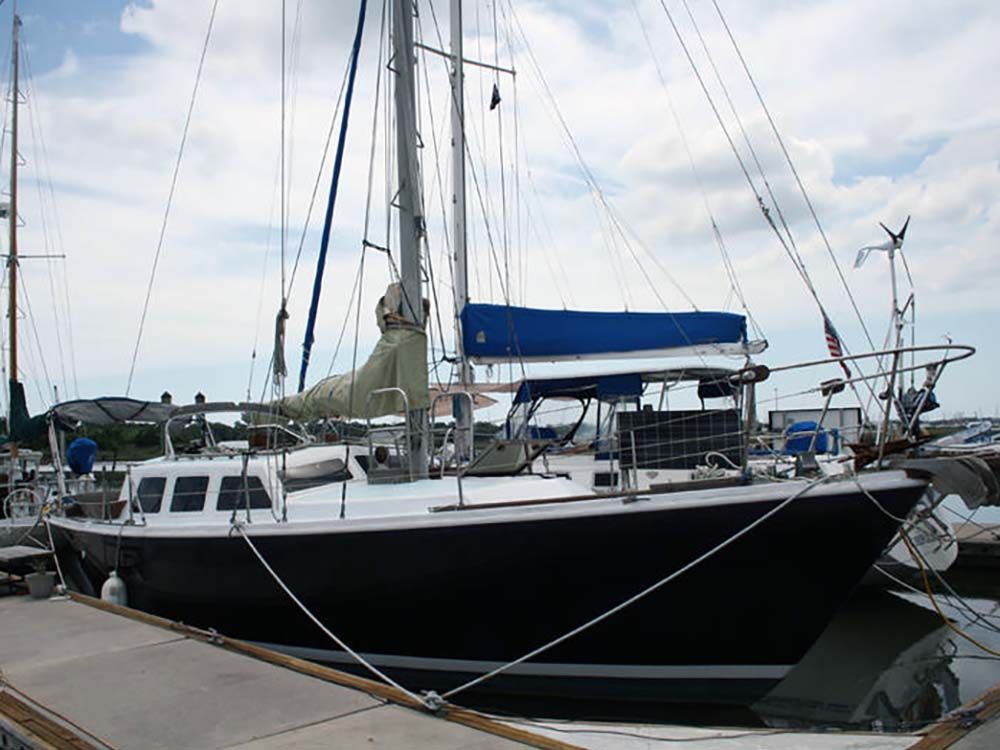
The Cal 35 is a classic American cruising sailboat designed in the late 1970s by the renowned naval architect Bill Lapworth and built by Cal Yachts, a company known for producing robust and efficient fiberglass cruisers. Conceived primarily as a coastal and light offshore cruiser rather than a pure racer, the Cal 35 was aimed at sailors seeking comfort, safety, and reasonable performance in one package. It appealed to families, couples, and serious cruisers who valued reliability over cutting-edge racing speed. Over the years, the model has retained a solid reputation in the used-boat market, particularly among private owners and cruising couples, though it is less common in the charter fleet or sailing schools. Today, demand remains steady among buyers looking for a well-built, affordable classic that can still deliver enjoyable sailing without the price tag of newer production boats.
Design and Construction
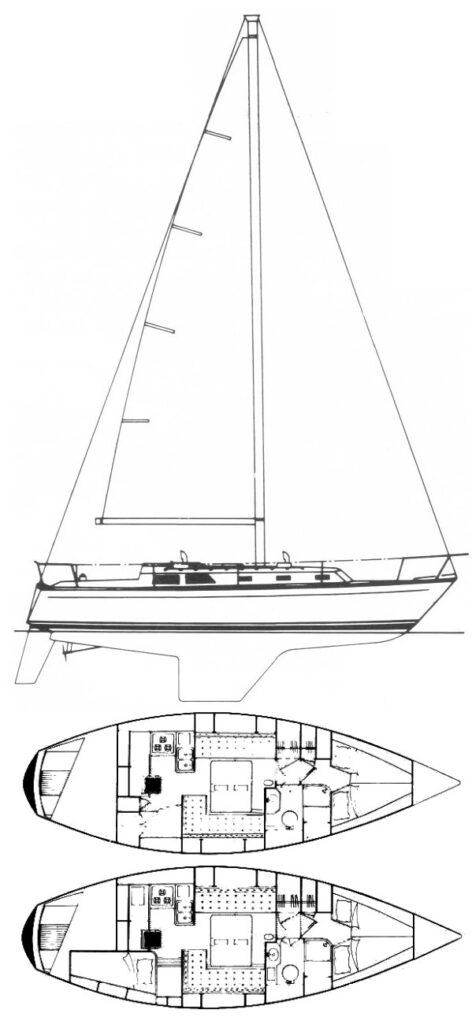
The Cal 35 features a moderate displacement hull with a fin keel and skeg-hung rudder, a design combination that provides both directional stability and reasonable maneuverability. Its sloop rig, with a single mast and headsail, keeps sail handling straightforward, especially for short-handed crews. Built in fiberglass, a relatively new but proven material at the time, the boat strikes a balance between durability and ease of maintenance. The deck and interior are supported by robust structural liners, which help stiffness but can make access to hidden areas more difficult.
From a naval architecture standpoint, the hull shape emphasizes seaworthiness over raw speed. The fin keel reduces wetted surface for better upwind performance compared to full-keel cruisers of the same era, while the skeg-hung rudder adds protection and strength against impact. For buyers, this means a hull that can be repaired more easily than modern spade rudders and a structure that has proven to age gracefully if properly maintained.
Performance
On the water, the Cal 35 offers balanced performance. It sails comfortably at 6–7 knots in moderate breezes and maintains course well in stronger winds. Its upwind ability is respectable, though not on par with modern fin-keel racers or performance cruisers. In heavier seas, the boat remains stable and predictable, a quality much appreciated by cruising families. Downwind, its conservative sail plan favors control over excitement, reducing the risk of broach.
Compared with contemporaries like the Catalina 36 or Hunter 37, the Cal 35 is slightly less spacious but often considered more solidly built. Among owners, it has a reputation for being forgiving to sail, reliable in varying conditions, and comfortable over longer passages. It is not a “fast” boat, but one that consistently delivers safe, predictable cruising.
Comfort and Accommodations
The interior layout of the Cal 35 was designed for practical cruising rather than luxury. Typically, it offers a forward V-berth, a spacious saloon with settees, an aft quarter berth, and a functional galley. Storage is adequate for coastal cruising, though limited compared to newer designs with beamier hulls. Ventilation is fair, with opening ports and hatches, though many boats on the market today may benefit from upgraded fans or modern portlights.
For a couple or small family, the boat works well as a weekender or even for extended living aboard. However, those accustomed to the volume of modern production boats may find the interior narrower and darker. Many examples on the market show signs of refits, particularly in galley equipment, upholstery, and interior woodwork, which speaks to the boat’s longevity and adaptability.
Safety and Practicality
On deck, the Cal 35 prioritizes safety with wide side decks, sturdy handholds, and a cockpit deep enough to inspire confidence but not so deep as to risk flooding. The skeg-hung rudder offers an added measure of security against groundings. Sail handling systems are simple, and the sloop rig makes single or double-handed sailing practical.
The boat is generally well-suited for coastal and limited offshore cruising without requiring major modifications, though serious bluewater sailors may wish to add storm sails, reinforced rigging, or updated safety gear. Access to systems, particularly engine and tanks, is decent by older-boat standards, though not as user-friendly as in newer models. Maintenance costs benefit from the boat’s simplicity, as most systems are straightforward to service.
Known Issues with the Cal 35
Like many older fiberglass cruisers, the Cal 35 can suffer from typical aging issues:
- Osmosis (blistering) in the hull if not properly maintained.
- Engine wear in boats still carrying their original auxiliary diesel. Repowering is common and can significantly affect resale value.
- Deck leaks around chainplates, hatches, or portlights.
- Worn standing rigging in boats that have not seen a major refit.
- Original electrical systems may be outdated or undersized for modern cruising needs.
Common upgrades include replacing standing rigging, updating navigation electronics, and occasionally reinforcing bulkheads. Buyers should budget for at least partial refits unless purchasing from a well-maintained owner.
Market Availability and Pricing in the U.S.
The Cal 35 is no longer in production and is available only on the used market. Most listings are concentrated in California, the Pacific Northwest, and the U.S. East Coast, especially Florida and New England. Condition varies widely: some boats are neglected project vessels, while others have been lovingly restored.
Typical asking prices today range between $25,000 and $45,000, depending on year, condition, and level of refit. This places it competitively against similar cruisers, offering strong value for buyers who prioritize build quality over interior volume. Resale potential is moderate: not as liquid as a Catalina 36, but steady thanks to a niche following of Lapworth and Cal enthusiasts.
Below is a comparison with similar sailboats:
| Model | LOA | Years Built | Typical U.S. Price | Key Differences |
|---|---|---|---|---|
| Cal 35 | 35 ft | 1979–1985 | $25,000–$45,000 | Solid construction, conservative interior, balanced cruiser with steady resale value. |
| Catalina 36 | 36 ft | 1982–2005 | $35,000–$65,000 | Roomier interior, widely available, stronger resale market but less robust build. |
| Hunter 37 Cutter | 37 ft | 1978–1984 | $28,000–$55,000 | Cutter rig offers flexibility, larger tankage, but less nimble under sail. |
| Jeanneau Sun Fizz 40 | 40 ft | 1980–1986 | $40,000–$70,000 | European design, faster and more spacious, but higher maintenance costs. |
Maintenance Costs of a Cal 35 in the USA
Annual ownership costs for a Cal 35 fall in the mid-range for boats of its size. Typical figures include:
- Dockage and mooring: $3,000–$8,000 per year depending on region (higher in New England and California, lower in the Gulf Coast).
- Insurance: $800–$2,000 annually depending on coverage.
- Engine servicing: $500–$1,200 annually for oil changes, filters, and minor upkeep.
- Bottom paint and antifouling: $1,500–$3,000 every 1–2 years.
- Standing rigging inspection: $300–$600, with full replacement every 15–20 years costing $7,000–$10,000.
- Sail replacement: A new mainsail or headsail runs $3,000–$5,000; a full new suit may exceed $10,000.
Electronics refits, often necessary in older boats, can cost $5,000–$15,000 depending on scope. For hands-on owners willing to do their own work, costs can be kept moderate, but those relying on professional yards will see expenses closer to the higher end. Overall, the Cal 35 sits in the medium category for maintenance costs among 35-foot cruisers, and its solid construction helps preserve resale value, making investment reasonable for committed sailors.
Conclusion
The Cal 35 stands as a well-balanced choice for sailors who want a sturdy, straightforward cruiser capable of safe coastal passages and occasional offshore ventures. Its strengths lie in its construction quality, predictable sailing behavior, and affordability on the secondhand market. Weaknesses include an interior that feels dated by modern standards and the likelihood of needing system upgrades in most available boats.
For buyers seeking a reliable, honest cruiser rather than a flashy performance yacht, the Cal 35 remains an underrated option. It offers enduring value for coastal cruising couples or small families, with manageable maintenance costs and steady resale potential. In a market where many boats chase modern volume and speed, the Cal 35 endures as a practical, trustworthy companion at sea.
Specifications
| Hull & Dimensions | |
|---|---|
| Hull Type | Fin w/spade rudder |
| Rigging Type | Masthead Sloop |
| LOA | 35.08 ft / 10.69 m |
| LWL | 28.75 ft / 8.76 m |
| S.A. (reported) | 607.00 ft² / 56.39 m² |
| Beam | 11.00 ft / 3.35 m |
| Displacement | 13,000.00 lb / 5,897 kg |
| Ballast | 5,200.00 lb / 2,359 kg |
| Max Draft | 5.00 ft / 1.52 m |
| Construction | FG |
| Ballast Type | Lead |
| First Built | 1979 |
| Builder | Jensen Marine (USA) |
| Designer | C. William Lapworth |
Auxiliary Power / Tanks (orig. equip.) | |
| Make | Universal |
| Type | Diesel |
| Fuel | 33 gals / 125 L |
Accommodations | |
| Water | 90 gals / 341 L |
Sailboat Calculations | |
| S.A. / Displ. | 17.63 |
| Bal. / Displ. | 40.00 |
| Disp. / Len. | 244.22 |
| Comfort Ratio | 26.89 |
| Capsize Screening Formula | 1.87 |
| S# | 2.28 |
| Hull Speed | 7.18 kn |
| Pounds/Inch Immersion | 1,130.00 pounds/inch |
Rig and Sail Particulars | |
| I | 46.50 ft / 14.17 m |
| J | 15.00 ft / 4.57 m |
| P | 40.50 ft / 12.34 m |
| E | 12.50 ft / 3.81 m |
| S.A. Fore | 348.75 ft² / 32.40 m² |
| S.A. Main | 253.13 ft² / 23.52 m² |
| S.A. Total (100% Fore + Main Triangles) | 601.88 ft² / 55.92 m² |
| S.A. / Displ. (calc.) | 17.48 |
| Est. Forestay Length | 48.86 ft / 14.89 m |
Disclaimer
The considerations and analyses presented regarding the Cal 35 sailboat are of a general nature and are based on the available information and technical data on this model, interpreted to the best of our knowledge and understanding. It is important to note that the specific characteristics of any particular sailboat may vary due to custom modifications, maintenance performed, and conditions of use over time, among other factors. Therefore, the details and performance of the boat you are considering may not exactly match the information provided here.
We strongly recommend that, before making any purchasing or usage decisions, you conduct a detailed inspection of the boat in question, consult with nautical professionals and other sailors, and consider your personal needs, expectations, and capabilities. Each sailboat may have unique particularities that affect its performance and suitability for different types of sailing and sailors.
The information contained in this analysis should be used as a general guide and not as a definitive reference. Professional evaluation and personal inspection are essential to ensure that the boat meets your specific requirements and expectations.