



The Cape Dory 30 is a classic American cruising sailboat introduced in the late 1970s by Cape Dory Yachts, designed by the well-regarded naval architect Carl Alberg. Intended as a sturdy coastal and limited offshore cruiser, it reflects Alberg’s signature design philosophy: traditional lines, full-keel stability, and seaworthiness over sheer speed. The boat quickly gained favor among sailors who valued reliability, simplicity, and the romance of traditional design. Today, it enjoys steady demand in the used-boat market, particularly among private owners seeking a manageable, durable cruiser rather than charter fleets or sailing schools, which tend to favor lighter and more modern production boats.
Design and Construction
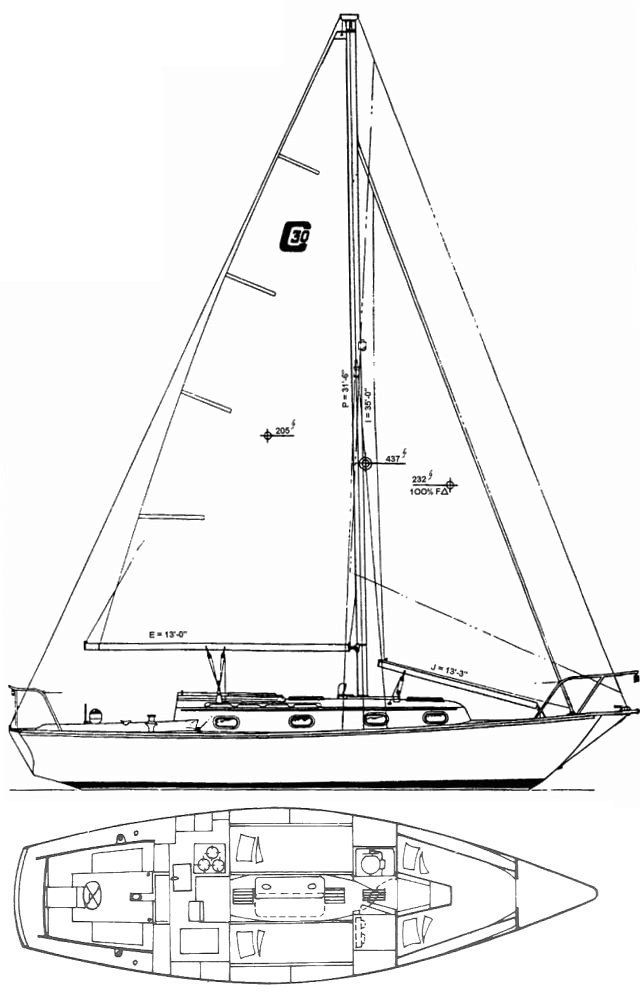
The hull of the Cape Dory 30 features a full keel with an attached rudder, a design rooted in mid-20th-century naval architecture that prioritizes directional stability and durability over agility. Its moderate displacement-to-length ratio gives it a solid, comfortable motion in waves, though at the expense of high performance in light airs. Built in fiberglass with teak trim, the construction is robust and straightforward, qualities that ease long-term maintenance and support resale value. The rig is a masthead sloop, the most common setup of its time, offering simplicity and versatility for coastal cruising. Owners appreciate that most systems are accessible and relatively easy to repair compared to more complex, modern yachts.
Performance
Under sail, the Cape Dory 30 is known for its steady, forgiving character rather than raw speed. It tracks well and handles heavy weather with confidence, attributes of its full-keel design. In moderate breezes, it performs adequately, though sailors accustomed to fin-keel boats may find it less responsive when tacking. Upwind ability is competent but not aggressive, making it a comfortable boat for long passages rather than short races. Compared to contemporaries like the Catalina 30, it is slower but often regarded as more seaworthy in rough conditions. Among cruising sailors, the boat has a reputation for dependability and safety, particularly when short-handed.
Comfort and Accommodations
The interior is traditional, with a layout optimized for a couple or a small family. Expect a V-berth forward, a saloon with settees, a compact galley, and an enclosed head. While not spacious by modern standards, the arrangement is practical and ergonomic, with ample storage for extended cruising. Ventilation is adequate thanks to opening ports and hatches, though hot climates may require additional fans. Many surviving examples have undergone refits, with owners upgrading upholstery, woodwork, and electronics. For weekends or seasonal cruising, it is more than adequate, though full-time liveaboards may find the space limiting.
Safety and Practicality
Safety features include high bulwarks, secure side decks, and a deep, well-protected cockpit. The full keel contributes to a forgiving motion and reduces vulnerability in accidental groundings. Systems are accessible, a major benefit for DIY-oriented sailors, though some tight spaces around the engine can pose challenges. With proper equipment, it is capable of offshore passages, though most owners use it for coastal cruising. Its conservative design and forgiving handling make it manageable for short-handed crews or even solo sailors.
Known Issues with the Cape Dory 30
Common issues reported by owners include deck leaks around portlights and chainplates, aging diesel engines (often Universal or Westerbeke models), and original wiring that may no longer meet modern standards. Osmosis in the hull is not widely reported, but like any boat of its age, moisture intrusion in deck coring can occur. Many owners upgrade the propeller for improved performance under power, replace outdated electronics, and reinforce standing rigging. These are well-understood refits and do not typically detract from the model’s desirability when addressed.
Market Availability and Pricing in the U.S.
The Cape Dory 30 is no longer in production and is available only on the used market. Most listings appear in New England, where Cape Dory Yachts was based, though examples can be found in Florida and along the Mid-Atlantic. Well-maintained boats are common thanks to the loyalty of long-term owners, though some neglected examples also surface. As of recent listings, prices typically range from $15,000 to $30,000, depending on condition, upgrades, and location. This places it in the same bracket as popular coastal cruisers like the Catalina 30 and Hunter 30, but with a reputation for more traditional seaworthiness.
Here is a comparison table of comparable models:
| Model | LOA | Years Built | Typical U.S. Price | Key Differences |
|---|---|---|---|---|
| Cape Dory 30 | 30 ft | 1977–1987 | $15,000–$30,000 | Traditional full keel, seaworthy, slower under sail |
| Catalina 30 | 29’11” | 1974–2008 | $12,000–$28,000 | Lighter fin keel, more spacious interior, faster but less stable offshore |
| Hunter 30 (Cherubini) | 30 ft | 1973–1983 | $10,000–$25,000 | Moderate fin keel, good performance, less robust build quality |
| Ericson 30+ | 30 ft | 1979–1985 | $14,000–$27,000 | Performance-oriented, more responsive handling, less traditional feel |
Maintenance Costs of a Cape Dory 30 in the USA
Annual ownership costs are typical for a 30-foot cruiser. Slip fees range from $2,000–$6,000 depending on region, with New England and California at the higher end. Insurance averages $600–$1,200 per year. Routine maintenance, including engine servicing and bottom paint, typically falls between $2,000–$4,000 annually. Standing rigging replacement every 10–15 years can cost around $3,000–$5,000, while new sails range from $4,000–$7,000. Major refits, such as electronics upgrades, can add $5,000–$10,000 in a single project. Many Cape Dory owners are hands-on sailors who handle part of the upkeep themselves, reducing costs significantly. Overall, annual costs fall in the medium range for its class, with good resale potential helping to offset investments.
Conclusion
The Cape Dory 30 stands out as a well-built, seaworthy cruiser for sailors who value traditional design and reliable performance over speed and interior volume. Its strengths lie in durability, simplicity, and safe handling in rough weather, while its weaknesses are primarily limited interior space and slower performance compared to modern fin-keel cruisers. For coastal and limited offshore cruising, it remains a worthy option with enduring resale value. For sailors seeking a trustworthy classic that balances charm, practicality, and affordability, the Cape Dory 30 is a strong contender in the 30-foot market.
Specifications
| Hull & Design | |
|---|---|
| Hull Type | Full Keel |
| Rigging Type | Cutter |
| LOA | 30.21 ft / 9.21 m |
| LOD | |
| LWL | 22.83 ft / 6.96 m |
| S.A. (reported) | 437.00 ft² / 40.60 m² |
| Beam | 9.00 ft / 2.74 m |
| Beam WL | |
| Displacement | 10,000.00 lb / 4,536 kg |
| Ballast | 4,000.00 lb / 1,814 kg |
| Max Draft | 4.17 ft / 1.27 m |
| Construction | FG |
| Ballast Type | Lead |
| First Built | 1976 |
| Last Built | 1987 |
| # Built | 363 |
| Builder | Cape Dory Yachts (USA) |
| Designer | Carl Alberg |
Auxiliary Power / Tanks (original equipment) | |
| Make | Volvo |
| Model | MD7A |
| Type | Diesel |
| HP | 13 |
| Fuel Capacity | 20 gals / 76 L |
Accommodations | |
| Water Capacity | 60 gals / 227 L |
Sailboat Calculations | |
| S.A. / Displ. | 15.11 |
| Bal. / Displ. | 40.00 |
| Disp. / Len. | 375.18 |
| Comfort Ratio | 33.06 |
| Capsize Screening Formula | 1.67 |
| S# | 1.15 |
| Hull Speed | 6.40 kn |
| Pounds/Inch Immersion | 734.17 pounds/inch |
Rig and Sail Particulars | |
| I | 35.00 ft / 10.67 m |
| J | 13.25 ft / 4.04 m |
| P | 31.50 ft / 9.60 m |
| E | 13.00 ft / 3.96 m |
| S.A. Fore | 231.88 ft² / 21.54 m² |
| S.A. Main | 204.75 ft² / 19.02 m² |
| S.A. Total (100% Fore + Main) | 436.63 ft² / 40.56 m² |
| S.A. / Displ. (calc.) | 15.10 |
| Estimated Forestay Length | 37.42 ft / 11.41 m |
| Mast Height from DWL | 40.50 ft / 12.34 m |
Disclaimer
The considerations and analyses presented regarding the Cape Dory 30 sailboat are of a general nature and are based on the available information and technical data on this model, interpreted to the best of our knowledge and understanding. It is important to note that the specific characteristics of any particular sailboat may vary due to custom modifications, maintenance performed, and conditions of use over time, among other factors. Therefore, the details and performance of the boat you are considering may not exactly match the information provided here.
We strongly recommend that, before making any purchasing or usage decisions, you conduct a detailed inspection of the boat in question, consult with nautical professionals and other sailors, and consider your personal needs, expectations, and capabilities. Each sailboat may have unique particularities that affect its performance and suitability for different types of sailing and sailors.
The information contained in this analysis should be used as a general guide and not as a definitive reference. Professional evaluation and personal inspection are essential to ensure that the boat meets your specific requirements and expectations.