



The Catalina 25 is one of the most iconic small cruising sailboats ever built in the United States. Introduced in 1978 by Catalina Yachts and designed by Frank V. Butler, this trailerable 25-foot sailboat was envisioned as an accessible, family-friendly coastal cruiser for weekend getaways and club racing. With over 5,000 units produced during its nearly two-decade production run, the Catalina 25 became a staple in American marinas. Its continued popularity on the second-hand market today reflects its broad appeal among individual sailors, small families, and sailing schools looking for an affordable and forgiving vessel with enough space for short-term onboard living.
Design and Construction
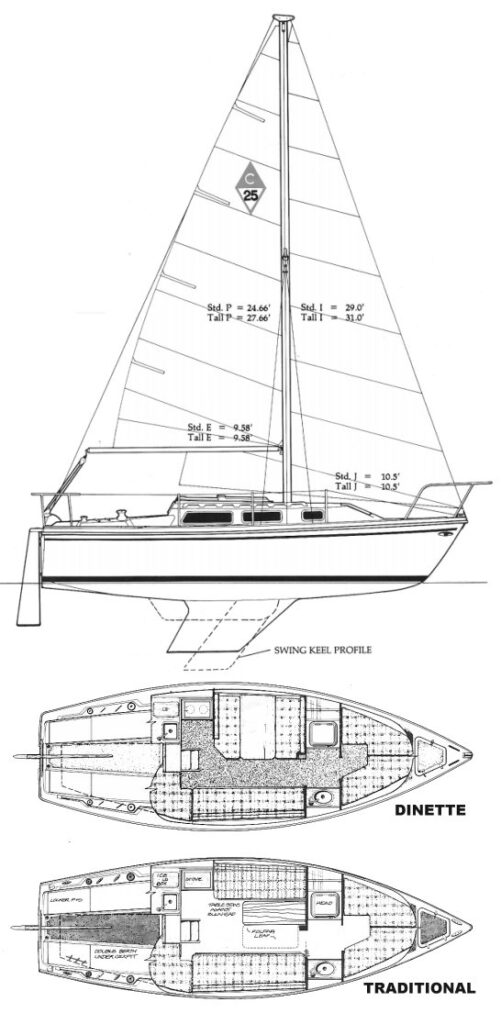
The Catalina 25 was offered with three keel configurations: fin keel, swing keel, and later a wing keel. This flexibility allowed buyers to tailor the boat to their local sailing grounds—shoal draft for lakes or intercoastal cruising, and deeper keel options for better performance. It features a transom-hung rudder, and the hull is a moderate-displacement fiberglass monohull with relatively high freeboard for its size, adding interior volume and dryness in chop.
The rig is a simple masthead sloop, easy to handle even for novice sailors. The deck and hull are constructed with hand-laid fiberglass, which—while prone to some core issues with age—is known for its structural integrity. Simplicity in construction translates into easier and cheaper maintenance, and the widespread availability of replacement parts boosts its appeal for DIY owners. Longitudinal stringers and molded liners help provide stiffness, and the result is a boat that, while not high-tech, has aged surprisingly well when maintained.
Performance
The Catalina 25 sails predictably and comfortably in a wide range of coastal conditions. With a PHRF rating around 222, it’s no racer, but the swing keel version can point reasonably well and offers a decent turn of speed when the wind picks up. The boat shines in 10-15 knots of wind, providing steady tracking and moderate heeling without drama. In heavier seas, it feels its size but remains controllable. Compared to similarly sized boats like the Hunter 25.5 or MacGregor 25, the Catalina 25 is often described as more solid and balanced, though less performance-oriented.
Downwind performance is adequate, and with its high sail area-to-displacement ratio (around 18-20 depending on configuration), it moves smartly in light air—especially the fin keel version. Owners report that with a properly tuned rig and clean hull, it can surprise more modern hulls on a reach.
Comfort and Accommodations
The Catalina 25 is remarkably roomy for its size, thanks to clever use of space and high topsides. It offers basic but functional accommodations for up to four adults, although two to three is ideal for cruising comfort. Most models include a V-berth forward, a convertible dinette, a small galley, and a marine head or portable toilet. The pop-top feature—optional or standard on some models—is a game-changer, dramatically improving headroom at anchor and making it feel much less claustrophobic.
Storage is modest but sufficient for weekend gear. Ventilation is generally good, with several opening ports and a large forward hatch. Interior styling is utilitarian but functional; older boats may show signs of wear, but many owners invest in upholstery upgrades or LED lighting, making refurbishments common in the secondhand market.
Safety and Practicality
For coastal sailing and protected waters, the Catalina 25 is safe and capable. The cockpit is deep and secure, and the transom-hung rudder allows for easy inspection and repair. Side decks are narrow but manageable, and lifelines are usually well maintained. The simple rig makes single-handing feasible, and many owners have added roller furling systems and lazy jacks to increase ease of use.
Access to critical systems is relatively straightforward. The swing keel model does require more frequent inspection of the pivot mechanism and winch cable, but these are well-documented procedures. Outboard motor propulsion keeps maintenance costs low and removes the complexity of an inboard engine, though the weight and mounting of the outboard should be monitored carefully.
Known Issues with the Catalina 25
While generally solid, the Catalina 25 is not without its quirks. Common issues include:
- Swing keel wear: The pivot pin and cable system need periodic inspection and replacement. Neglect can lead to failure and expensive repairs.
- Core rot: Areas around deck fittings, especially the chainplates, may suffer from water intrusion if poorly bedded.
- Pop-top leaks: The seal around the pop-top can deteriorate, leading to drips or mold below.
- Rudder play: The rudder hardware on older models may wear over time and cause slop or vibration.
- Aging interiors: Many boats on the market have outdated cushions, tired veneers, and faded headliners—but these are aesthetic and easily upgraded.
Recommended upgrades include adding modern navigation electronics, solar charging systems, upgraded sail handling gear, and if necessary, replacing standing rigging on older models.
Market Availability and Pricing in the U.S.
The Catalina 25 is no longer in production, but it remains widely available across the U.S., particularly in regions with strong sailing cultures like California, the Great Lakes, and the Chesapeake Bay. Prices vary depending on keel type, condition, and upgrades. As of 2025, well-maintained Catalina 25s generally sell between $4,500 and $12,000, with swing keel models often slightly less expensive due to perceived maintenance needs.
This model holds value reasonably well, especially upgraded units with newer sails and trailers. It’s also easy to resell within local sailing clubs, schools, or trailer-sailor communities.
Below is a comparison with similar sailboats from the same era:
| Model | LOA | Year | Used Price (USD) | Main Differences |
|---|---|---|---|---|
| Catalina 25 | 25.0 ft | 1978–1994 | $4,500 – $12,000 | Trailerable, swing/fin/wing keel options, pop-top |
| Hunter 25.5 | 25.5 ft | 1984–1987 | $5,000 – $11,000 | Faster under sail, less interior volume |
| MacGregor 25 | 25.0 ft | 1973–1987 | $2,500 – $8,000 | Lighter, faster downwind, more Spartan interior |
| O’Day 25 | 24.8 ft | 1975–1984 | $3,500 – $9,000 | More traditional layout, heavier displacement |
Conclusion
The Catalina 25 is a time-tested, versatile cruiser that offers outstanding value for beginner to intermediate sailors. Its simple systems, manageable size, and spacious interior make it a favorite for families, solo adventurers, and weekend cruisers. While it does have known aging issues—especially with the swing keel—these are well documented and solvable with moderate effort.
For those seeking an affordable entry into coastal cruising without sacrificing safety or comfort, the Catalina 25 remains a smart buy. It’s a forgiving and adaptable platform with a strong community and robust support network, making it an underrated gem in the small cruiser segment. Whether you’re buying your first boat or downsizing to something towable and practical, the Catalina 25 is a classic worth considering.
Specifications
| Hull Type | Fin w/ transom hung rudder |
| Rigging Type | Masthead Sloop |
| LOA | 25.00 ft / 7.62 m |
| LWL | 22.17 ft / 6.76 m |
| Beam | 8.00 ft / 2.44 m |
| Max Draft | 4.00 ft / 1.22 m |
| Displacement | 4,550 lb / 2,064 kg |
| Ballast | 1,900 lb / 862 kg |
| Construction | FG (Fiberglass) |
| First Built | 1978 |
| Last Built | 1994 |
| # Built | 5,866 |
| Builder | Catalina Yachts (USA) |
| Designer | Frank Butler |
| S.A. / Displ. | 15.78 |
| Bal. / Displ. | 41.76% |
| Disp. / Len. | 186.41 |
| Comfort Ratio | 19.14 |
| Capsize Screening Formula | 1.93 |
| S# (Sail Area to Displacement) | 2.72 |
| Hull Speed | 6.31 kn |
| Pounds/Inch Immersion | 633.73 lbs/inch |
| I | 29.00 ft / 8.84 m |
| J | 10.50 ft / 3.20 m |
| P | 24.66 ft / 7.52 m |
| E | 9.58 ft / 2.92 m |
| S.A. Fore | 152.25 ft² / 14.14 m² |
| S.A. Main | 118.12 ft² / 10.97 m² |
| S.A. Total (100% Fore + Main) | 270.37 ft² / 25.12 m² |
| S.A./Displ. (calc.) | 15.80 |
| Est. Forestay Length | 30.84 ft / 9.40 m |
| Mast Height from DWL | 30.00 ft / 9.14 m |
Disclaimer
The considerations and analyses presented regarding the Catalina 25 sailboat are of a general nature and are based on the available information and technical data on this model, interpreted to the best of our knowledge and understanding. It is important to note that the specific characteristics of any particular sailboat may vary due to custom modifications, maintenance performed, and conditions of use over time, among other factors. Therefore, the details and performance of the boat you are considering may not exactly match the information provided here.
We strongly recommend that, before making any purchasing or usage decisions, you conduct a detailed inspection of the boat in question, consult with nautical professionals and other sailors, and consider your personal needs, expectations, and capabilities. Each sailboat may have unique particularities that affect its performance and suitability for different types of sailing and sailors.
The information contained in this analysis should be used as a general guide and not as a definitive reference. Professional evaluation and personal inspection are essential to ensure that the boat meets your specific requirements and expectations.