



The Catalina 36 is a classic American cruising design that has spent decades on the short-list of practical, affordable 35–37-foot family cruisers. Launched in the early 1980s by Catalina Yachts and refined with a Mark II update in the mid-1990s, the design was driven by Frank Butler (with Gerry Douglas credited on the Mark II) and intended first and foremost as a comfortable coastal cruiser with sensible performance and easy systems for owner-operators. The boat’s combination of a forgiving hull, roomy cockpit and family-friendly interior made it attractive to weekenders, liveaboards and charter fleets; thousands were built and the model remains common on the used market. Today the Catalina 36 is most often bought and sold by private cruisers and couples upgrading into serious coastal passagemaking, but you’ll also see examples owned by sailing schools, smaller charter outfits and boaters looking for a solid platform to refit.
Design and Construction
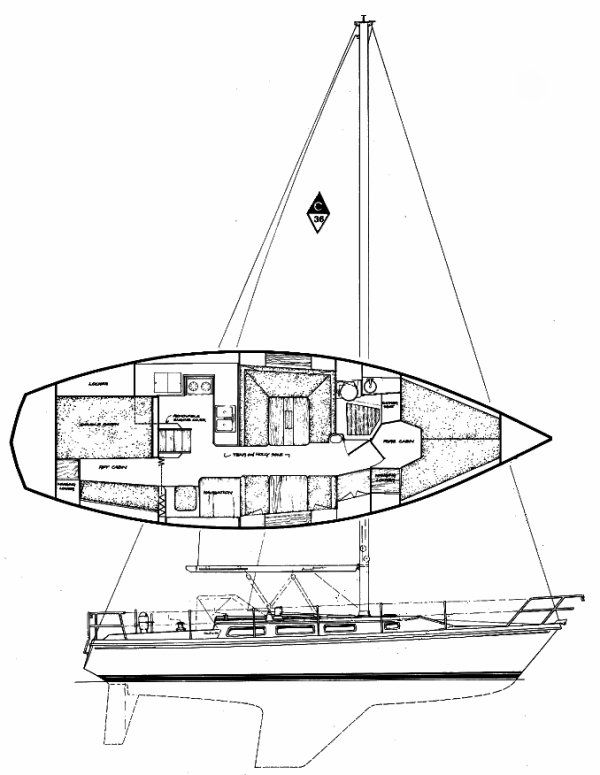
The Catalina 36 uses a relatively conservative, proven hull form: moderate beam (around 11.9′), a fin keel (or optional wing/ shoal draft keel), and an internally mounted spade rudder controlled by a wheel. It’s normally rigged as a masthead sloop—simple, easy to tune and forgiving for short-handed crews. Construction is hand-laid fiberglass with a balsa or solid laminate deck depending on year and sub-model; the Mark II kept the same hull but updated the deck layout, cockpit and cabin ergonomics to suit cruising couples and charter use. These choices mean the Catalina is sturdy and repairable (fiberglass hull repairs are straightforward and parts/ systems are common), but like many production yachts of the era it concentrates systems in predictable areas—deck-to-hull joints, portlights and chainplates—which are also where deferred maintenance will show up first.
From a naval-architecture perspective the Catalina 36 trades outright race performance for a higher comfort ratio and a healthy ballast ratio: that ballast and moderate displacement give a stabile, forgiving motion in a seaway and decent initial stiffness under sail, which reduces crew fatigue on passages. The wide business-end beam and displacement also help interior volume (important for liveability) but slightly reduce windward pointing compared with lighter, narrower designs. For owners this means routine fiberglass maintenance and periodic hardware replacement will preserve value; structurally it ages well if kept dry and ventilated, but cosmetics and through-hull fittings are the usual long-term maintenance items to watch.
Performance
The Catalina 36’s hull speed sits in the high-7 knot range, and in real-world sailing it behaves like a comfortable coastal cruiser rather than a club racer. It points reasonably well for a moderate-beam cruiser, accelerates cleanly off the wind and is happiest with a full-bodied headsail in lighter airs or the tall-rig option where available. In confused seas the displacement and beam provide a predictable, comfortable motion; in stronger wind it will heel and then carry on without sudden stall characteristics—again, the sort of behavior many cruising couples prefer to being overpowered and twitchy. Sailors report that the boat is easy to handle short-handed (simple sloop rig, accessible sheet leads) and that its steering and maneuverability under power are acceptable for tight dockings, though not sporting compared with lighter modern designs. Compared to contemporary 36-foot cruisers the Catalina is rarely the fastest boat on a reach, but it stays competitive on passage in a mixed-fleet weekend context and rewards conservative reefing and headsail choices with steady miles.
Comfort and Accommodations
Interior space is one of the Catalina 36’s strongest selling points. The Mark II’s reworked cabin and larger cockpit improved liveability (more cockpit room, walk-through transom options on some years) while retaining a full galley, generous chart area and sensible stowage for extended weekends or coastal cruising. Water and fuel tankage on many examples are generous for the size, and the finishing tends to be straightforward, functional brightwork or varnished teak—easy to update for owners who prefer a modern look. For a couple or small family the layout supports week-long cruising comfortably; for a full-time liveaboard some owners make modest upgrades (ventilation, insulation, fridge/ refrigeration) but the platform adapts well.
Because the interior is essentially traditional, it also tends to age gracefully: many Catalinas on the market are cosmetically updated (new cushions, galley refits, electronics) while the underlying joinery and hull shape remain serviceable. That means buyers will frequently find boats in the 36’ range that need only targeted upgrades to become comfortable long-term cruisers, rather than full-scale refits.
Safety and Practicality
On deck the Catalina’s layout favors straightforward crew movement: wide sidedecks, a protected cockpit and a relatively low coachroof make short-handed sailing and man-overboard recovery more manageable than on sportier, narrower designs. The typical Catalina 36 will offer reliable access to the water (swim/ boarding platforms on later models), and its steering geometry and hull form make it easy to drive off the wind and keep a course under power. The boat is primarily a coastal cruiser out of the box: many owners have taken them on offshore hops, but doing reliable offshore work generally requires investing in updated safety systems (EPIRB, liferaft, upgraded rigging checks, extra grounding and redundancy).
Systems are generally accessible—engine, tanks and through-hulls are located in predictable spots—so routine servicing and troubleshooting are achievable for competent owner-operators and affordable for professional yards. That practical accessibility is a big part of why the model is popular with owner-operators who prefer to perform much of the maintenance themselves.
Known Issues with the Catalina 36
Owners’ forums and owner groups identify a handful of recurring themes rather than catastrophic design flaws. The most common items are deck-to-hull joint leaks and aging window/portlight seals, blistering/ osmosis complaints on older boats in certain climates, and the usual wear on chainplates and standing rigging with age. Some Catalina 36s have reported engine vibration at idle or other Universal diesel-series quirks—issues that usually trace back to mounts or exhaust hangers rather than fundamental design failure. Electronic panels and wiring sometimes show evidence of piecemeal upgrades and need careful inspection during a survey.
Commonly recommended buyer upgrades (practical, cost-effective fixes) include: replacing worn keel bolts and checking chainplate backing, installing new deck seals and hatches, upgrading old navigation electronics to modern, low-power systems, and reviewing propeller choice and shaft standing to reduce vibration. These are not unusual or unique to the Catalina 36, but they are the items that remove most buyer risk and make an older boat feel modern and reliable again.
Market Availability and Pricing in the U.S.
The Catalina 36 is out of production (the Mk II was produced through the early 2000s), so availability today is entirely on the used market. Because Catalina built a large number of hulls, the model shows up across the U.S.—frequently in Florida and the Southeast, around the Chesapeake and mid-Atlantic, in New England and along the West Coast (especially California) and in the Great Lakes—so buyers can often find regionally varied condition levels (from well-maintained cruisers to inexpensive project boats). Listings on major broker sites illustrate a wide spread in asking prices depending on year and condition: older, project boats can be found under $30k while well-equipped late Mark II boats can approach or exceed $90–100k. A reasonable national used range to expect: $25,000–$100,000 depending on year, gear and condition.
Below is a short comparison table that places the Catalina 36 against three alternatives in the same size and era:
| Model | LOA | Approx. Years Built | Typical U.S. Used Price | Main Differences |
|---|---|---|---|---|
| Catalina 36 (Mk I / Mk II) | ~36.3′ | 1982–2005 | **$25,000–$100,000** | Traditional U.S. build, roomy interior, proven systems, many on market; good balance of comfort and maintainability. :contentReference[oaicite:9]{index=9} |
| Hunter 36 (Legend / variants) | ~35.7′ | 2001 (Legend) / various years | $30,000–$95,000 | Often wider beam, modern deck layouts, B&R rig variants; typically more modern deck ergonomics and sometimes better light-air performance. :contentReference[oaicite:10]{index=10} |
| Jeanneau Sun Odyssey 36.2 | ~36.1′ | Late 1990s–2000s | $40,000–$85,000 | European build, lighter displacement, sometimes better under-sail speed and a slightly more modern interior layout; often sold as charter variants. :contentReference[oaicite:11]{index=11} |
| Beneteau Oceanis / 361 | ~36.4′ | Late 1990s–early 2000s | $45,000–$80,000 | Typically lighter, roomier interiors for the length, modern sail plans; often better resale in some markets but can vary by region. :contentReference[oaicite:12]{index=12} |
Catalina 36 11.50 vs Hunter 36

Catalina 36 and Hunter 36 variants occupy a similar market niche—friendly cruising boats in the mid-30s—but they arrive at that niche from slightly different directions. The Catalina’s hull is conservative and heavy enough to provide a comfortable, predictable motion and robust load-carrying for cruising gear; Hunter’s Legend/36 variants tend to push a bit more beam and modern deck ergonomics (B&R rigs and flatter topsides on some years) that favor a roomier cockpit and sometimes easier sail handling in a club scene. For owners this matters: if you prioritize a stable, tried-and-true hull that tolerates simple systems work, the Catalina is attractive; if you want a more contemporary deck plan and slightly different upwind tuning options, the Hunter may appeal more.
Below decks the Catalina typically offers straightforward joinery and a layout focused on storage and practicality, while Hunters often push for slightly higher headroom and an interior that emphasizes walkthrough flow and optional modern amenities. Maintenance requirements are comparable—routine rig and through-hull work—but the Hunter’s more modern options (e.g., integral swim platforms, different hardware arrangements) can mean different replacement costs for deck gear. Overall, the Catalina will usually be the easier, lower-risk purchase for first-time owners who intend to do their own wrenching; the Hunter can be better for buyers who prioritize contemporary ergonomics and don’t mind paying a premium for certain conveniences.
► Learn more about de Hunter 36
Catalina 36 vs Jeanneau Sun Odyssey 36.2
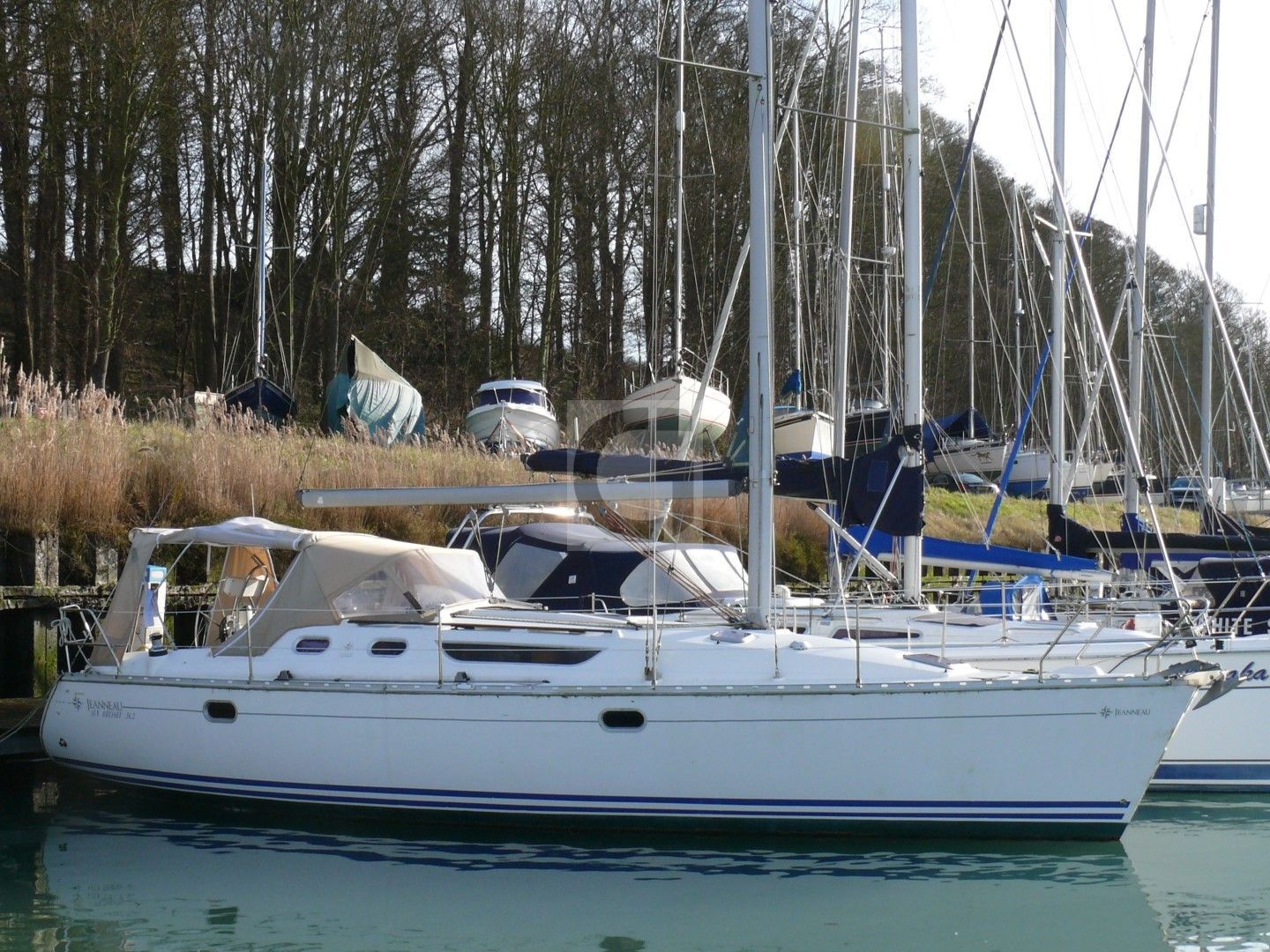
Comparing Catalina 36 to the Jeanneau Sun Odyssey 36.2 highlights the U.S. vs European design philosophies of the 1990s and early 2000s. The Jeanneau is generally lighter, with a hull and sailplan aimed to squeeze more speed out of a similar length—resulting in livelier performance, especially in light to moderate airs—while the Catalina emphasizes comfort and a more conservative motion. For a buyer who spends more time on coastal passages and values a slightly sportier ride and European finish, the Jeanneau will feel peppier; for those who want a slower-stepping, robust platform with a large owner community in the U.S., the Catalina’s simplicity and parts availability are advantages.
Inside, Jeanneaus of the era tend to feel more modern and sometimes brighter due to different portlight and coachroof designs, while the Catalina’s interior leans toward proven ergonomics and heavier tankage options—something cruisers who want autonomy between stops will appreciate. Maintenance responsibilities differ in flavor: the Jeanneau’s systems and fittings may follow European suppliers and practices, while Catalina parts and service are broadly available in the U.S., which can lower both parts-lead time and, in some cases, labor costs.
► Learn more about de Jeanneau Sun Odyssey 36.2
Catalina 36 vs Beneteau Oceanis 361

Beneteau’s Oceanis 361 and the Catalina 36 are similar in user audience—both aim at comfortable family cruising—but Beneteau pushed lighter displacement and modern hull shapes to increase interior volume and sailing efficiency. In practice the Oceanis often feels roomier for the same LOA, and it tends to accelerate more readily in lighter winds; the Catalina trades that light-air edge for a steadier, more forgiving motion in confused seas and a hull that tolerates more load without loss of comfort. For families prioritizing live-aboard space and modern lines, the Beneteau can be a compelling choice; for owners who want a workmanlike, easy-to-service American build with strong owner support, the Catalina will usually win on maintainability and replacement-part access.
From an ownership cost perspective, both boats attract similar attention in the used market, but Beneteaus sometimes command firmer resale in certain coastal charter markets because of interior volume and a modern look; Catalinas retain strong value where an owner base values repairability and conservative systems. Maintenance profiles are similar—both need routine rigging and bottom care—but buyers should expect slightly different costs and lead times for European vs U.S.-sourced components.
► Learn more about de Beneteau Oceanis 361
Maintenance Costs in the U.S.
- Slip / Mooring — $3,600–$15,000+ per year. Northern/ New England and California marinas typically sit at the high end (often $400–$1,000+ per month for a 36′ slip), while sheltered Southeast or smaller municipal marinas can be markedly cheaper. Example local rate sheets and marina guides show wide regional variance.
- Insurance — $300–$1,500 per year. Basic liability and hull cover for older 36′ cruisers is often in the low hundreds; comprehensive policies and vessels kept in higher-risk zones (tropical storm exposure) push premiums higher. National insurers show typical ranges consistent with this.
- Engine & Mechanical Service (annual checks, winterize) — $300–$1,500. Routine oil/filter service, impeller, transmission/drivechecks and small repairs; major repowers cost far more but are infrequent. Owner-doable items reduce cost if you have mechanical skill.
- Antifouling & Haul/Bottom Paint — $800–$4,000 every 1–3 years depending on prep and region. A full haul, pressure wash, primer and two coats of quality bottom paint on a 36′ hull commonly runs in the low thousands; first-time jobs or heavy blister repair substantially increase cost.
- Rigging inspection & small running rigging replacement — $200–$1,500/year averaged. Standing rigging replacement is periodic (decades depending on use) and expensive; routine inspections and small running-rig upgrades are manageable annually.
- Sails — $0–$6,000+. A well-kept mainsail and headsail can last many years; a new mainsail or a full suit of cruising sails is the largest periodic expense (often $2k–$5k+ depending on cloth). Many owners stretch this out by repairing and patching when feasible.
- Miscellaneous (winter storage, dockage taxes, electronics upgrades, survey/insurance inspections) — $500–$4,000. Periodic electronics upgrades or a single major piece (new chartplotter, autopilot servos) will spike expenses some years.
Can the owner do the work? Much of routine maintenance on a Catalina 36 is approachable for a motivated owner: oil changes, basic rigging checks, canvas repairs and many interior upgrades are owner-doable. Structural or large-scale tasks (standing rig replacement, hull blister repairs, major engine work) typically require professional service and materially increase costs. A practical rule of thumb many owners use is budgeting roughly 5–10% of the boat’s value per year averaged across maintenance cycles; for older used boats the absolute dollar figure is lower, but surprises (spars, through-hull work) are still expensive. Overall, for its length and type the Catalina 36 tends to sit in the medium maintenance-cost band: more than a small pocket cruiser, but lower than larger yachts of similar age and equipment
Conclusion
The Catalina 36 is a pragmatic, well-proven choice for a buyer who wants a comfortable, easy-to-maintain coastal cruiser that’s friendly to owner-mechanics. Its strengths are predictability at sea, plentiful interior space for its length, strong community support and parts availability in the U.S. Weaknesses are the typical wear points of production boats of this era—sealant, deck-to-hull joints, occasional osmosis on older hulls and the need to modernize electronics or sails on many listings. For a couple or small family seeking a reliable platform for weekend to extended coastal cruising, the Catalina 36 is often a smart buy: it’s easy to find, straightforward to survey, and receptive to incremental upgrades that match a buyer’s budget and skills.
If your priority is an inexpensive, well-proven platform that you can service yourself and customize over time, the Catalina 36 is worth seeking out; it represents good value in the used market for coastal cruising and tends to hold resale appeal due to name recognition and a broad owner base. If you prize light-air performance or ultra-modern interiors, the European alternatives (Jeanneau, Beneteau) or later sporty Hunters deserve a look—but for balanced cost of ownership, maintainability and comfort, the Catalina 36 remains a sensible, pragmatic choice.
Specifications
| Hull Type | Fin w/spade rudder |
| Rigging Type | Masthead Sloop |
| LOA | 36.33 ft / 11.07 m |
| LWL | 30.25 ft / 9.22 m |
| S.A. (reported) | 545.00 ft² / 50.63 m² |
| Beam | 11.92 ft / 3.63 m |
| Displacement | 13,500.00 lb / 6,123 kg |
| Ballast | 6,000.00 lb / 2,722 kg |
| Max Draft | 5.83 ft / 1.78 m |
| Construction | FG |
| Ballast Type | Lead |
| First Built | 1982 |
| # Built | 1766 |
| Builder | Catalina Yachts (USA) |
| Designer | Frank Butler |
Auxiliary Power / Tanks (orig. equip.) | |
| Fuel | 25 gals / 95 L |
Accommodations | |
| Water | 72 gals / 273 L |
Sailboat Calculations / Definitions | |
| S.A. / Displ. | 15.44 |
| Bal. / Displ. | 44.44 |
| Disp. / Len | 217.73 |
| Comfort Ratio | 23.98 |
| Capsize Screening Formula | 2.01 |
| S# | 2.36 |
| Hull Speed | 7.37 kn |
| Pounds/Inch Immersion | 1,288.39 pounds/inch |
Rig and Sail Particulars | |
| I | 44.75 ft / 13.64 m |
| J | 14.33 ft / 4.37 m |
| P | 39.00 ft / 11.89 m |
| E | 12.00 ft / 3.66 m |
| S.A. Fore | 320.63 ft² / 29.79 m² |
| S.A. Main | 234.00 ft² / 21.74 m² |
| S.A. Total (100% Fore + Main Triangles) | 554.63 ft² / 51.53 m² |
| S.A./Displ. (calc.) | 15.71 |
| Est. Forestay Length | 46.99 ft / 14.32 m |
| Mast Height from DWL | 50.16 ft / 15.29 m |
Disclaimer
The considerations and analyses presented regarding the Catalina 36 sailboat are of a general nature and are based on the available information and technical data on this model, interpreted to the best of our knowledge and understanding. It is important to note that the specific characteristics of any particular sailboat may vary due to custom modifications, maintenance performed, and conditions of use over time, among other factors. Therefore, the details and performance of the boat you are considering may not exactly match the information provided here.
We strongly recommend that, before making any purchasing or usage decisions, you conduct a detailed inspection of the boat in question, consult with nautical professionals and other sailors, and consider your personal needs, expectations, and capabilities. Each sailboat may have unique particularities that affect its performance and suitability for different types of sailing and sailors.
The information contained in this analysis should be used as a general guide and not as a definitive reference. Professional evaluation and personal inspection are essential to ensure that the boat meets your specific requirements and expectations.