



The Dufour 350 Grand Large is a modern family cruiser introduced in the mid-2010s as part of Dufour’s Grand Large line, designed to blend comfortable coastal cruising with sprightly sailing performance. Launched in the mid-2010s to a design by Umberto Felci, it was intended for owners who wanted a manageable 35-foot yacht that still felt contemporary below decks and confident under sail for family passages and club cruising. The model quickly found traction with private owners and charter companies because its three-cabin layouts and deck ergonomics suit both couples and short-handed crews, and used examples appear regularly on the brokerage market in Europe and North America.
Design and Construction
Dufour approached the 350 Grand Large with a modern hull form — moderate beam carried aft, a performance-minded foil package and twin-wheel or single-wheel steering options — built in E-glass with production finishes that balance durability and cost. The Felci hull and keel geometry favor good upwind pointing and a forgiving motion while the deck arrangement keeps sail controls led aft for short-handed operation; that layout philosophy reduces the need for expensive cockpit retrofits and keeps essential systems accessible. Construction choices (solid laminate below the waterline, cored topsides and production joinery) make structural repairs straightforward for a professional yard while still allowing owner-level cosmetic work; buyers should expect respectable longevity and relatively predictable refit needs compared with older, hand-laid custom cruisers.
Performance
On the water the 350 Grand Large tends to reward conservative sail choices with steady speeds and a confident feel: it accelerates well in moderate breeze, points respectably for a cruising design of its era, and balances heel and helm to feel secure when reefed. Test sails and magazine reviews from its launch period highlighted the boat’s lively but controlled response — quicker than older heavy cruisers of similar length but not as razor-sharp as pure performance designs — which positions it well for family passages, coastal hopping and club racing in production-boat fleets. In practical terms, an owner trading up from a late-1990s small cruiser will notice the 350’s improved upwind angles and modern sailplan control, while those comparing it with contemporary rivals will find it sits squarely in the comfortable-performance segment.
Comfort and Accommodations
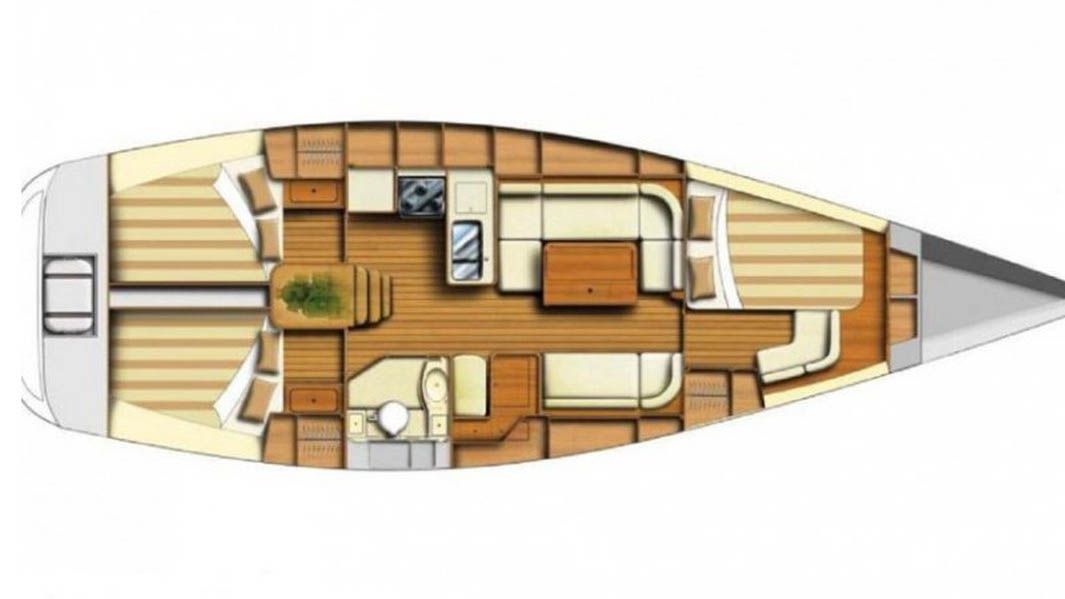
Interior layouts are one of the 350’s selling points: available in two- or three-cabin versions, the boat maximizes usable volume with a bright saloon, comfortable berths and a practical galley, making it suitable for couples or small families who want genuine cruising capability without stepping up to a larger hull. Storage and water/fuel capacity are tuned for short to medium cruises, and the finish level is modern but serviceable — owners often personalize upholstery and instruments, but structural upgrades are rarely necessary. While liveaboard cruising for long seasons is possible, the 350 is most naturally at home on coastal passages and week-long cruises where the combination of cabin comfort and deck ergonomics delivers clear practical advantages.
Safety and Practicality
Deck ergonomics and control layout prioritize safe single- or short-handed sailing: sheet leads, furling options and accessible winches reduce crew movement and exposure, and the hull’s form stability helps keep motion predictable in typical coastal conditions. Systems accessibility (engine bay, sea cocks, tank access) follows contemporary production standards so routine maintenance is straightforward for a competent owner or small yard; however, as with any production boat, owners should verify the condition of through-hulls, seacocks and rig bearings during survey to avoid surprises. The boat is primarily intended for coastal and offshore cruising within reason — it’s not a blue-water full-time passagemaker by default, but with sensible equipment and seamanship it is suitable for extended coastal passages and moderate offshore work.
Known Issues with the Dufour 350 Grand Large
Common owner notes and reviews point to a few predictable areas: production joinery and locker seals can show wear over time, electrical and electronics packages are often minimal on base boats (leading owners to upgrade), and like many production cruisers a thorough survey may reveal soft spots around deck fittings or the companionway if water ingress has been permitted. None of these are unique or fatal — they are the usual tradeoffs of modern, volume-built yachts — but prospective buyers should budget for modest upgrades (chartplotter/GPS, upgraded wind instruments, and sometimes a stronger windlass or bow thruster option) and check standard wear items (sail condition, standing rigging age). Recommended pre-purchase priorities are a detailed deck-to-hull survey and confirmation of keel bolts and seacock condition.
Market Availability and Pricing in the U.S.
The Dufour 350 Grand Large was built in the mid-2010s (roughly 2015–2017) and is available only on the used market; reasonably equipped examples show up regularly in European listings and intermittently in North America via broker imports and international listings. Typical asking prices for well-equipped, clean examples generally sit in the $80,000–$140,000 range depending on year, layout and location, with lower-end boats found below that band in Europe and higher-spec models or U.S.-imported boats toward the top. In comparison, close rivals such as the Jeanneau Sun Odyssey 349, Beneteau Oceanis 35 and Bavaria Cruiser 34 occupy overlapping price bands but differ in cabin ergonomics, dealer support and options packages — buyers should weigh local dealer support and parts availability when comparing residual values.
Below is a comparison with similar sailboats from the same era:
| Model | LOA | Approx. first built | Typical U.S. used price | Main practical differences |
|---|---|---|---|---|
| Dufour 350 Grand Large | ~35.0 ft | 2015 | $80,000–$140,000 | Modern Felci hull, efficient use of interior volume, strong deck ergonomics for short-handed cruising. |
| Jeanneau Sun Odyssey 349 | ~33.9 ft | 2014 | $80,000–$150,000 | Wider beam, twin rudders option, emphasis on easy family cruising and off-the-shelf comfort packages. |
| Beneteau Oceanis 35 | ~35.0 ft | 2015 | $130,000–$180,000 | Greater emphasis on cruising comfort and tankage; typically higher base equipment and dealer support costs. |
| Bavaria Cruiser 34 | ~34.0 ft | 2013 | $70,000–$160,000 | Strong value proposition with roomy interiors; production-boat approach with focus on cost-efficient ownership. |
Dufour 350 Grand Large vs Jeanneau Sun Odyssey 349

The Dufour emphasizes a sleeker hull section and a layout that favors larger tankage and slightly more accommodation flexibility, while the Jeanneau 349 often trades a bit of pointing performance for a wider beam, twin-rudder stability and a very family-friendly cockpit layout. For a buyer, that means the Dufour will feel more like a traditional compact cruiser with marginally better upwind manners, while the Jeanneau gives a more forgiving, roomy feel under sail and in harbor — important when your priority is cockpit comfort and interior volume.
Maintenance and ownership considerations split on dealer support and options: Jeanneau’s broad dealer network and common options make sourcing replacements and used upgrades straightforward, whereas the Dufour’s slightly higher-spec finishes can mean higher parts or refurbishment costs but often result in stronger perceived resale value among buyers seeking a modern, stylish interior.
► Learn more about de Jeanneau Sun Odyssey 349
Dufour 350 Grand Large vs Beneteau Oceanis 35
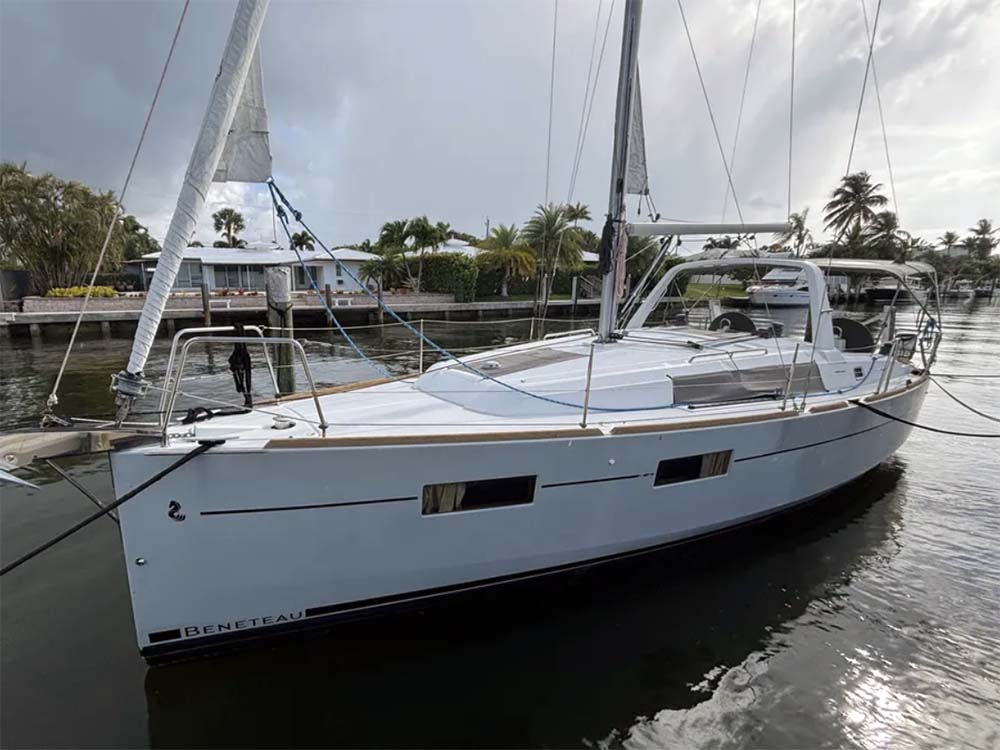
Comparing the Dufour with the Oceanis 35, the Beneteau generally leans toward comfortable coastal cruising with heavier tankage, more luxurious standard equipment and dealer options, while the Dufour prioritizes a lighter, sportier feel and efficient deck ergonomics for short-handed sailing. Buyers focused on extended family cruising will likely prefer the Oceanis for its comfort and larger service networks, accepting higher purchase and maintenance costs for the convenience.
Conversely, owners who want a slightly more responsive helm and a boat that rewards active trimming without losing cruising comforts may find the Dufour hits a better balance; the tradeoff is that the Dufour’s optional equipment choices and interior styling can add to upfront outfitting costs.
► Learn more about de Beneteau Oceanis 35
Dufour 350 Grand Large vs Bavaria Cruiser 34
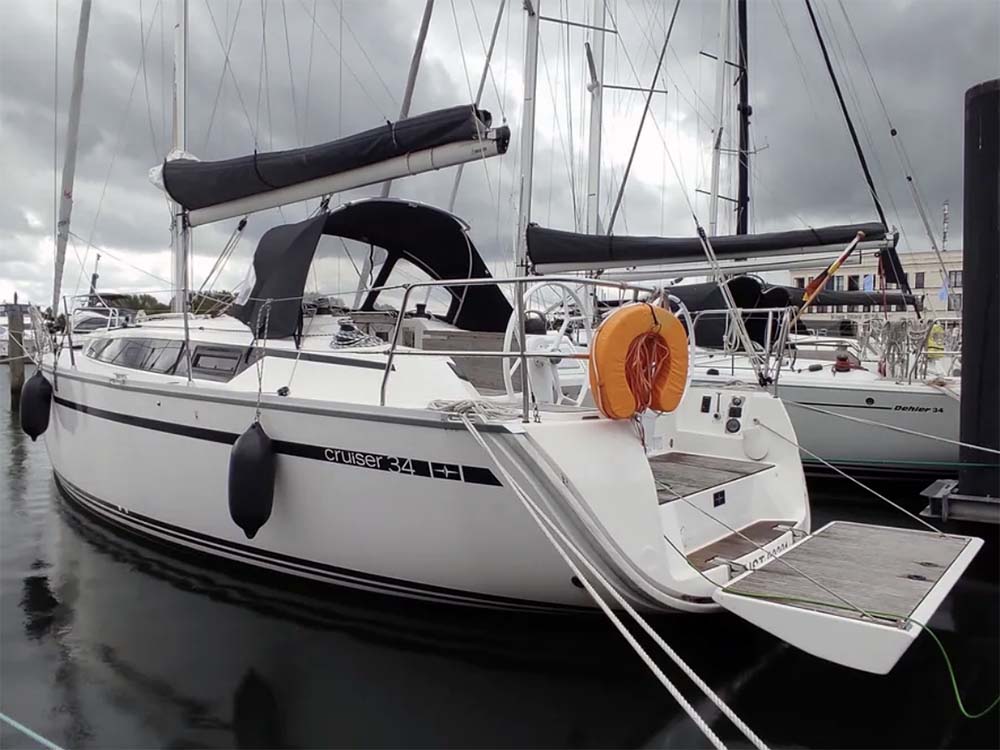
The Bavaria Cruiser 34 competes on value: it offers a roomy interior and practical systems at often lower entry prices, while the Dufour presents a more performance-minded hull and a higher finish level that appeals to buyers who want a modern aesthetic and slightly sharper sailing performance. From a maintenance standpoint, Bavaria’s production focus can make aftermarket parts and service competitive and affordable, whereas the Dufour’s sometimes higher-end options (electronics packages, integrated systems) may push owners toward professional service for major upgrades.
In short, the Bavaria is attractive for buyers prioritizing interior volume and cost-efficient ownership, while the Dufour is for those willing to pay a premium for a contemporary feel, better upwind manners and a deck layout optimized for short-handed sailing.
► Learn more about de Bavaria Cruiser 34
Maintenance Costs of a Dufour 350 Grand Large in the U.S.
Below is an annotated list of typical annual expenses (approximate ranges) with each item in bold followed by practical notes. These are estimates intended to help buyers budget; actual costs vary with location, boat condition and owner choices.
- Mooring or slip fees: $2,500–$18,000 per year — marina fees dominate the budget and vary dramatically between inland harbors and high-demand coastal marinas.
- Insurance: $800–$3,000 per year — larger production cruisers like a 35-footer carry higher agreed values and coastal risks increase premiums.
- Engine servicing (inboard diesel): $400–$1,200 per year — routine service, filters, belts and annual checks; more if injectors or transmission work is needed.
- Antifouling paint and bottom maintenance: $800–$3,500 per year — saltwater, in-water boats and busy marina areas require more frequent hauling and paint cycles.
- Standing and running rigging inspection/replacement: $200–$800 per year for inspections and minor repairs; full standing-rig replacement every 10–15 years can cost $3,000–$8,000 depending on hardware and mast work.
- Sails (repairs/replace): $300–$1,200 per year for repairs and periodic servicing; a new main and genoa set can run $6,000–$15,000 depending on cloth and cut.
- Electronics and systems maintenance/upgrades: $300–$2,500 per year — modern chartplotters, AIS and autopilots are common upgrade items and can be significant one-time costs.
- Winterization, dockage admin and misc consumables: $500–$3,000 per year — covers shrinkwrap/yard storage, zincs, anodes, and consumables.
Region matters: owners in the Gulf Coast, Florida and high-demand Northeast marinas should budget toward the top of these ranges, while owners who haul for winter in the Great Lakes or keep boats in low-cost slips will see materially lower outlays. Typical one-time major expenses to expect over a multi-year ownership period include sail replacement ($6,000–$15,000), autopilot or electronics refit ($2,000–$8,000), and major engine or shaft work ($3,000–$15,000). Many routine tasks (engine servicing, basic sail care, winch servicing) are owner-doable for someone with mechanical aptitude, which materially lowers annual costs; major structural, electrical or sailmaking work usually requires professional yards and raises the total cost. Overall, for a well-equipped 35-foot production cruiser, annual running costs are typically medium within its class — not cheap to operate, but reasonable compared with larger yachts — and resale value for a cared-for Dufour 350 GL usually compensates for sensible upkeep because the model is recognized for good design and modern interiors.
Conclusion
The Dufour 350 Grand Large presents a compelling package for buyers who want a contemporary 35-foot cruiser that combines comfortable accommodations with a hull and deck layout tuned for short-handed performance. Its strengths are modern hull lines, efficient interior volume and accessible systems that make it practical for couples and small families who cruise coastally or take week-long passages; its potential downsides are the typical production-boat tradeoffs — some owners choose to upgrade electronics, sails or certain deck hardware after purchase to meet specific cruising goals. For buyers seeking a stylish, manageable coastal cruiser with respectable resale prospects, the 350 Grand Large is often worth considering; for those whose priority is lowest possible operating cost or heavy-weather blue-water capability, a different platform (heavier displacement or more offshore-oriented design) may be a better long-term match.
Specifications
| Hull Type: | Fin w/bulb & spade rudder |
| Rigging Type: | Fractional Sloop |
| LOA: | 33.73 ft / 10.28 m |
| LWL: | 29.69 ft / 9.05 m |
| S.A. (reported): | 591.00 ft² / 54.91 m² |
| Beam: | 11.61 ft / 3.54 m |
| Displacement: | 12,509.00 lb / 5,674 kg |
| Ballast: | 3,417.00 lb / 1,550 kg |
| Max Draft: | 6.23 ft / 1.90 m |
| Construction: | Fiberglass with foam core deck |
| First Built: | 2015 |
| Last Built: | 2017 |
| Builder: | Dufour Yachts (France) |
| Designer: | Umberto Felci |
| Auxiliary Power: | Diesel engine |
| Horsepower: | 19 HP |
| Fuel Capacity: | 42 gals / 159 L |
| Water Capacity: | 58 gals / 220 L |
| S.A. / Displ.: | 17.61 |
| Bal. / Displ.: | 27.32 |
| Disp. / Len.: | 213.38 |
| Comfort Ratio: | 23.88 |
| Capsize Screening Formula: | 2.00 |
| S#: | 2.48 |
| Hull Speed: | 7.30 kn |
| Pounds/Inch Immersion: | 1,231.65 lb/inch |
| I: | 41.67 ft / 12.70 m |
| J: | 12.30 ft / 3.75 m |
| P: | 39.60 ft / 12.07 m |
| E: | 14.76 ft / 4.50 m |
| S.A. Fore: | 256.27 ft² / 23.81 m² |
| S.A. Main: | 292.25 ft² / 27.15 m² |
| S.A. Total (100% Fore + Main Triangles): | 548.52 ft² / 50.96 m² |
| S.A./Displ. (calculated): | 16.34 |
| Estimated Forestay Length: | 43.45 ft / 13.24 m |
Disclaimer
The considerations and analyses presented regarding the Dufour 350 Grand Large sailboat are of a general nature and are based on the available information and technical data on this model, interpreted to the best of our knowledge and understanding. It is important to note that the specific characteristics of any particular sailboat may vary due to custom modifications, maintenance performed, and conditions of use over time, among other factors. Therefore, the details and performance of the boat you are considering may not exactly match the information provided here.
We strongly recommend that, before making any purchasing or usage decisions, you conduct a detailed inspection of the boat in question, consult with nautical professionals and other sailors, and consider your personal needs, expectations, and capabilities. Each sailboat may have unique particularities that affect its performance and suitability for different types of sailing and sailors.
The information contained in this analysis should be used as a general guide and not as a definitive reference. Professional evaluation and personal inspection are essential to ensure that the boat meets your specific requirements and expectations.