



The Gulfstar 36 was introduced in the mid-1970s by Gulfstar Yachts, a Florida-based builder known for producing solid, affordable cruising sailboats aimed at the American market. Designed primarily for coastal and moderate offshore cruising rather than competitive racing, it targeted families and couples seeking a comfortable platform for extended holidays afloat. Its mix of livability and manageable size made it appealing for first-time owners and seasoned sailors alike. On today’s used-boat market, the Gulfstar 36 maintains steady interest, especially among private buyers who value classic fiberglass cruisers with proven bluewater pedigrees, though it is less common in charter fleets or sailing schools compared to more modern production boats.
Design and Construction
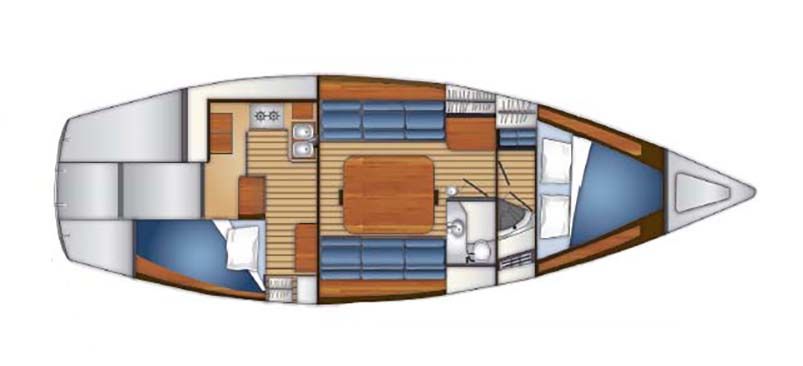
The Gulfstar 36 carries a moderate displacement hull with a fin keel and a skeg-hung rudder, balancing directional stability with responsive handling. Most were built as masthead sloops, though some ketch rigs were also offered, catering to sailors who preferred easier sail management. The hull was laid up in solid fiberglass, a hallmark of the era, ensuring toughness but at the expense of extra weight compared to modern composites. Decks often included plywood cores, which require careful inspection for water intrusion. The interior layout was straightforward, with a conventional V-berth forward, main saloon, and aft quarter berth, reflecting Gulfstar’s emphasis on practicality and efficient use of space. From a naval architecture standpoint, the design prioritizes durability and ease of repair, factors that continue to sustain its residual value.

Performance
Under sail, the Gulfstar 36 delivers steady and predictable performance. It is not among the fastest boats of its class, but it tracks well upwind and maintains reassuring stability in moderate seas. In heavier conditions, the skeg-hung rudder contributes to directional control, while the relatively deep fin keel provides good bite, though tacking angles are not as tight as on performance-oriented models. In light air, its weight can limit speed, but once wind builds, it offers a comfortable, forgiving ride. Compared with peers like the Catalina 36 or Hunter 37, it is more conservative in performance but enjoys a reputation for reliability and safety rather than nimbleness.
Comfort and Accommodations
Inside, the Gulfstar 36 offers a warm and practical living space, well-suited for a cruising couple or small family. The galley is functional, usually arranged in an L-shape, and the saloon provides seating that converts into berths when needed. Storage is ample for coastal cruising, though limited for extended ocean passages. Ventilation is adequate, but many boats now benefit from added hatches or upgraded portlights. Ergonomically, the interior reflects 1970s sensibilities—straightforward and sturdy rather than stylish. Many surviving examples have undergone refits, with upgraded upholstery, joinery refinishing, or modernized electrical systems, making interiors vary widely in condition.
Safety and Practicality
On deck, the Gulfstar 36 features wide side decks and solid handholds, contributing to safe movement at sea. The cockpit is deep and protective, though slightly narrow by today’s standards. Its rig and sail plan are easily managed by a small crew, making it appealing for couples. Systems are generally accessible, thanks to simple layouts and robust components, though engine access can be tight depending on installation. With proper upgrades, it is capable of offshore work, but most examples are best suited for coastal and nearshore cruising. The practicality of its systems makes long-term ownership feasible without excessive reliance on professional services.
Known Issues with the Gulfstar 36
Common age-related issues include deck core moisture, potential blistering (osmosis) in the solid fiberglass hull, and aging diesel engines that may require overhaul or replacement. Original electrical systems are often outdated and benefit from complete rewiring. Hardware such as winches, cleats, and stanchions may show wear, but replacements are straightforward. Owners frequently recommend upgrading to a feathering or three-blade propeller for improved motoring performance, as well as modern navigation electronics and reinforced chainplates. These improvements enhance both safety and resale potential.
Market Availability and Pricing in the U.S.
The Gulfstar 36 is no longer in production and is found exclusively on the second-hand market. Listings are most common in Florida, the Chesapeake Bay, and New England, regions with a strong base of Gulfstar owners. Condition varies widely: some examples are well-maintained by long-term owners, while others may be neglected projects. On average, asking prices range between $25,000 and $45,000 USD, depending on upgrades and condition. This positions the Gulfstar 36 competitively against Catalina and Hunter models of similar age, often offering more robust construction at a slightly lower price point.
Below is a comparison with similar sailboats from the same era:
| Model | LOA | Years Built | Typical U.S. Price | Main Differences |
|---|---|---|---|---|
| Gulfstar 36 | 36 ft | 1973–1978 | $25,000–$45,000 | Solid fiberglass, conservative design, strong cruiser reputation |
| Catalina 36 | 36 ft | 1982–2005 | $35,000–$70,000 | More modern interior, faster in light air, very popular resale market |
| Hunter 37 Cutter | 37 ft | 1978–1984 | $28,000–$50,000 | Cutter rig, better offshore reputation, slightly heavier displacement |
| Jeanneau Sun Fizz 40 | 40 ft | 1980–1986 | $40,000–$70,000 | European styling, more interior volume, better light-air performance |
Maintenance Costs of a Gulfstar 36 in the USA
Annual ownership costs vary by region. Marina slip fees can range from $3,000–$6,000 per year in smaller East Coast towns to $8,000–$12,000 in premium marinas in Florida or California. Insurance typically costs $1,200–$2,500 annually, depending on cruising area. Routine engine servicing averages $500–$1,000 per year, while antifouling paint application every 12–18 months costs $2,000–$3,500. Standing rigging replacement, often needed every 10–15 years, can exceed $6,000, and a new set of sails may run $7,000–$10,000. Electronics upgrades or refits vary widely, from $3,000 for essentials to $20,000 for full modern systems. Owners with mechanical aptitude can reduce costs significantly, since most systems are straightforward to maintain without constant reliance on professionals. Overall, maintenance costs are in the medium range for a 36-foot cruiser, with resale values generally supporting reinvestment in upgrades.
Conclusion
The Gulfstar 36 is a well-built, straightforward cruiser that continues to offer solid value on the second-hand market. Its strengths lie in robust fiberglass construction, predictable handling, and comfortable accommodations for a couple or small family. It is not a fast or flashy performer, but rather a reliable platform for safe and enjoyable coastal cruising. Weaknesses include its age-related maintenance needs, limited light-air performance, and interiors that feel dated unless upgraded. For buyers seeking a capable, affordable classic cruiser with good resale stability, the Gulfstar 36 represents a sound investment and remains a somewhat underrated option within its category.
Specifications
| Design & Construction | |
|---|---|
| Hull Type | Fin with rudder on skeg |
| Rigging Type | Masthead Sloop |
| LOA | 36.08 ft / 11.00 m |
| LWL | 30.33 ft / 9.24 m |
| S.A. (reported) | 608.00 ft² / 56.49 m² |
| Beam | 12.00 ft / 3.66 m |
| Displacement | 14,250.00 lb / 6,464 kg |
| Ballast | 5,462.00 lb / 2,478 kg |
| Max Draft | 4.83 ft / 1.47 m |
| Construction | FG |
| Ballast Type | Lead |
| First Built | 1983 |
| Last Built | 1985 |
| # Built | 23 |
| Builder | Lazarra Marine/Gulfstar Inc. |
| Designer | Richard Lazzarra / David Jones |
Auxiliary Power / Tanks (orig. equip.) | |
| Make | Westerbeke |
| Type | Diesel |
| HP | 27 |
| Fuel | 50 gals / 189 L |
Accommodations | |
| Water | 40 gals / 151 L |
Sailboat Calculations (Definitions) | |
| S.A. / Displ. | 16.61 |
| Bal. / Displ. | 38.33 |
| Disp. / Len. | 228.01 |
| Comfort Ratio | 25.10 |
| Capsize Screening Formula | 1.98 |
| Hull Speed | 7.38 kn |
| Pounds/Inch Immersion | 1,300.47 pounds/inch |
Disclaimer
The considerations and analyses presented regarding the Gulfstar 36 sailboat are of a general nature and are based on the available information and technical data on this model, interpreted to the best of our knowledge and understanding. It is important to note that the specific characteristics of any particular sailboat may vary due to custom modifications, maintenance performed, and conditions of use over time, among other factors. Therefore, the details and performance of the boat you are considering may not exactly match the information provided here.
We strongly recommend that, before making any purchasing or usage decisions, you conduct a detailed inspection of the boat in question, consult with nautical professionals and other sailors, and consider your personal needs, expectations, and capabilities. Each sailboat may have unique particularities that affect its performance and suitability for different types of sailing and sailors.
The information contained in this analysis should be used as a general guide and not as a definitive reference. Professional evaluation and personal inspection are essential to ensure that the boat meets your specific requirements and expectations.