


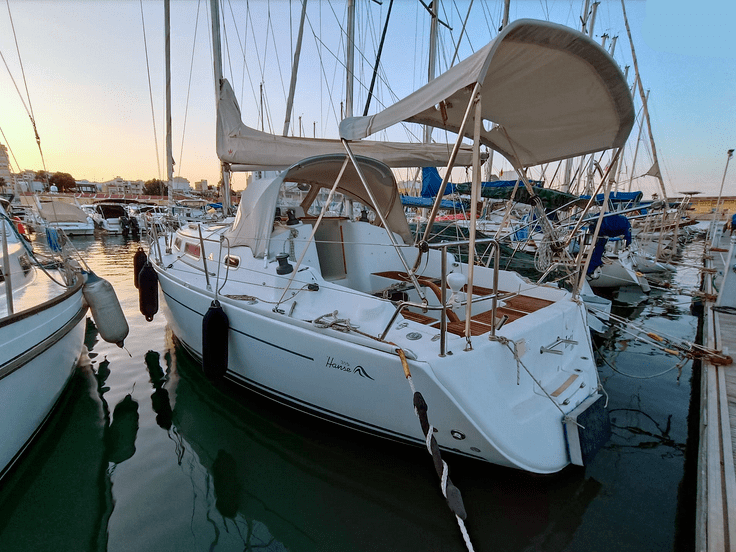
The Hanse 315 arrives on the scene as a compact, family-oriented performance cruiser: a design that tries to bridge easy single-handed sailing and genuinely enjoyable passage making rather than pure one-design speed or full-blown bluewater capability. Introduced in the mid-2000s and penned by Judel/Vrolijk & Co for Hanse Yachts, the 315 was marketed as a modern “family performance cruiser” with sensible options (shallow or L-keel, tiller or optional twin wheels, self-tacking headsail) to suit a wide set of owners.
That positioning — sporty hull lines, relatively light displacement for its length and flexible interior layouts — has made the model visible on the European used market and, more selectively, in the U.S. second-hand market. While not as common in American brokerages as Catalinas or Beneteaus of the same length, the 315 shows up periodically and attracts buyers who value contemporary deck ergonomics and sharper sailing manners for coastal cruising, clubs and family weekends rather than full-time liveaboard or long-haul offshore voyaging
Design and Construction
The 315 uses a modern, fairly beamy hull with an almost-plumb bow and efficient waterline, a fin keel with a bulb (two keel depth options) and a spade rudder. Measurements cluster around a 31–32 ft LOA, ~11 ft beam and a displacement in the mid-4,000 kg range; the factory offered a fractional sloop rig and an interior built around flexible 2-cabin/1-head arrangements. Structurally the hull is solid laminate below the waterline with cored or foam sections above and a balsa-cored deck — a common contemporary mix that balances stiffness, weight and cost.
Those material and layout choices drive practical outcomes buyers care about. A solid laminate under the waterline improves resistance to impact and lowers the immediate risk of structural osmosis compared with an all-cored hull, while the cored deck reduces weight aloft but increases the need for disciplined sealing of deck fittings (poor bedding can lead to soft spots or leaks over time). The cast-iron keel and GRP rudder construction keep replacement costs modest but should be inspected for corrosion or water ingress; the overall result is a boat that is reparable at conventional yards, with a value profile that rewards owners who stay on top of bedding, seacocks and rudder bearings.

Performance
In the breezes the 315 feels lively: its relatively narrow waterline aft and light displacement let it accelerate in puffs and maintain momentum, making passages short and pleasant for coastal work. Test reports from contemporary reviewers and many owner posts describe the boat as responsive and capable of good pointing for a cruising-oriented 31-footer, while the optional self-tacking jib and cockpit-led controls make single-handing straightforward — a real selling point for a couple or a parent-and-child team.
That said, the hull form and moderate ballast ratio put it in the “coastal and short offshore” performance band rather than a heavy-weather bluewater category: you’ll get comfortable, efficient cruising in typical Atlantic or Mediterranean conditions but should avoid committing to heavy ocean passages without additional strengthening, bigger tankage and offshore systems. Compared with heavier family cruisers of the 1990s the 315 is quicker and more agile, but owners trade some storage and motion comfort for that liveliness — an intentional compromise for those who value sailing quality over maximum payload.
Comfort and Accommodations
Interior layouts are adaptable: two-cabin versions with a functional galley and a single head are most common, and the Hanse interior aesthetic leans toward modern lines, generous lockers and a saloon that feels larger than the hull length implies. The molded inner-tray construction used for seating and bulkhead recesses keeps weight down and simplifies production, but buyers should note that trim quality, joinery and finishes on older boats vary with how they were specified and maintained.
Practically, the 315 is best suited to a couple or a small family for multi-day coastal cruising and comfortable weekending. There’s enough galley and tankage to cruise for a week if you are tidy, but long-term liveaboard comfort will require clever storage solutions and possibly interior refit work (many used 315s show owner updates to upholstery, navigation gear and cabinetry). Ventilation and access are generally good for the size — hatches and the drop-down transom help with summer comfort and boarding at anchor.
Safety and Practicality
Deck ergonomics are a strong point: clear side decks, easily reachable winches and a cockpit that can be ordered with twin wheels or the standard tiller make moving around in a seaway straightforward. The drop-down transom is a practical feature for man-over-board recovery, boarding and family swimming, and the layout lends itself to short-handed handling so owners don’t need a large crew to manage sail changes and mooring.
For buyers focused on safety and long-range capability, the 315 is best considered a capable coastal cruiser: it carries a CE A category rating on some spec sheets, but real offshore readiness requires owner upgrades (larger fuel/water capacity, stronger seacocks and through-hull fittings, upgraded offshore nav/communications). Systems are generally accessible for routine maintenance (engine, saildrive or shaft, electrics), but the typical owner should budget for professional help for major work such as rudder or keel servicing.
Known Issues with the Catalina 315
Owners and forum threads highlight a few recurring topics buyers should verify on survey: rudder blade water ingress or wear — in some cases owners reported damage after groundings and have recommended inspecting bearings and considering Jefa-type replacements — and the general need to check bedding around deck hardware because of the cored-deck construction. Osmotic blistering is not unique to Hanse but is a standard GRP risk; the 315’s solid laminate below waterline helps reduce that risk but does not eliminate the need for routine anti-fouling and barrier coats if the hull has older polyester resin laminates.
Typical owner upgrades or recommended checks include: replacing or upgrading rudder bearings and blade if there’s water ingress; inspecting keel bolts and backing plates for corrosion; upgrading prop and sail inventory for improved light-air performance; and updating electronics and batteries. Those measures are common and relatively straightforward — they’re predictable costs that a careful pre-purchase survey will expose, and most are cheaper to address on a 31-ft hull than on larger yachts.
Market Availability and Pricing in the U.S.
The original Hanse 315 run dates from the mid-2000s (commonly cited as 2005–2007 for the first generation), and the model has reappeared in updated form in the 2020s as Hanse refreshed smaller models; you will therefore find both older used hulls and brand-new (or very recent) dealer stock internationally. In the U.S., examples are sporadic but present through broker lists and importers; many used hulls are located where European owners traded them in or where brokers service transatlantic clients (East Coast and Florida are the likeliest U.S. locations).
Typical used-boat pricing for older 2005–2015 Hanse 315s in current markets generally sits around $40,000–$85,000 depending on year, equipment and condition; more recent Hanse-market re-entries (new 2024–25 units) are listed in the $150,000–$195,000 range, reflecting new-build cost and dealer import pricing. These ranges put the 315 competitively against similar 31–33 ft coastal cruisers: it tends to offer better sailing performance than many Catalina or Hunter boats of similar LOA while sometimes trailing them on absolute interior volume and U.S. parts ubiquity.
Below is a comparison with similar sailboats from the same era:
| Model | LOA | Typical years | Typical U.S. used price | Main differences |
|---|---|---|---|---|
| Hanse 315 | 31–32 ft | 2005–2007 (original run); recent re-issues 2020s | **$40,000–$85,000** (used); new ~ $150k–$195k | Sportier hull, modern options (self-tacking jib, drop transom), lighter displacement; European dealer network. |
| Catalina 320 | 32 ft 6 in | 1990s–2009 | $36,000–$87,000 (varies by year/condition) | More US-serviceable parts and widespread owner community; heavier, roomier interior; conservative hull tuning. |
| Hunter 31 | ~31 ft | 1980s–2000s (various models) | $9,000–$56,000 typical listing spread | Often budget-friendly, simpler systems; older models can be less performance-oriented and need more refit work. |
| Jeanneau Sun Odyssey 32i | ~32 ft | 2000s | ~$50,000–$65,000 (used listings common) | Similar European construction philosophy to Hanse with emphasis on comfortable cruising and good resale in Europe; often better dealer networks in EU. |
Hanse 315 vs Catalina 320

The Hanse 315 leans toward a lighter, more performance-oriented hull with a plumb bow and a focus on deck ergonomics (self-tacking options, clean side decks), which gives it livelier acceleration and more engaging handling in moderate conditions. Catalina 320 offers a more conservative, heavier displacement approach — that translates into a steadier, more motion-forgiving ride for long-leg comfort and typically larger tankage and storage, which families planning extended cruising appreciate.
From a practical ownership perspective, the Catalina’s enormous U.S. owner base and parts network simplify maintenance and resale in American marinas, while the Hanse rewards buyers who prioritize sharper sailing manners and modern styling; the tradeoffs are lighter internal volume and the need to be more diligent about deck bedding and rudder checks on the Hanse.
► Learn more about de Catalina 320
Hanse 315 vs Hunter 31

Compared with most Hunter 31 variants, the Hanse 315 is newer in concept and typically better sorted for single-handed performance thanks to cockpit-led controls and optional features like a self-tacking jib or twin wheels. Hunters from the earlier generations were designed explicitly to be affordable and forgiving, often compromising top-end sailing performance for simplicity and low purchase price.
Buyers on a strict budget — or those who value simplicity and maximum interior space for a lower initial outlay — will find Hunters attractive; buyers who want a slightly more lively, responsive boat that’s pleasant to handle in a range of conditions will view the Hanse as a better fit but should expect to pay a premium and to be conscientious about routine survey items.
► Learn more about de Hunter 31
Hanse 315 vs Jeanneau Sun Odyssey 32i

The Hanse and the Jeanneau share a European design language and similar quality expectations, but the Hanse tilts toward sportier lines and snappier handling while the Jeanneau tends to prioritize cruising comfort, a slightly more conservative motion at sea and broad appeal in the charter/owner market. The 315’s modern deck ergonomics and optional twin wheels give it a “bigger boat” feel in a compact package, whereas the Jeanneau typically trades a bit of that sporting edge for interior volume optimization and a softer motion.
For coastal family cruising where creature comforts, parts availability in Europe and charter resale options matter, the Jeanneau can be the safer commercial bet; for a buyer who values weekend performance, easy single-handing and a contemporary look, the Hanse 315 is often the more rewarding ownership experience.
► Learn more about de Jeanneau Sun Odyssey 32i
Maintenance Costs of a Hanse 315 in the U.S.
Below is a practical, region-aware outline of typical annual and periodic costs for a well-kept Hanse 315. Figures are approximate ranges intended for budgeting — exact values depend on marina rates, insurance history and how much owner-labor you can do.
- Slip/Marina (annual): $2,000–$10,000 — East Coast harbors and Florida premium marinas sit at the high end; small coastal marinas and inland moorings are at the low end.
- Insurance (annual): $400–$1,800 — depends on hull value, cruising area (Gulf/Offshore raises premiums), owner experience and safety gear.
- Engine/service (annual): $300–$900 — routine oil/filter, fuel/water separator, belt checks; larger servicing intervals cost more.
- Bottom paint / anti-fouling (annual/biannual): $400–$1,800 — higher in warm fouling zones where paint schedules are annual (Florida) and lower where you can do multi-year cycles.
- Standing & running rigging inspection/replacement (periodic): $0–$2,500 yearly accrual; replacement every ~10–15 years for standing rigging can be $2,500–$6,000 depending on hardware and labor.
- Sails (periodic replacement): $0–$6,000+ — a new main and furling headsail are major one-time costs; light-air or performance sails add cost.
- Routine winterization, haulout and minor repairs: $500–$3,000 annually depending on region and yard rates.
- Systems & electronics upkeep / batteries: $100–$1,500 annually; upgrades (chartplotter, AIS) are significant one-time costs ($1,000–$6,000).
Significant one-time or periodic costs to budget for include sail replacement ($2k–$6k+), major rigging work (see above), rudder or keel repairs if the survey finds problems, and a larger refit (cosmetic + systems) that can run $10k–$40k depending on scope. Many routine tasks (oil changes, antifouling paint if you have the skills, basic wiring, minor joinery) can be owner-performed to reduce cost, but structural work, keel/rudder servicing and complex electrical or diesel work generally require professionals. Overall, for a 31-ft modern cruiser the ownership cost level is medium — higher than owning a small daysailer but lower than larger bluewater yachts — and a well-maintained 315 holds resale value reasonably well if the owner keeps up standard preventive work.
Conclusion
The Hanse 315 is a smart choice for a buyer who prioritizes modern ergonomics, engaging coastal performance and easy short-handed sailing in a compact, well-built hull. Its strengths are a light, lively hull, attractive deck layout (drop transom, optional twin wheels, clear side decks) and flexible interior that suits couples or small families for coastal cruising and club-level racing. Weaknesses are predictable for the class: less absolute interior volume than heavier 32-foot cruisers, a need for attentive bedding work on the cored deck, and a handful of owner-reported rudder/maintenance items that a careful survey will catch.
For coastal cruising, weekend sailors and buyers who want more enjoyable sailing manners in the low-to-mid 30-ft class, the 315 is worth actively looking for on the used market — particularly if you can find one with documented maintenance, a recent survey and sensible upgrades (newer sails/electronics, rudder bearings, fresh antifouling). It is a good value if your priority is sailing quality and modern features rather than maximum interior volume, and with reasonable upkeep it holds its value comparably to other mid-size European cruisers.
Specifications
| Hull Type | Fin w/ bulb & spade rudder |
| Rigging Type | Fractional Sloop |
| LOA | 31.56 ft / 9.62 m |
| LWL | 28.54 ft / 8.70 m |
| S.A. (reported) | 505.00 ft² / 46.92 m² |
| Beam | 10.99 ft / 3.35 m |
| Displacement | 10,362.00 lb / 4,700 kg |
| Ballast | 3,307.00 lb / 1,500 kg |
| Max Draft | 6.07 ft / 1.85 m |
| Construction | FG (Fiberglass) |
| First Built | 2016 |
| Builder | Hanse Yachts |
| Designer | Judel/Vrolijk |
| Type | Diesel |
| HP | 12 |
| Fuel | 26 gals / 98 L |
| Water | 61 gals / 231 L |
| S.A. / Displ. | 17.06 |
| Bal. / Displ. | 31.91 |
| Disp: / Len | 198.99 |
| Comfort Ratio | 22.33 |
| Capsize Screening Formula | 2.02 |
| S# | 2.64 |
| Hull Speed | 7.16 kn |
| Pounds / Inch Immersion | 1,120.72 pounds/inch |
| I | 38.71 ft / 11.80 m |
| J | 11.38 ft / 3.47 m |
| P | 37.73 ft / 11.50 m |
| E | 13.94 ft / 4.25 m |
| S.A. Fore | 220.26 ft² / 20.46 m² |
| S.A. Main | 262.98 ft² / 24.43 m² |
| S.A. Total (100% Fore + Main Triangles) | 483.24 ft² / 44.89 m² |
| S.A. / Displ. (calc.) | 16.32 |
| Estimated Forestay Length | 40.35 ft / 12.30 m |
| Mast Height from DWL | 47.10 ft / 14.36 m |
Disclaimer
The considerations and analyses presented regarding the Hanse 315 sailboat are of a general nature and are based on the available information and technical data on this model, interpreted to the best of our knowledge and understanding. It is important to note that the specific characteristics of any particular sailboat may vary due to custom modifications, maintenance performed, and conditions of use over time, among other factors. Therefore, the details and performance of the boat you are considering may not exactly match the information provided here.
We strongly recommend that, before making any purchasing or usage decisions, you conduct a detailed inspection of the boat in question, consult with nautical professionals and other sailors, and consider your personal needs, expectations, and capabilities. Each sailboat may have unique particularities that affect its performance and suitability for different types of sailing and sailors.
The information contained in this analysis should be used as a general guide and not as a definitive reference. Professional evaluation and personal inspection are essential to ensure that the boat meets your specific requirements and expectations.