



The Island sailboat was conceived during a period when American builders sought to balance seaworthiness with comfort for family cruising. Typically produced in the 1970s and 1980s by Islander Yachts—a California-based yard—the design philosophy leaned toward accessible coastal cruising rather than competitive racing. Naval architects working with Islander aimed to create reliable, straightforward boats that could be sailed by small crews or couples while still offering space for family vacations. In today’s secondhand market, Island models are popular among private owners and sailing schools looking for solid, affordable platforms. While they no longer dominate charter fleets, they remain in demand among coastal cruisers who prioritize value and simplicity over cutting-edge technology.
Design and Construction
The Island’s hull design follows the classic fin keel with a spade rudder, a common setup that offers a good compromise between stability and maneuverability. With a moderate beam, the hull provides interior space without sacrificing hydrodynamics. Rigging is typically a masthead sloop, favoring straightforward sail management and cost-effective replacement options. Construction relies on solid fiberglass hulls with cored decks, a durable choice for long-term ownership, though attention to deck core integrity is essential in older examples. These design principles yield a boat that is not only durable but also relatively easy to repair, ensuring it maintains resale potential and practicality for budget-conscious sailors.
Performance
Under sail, Island boats are known for steady and forgiving performance. They are not the fastest in light air compared to more performance-driven European contemporaries, but they behave predictably in a range of conditions. Their ballast-to-displacement ratio offers stability in moderate seas, and while they may pound somewhat in choppier waters, they inspire confidence for coastal passages. Compared with similarly sized Catalina or Hunter models, Island sailboats often feel more conservative and less agile, yet their reputation for dependability and ease of handling makes them attractive for new sailors or those who prioritize safety over speed.
Comfort and Accommodations
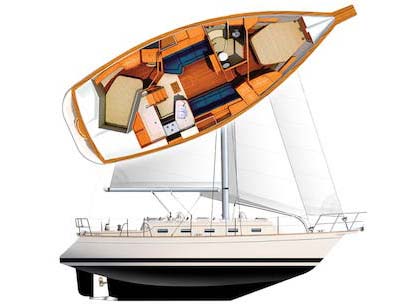
The interiors of Island boats are functional rather than luxurious, tailored for family cruising. Layouts typically feature two cabins with a main salon, compact galley, and head, making them practical for weekend or week-long trips. Storage is adequate but not as generous as in newer designs, and ventilation depends heavily on opening ports and hatches, which may require upgrading in older boats. While suitable for couples or small families, they are less ideal for long-term liveaboard life unless significant refits are undertaken. Many surviving examples have undergone interior renovations, and buyers should expect a mix of original finishes and modern updates.
Safety and Practicality
Safety on deck is supported by wide side decks and a simple, uncluttered rig, which facilitates mobility in rough weather. The cockpits are moderately deep, offering a secure feel, though smaller than those of modern designs with dual helms. With their straightforward systems, these boats are manageable for short-handed crews, an important consideration for aging sailors or couples. While primarily intended for coastal use, many have been successfully sailed offshore with proper preparation. The accessibility of systems—engine, wiring, plumbing—varies by model year but is generally straightforward, keeping ownership costs within reason.
Known Issues with the Island Packet 370
As with many boats of its era, Island sailboats may show signs of deck core moisture or delamination if poorly maintained. Osmosis in the hull is possible but not more frequent than in peers. Original engines, often small diesel units, may be underpowered by modern standards and could require repowering. Leaks around chainplates and hatches are commonly reported, as are outdated electrical systems. Many owners upgrade to modern electronics, add stronger ground tackle, or replace the fixed-blade prop with a folding version for improved sailing performance under power.
Market Availability and Pricing in the U.S.
The Island Packet 370 is a modern iteration of Island Packet’s heavy-displacement, blue-water pedigree; it was introduced in the early 2000s (first built about 2003) and production continued into the late 2010s, so it is now encountered almost exclusively on the used market rather than as a current new-build model.
In practice the 370 shows up regularly in coastal cruising hotspots: Florida and the southeastern U.S., New England and the mid-Atlantic (Rhode Island, Maryland), and on the West Coast (California); there are also a number of examples that have spent time in the Caribbean. Listings across sites demonstrate that you’ll find well-maintained owner boats, a handful of professionally brokered refits, and the occasional project or heavily used example.
Based on recent U.S. listings and broker pages, a realistic price band for a sound Island Packet 370—depending on year, equipment and refits—lands roughly in the $180,000–$235,000 range. Examples advertised in the mid-$180k to mid-$200k band are common; exceptionally outfitted or nearly new/low-hour boats push toward the top of that window.
When compared with alternatives in the same blue-water/coastal cruiser category, the 370 trades a slower hull speed and heavier displacement for a quiet motion, roomy tankage and systems laid out for owner-maintenance. There are also occasional units that have been used in charter or commercial service in the Caribbean—those examples often require more detailed mechanical and structural inspection because of higher hours and turnover.
| Model | LOA | Approx. Years Built | Typical Price (U.S.) | Principal differences |
|---|---|---|---|---|
| Island Packet 370 | ≈37.8′ | 2003–2019 | **$180,000–$235,000** | Heavy/displacement cutter; long-keel / skeg rudder architecture, built for comfort and seaworthiness. |
| Pacific Seacraft 37 (Crealock) | ≈36.9′ | 1979–2000s (various) | $65,000–$170,000 | Traditional cutter/fin-keel family, strong offshore pedigree, generally lighter and more performance-oriented than IP370. |
| Hallberg-Rassy 37 | ≈37.1′ | Early 2000s (2003–2012) | $195,000–$280,000+ | European, high-quality build, fin keel & spade rudder, more modern hull sections and premium outfitting—higher price point. |
| Tayana 37 | ≈37′ | 1976–late 1980s | $30,000–$80,000 | Traditional, heavy cruising cutter from the 1970s–80s; usually less expensive but variable condition and older systems. |
Island Packet 370 vs Pacific Seacraft 37

The Island Packet 370 emphasizes a comfortable, heavily built cruising platform with a long-keel / skeg-supported underwater profile and a cutter sail plan arranged for easy balance and motion comfort in a seaway. That structural choice makes it feel steady and forgiving on long passages, but it is heavier and slower to accelerate than the Crealock/Pacific Seacraft designs.
The Pacific Seacraft 37 (Crealock) typically presents a slightly narrower, more performance-tilted hull and a fin/long-fin keel with skeg rudder that offers crisper handling and quicker tacks—attributes that appeal to owners who want a livelier passagemaker. Practically, buyers choosing between the two must balance the Island Packet’s greater tankage, protected cockpit and owner-friendly systems against the Crealock’s lighter displacement, easier sailing in light airs, and often lower acquisition cost.
► Learn more about de Pacific Seacraft 37
Island Packet 370 vs Hallberg-Rassy 37

Both boats are aimed at serious cruisers, but the Hallberg-Rassy 37 is built to a European “premium production” standard with a fin keel and spade rudder that favour more modern underwater lines and slightly better passage speeds for a given sail area. As a result, the HR37 often feels more responsive on the helm and provides a more contemporary below-decks experience, while the Island Packet prioritizes motion comfort and offshore insurance against a confused sea.
From an ownership perspective, Hallberg-Rassy models usually command higher prices and expect more precision in maintenance and systems upkeep; Island Packet 370s, although well-built, typically attract owners who value simpler, robust systems and easier long-term maintenance. That translates into different resale profiles: HR can be pricier to buy and maintain but may hold value among buyers wanting a “turnkey” European cruiser; the 370 sells well to owners wanting rugged reliability and lower annual servicing demands.
► Learn more about de Hallberg-Rassy 37
Island Packet 370 vs Tayana 37

The Tayana 37 (and similar 1970s–80s heavy cutters) shares the Island Packet’s conservative design goals—strong hulls, full-length structure and real blue-water capability—but Tayana examples are older and therefore present a much wider spread of condition and refit history. That age spread means price can be attractive, but buyers should expect to invest in updated systems, rigging and interior refits more often than with many Island Packet 370s.
In sailing terms, Tayana hulls often feel very sea-kindly and robust but can lack the tankage, modern ergonomics and factory-installed systems (heating, refrigeration, modern electricity/electronics) that a later-generation IP370 typically provides. For a buyer focused on immediate, low-stress cruising with modest refit needs, the 370 is commonly the better “turnkey” choice; for a buyer on a tight acquisition budget willing to do work, a Tayana may offer similar offshore capability for less capital up front.
► Learn more about de Tayana 37
Maintenance Costs of a Island Packet 370 in the U.S.
Typical annual expenses for an Island 30 include:
- Mooring or marina fees: $2,500–$5,000 (higher in California and the Northeast, lower in the Southeast).
- Insurance: $800–$1,500 per year, depending on region and coverage.
- Engine servicing: $600–$1,000 annually, with potential repowering costs if the original engine remains.
- Antifouling paint: $1,500–$2,500 every 1–2 years.
- Standing and running rigging: Averaged at $800–$1,500 per year across replacement cycles.
- Sails: $2,000–$4,000 for a new set every 8–10 years, with ongoing maintenance costs in between.
Significant one-time costs may involve upgrading outdated electronics ($5,000–$10,000) or addressing deck core repairs. The Island 30 can often be owner-maintained thanks to its simple systems, which reduces costs compared to more complex boats. Overall, expenses are low to medium within its size range, and while resale values are modest, the affordability of entry helps balance the investment.
Conclusion
The Island sailboat stands out as a practical, value-driven option for sailors seeking reliability without high costs. Its strengths lie in conservative design, ease of handling, and low maintenance demands, while its weaknesses are mainly tied to aging systems and modest resale appeal. Best suited for coastal cruising and weekend sailing, it can also serve as an affordable entry point for families or individuals new to ownership.
For buyers, it offers a sensible balance: accessible pricing, proven durability, and straightforward sailing. While not a prestige purchase, it remains a dependable investment for those prioritizing function over fashion in the used sailboat market.
Specifications
| General | |
|---|---|
| Hull Type | Long keel w/rudder on skeg |
| Rigging Type | Cutter |
| LOA | 37.83 ft / 11.53 m |
| LWL | 31.00 ft / 9.45 m |
| Beam | 13.08 ft / 3.99 m |
| Displacement | 21,000.00 lb / 9,525 kg |
| Ballast | 8,300.00 lb / 3,765 kg |
| Ballast Type | Lead |
| Max Draft | 4.25 ft / 1.30 m |
| Construction | FG (Fiberglass) |
Designer / Builder | |
| First Built | 2003 |
| Last Built | 2019 |
| Builder | Island Packet Yachts (USA) |
| Designer | Robert K. Johnson |
Auxiliary Power / Tanks (original equipment) | |
| Make | Yanmar |
| Model | 4JH3BE |
| Type | Diesel |
| HP | 56 |
| Fuel | 75 gals / 284 L |
Accommodations | |
| Water | 160 gals / 606 L |
| Headroom | 6.42 ft / 1.96 m |
Sail Area / Rig & Sail Particulars | |
| S.A. (reported) | 814.00 ft² / 75.62 m² |
| I | 49.92 ft / 15.22 m |
| J | 15.08 ft / 4.60 m |
| P | 42.25 ft / 12.88 m |
| E | 14.25 ft / 4.34 m |
| S.A. Fore | 376.40 ft² / 34.97 m² |
| S.A. Main | 301.03 ft² / 27.97 m² |
| S.A. Total (100% Fore + Main) | 677.43 ft² / 62.94 m² |
| Estimated Forestay Length | 52.15 ft / 15.90 m |
| Mast Height from DWL | 53.83 ft / 16.41 m |
Performance Metrics / Calculations | |
| S.A. / Displ. | 17.18 |
| S.A./Displ. (calc.) | 14.29 |
| Bal. / Displ. | 39.52 |
| Disp: / Len | 314.69 |
| Comfort Ratio | 31.99 |
| Capsize Screening Formula | 1.90 |
| S# | 1.43 |
| Hull Speed | 7.46 kn |
| Pounds / Inch Immersion | 1,448.82 pounds/inch |
Disclaimer
The considerations and analyses presented regarding the Island Packet 370 sailboat are of a general nature and are based on the available information and technical data on this model, interpreted to the best of our knowledge and understanding. It is important to note that the specific characteristics of any particular sailboat may vary due to custom modifications, maintenance performed, and conditions of use over time, among other factors. Therefore, the details and performance of the boat you are considering may not exactly match the information provided here.
We strongly recommend that, before making any purchasing or usage decisions, you conduct a detailed inspection of the boat in question, consult with nautical professionals and other sailors, and consider your personal needs, expectations, and capabilities. Each sailboat may have unique particularities that affect its performance and suitability for different types of sailing and sailors.
The information contained in this analysis should be used as a general guide and not as a definitive reference. Professional evaluation and personal inspection are essential to ensure that the boat meets your specific requirements and expectations.