



The Island Packet 32 was introduced in the early 1990s by Island Packet Yachts, a Florida-based shipyard recognized for building sturdy, full-keel cruising sailboats. Designed by naval architect Bob Johnson, the 32 was conceived primarily as a coastal and offshore cruiser rather than a racing boat. From the beginning, its mission was to provide safety, comfort, and durability for sailors who wanted to explore beyond the weekend harbor.
This model quickly became popular among couples and small families seeking a manageable yacht that could handle extended passages. On the used market, the Island Packet 32 has maintained a steady demand, particularly among cruising enthusiasts and retirees who value comfort and seaworthiness over speed. Its reputation for solid construction makes it less common in charter fleets but well-regarded among private owners looking for a long-term investment.
Design and Construction
The hull of the Island Packet 32 features a full keel with a cutaway forefoot, a signature design of the brand that prioritizes directional stability and protection of underwater appendages. The rudder is keel-attached, reducing vulnerability to grounding damage compared with spade rudders. While this design sacrifices some agility compared to fin-keel boats, it greatly enhances confidence offshore.
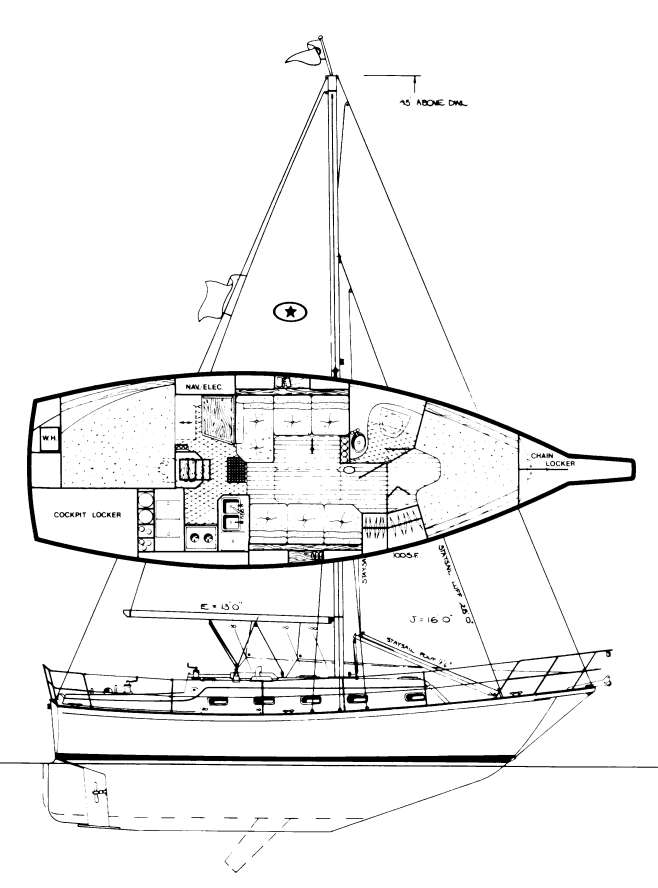
Rigged as a cutter, the sail plan offers versatility: the staysail provides balance in heavy winds, while the genoa improves performance in light air. The cutter rig is a hallmark of Island Packet design, appealing to bluewater sailors who want multiple sail options without handling oversized canvas.
Construction is solid fiberglass, with heavy layup typical of Island Packet standards. Decks are cored with plywood for stiffness, and bulkheads are securely tabbed to the hull. This robust approach increases durability and resale value, though it also adds weight, making the boat less sprightly in light air.
Performance
On the water, the Island Packet 32 sails conservatively. Its hull speed is modest, and it is not intended to compete with performance cruisers such as the Catalina 320 or Jeanneau Sun Odyssey 32. Instead, it excels at predictable, steady handling. In heavy weather, the boat tracks securely and resists pounding, a quality valued by long-distance sailors.
Upwind performance is limited by the full keel design; the boat does not point as high as fin-keel competitors. However, on a reach or downwind, it is comfortable and easy to balance. Compared to peers, it offers excellent directional stability, requiring less attention at the helm—ideal for shorthanded crews. Owners frequently praise the boat for being “safe and forgiving,” qualities often prioritized over speed when crossing long stretches of open water.
Comfort and Accommodations
Inside, the Island Packet 32 is designed for comfort over maximum berth count. The interior has a spacious saloon with an open layout, generous headroom, and plenty of storage for extended cruising. Ventilation is ensured by numerous opening ports and hatches, a strong point in warmer climates.
The galley is practical, with adequate counter space and a secure arrangement for use underway. A dedicated navigation station, a hallmark of serious cruising boats, underscores the yacht’s bluewater intent. The sleeping arrangements suit a couple or a small family: a V-berth forward, an aft quarter berth, and convertible saloon seating.
For long-term living aboard, the 32 provides the necessary comfort: tankage is generous for its size, and the joinery holds up well over decades. Many examples on the used market show tasteful owner upgrades, suggesting the interior ages gracefully and adapts well to modern refurbishments.
Safety and Practicality
Deck layout is simple and practical, with wide side decks and a secure cockpit. High bulwarks and sturdy lifelines provide confidence moving forward in rough seas. The cutter rig allows reefing flexibility without overburdening the crew, making the boat manageable for single-handers and older sailors.
Systems access is reasonably straightforward, although the boat’s traditional construction can make some areas tight to reach compared to more modern modular designs. Still, most critical systems—engine, tanks, and electrical panels—are accessible enough for regular maintenance. The full keel and attached rudder greatly reduce vulnerability to groundings, an important factor for sailors exploring shallow U.S. waters such as Florida and the Chesapeake.
Known Issues with the Island Packet 32
Like many Island Packets, the 32 is not immune to cosmetic gelcoat crazing, though this rarely compromises structural integrity. Some owners report deck core moisture, particularly around chainplates and hardware fittings, which is common in boats of this vintage.
Engines are often original Yanmars; while reliable, older units may require major service or replacement. Rudder bearings can develop play with age, though the keel-attached design reduces catastrophic risk. On the interior, older wiring and outdated electronics are typical upgrade points.
Common owner improvements include replacing the fixed-blade propeller with a feathering unit for slightly better light-wind performance, updating navigation electronics, and re-bedding deck hardware to prevent leaks.
Market Availability and Pricing in the U.S.
The Island Packet 32 is no longer in production, but it is widely available on the used market. Listings are most often found in Florida, the Gulf Coast, and the East Coast, where the brand has always been popular. Well-maintained examples generally fall between $55,000 and $75,000 USD, depending on condition, equipment, and recent refits.
Compared to competitors, the Island Packet 32 commands a premium due to its reputation for durability and seaworthiness. Alternatives like the Catalina 320 or Hunter 33 often list for slightly less but appeal to buyers prioritizing performance over rugged construction. Jeanneau and Beneteau models in the same size range often feature brighter interiors and lighter displacement, making them faster but arguably less confidence-inspiring offshore.
Below is a comparison with similar sailboats:
| Model | LOA | Years Built | Typical Price (U.S.) | Key Differences |
|---|---|---|---|---|
| Island Packet 32 | 32 ft | 1991–1997 | $55,000–$75,000 | Full keel, cutter rig, emphasis on safety and comfort |
| Catalina 320 | 32 ft | 1993–2003 | $40,000–$55,000 | Fin keel, faster, lighter, less robust offshore |
| Hunter 33 | 33 ft | 1980s–2000s | $35,000–$50,000 | Spade rudder, more performance-oriented, lighter build |
| Jeanneau Sun Odyssey 32 | 32 ft | 1990s–2000s | $40,000–$60,000 | European styling, quicker under sail, less tankage |
Maintenance Costs of a Island Packet 32 in the USA
Annual ownership costs vary by region. Dockage in Florida or the Northeast may range from $3,000 to $7,000 per year, while insurance typically costs $1,500–$3,000 depending on cruising area and coverage. Routine engine servicing and winterization run around $1,000 annually.
Antifouling bottom paint averages $2,000 every one to two years, and standing rigging inspections may cost another $1,000–$1,500. Sail replacement, when needed, is a significant outlay—$6,000–$10,000 for a full suit. Electronics upgrades, often necessary on older boats, can range from $5,000 to $15,000 depending on complexity.
Because the Island Packet 32 is heavily built and designed with simplicity in mind, many maintenance tasks can be handled by a competent owner, reducing reliance on professional yards. Overall, annual running costs typically fall in the $8,000–$12,000 range, placing the boat in the medium-to-high category for its size. However, its strong resale value often compensates for these expenses.
Conclusion
The Island Packet 32 stands out as a solidly constructed, cutter-rigged cruiser that prioritizes safety, comfort, and practicality over raw performance. Its full keel and traditional design may limit speed, but they offer confidence and durability unmatched in many lighter-production yachts.
Best suited for couples or small families seeking a reliable boat for extended coastal cruising—and with preparation, occasional offshore passages—it offers a stable market presence with good resale value. For buyers who appreciate a conservative but trustworthy design, the Island Packet 32 remains a smart and enduring choice in the 30-foot cruising range.
Specifications
| Hull Type | Long Keel |
| Rigging Type | Cutter |
| LOA | 35.00 ft / 10.67 m |
| LWL | 28.58 ft / 8.71 m |
| S.A. (reported) | 654.00 ft² / 60.76 m² |
| Beam | 11.50 ft / 3.51 m |
| Displacement | 13,500 lb / 6,123 kg |
| Ballast | 5,950 lb / 2,699 kg |
| Max Draft | 4.33 ft / 1.32 m |
| Construction | Fiberglass (FG) |
| Ballast Type | Lead |
| First Built | 1990 |
| Last Built | 1996 |
| # Built | 120 |
| Builder | Island Packet Yachts (USA) |
| Designer | Robert Johnson |
| Auxiliary Power (original) | Yanmar Diesel, 27 HP |
| Fuel Capacity | 28 gals / 106 L |
| Water Capacity | 85 gals / 322 L |
| S.A./Displ. | 18.52 |
| Bal./Displ. | 44.07 |
| Disp./Len. | 258.17 |
| Comfort Ratio | 26.44 |
| Capsize Screening Formula | 1.94 |
| S# | 1.98 |
| Hull Speed | 7.16 kn |
| Pounds/Inch Immersion | 1,174.37 pounds/inch |
| I | 41.42 ft / 12.62 m |
| J | 16.00 ft / 4.88 m |
| P | 34.33 ft / 10.46 m |
| E | 13.00 ft / 3.96 m |
| S.A. Fore | 331.36 ft² / 30.78 m² |
| S.A. Main | 223.15 ft² / 20.73 m² |
| S.A. Total (100% Fore + Main) | 554.51 ft² / 51.52 m² |
| S.A./Displ. (calculated) | 15.70 |
| Estimated Forestay Length | 44.40 ft / 13.53 m |
| Mast Height from DWL | 45.00 ft / 13.72 m |
Disclaimer
The considerations and analyses presented regarding the Island Packet 32 sailboat are of a general nature and are based on the available information and technical data on this model, interpreted to the best of our knowledge and understanding. It is important to note that the specific characteristics of any particular sailboat may vary due to custom modifications, maintenance performed, and conditions of use over time, among other factors. Therefore, the details and performance of the boat you are considering may not exactly match the information provided here.
We strongly recommend that, before making any purchasing or usage decisions, you conduct a detailed inspection of the boat in question, consult with nautical professionals and other sailors, and consider your personal needs, expectations, and capabilities. Each sailboat may have unique particularities that affect its performance and suitability for different types of sailing and sailors.
The information contained in this analysis should be used as a general guide and not as a definitive reference. Professional evaluation and personal inspection are essential to ensure that the boat meets your specific requirements and expectations.