



The Jeanneau Sun Odyssey 409 arrived as Jeanneau’s mid-size, family-cruiser answer in the early 2010s—a modern, hard-chine hull penned by Philippe Briand and offered to owners who wanted an easy-to-handle coastal passagemaker with a performance edge and a comfortable, light interior. Designed and launched around 2010, the 409 replaced the Sun Odyssey 39i in the line and was built in reasonable numbers for a production model, finding buyers among cruising couples, families and owner-operators who wanted short-handed sailing capability plus a liveable saloon. On the used market the 409 has carved a steady niche: active enough for owners who value sailing manners, but commoditized enough that private sellers and brokers regularly list well-equipped examples.
Design and Construction
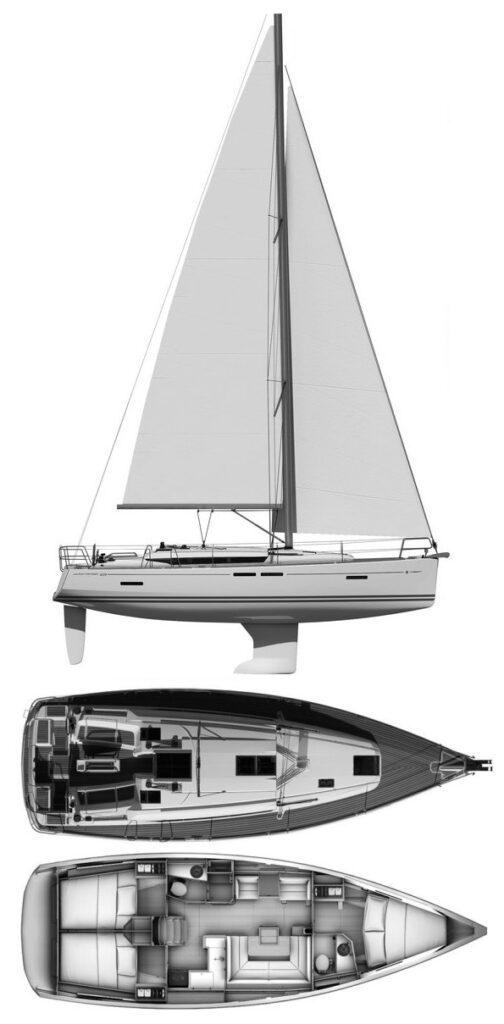
Jeanneau’s 409 is built around a modern production recipe: a relatively fine entry that broadens aft, a hard chine to increase form stability, a fin keel with a weighted bulb and a spade rudder—all in hand-laid fiberglass with localized structural reinforcements where loads concentrate. The fractional rig and careful deck lead geometry put most controls within reach of the helm, which is a deliberate architecture choice that favors short-handed handling and safer cockpit work. From a buyer’s viewpoint these construction and arrangement choices bring practical trade-offs: the boat is reparable by conventional GRP yard methods and benefits from good factory support, but longevity depends on disciplined bedding of chainplates, deck fittings and the mast step. In short, the 409’s structure maximizes interior volume and sailing performance for its size while placing a premium on routine preventive maintenance—exactly the kind of balance many cruisers want.
Performance
The Sun Odyssey 409 was repeatedly praised in contemporary sea trials for giving energetic, predictable performance without demanding a racing crew. Test sails and reviews report comfortable speeds near hull speed in moderate air and confident behavior in short chop: reviewers logged sensible boat speeds under sail and found the 40-hp auxiliary adequate for docking and motoring at displacement hull speeds. The hard chine and hull form give notable form stability that helps the boat feel stiff when reefing, and the fractional rig produces a powerful, easy-trim mainsail that simplifies reefing strategy and sail balance for a couple. Compared to older, heavier American full-keel cruisers the 409 accelerates and points better; versus modern European peers it sits neatly in the middle—more cruising-focused than sport-only designs, but clearly tuned for lively coastal passagemaking.
Comfort and Accommodations
Where the 409 stands out is the feeling of space and light below: a well-proportioned saloon, clever locker placement and a variety of factory layouts (two- or three-cabin options) that adapt to couples, families or occasional guests. Headroom and natural ventilation are good for a forty-foot boat, and the layout typically places a sensible galley-to-cockpit flow that works while cooking underway. For weekender couples it’s immediately liveable; for longer cruising the usual upgrades—larger fridge, extra battery capacity, watermaker or generator—are straightforward and commonly fitted by owners. Cosmetic aging is usually cosmetic only: joinery weathers nicely if maintained, and many sellers present tasteful refits that improve resale and live-ability without structural intervention.
Safety and Practicality
Deck ergonomics and line routing were designed with short-handed safety in mind—sheet leads, winch placement and visibility from aft helm positions let a couple manage sail changes without leaving the cockpit. The fin-keel / spade-rudder combination gives direct helm feel and good close-quarters maneuverability, but the unprotected rudder and production chainplate arrangements mean that buyers planning extended offshore work should inspect these areas carefully and consider modest reinforcements. Access to the engine bay and service panels is generally good for a production boat, which lowers routine service costs; nonetheless, long-range cruising should include confirmation of tankage capacity, bilge pumping redundancy and robust electrical backups.
Known Issues with the Jeanneau Sun Odyssey 409
Owners and surveyors typically point to a handful of common attention items rather than systemic design failures. The usual suspects are bedding and deck-fitting leaks (chainplates, coachroof hatches and the mast step area) which—if ignored—can produce localized core saturation. Osmosis is not a widespread complaint on the 409, but like all production GRP boats it’s something to check on older hulls. Mechanical and systems items follow expected aging patterns: exhaust hardware, engine-mount wear, sail condition and electronics renewal show up on many pre-purchase lists. Practical, frequently recommended buyer actions include a focused mast-step and chainplate inspection, scheduled standing-rigging replacement on interval, rebedding of deck hardware where necessary, and modernizing navigation/electrical systems—investments that materially reduce future survey notes and improve resale.
Market Availability and Pricing in the U.S.
The Sun Odyssey 409 is no longer in current production and is sold exclusively on the pre-owned market; U.S. availability is concentrated in cruising hubs where brokers list European imports or trade-in stock—Florida, New England, and the West Coast appear most often. Contemporary U.S. listings and brokerage portals show asking prices that vary with year and equipment: typical asking ranges for clean, well-equipped 2011–2015 examples commonly cluster in the $170,000–$235,000 bracket, with lower-priced project boats and higher-spec late-model examples outside that band. Buying strategy matters: well-documented maintenance and recent refits command a premium, while survey-flagged bedding or rigging work is a clear negotiation point.
Here is a comparison with three similar models commonly considered by cruisers:
| Model | LOA | Approx. Years Built | Typical US Used Price | Main Differences |
|---|---|---|---|---|
| Jeanneau Sun Odyssey 409 | ≈40.5 ft | 2010–2015 | $170,000–$235,000 | Hard-chine hull, fractional rig, focus on light interior and short-handed ergonomics. |
| Beneteau Oceanis 41 | ≈41.0 ft | 2009–2015 | $140,000–$225,000 | Broad market support, slightly softer motion, many layout options and strong dealer networks. |
| Dufour 405 Grand Large | ≈40.0 ft | 2009–2012 | $120,000–$170,000 | Performance-leaning Euro hull, refined finish and twin-helm ergonomics. |
| Catalina 42 MkII | ≈43.2 ft | 1995–2008 | $65,000–$180,000 | American production cruiser with conservative hull form, robust systems and wide owner support. |
Jeanneau Sun Odyssey 409 vs Beneteau Oceanis 41

Both boats occupy the same buyer sweet spot—comfortable coastal cruisers with contemporary styling—but the Jeanneau emphasizes a harder chine and slightly sportier hull tuning that translates into crisper acceleration and a stiffer feel when reefing. The Oceanis often presents a softer-motion ride in light airs and benefits from an extensive Beneteau dealer network and many factory layout options; buyers who want the most forgiving motion and strong local support may prefer the Oceanis, while those prioritizing a livelier passage-making character and a bright salon often choose the Jeanneau.
► Learn more about de Benetau Oceanis 41
Jeanneau Sun Odyssey 409 vs Dufour 405 Grand Large

The Dufour 405 leans more toward performance-oriented hull lines and a high-quality interior finish, whereas the 409 balances performance with a greater emphasis on deck ergonomics for short-handed cruising. If a buyer’s program includes spirited coastal passagemaking and sharper helm feedback, the Dufour will likely feel more rewarding; if the priority is a proven, well-supported platform with comfortable everyday ergonomics and broad market visibility, the 409 is an attractive compromise.
► Learn more about de Dufour 405 Grand Large
Jeanneau Sun Odyssey 409 vs Catalina 42 MkII

Compared with the Catalina 42 MkII, the 409 is the more modern, Euro-styled choice with better acceleration and a lighter, more responsive feel; the Catalina trades some of that edge for conservative systems, higher tankage options and owner-serviceability prized by do-it-yourself cruisers. For buyers who value simple, familiar systems and a very forgiving motion, the Catalina can be more practical; for those seeking modern lines, deck ergonomics and a brisker sailing character, the Jeanneau typically offers a better match.
► Learn more about de Catalina 42 MkII
Maintenance Costs of a Jeanneau Sun Odyssey 409 in the USA
A realistic annual cost outline for a forty-foot European production cruiser—each item bolded with a short comment:
- Mooring / Slip / Storage: $3,000–$18,000 per year depending on marina, season and region (Florida tends to be cheaper year-round; New England and California are at the top end).
- Insurance: $1,000–$3,500 per year depending on insured value, cruising area and deductibles; offshore or charter use raises premiums.
- Engine servicing & consumables: $500–$2,000 per year for routine oil, filters, impellers and belts; major engine interventions cost several thousand dollars.
- Antifouling & haul-out: $800–$3,000 per haul depending on paint system and yard labor; frequency and winter storage plans significantly affect the yearly average.
- Standing & running rigging (reserve): Reserve $300–$1,000 annually; full standing-rigging replacement every 10–15 years typically runs $3,000–$8,000+.
- Sails (amortized): $0–$6,000 per year amortized; mains and primary headsails are multi-thousand dollar periodic costs when replaced.
- Electronics & batteries: $200–$2,000 per year amortized; a modern chartplotter/AIS/radar/refit commonly costs $5k–$15k.
- Miscellaneous (plumbing, canvas, cushions, gelcoat): $500–$4,000/year variable with age and owner taste.
Significant one-time costs to budget for include major sail replacement, standing-rigging renewal, an electronics refit, or professional repairs for any mast-step or deck-core work found on survey. Many routine tasks—bedding small fittings, varnish touchups, battery replacement—are owner-doable for capable owners; structural repairs, mast-step reinforcement or complex transmission work normally require yard expertise. On balance, for a 40-foot modern cruiser expect medium annual ownership costs: proactive maintenance preserves resale value and usually makes the investment pay off when selling a well-kept example.
Conclusion
The Jeanneau Sun Odyssey 409 is a compelling, practical option for buyers who want a modern, well-balanced coastal cruiser: it combines a bright, commodious interior with a hull that rewards sensible sail trim and short-handed work. Strengths include hull efficiency, deck ergonomics that favor single- or double-handed sailing, and an interior that lives larger than its length. The trade-offs are familiar—attention to bedding, chainplates and the mast step are essential—but these are manageable, predictable costs that experienced buyers factor into pricing and surveys. For couples and families who want an agile, comfortable boat for coastal passagemaking and seasonal cruise itineraries, the 409 is worth pursuing; buying after a careful survey and addressing routine attention items will maximize enjoyment and protect resale value.
Specifications
| Hull Type: | Fin w/bulb & spade rudder |
| Rigging Type: | Fractional Sloop |
| LOA: | 40.49 ft / 12.34 m |
| LWL: | 36.09 ft / 11.00 m |
| S.A. (reported): | 773.00 ft² / 71.81 m² |
| Beam: | 13.09 ft / 3.99 m |
| Displacement: | 16,424.00 lb / 7,450 kg |
| Ballast: | 4,982.00 lb / 2,260 kg |
| Max Draft: | 6.89 ft / 2.10 m |
| Construction: | FG |
| Ballast Type: | Iron |
| First Built: | 2010 |
| Last Built: | 2015 |
| Builder: | Jeanneau |
| Designer: | P. Briand |
| Auxiliary Power (orig. equip.): | Yanmar 3JH5-CE Diesel, 40 HP |
| Fuel Capacity: | 53 gals / 201 L |
| Water Capacity: | 87 gals / 329 L |
| S.A. / Displ.: | 19.21 |
| Bal. / Displ.: | 30.33 |
| Disp. / Len.: | 155.98 |
| Comfort Ratio: | 22.08 |
| Capsize Screening Formula: | 2.06 |
| S#: | 3.59 |
| Hull Speed: | 8.05 kn |
| Pounds/Inch Immersion: | 1,688.00 pounds/inch |
| I: | 50.85 ft / 15.50 m |
| J: | 14.83 ft / 4.52 m |
| P: | 49.21 ft / 15.00 m |
| E: | 16.08 ft / 4.90 m |
| S.A. Fore: | 377.05 ft² / 35.03 m² |
| S.A. Main: | 395.65 ft² / 36.76 m² |
| S.A. Total (100% Fore + Main Triangles): | 772.70 ft² / 71.79 m² |
| S.A./Displ. (calc.): | 19.21 |
| Est. Forestay Length: | 52.97 ft / 16.15 m |
Disclaimer
The considerations and analyses presented regarding the Jeanneau Sun Odyssey 409 sailboat are of a general nature and are based on the available information and technical data on this model, interpreted to the best of our knowledge and understanding. It is important to note that the specific characteristics of any particular sailboat may vary due to custom modifications, maintenance performed, and conditions of use over time, among other factors. Therefore, the details and performance of the boat you are considering may not exactly match the information provided here.
We strongly recommend that, before making any purchasing or usage decisions, you conduct a detailed inspection of the boat in question, consult with nautical professionals and other sailors, and consider your personal needs, expectations, and capabilities. Each sailboat may have unique particularities that affect its performance and suitability for different types of sailing and sailors.
The information contained in this analysis should be used as a general guide and not as a definitive reference. Professional evaluation and personal inspection are essential to ensure that the boat meets your specific requirements and expectations.