



The Marlow-Hunter 33 arrived as a compact, modern cruiser intended for couples and small families who wanted straightforward short-handed sailing without sacrificing interior comfort. Designed by Glenn Henderson and the Hunter design team and introduced around 2011–2012 (initially marketed as the Hunter E33 before the Marlow-Hunter rebranding), the boat was positioned as a “compact cruiser” with contemporary styling—large hull windows, a roomy cockpit and optional user-friendly features such as in-mast furling and a drop-down swim platform.
On the used market the 33 is reasonably visible in the U.S. inventory thanks to a steady trickle of trade-ins and private resales; buyers tend to be cruising couples, coastal owners who want a manageable liveaboard, and private owners rather than big charter fleets. Recent U.S. listings show the model frequently offered by brokers in east and west coast yards, which keeps it well represented among mid-size coastal cruisers.
Design and Construction
Marlow-Hunter took the familiar Hunter formula—B&R rig, broad stern, emphasis on cockpit comfort—and refined it into a 33-foot hull that is relatively beamy aft, with a fin keel and spade rudder (or shoal/wing/shoal-option configurations in some markets). The signature B&R swept spreader rig is a fractional arrangement that removes the backstay and allows a larger roach in a slab-reefed main or, optionally, a simpler in-mast furling main. That rig choice reduces standing-rigging complexity and makes the boat very easy to manage short-handed, though it also changes sail-shape options for a performance-minded buyer.
Construction is conventionally fiberglass with solid laminate below the waterline and a cored deck; Hunter’s production techniques and material choices aim to balance cost, weight and durability. The result is a boat that will accept routine yard repairs without exotic procedures, and that tends to hold value for owners who keep the structural items (keel bolts, chainplate areas, deck cores) under regular inspection. The trade-offs are typical: accessible systems and simple structural layout make DIY maintenance feasible, but like any production cruiser the long-term condition depends heavily on how faithfully owners follow antifouling, seacock and rigging inspection schedules.

Performance
The Marlow-Hunter 33 sails as a comfortable coastal cruiser. Reviews and sea trials describe a hull that accelerates easily on a reach, holds a steady pace to windward and will often cruise in the high-5s to low-7s knots range in moderate conditions; testers noted that the deeper-keel versions and a slab-reefed, full-battens main improve upwind trim and pointing compared with a furling-main configuration. In practical terms the 33 is not an all-out racer but it is lively and confidence-inspiring for family cruising and club racing.
Compared with older, narrower 33-foot designs the boat’s wider stern and longer dynamic waterline favor off-wind speed and interior volume, while the B&R rig gives easy short-handed control at the expense of some sail-plan tuning options. For buyers who prize simple handling and enjoyable coastal performance, the balance is attractive; buyers who prioritize outright light-air pointing or racing-edge sail shapes will want to specify a non-furling main and consider performance pages carefully.
Comfort and Accommodations
One of the Marlow-Hunter 33’s strongest selling points is livability. Large hull windows and an open companionway make the saloon bright, the cockpit is intentionally long and sociable, and systems (fuel/water capacity, galley layout, storage) are sized for real cruising rather than occasional daysails. Many owner reports and reviews praise the usable aft cabin and the practical galley arrangement; for weekenders and seasonal cruisers the comfort level is high without immediate refit needs.
That said, a buyer planning extended live-aboard life should budget for upgrades: improved refrigeration, upgraded heating/ventilation and modern electronics are common refit items to make the 33 comfortable for multi-week passages. Interiors tend to age gracefully if joinery is looked after, but upholstery, upholstery hardware and water-sensitive trims do represent normal mid-life refresh items in the used market.
Safety and Practicality
Deck ergonomics and hardware placement reflect Hunter’s focus on safety for short-handed crews: deepish coamings, a well-protected cockpit and easily led control lines make single-handing and short-handed cruising straightforward. The optional fold-down swim platform improves access to the water and marina life but should be inspected on older boats for hinge corrosion and seal integrity. Engine access is generally good for the class (many boats use Yanmar 20–30 hp diesels or similar saildrive installations), and systems are laid out so that common servicing tasks are possible without a major yard intervention.
For true offshore passagemaking the boat benefits from targeted upgrades—redundant navigation/electrics, watermaker or additional tankage, and rigorous standing-rigging checks—but out of the box it’s best thought of as a confident coastal and near-offshore cruiser rather than an unmodified ocean-crossing yacht.
Known Issues with the Marlow-Hunter 33
A recurring theme in owner forums and test reports is the compromise that comes with convenience options. The optional in-mast furling main simplifies sail handling but has the well-documented drawbacks of increased weight aloft, less efficient sail shape and occasional furling-line jams if the system or sail isn’t well maintained. Owners who want better light-air or upwind performance frequently replace the in-mast furling main with a full-battens slab-reefed main or fit a hybrid solution.
Other typical concerns are routine for modern production boats: saildrive alignment and maintenance; corrosion or wear on cutless bearings and propeller assemblies; and the usual deck-seal and hatch gasket deterioration. Buyers should inspect keel coatings (iron or lead keels are options on many Hunters), chainplate beds and seacocks carefully. Commonly recommended buyer upgrades include a solid full-battens mainsail (if performance matters), modern navigation/electronics and periodic servicing or replacement of standing rigging if age warrants it.
Market Availability and Pricing in the U.S.
The Marlow-Hunter 33 was built beginning about 2011 (marketed as the Hunter E33 at first) and remains well represented on the used market; U.S. listings are concentrated where Hunter/Marlow dealer networks and private brokers operate (Florida, the Mid-Atlantic and parts of the West Coast). Broker and listing platforms show numerous used examples, and asking prices vary widely with condition, year, equipment and location.
A realistic U.S. used-market range for sensible, brokered examples sits roughly between $45,000–$95,000, with clean, well-equipped 2012–2016 boats toward the top end and project or minimally equipped hulls toward the bottom. Recent advertised asking prices on U.S. broker sites have commonly appeared in the mid-$50k–$75k band, making the 33 competitive versus similar compact cruisers and attractive for buyers who want contemporary features without brand-new pricing.
Below is a comparison with similar sailboats from the same era:
| Model | LOA | Approx. Years | Typical U.S. Used Price | Main difference |
|---|---|---|---|---|
| Marlow-Hunter 33 | ~33.5 ft | 2011–2018+ | $45,000–$95,000 | Modern Hunter styling, B&R fractional rig, emphasis on cockpit comfort and ease of handling. :contentReference[oaicite:12]{index=12} |
| Beneteau 331 / Oceanis 331 | ~33 ft | 2000–2005 | $45,000–$75,000 | European builder with efficient hull, similar cruising focus but older production years and differing interior layout. :contentReference[oaicite:13]{index=13} |
| Jeanneau Sun Odyssey 33i | ~33 ft | 2006–2014 | $60,000–$90,000 | Contemporary European design with strong emphasis on interior light and cruising comfort; sometimes pricier in U.S. listings. :contentReference[oaicite:14]{index=14} |
| Catalina 30 / 315 family | ~30–33 ft | 1990s–2010s | $15,000–$85,000 | Very common in the U.S., large parts/support network and broad price spread; often easier to maintain regionally. :contentReference[oaicite:15]{index=15} |
Marlow-Hunter 33 vs Beneteau Oceanis 331
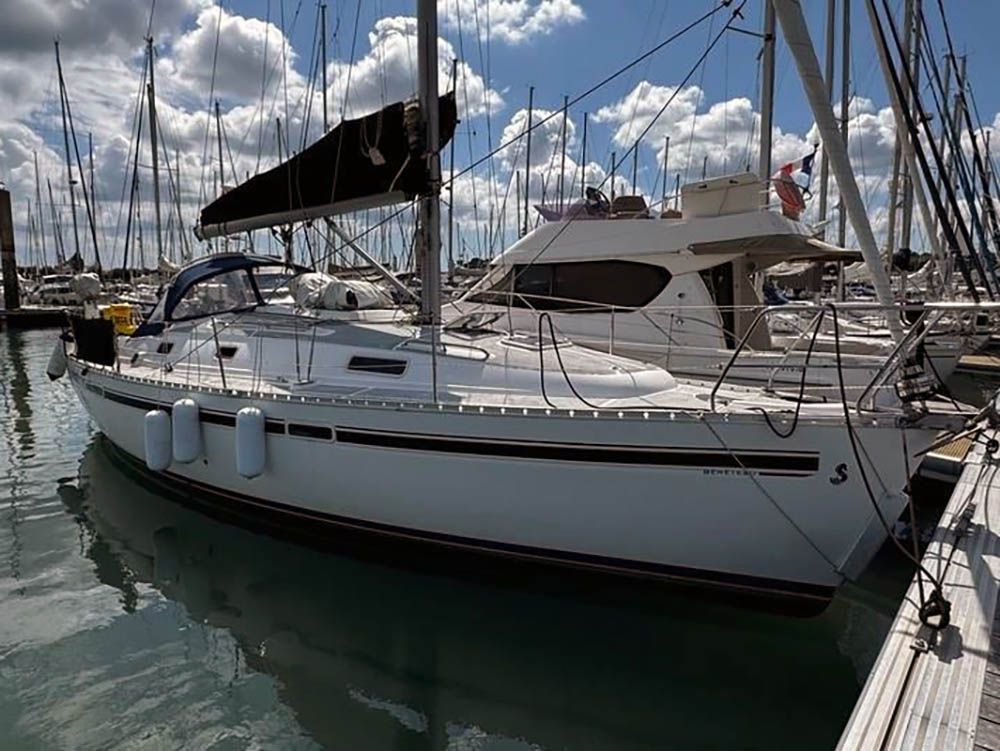
The Marlow-Hunter 33 emphasizes easy handling and cockpit comfort in a modern package, using the B&R rig and user-friendly fittings to make short-handed sailing simple; the Beneteau 331 leans on classic European production refinements and efficient hull lines that give strong performance for their era. For buyers, the Beneteau can feel a touch more traditionally “sail-efficient,” while the Marlow-Hunter trades a little theoretical speed for significantly easier day-to-day handling and a more social cockpit layout.
Maintenance expectations are similar—both are fiberglass production boats with widely available yard support—but Beneteau examples may demand more regional sourcing for parts in some U.S. ports, whereas Hunter-brand systems and dealer networks (and the commonality of Marlow-Hunter listings) can simplify local service and resale.
► Learn more about de Beneteau Oceanis 331
Marlow-Hunter 33 vs Jeanneau Sun Odyssey 33i
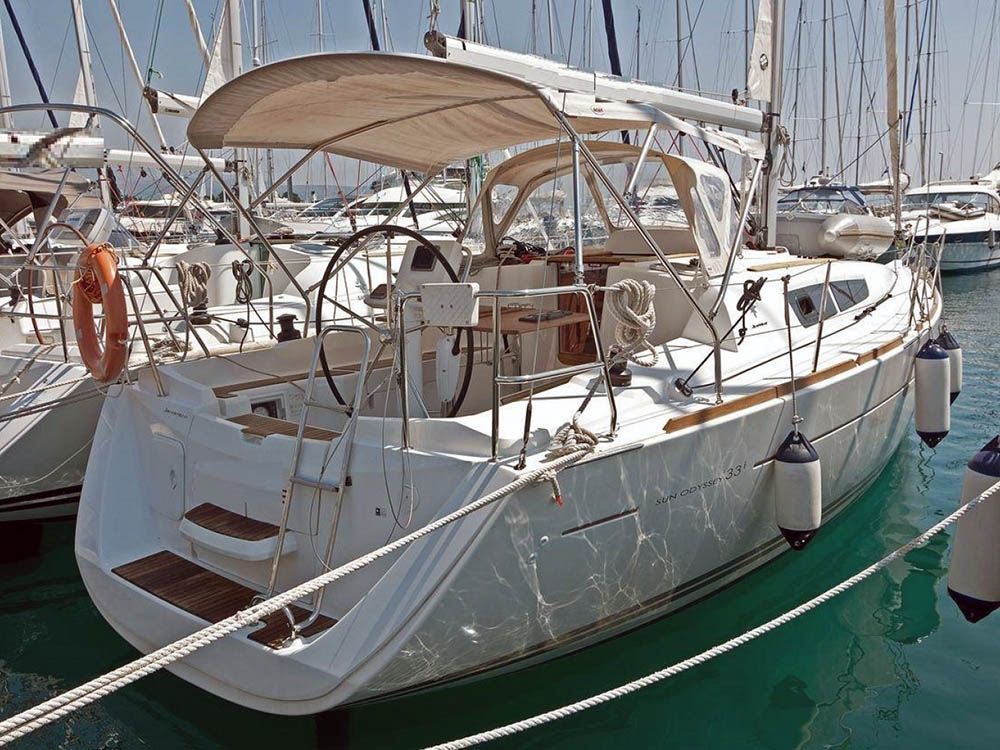
Jeanneau’s 33i typically presents a strong European fit-and-finish and sometimes slightly finer underwater lines aimed at balance and comfort; the Marlow-Hunter 33 competes by offering simpler short-handed systems (B&R rig and furling options) and a cockpit designed for active family use. In practical ownership terms, Jeanneau boats can be marginally pricier on the used market but often reward buyers with a perceived upgrade in interior finish and hull refinement; the Marlow-Hunter is frequently chosen by owners prioritizing ease of use, a roomy cockpit and dealer familiarity in the U.S.
If resale and dealer support in your region are critical, compare local inventories—Jeanneau may carry a stronger European dealer footprint, while Marlow-Hunter examples often show up in U.S. brokerages with factory-supported parts histories.
► Learn more about de Jeanneau Sun Odyssey 33i
Marlow-Hunter 33 vs Catalina 30

Catalina’s long U.S. pedigree gives it an advantage in parts availability, aftermarket support and a very large pool of owner knowledge; the Marlow-Hunter 33 offers a more modern deck and cabin design, and typically a little more creature comfort at the same LOA. For an American buyer who values ease of servicing, widespread replacement parts and abundant cheap brokered examples, Catalina models are compelling; for someone who wants contemporary styling, a bigger cockpit and newer systems in a 33-foot package, the Marlow-Hunter can be the smarter purchase.
From a maintenance perspective, Catalinas often benefit from cheaper local labor and huge parts catalogs, whereas Marlow-Hunter owners may plan for a bit more selective sourcing but enjoy a boat that is friendlier to short-handed cruising from day one.
► Learn more about de Catalina 30
Maintenance Costs of a Marlow-Hunter 33 in the U.S.
Typical annual and periodic costs (ranges reflect regional differences and owner choices):
- Mooring / slip fees – $2,000–$10,000/year — depends heavily on region and whether you use a transient, seasonal, or annual slip.
- Insurance – $400–$1,500/year — hull value, cruising area and experience level drive premiums.
- Engine servicing – $300–$1,200/year — routine oil/filter changes and impeller service; larger engine work or saildrive service raises costs.
- Antifouling (haul, paint, small repairs) – $400–$1,800 every 1–2 years — hauling and labor rates vary strongly by marina and season.
- Standing rigging inspection / replacement – $0–$4,000+ — inspections are inexpensive; full replacement every ~10–15 years is the big periodic expense.
- Sails (maintenance & replacement) – $200–$1,200/year for repairs; $2,000–$8,000 for a full new set depending on materials and whether you replace a furling main with a full-battens main.
- Electronics & electrical – $200–$3,000/year incremental; $4,000–$12,000+ for a top-end nav/electronics refit (plotter, autopilot, AIS, radar).
- Hull, deck and systems reserve – $1,000–$4,000/year reserve for gelcoat, seacock servicing, plumbing, and unexpected items.
Regional note: New England and California top out the haul/out and storage costs; Florida and the Southeast can be competitive for yard labor but have hurricane-season insurance considerations. Significant one-time costs to budget for include standing-rigging replacement, a major engine or saildrive service/repower and a full electronics and safety-gear upgrade. An owner with competent DIY skills can reduce annual costs noticeably; professionally maintained boats will sit toward the higher end of the bands. Overall cost for a 33-ft modern production cruiser is medium—not inexpensive, but reasonable for a well-equipped coastal cruiser—and sensible maintenance tends to preserve resale value in this active used segment.
Conclusion
The Marlow-Hunter 33 is a pragmatic modern compact cruiser that answers a common owner question: how do I get contemporary comforts, a social cockpit and simple, short-handed sailing in a manageable package? Its strengths are obvious—easy handling (B&R rig and furling options), bright interior, and a cockpit geared to real family use—while its downsides are largely the predictable ones that come with convenience options (in-mast furling trade-offs, saildrive/keel maintenance considerations).
For buyers seeking a comfortable coastal cruiser that’s easy to single- or double-hand and fits well into the modern marina lifestyle, the Marlow-Hunter 33 is worth strong consideration, especially if you prioritize cockpit comfort and simple sail handling. It’s a solid value in the used market when you factor in realistic refit budgets; buy a well-documented example, address the common upgrades (sails, electronics, rigging as needed), and the 33 will serve as a reliable, enjoyable coastal cruiser with respectable resale appeal.
Specifications
| General Information | |
|---|---|
| Hull Type | Fin w/bulb & spade rudder |
| Rigging Type | B&R Fractional |
| LOA | 32.35 ft / 9.86 m |
| LWL | 29.66 ft / 9.04 m |
| S.A. (reported) | 581.00 ft² / 53.98 m² |
| Beam | 11.84 ft / 3.61 m |
| Displacement | 11,854.00 lb / 5,377 kg |
| Ballast | 3,380.00 lb / 1,533 kg |
| Max Draft | 5.41 ft / 1.65 m |
| Construction | FG |
| First Built | 2015 |
| Builder | Marlow Hunter (USA) |
| Designer | Glenn Henderson |
Auxiliary Power / Tanks | |
| Type | Diesel |
| HP | 20 |
| Fuel | 21 gals / 79 L |
Accommodations | |
| Water | 50 gals / 189 L |
Sailboat Calculations | |
| S.A. / Displ. | 17.94 |
| Bal. / Displ. | 28.51 |
| Disp. / Len. | 202.82 |
| Comfort Ratio | 22.36 |
| Capsize Screening Formula | 2.08 |
| Hull Speed | 7.30 kn |
| Pounds/Inch Immersion | 1,254.78 pounds/inch |
Rig and Sail Particulars | |
| I | 35.76 ft / 10.90 m |
| J | 11.25 ft / 3.43 m |
| P | 3.64 ft / 1.11 m |
| E | 36.45 ft / 11.11 m |
| SPL/TPS | 46.55 ft / 14.19 m |
| S.A. Fore | 201.15 ft² / 18.69 m² |
| S.A. Main | 66.34 ft² / 6.16 m² |
| S.A. Total (100% Fore + Main Triangles) | 267.49 ft² / 24.85 m² |
| S.A. / Displ. (calc.) | 8.26 |
| Est. Forestay Length | 37.49 ft / 11.43 m |
Disclaimer
The considerations and analyses presented regarding the Marlow-Hunter 33 sailboat are of a general nature and are based on the available information and technical data on this model, interpreted to the best of our knowledge and understanding. It is important to note that the specific characteristics of any particular sailboat may vary due to custom modifications, maintenance performed, and conditions of use over time, among other factors. Therefore, the details and performance of the boat you are considering may not exactly match the information provided here.
We strongly recommend that, before making any purchasing or usage decisions, you conduct a detailed inspection of the boat in question, consult with nautical professionals and other sailors, and consider your personal needs, expectations, and capabilities. Each sailboat may have unique particularities that affect its performance and suitability for different types of sailing and sailors.
The information contained in this analysis should be used as a general guide and not as a definitive reference. Professional evaluation and personal inspection are essential to ensure that the boat meets your specific requirements and expectations.