


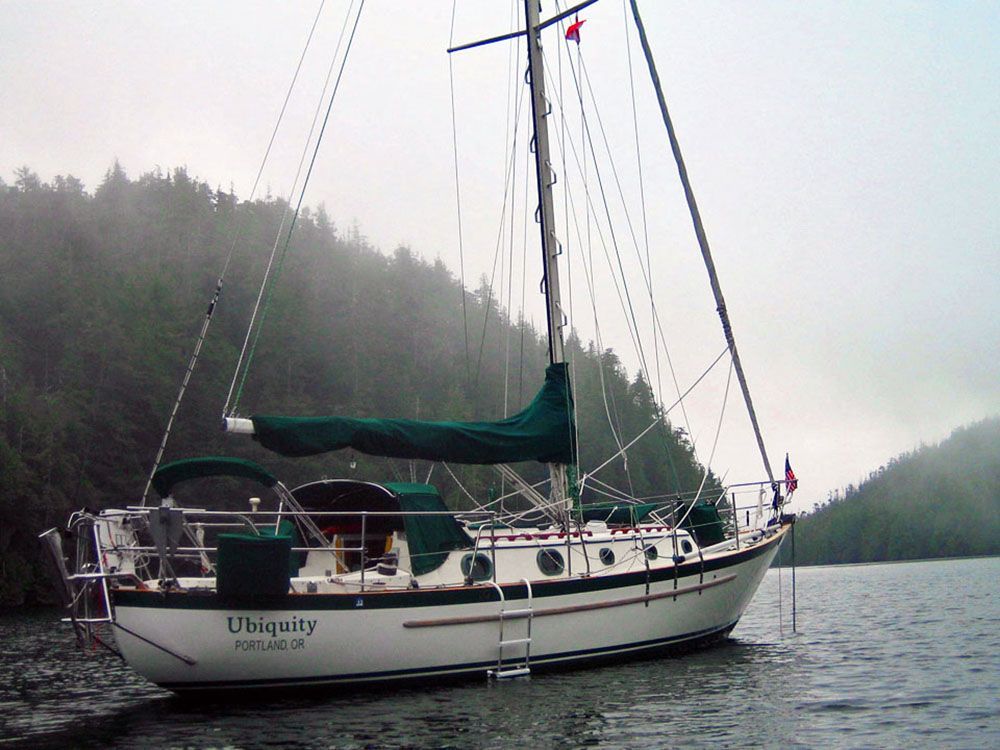
The Pacific Seacraft 34 is a bluewater cruiser introduced in the mid-1980s by Pacific Seacraft Yachts, designed by W.I.B. Crealock. It was conceived as an evolution of the earlier Crealock 31, offering greater interior volume and offshore capabilities while retaining manageable size for a couple or small crew. Built in California, the 34 quickly developed a reputation as a serious passagemaker in compact form—durable, self-sufficient, and comfortable over long distances. On today’s second-hand market, it remains highly sought after by private owners planning extended cruising or liveaboard life, rather than schools or charter fleets, thanks to its offshore pedigree and quality build.
Design and Construction
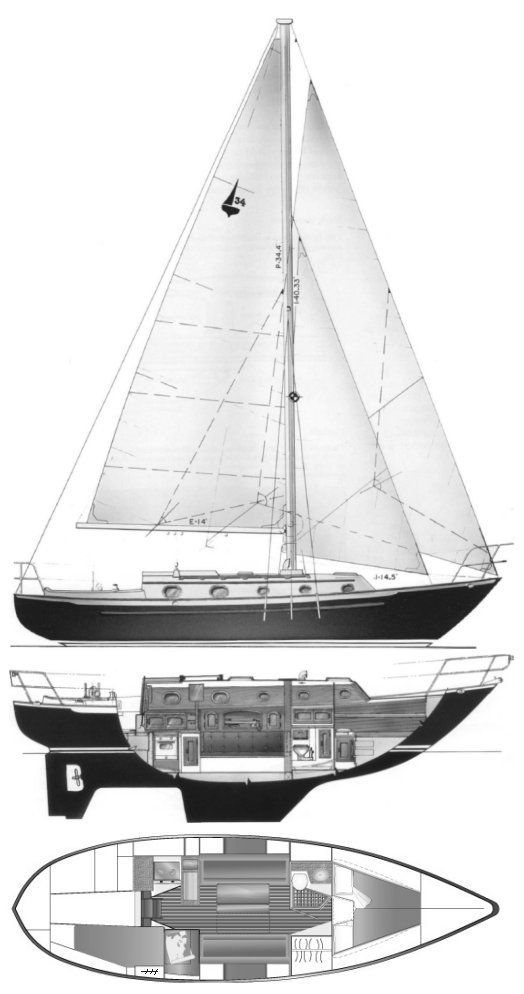
The hull features a moderate displacement with a long fin keel and skeg-hung rudder, balancing directional stability with better maneuverability than a traditional full keel. The cutter rig is standard, giving owners flexibility to balance sail area in changing conditions—a practical advantage for shorthanded offshore sailing. Construction is heavy-duty fiberglass with high-quality joinery, including substantial teak trim inside and out. Bulkheads are well-tabbed, and the deck is robustly built, reducing flex and enhancing durability. These design and construction choices favor longevity, structural strength, and ease of repair, which in turn preserve resale value.
Performance
Under sail, the Pacific Seacraft 34 is known for steady tracking, forgiving motion, and solid performance in heavy seas. It is not a fast boat in light air, but once the wind picks up, it maintains good average passage speeds, often 5.5–6.5 knots. Its cutter rig allows precise sail management, making it suitable for ocean passages with variable weather. Upwind performance is respectable for a cruiser of its displacement, though not on par with lighter, modern fin-keel designs. Compared to boats like the Catalina 34 or Hunter 34, the Seacraft sacrifices speed for safety and offshore capability. Among serious cruisers, it enjoys a reputation for reliability, comfort underway, and confidence in offshore passages.
Comfort and Accommodations
The interior layout reflects its offshore purpose. Expect a well-sized V-berth, a saloon with settees that double as sea berths, a compact but functional galley, and a navigation station. Storage is abundant, with deep lockers and ample cabinetry for provisioning long voyages. Headroom is generous for its class, and ventilation is supported by multiple opening ports and hatches, though tropical cruising may still require additional airflow solutions. The joinery is classic Pacific Seacraft: heavy teak, strong construction, and a warm, traditional look. Many examples have seen tasteful upgrades to upholstery and systems, but even older interiors tend to age gracefully due to quality materials. This makes the boat equally suitable for weekend coastal sailing or extended liveaboard use.
Safety and Practicality
On deck, the boat inspires confidence. High bulwarks, robust lifelines, wide side decks, and secure handholds make movement safe even in rough conditions. The cockpit is deep and well-protected, ideal for offshore passages, though smaller than some modern cruisers. The skeg-hung rudder adds strength and protection, while the cutter rig allows flexible sail handling for reduced crews. Systems are generally accessible, though engine access can be somewhat tight. Overall, the Pacific Seacraft 34 is well-equipped for both coastal and offshore sailing without major modifications, making it a practical choice for sailors looking for versatility.
Known Issues with the Pacific Seacraft 34
As with many older cruising boats, common issues stem from age rather than design flaws. Owners report occasional deck leaks around fittings, original engine wear (often Yanmar diesels, which are reliable but may now require rebuilds), and outdated wiring or plumbing in early models. Teak decks, where fitted, may require attention. Osmosis is not commonly cited thanks to robust layup, but moisture intrusion in hardware bedding is possible. Popular upgrades include modern electronics, solar panels, autopilots, and occasionally feathering propellers for better performance under power. These refits, while costly, often enhance both usability and resale value.
Market Availability and Pricing in the U.S.
The Pacific Seacraft 34 is no longer in production but remains widely available on the used market. Most listings appear in coastal cruising hubs such as Florida, California, and the Chesapeake, with New England also a stronghold due to the model’s offshore reputation. Boats are typically well-maintained, as owners tend to be long-term custodians rather than casual users. Prices on the U.S. market generally range from $70,000 to $120,000, depending on condition, upgrades, and year of build. Compared to alternatives, it commands a premium, but this is justified by its offshore pedigree and enduring resale demand.
Here is a comparison table of comparable models:
| Model | LOA | Years Built | Typical U.S. Price | Key Differences |
|---|---|---|---|---|
| Pacific Seacraft 34 | 34 ft | 1984–2001 | $70,000–$120,000 | Heavy-duty bluewater cruiser, cutter rig, strong offshore reputation |
| Catalina 34 | 34 ft | 1985–2006 | $40,000–$70,000 | Roomier interior, faster coastal cruiser, less rugged offshore |
| Hunter 34 | 34 ft | 1983–1987 | $25,000–$45,000 | Value-oriented, good coastal boat, lighter construction |
| Island Packet 32 | 32 ft | 1990–1997 | $60,000–$90,000 | Full keel, heavy cruiser, slower but very comfortable |
Maintenance Costs of a Pacific Seacraft 34 in the USA
Annual ownership costs reflect its offshore-capable size and build quality. Slip fees range from $3,500–$8,000 depending on region, with the West Coast and Northeast typically higher. Insurance averages $1,000–$2,000 annually. Routine maintenance, including engine service and antifouling, often falls between $3,000–$6,000 per year. Sails typically last 10–12 years, with replacement costs of $6,000–$10,000 depending on the sail plan. Standing rigging should be replaced every 10–15 years at $5,000–$8,000, and full electronics upgrades can cost $10,000 or more. Many owners handle some upkeep themselves, but professional maintenance is common, especially before offshore voyages. Overall, the Pacific Seacraft 34 falls into the medium-to-high range for annual costs in its size category, but the strong resale market helps offset the investment.
Conclusion
The Pacific Seacraft 34 remains one of the most respected mid-sized bluewater cruisers on the used market. Its strengths include rugged construction, offshore-ready design, and timeless interior quality. Its limitations are slower light-air performance and higher purchase cost compared to coastal cruisers of similar size. For sailors seeking a serious passagemaker in a manageable length, it is a strong candidate, particularly for couples planning long-distance cruising. Stable resale values, a loyal owner community, and a proven offshore track record make it a solid investment. For the right sailor, the Pacific Seacraft 34 is not just a boat—it is a dependable partner for adventure.
Specifications
| Hull & Design | |
|---|---|
| Hull Type | Fin with rudder on skeg |
| Rigging Type | Cutter |
| LOA | 34.08 ft / 10.39 m |
| LWL | 26.21 ft / 7.99 m |
| S.A. (reported) | 533.00 ft² / 49.52 m² |
| Beam | 10.00 ft / 3.05 m |
| Displacement | 13,500.00 lb / 6,123 kg |
| Ballast | 4,800.00 lb / 2,177 kg |
| Max Draft | 4.92 ft / 1.50 m |
| Construction | FG |
| Ballast Type | Lead |
| First Built | 1985 |
| Builder | Pacific Seacraft (USA) |
| Designer | William Crealock |
Auxiliary Power / Tanks (original equipment) | |
| Make | Yanmar |
| Model | 3JH2E |
| Type | Diesel |
| HP | 38 |
| Fuel Capacity | 38 gals / 144 L |
Accommodations | |
| Water Capacity | 75 gals / 284 L |
| Headroom | 6.25 ft / 1.91 m |
Sailboat Calculations | |
| S.A. / Displ. | 15.10 |
| Bal. / Displ. | 35.56 |
| Disp. / Len. | 334.72 |
| Comfort Ratio | 34.00 |
| Capsize Screening Formula | 1.68 |
| S# | 1.37 |
| Hull Speed | 6.86 kn |
| Pounds/Inch Immersion | 936.51 pounds/inch |
Rig and Sail Particulars | |
| I | 40.33 ft / 12.29 m |
| J | 14.50 ft / 4.42 m |
| P | 34.40 ft / 10.49 m |
| E | 14.00 ft / 4.27 m |
| S.A. Fore | 292.39 ft² / 27.16 m² |
| S.A. Main | 240.80 ft² / 22.37 m² |
| S.A. Total (100% Fore + Main Triangles) | 533.19 ft² / 49.53 m² |
| S.A. / Displ. (calc.) | 15.10 |
| Estimated Forestay Length | 42.86 ft / 13.06 m |
Disclaimer
The considerations and analyses presented regarding the Pacific Seacraft 34 sailboat are of a general nature and are based on the available information and technical data on this model, interpreted to the best of our knowledge and understanding. It is important to note that the specific characteristics of any particular sailboat may vary due to custom modifications, maintenance performed, and conditions of use over time, among other factors. Therefore, the details and performance of the boat you are considering may not exactly match the information provided here.
We strongly recommend that, before making any purchasing or usage decisions, you conduct a detailed inspection of the boat in question, consult with nautical professionals and other sailors, and consider your personal needs, expectations, and capabilities. Each sailboat may have unique particularities that affect its performance and suitability for different types of sailing and sailors.
The information contained in this analysis should be used as a general guide and not as a definitive reference. Professional evaluation and personal inspection are essential to ensure that the boat meets your specific requirements and expectations.