


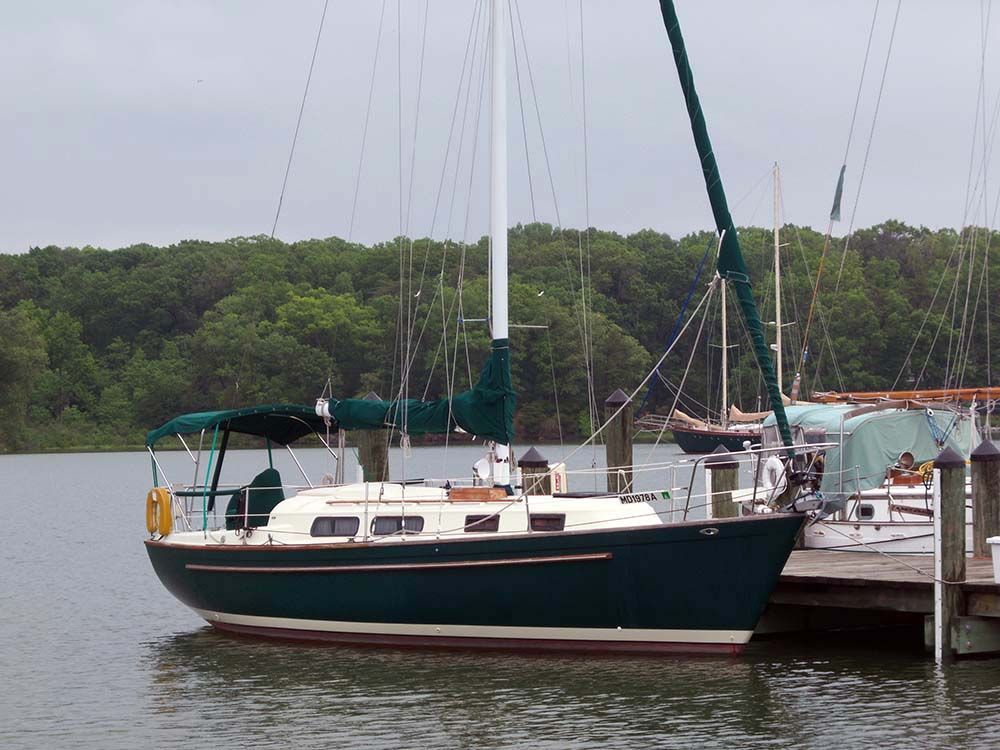
The Pearson 323 is a 32-foot cruising sailboat designed in the mid-1970s by William Shaw and built by Pearson Yachts in Rhode Island, USA. Conceived primarily as a coastal and limited offshore cruiser, it aimed to provide comfortable accommodations and solid sailing performance for couples or small families rather than racing enthusiasts. Launched during a period when fiberglass construction was becoming the standard, the model reflected Pearson’s philosophy of building durable, well-appointed boats for the serious amateur sailor. Today, the 323 has a steady presence on the used market, attracting private owners and cruising couples looking for a dependable, moderately priced vessel with a proven pedigree. Its demand is strongest among those seeking an affordable liveaboard-capable yacht or a robust weekend cruiser.
Design and Construction
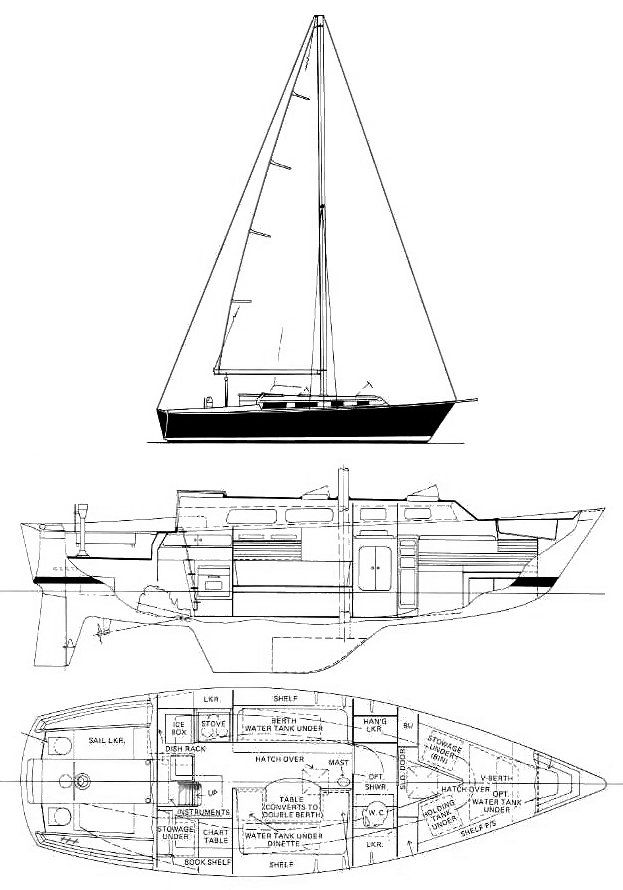
The Pearson 323 features a moderate-displacement hull with a fin keel and skeg-hung rudder, striking a balance between directional stability and maneuverability. The full-bodied bow and relatively beamy midsection provide good interior volume while maintaining seaworthiness. The rig is a masthead sloop, favored for its simplicity and efficiency, with sail controls that can be handled without specialized racing gear. Built entirely from solid fiberglass, the hull has a reputation for being tough and resistant to structural fatigue, while the deck incorporates balsa-core sections for weight savings—something that can require attention with age. The interior layout typically includes a V-berth forward, a saloon with settees, a quarter berth, and a practical galley. These design choices support long-term durability, straightforward repairs, and respectable resale value.
Performance
Under sail, the Pearson 323 is not a speedster, but it delivers a predictable and comfortable ride. In light winds, it moves steadily without excessive weather helm, and in moderate to heavy air it maintains composure with minimal pounding. Its fin keel offers better pointing ability than full-keel cruisers of the same era, and the skeg-hung rudder enhances control in following seas. Compared with similar boats like the Catalina 30 or Hunter 33, the 323 sacrifices a knot or so of top-end speed for a more forgiving motion and robust build quality. Among cruising sailors, it’s valued as a “go-anywhere within reason” yacht, performing best in coastal passages and moderate offshore conditions.
Comfort and Accommodations
The interior of the Pearson 323 is functional for its size, with enough headroom for most adults and a layout that works well for a couple with occasional guests. Storage is ample for a boat under 33 feet, and ventilation is adequate thanks to opening ports and hatches. While comfortable for weekend sailing and short-term liveaboard use, extended cruising with more than two people can feel cramped. Many boats on the market have received tasteful upgrades, from modernized galleys to reupholstered cushions, which speaks to the longevity of the basic interior plan. Overall, it offers solid comfort without unnecessary complexity.
Safety and Practicality
On deck, the high lifelines, wide side decks, and sturdy grab rails contribute to safe movement in rough weather. The cockpit is deep enough to feel secure without trapping water, and the sailplan is manageable for a short-handed crew. Most systems—engine access, electrical wiring, plumbing—are straightforward to reach, reducing maintenance headaches. The Pearson 323 is fully capable of coastal cruising out of the box, and with selective upgrades (e.g., storm sails, offshore safety gear) can handle moderate offshore passages.
Known Issues with the Pearson 323
Commonly reported issues include deck core moisture around hardware fittings, aging fuel tanks, and original engine wear—many were equipped with the Westerbeke 30 diesel, which can last decades but eventually needs overhaul or replacement. Some owners report minor gelcoat crazing and leaks at deck fittings, typical for boats of this vintage. Osmosis is relatively rare but not unheard of. Popular upgrades include feathering props for improved motoring, modern navigation electronics, and reinforced chainplates to prolong structural integrity.
Market Availability and Pricing in the U.S.
The Pearson 323 is no longer in production and is found exclusively on the used market. They are most commonly listed in the Northeast (especially New England) and Florida, with occasional examples in the Pacific Northwest and Great Lakes. Well-maintained boats typically sell in the $20,000–$35,000 range, depending on equipment, upgrades, and cosmetic condition.
Below is a comparison with similar sailboats from the same era:
| Model | LOA | Years | Typical Used Price | Main Differences |
|---|---|---|---|---|
| Pearson 323 | 32’3″ | 1976–1983 | $20,000–$35,000 | Solid fiberglass hull, moderate performance, durable coastal cruiser |
| Catalina 30 | 29’11” | 1975–2000 | $18,000–$35,000 | Lighter build, more interior space, slightly faster but less rugged |
| Hunter 33 | 33′ | 1977–1983 | $22,000–$38,000 | Sleeker design, better in light wind, less tankage than Pearson |
| Jeanneau Melody 34 | 33’9″ | 1974–1982 | $25,000–$40,000 | European styling, good offshore capability, typically higher maintenance costs in U.S. |
Maintenance Costs of a Pearson 323 in the USA
Annual upkeep typically runs $3,000–$6,000, depending on region. Mooring or slip fees range from $1,500 in smaller coastal towns to over $4,000 in high-demand marinas like San Francisco or Miami. Insurance averages $400–$900 annually. Routine engine servicing and checks cost $300–$600 per year, while bottom paint and antifouling run $800–$1,500 depending on yard rates. Standing rigging inspection/replacement can be a significant outlay—$2,500–$4,000 every 10–15 years—while sails, if replaced, can cost $3,000–$5,000 for a standard cruising set. Many owners do a portion of the work themselves, keeping annual costs toward the lower end. Overall, maintenance costs are medium for its size and type, and the boat’s stable resale value helps offset long-term ownership expenses.
Conclusion
The Pearson 323 stands out as a well-built, seaworthy coastal cruiser with enough capability to venture offshore under the right conditions. Its strengths lie in solid construction, manageable size, and proven design, while its weaknesses are mainly in speed and interior volume compared to newer designs. For sailors seeking a dependable, classic fiberglass yacht with honest handling and reasonable upkeep costs, it remains a compelling choice. It is particularly well-suited to couples or solo sailors who value sturdiness and simplicity over racing performance. For the right buyer, it’s not just a sound investment—it’s a quietly capable partner for years of enjoyable cruising.
Specifications
| Hull Type | Fin with rudder on skeg |
| Rigging Type | Masthead Sloop |
| LOA | 32.25 ft / 9.83 m |
| LOD | |
| LWL | 27.50 ft / 8.38 m |
| S.A. (reported) | 477.00 ft² / 44.31 m² |
| Beam | 10.00 ft / 3.05 m |
| Beam WL | |
| Displacement | 12,800.00 lb / 5,806 kg |
| Ballast | 4,500.00 lb / 2,041 kg |
| Max Draft | 4.50 ft / 1.37 m |
| Construction | FG |
| Ballast Type | Lead |
| First Built | 1976 |
| Last Built | 1983 |
| Builder | Pearson Yachts (USA) |
| Designer | William Shaw |
| Auxiliary Power/Tanks (orig. equip.) | |
| Make | Universal |
| Model | Atomic 4 |
| Type | Gas |
| HP | 30 |
| Fuel | 30 gals / 114 L |
| Accommodations | |
| Water | 70 gals / 265 L |
| Sailboat Calculations | |
| Definitions | |
| S.A. / Displ. | 14.00 |
| Bal. / Displ. | 35.16 |
| Disp: / Len | 274.77 |
| Comfort Ratio | 31.84 |
| Capsize Screening Formula | 1.71 |
| S# | 1.68 |
| Hull Speed | 7.03 kn |
| Pounds/Inch Immersion | 982.61 pounds/inch |
| Rig and Sail Particulars | |
| I | 41.00 ft / 12.50 m |
| J | 13.83 ft / 4.22 m |
| P | 36.00 ft / 10.97 m |
| E | 10.75 ft / 3.28 m |
| S.A. Fore | 283.52 ft² / 26.34 m² |
| S.A. Main | 193.50 ft² / 17.98 m² |
| S.A. Total (100% Fore + Main Triangles) | 477.02 ft² / 44.32 m² |
| S.A./Displ. (calc.) | 14.00 |
| Est. Forestay Length | 43.27 ft / 13.19 m |
Disclaimer
The considerations and analyses presented regarding the Pearson 323 sailboat are of a general nature and are based on the available information and technical data on this model, interpreted to the best of our knowledge and understanding. It is important to note that the specific characteristics of any particular sailboat may vary due to custom modifications, maintenance performed, and conditions of use over time, among other factors. Therefore, the details and performance of the boat you are considering may not exactly match the information provided here.
We strongly recommend that, before making any purchasing or usage decisions, you conduct a detailed inspection of the boat in question, consult with nautical professionals and other sailors, and consider your personal needs, expectations, and capabilities. Each sailboat may have unique particularities that affect its performance and suitability for different types of sailing and sailors.
The information contained in this analysis should be used as a general guide and not as a definitive reference. Professional evaluation and personal inspection are essential to ensure that the boat meets your specific requirements and expectations.