



The Westsail 32 is a classic cruising sailboat designed for serious offshore voyaging. Introduced in the 1970s by Westsail Corporation and penned by William Crealock, it was intended for sailors seeking a sturdy, ocean-capable vessel rather than high-speed performance. Its design emphasizes safety, seakeeping, and comfort over racing agility, appealing to long-distance cruisers and bluewater adventurers. Over the decades, the Westsail 32 has developed a dedicated following in the used boat market, favored by both experienced cruisers and owners looking for a reliable, manageable offshore yacht. While no longer in production, it maintains a steady demand among private owners, liveaboard enthusiasts, and coastal sailors who appreciate its legendary seaworthiness.
Design and Construction
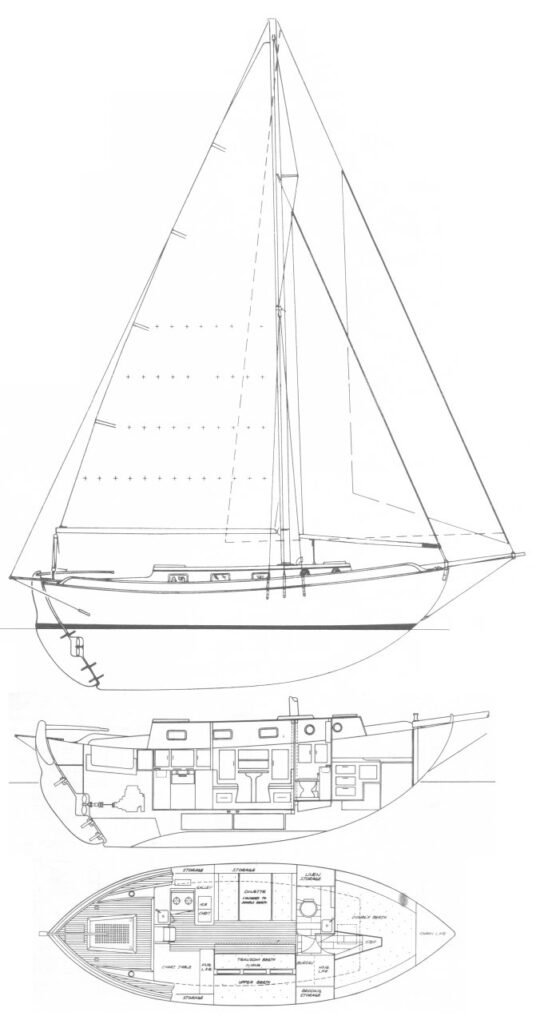
The Westsail 32 features a full keel with a cutaway forefoot, providing directional stability and protection for the rudder, which is keel-mounted. This traditional hull form gives the boat a solid feel in heavy seas but limits top-end speed. Its sloop rig is straightforward, allowing for manageable sail handling, and the robust fiberglass construction, often reinforced with extensive encapsulated ballast, ensures long-term durability with relatively low maintenance. Interior layout prioritizes practicality over luxury, offering a simple yet functional arrangement with efficient use of space. The design reflects proven principles of naval architecture—heavy displacement for comfort, full keel for tracking, and moderate sail area for balanced handling—making it easy to repair, resilient in harsh conditions, and retaining strong residual value for second-hand buyers.
Performance
Despite its weighty, full-keel design, the Westsail 32 performs admirably under moderate to strong conditions. It tracks well, handles chop with stability, and has a forgiving motion in heavy seas, making it an excellent platform for offshore passages. Its top speed is modest, typically around 6–6.5 knots under favorable conditions, but it excels in comfort and reliability rather than speed. While it is not as quick on a reach or close-hauled as a modern fin-keel cruiser of similar size, its reputation for steadiness, particularly in heavy weather, remains unmatched. Compared with contemporaries such as the Valiant 32, Bristol 32, or Islander 32, it is slower but safer and more forgiving for long passages.
Comfort and Accommodations
Inside, the Westsail 32 offers a surprisingly roomy layout for a 32-foot vessel. The V-berth, main salon, and aft quarter berth provide sleeping space for a small family or a couple with occasional guests. Storage is abundant, ventilation adequate with multiple hatches and ports, and galley and head spaces are functional for extended cruising. While the interior finishes are utilitarian, they age well, and many owners have updated cabinetry or cushions to improve comfort without compromising seaworthiness. The boat is suitable for extended liveaboard use for couples or small crews but may feel cramped for larger families on long-term cruises.
Safety and Practicality
Safety is a hallmark of this design. The high freeboard, deep cockpit, and secure lifelines provide confidence in rough conditions. The keel-hung rudder is protected from grounding, and the heavy displacement promotes a comfortable motion in seas that might overwhelm lighter boats. With a simple sloop rig, sail handling can be managed by a small crew, and systems are generally accessible and straightforward, reducing the learning curve and ongoing maintenance costs. It is fully capable for coastal or offshore cruising with minimal modifications.
Known Issues with the Westsail 32
The Westsail 32, like many older fiberglass boats, can experience issues related to age rather than design flaws. Common concerns include deck core soft spots, chainplate wear, and occasional osmosis in older hulls. Original Atomic 4 engines require careful inspection, and some owners upgrade to diesel conversions. Sail handling hardware, lines, and running rigging may need replacement due to age, and electronics often require modernization. Recommended upgrades typically include reefing systems, new sails, and sometimes reinforced chainplates or deck hardware. Proper maintenance and careful surveys mitigate most of these concerns.
Market Availability and Pricing in the U.S.
The Westsail 32 is only available on the used boat market, with listings concentrated in New England, Florida, and the West Coast. Boats are typically well-maintained by dedicated owners, although some may show signs of neglect or require refits. Current market prices generally range from $35,000 to $70,000, depending on condition, refits, and location. Compared with similar vintage cruisers such as the Catalina 30, Hunter 33, or Islander 32, it trades at a premium for seaworthiness rather than speed or modern amenities.
Below is a comparison with similar sailboats from the same era:
| Model | LOA | Year | Typical U.S. Price | Key Differences |
|---|---|---|---|---|
| Westsail 32 | 32 ft | 1978–1983 | $35,000–$70,000 | Heavy displacement, full keel, bluewater-capable |
| Catalina 30 | 30 ft | 1975–1986 | $20,000–$50,000 | Lighter, fin keel, coastal cruiser |
| Hunter 33 | 33 ft | 1977–1985 | $25,000–$55,000 | More modern rig, interior comfort, less offshore-oriented |
| Islander 32 | 32 ft | 1975–1982 | $30,000–$60,000 | Medium displacement, coastal/offshore balance |
Maintenance Costs of a Westsail 32 in the USA
Annual maintenance for a Westsail 32 typically ranges from $4,000 to $8,000, including slip fees, insurance, engine servicing, bottom painting, sail care, and routine rigging inspections. Costs vary by region, with higher marina fees on the East Coast or West Coast. Major replacements such as sails, electronics, or a refit can range from $5,000 to $20,000 depending on scope. Owners with mechanical skills may handle routine maintenance themselves, reducing costs, whereas professional services add to overall expenditure. Overall, maintenance is considered moderate for a boat of this size and purpose, and its durable design ensures that its resale value generally justifies the investment.
Conclusion
The Westsail 32 is a legendary cruiser with a reputation for safety, reliability, and offshore capability. Its strengths include exceptional seaworthiness, a manageable sloop rig, and a practical interior suited to couples or small crews. Its main limitations are modest speed and heavier handling compared to more modern designs. For sailors seeking a dependable coastal and offshore cruiser with proven bluewater credentials, it remains a compelling choice. With moderate maintenance costs and strong resale value, it is a worthy consideration for anyone prioritizing durability, safety, and comfort over outright performance.
Specifications
| Hull Type | Long keel w/trans. hung rudder |
| Rigging Type | Cutter |
| LOA | 32.00 ft / 9.75 m |
| LWL | 27.50 ft / 8.38 m |
| S.A. (reported) | 753.00 ft² / 69.96 m² |
| Beam | 11.00 ft / 3.35 m |
| Displacement | 19,500.00 lb / 8,845 kg |
| Ballast | 7,000.00 lb / 3,175 kg |
| Max Draft | 5.00 ft / 1.52 m |
| Construction | FG |
| Ballast Type | Lead |
| First Built | 1971 |
| Last Built | 1981 |
| # Built | 834 |
| Builder | Westsail Corp. (USA) |
| Designer | William Crealock / W. Atkin |
| Auxiliary Power Make | Volvo or Perkins |
| Type | Diesel |
| HP | 36 |
| Fuel | 42 gals / 159 L |
| Water | 80 gals / 303 L |
| Headroom | 6.17 ft / 1.88 m |
| S.A. / Displ. | 16.69 |
| Bal. / Displ. | 35.90 |
| Disp / Len | 418.59 |
| Comfort Ratio | 42.85 |
| Capsize Screening Formula | 1.64 |
| S# | 0.98 |
| Hull Speed | 7.03 kn |
| Pounds/Inch Immersion | 1,080.87 pounds/inch |
| I | 44.00 ft / 13.41 m |
| J | 18.30 ft / 5.58 m |
| P | 38.25 ft / 11.66 m |
| E | 15.83 ft / 4.82 m |
| S.A. Fore | 402.60 ft² / 37.40 m² |
| S.A. Main | 302.75 ft² / 28.13 m² |
| S.A. Total | 705.35 ft² / 65.53 m² |
| S.A./Displ. (calc.) | 15.64 |
| Estimated Forestay Length | 47.65 ft / 14.52 m |
Disclaimer
The considerations and analyses presented regarding the Westsail 32 sailboat are of a general nature and are based on the available information and technical data on this model, interpreted to the best of our knowledge and understanding. It is important to note that the specific characteristics of any particular sailboat may vary due to custom modifications, maintenance performed, and conditions of use over time, among other factors. Therefore, the details and performance of the boat you are considering may not exactly match the information provided here.
We strongly recommend that, before making any purchasing or usage decisions, you conduct a detailed inspection of the boat in question, consult with nautical professionals and other sailors, and consider your personal needs, expectations, and capabilities. Each sailboat may have unique particularities that affect its performance and suitability for different types of sailing and sailors.
The information contained in this analysis should be used as a general guide and not as a definitive reference. Professional evaluation and personal inspection are essential to ensure that the boat meets your specific requirements and expectations.