



The Beneteau Oceanis 41 was launched in the mid-2010s as part of Beneteau’s modern generation of cruising yachts aimed at combining performance, comfort, and ease of handling. Designed by Groupe Finot and the Italian styling firm Nauta Design, this model reflects a shift toward more voluminous, user-friendly cruisers suited for a broad range of sailors—from weekenders and coastal cruisers to long-distance liveaboards. Built in France by the prolific Beneteau shipyard, the Oceanis 41 has carved a niche in both private ownership and charter fleets thanks to its versatility and contemporary layout.
Today, it remains a popular option on the secondhand market, particularly appealing to cruising couples and small families, as well as sailing schools and charter operators looking for modern styling, reliable systems, and forgiving handling characteristics.
Design and Construction
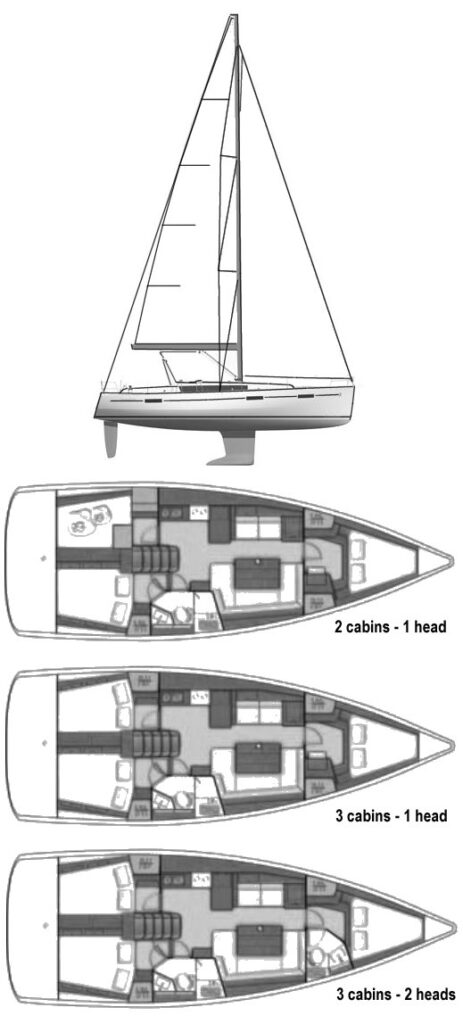
The Oceanis 41 features a modern hull with a plumb bow, wide beam carried aft, and a hard chine that improves form stability and interior volume. The underbody includes a fin keel with a bulb and a balanced spade rudder, offering a good compromise between draft, stability, and maneuverability. The rig is a masthead sloop with a large mainsail and furling headsail, optimized for ease of use.
Construction is predominantly fiberglass with a structural grid bonded to the hull, a method Beneteau has used for decades to ensure rigidity and durability. While not as robust as bluewater-expedition boats, the Oceanis 41 is solidly built for coastal cruising and offshore passages in favorable conditions. The deck layout is clean and modern, with twin wheels and an open transom that enhances accessibility at anchor.
The boat’s beam and interior space benefit from contemporary naval architecture trends—especially when combined with the hard chine—which provide excellent volume without compromising sailing efficiency in moderate conditions. Overall, the design prioritizes liveability and simple operation over aggressive racing performance, making it ideal for its cruising mission.
Performance
Under sail, the Oceanis 41 offers a balanced and comfortable ride. With a sail area/displacement ratio around 15.6 and a hull speed of just over 8 knots, she is no slouch in light to moderate air, especially on a reach. The boat tracks well and is easy to helm, with responsive but forgiving controls—ideal for shorthanded crews or less experienced sailors.
In heavier seas, the hull’s beam and form stability help reduce heeling, though like many wide-stern designs, it may feel more lively downwind in swell. While not designed for upwind racing performance, its ability to point respectably and maintain momentum makes it suitable for offshore hops and long passages.
Compared to similar boats like the Jeanneau Sun Odyssey 409 or the Catalina 42 MkII, the Oceanis 41 is more performance-oriented than the Catalina but not as agile as the Jeanneau. It’s a strong all-rounder for its class and purpose.
Comfort and Accommodations
Where the Oceanis 41 truly shines is in its interior. Nauta Design’s influence is immediately noticeable: sleek lines, large windows, and a bright, open saloon create a modern and spacious feel. Offered in two- and three-cabin layouts, the boat caters well to both private owners and charter configurations.
The galley is L-shaped and well-appointed, with ample storage and refrigeration. Ventilation is excellent thanks to numerous hatches and opening ports, and headroom is generous throughout the boat. The aft cabins provide real adult-sized sleeping quarters, while the forward cabin benefits from abundant light and smart storage.
For a couple or family looking to live aboard seasonally or even full-time, the Oceanis 41 delivers impressive comfort, with large tanks (132 gal water, 53 gal fuel), plenty of locker space, and a cockpit designed for lounging or dining. Interiors tend to age well, although chartered boats may show wear on cabinetry or upholstery if not carefully maintained.
Safety and Practicality
The Oceanis 41’s wide deck and uncluttered layout make for safe movement while under sail, and the twin helm setup allows for good visibility and easy control from either side. The fold-down transom swim platform is a major plus for anchoring or docking, though in some situations it requires care under power or following seas.
Rigging and control lines are led aft to the cockpit, allowing safe single- or double-handed operation. The deck-stepped mast simplifies inspection and reduces the risk of water ingress, although it may limit ultimate rig tension control.
Systems access (plumbing, electrics, engine) is generally good, and maintenance is straightforward thanks to Beneteau’s standardized design approach. This makes the Oceanis 41 a lower-cost cruiser to maintain than more bespoke yachts, which is an important consideration for owners planning long-term usage.
Known Issues with the Beneteau Oceanis 41
Like many production cruisers, the Oceanis 41 has a few known issues to be aware of:
- Rudder post seals: Some owners have reported wear or minor leaks over time. Inspection is recommended, especially on older units.
- Electronics: Original Raymarine systems may be dated by now; many owners upgrade chartplotters, autopilots, and wind instruments.
- Deck hardware bedding: Periodic re-bedding is recommended to prevent leaks in chainplates or stanchions.
- Swim platform hinges: A known weak point if abused or exposed to constant motion in rough water.
Upgrades such as a feathering propeller, solar panels, or lithium battery systems are increasingly common and improve both resale value and cruising independences.
Market Availability and Pricing in the U.S.
The Beneteau Oceanis 41 is no longer in production, having been succeeded by the Oceanis 41.1 and other newer models. However, it remains widely available on the used market, particularly in areas with strong charter industries like Florida and the Caribbean, as well as private-owner-heavy markets like the Pacific Northwest and Chesapeake Bay.
Most 2012–2017 models list in the U.S. between $160,000 and $220,000, depending on condition, equipment, and charter history. Well-maintained private boats with upgraded systems can command a premium, while ex-charter vessels may require cosmetic or mechanical refresh.
Here is a comparison with three similar cruising sailboats from the same era and size range:
| Model | LOA | Year | Used Price (USD) | Key Differences |
|---|---|---|---|---|
| Beneteau Oceanis 41 | 41.0 ft | 2012–2017 | $160,000–$220,000 | Spacious interior, fold-down transom, balanced performance |
| Jeanneau Sun Odyssey 409 | 40.0 ft | 2011–2015 | $150,000–$200,000 | Sportier handling, similar comfort, sleeker deck layout |
| Catalina 42 MkII | 42.0 ft | 2000–2008 | $120,000–$160,000 | Robust build, older styling, less cockpit innovation |
| Hunter 41 DS | 41.0 ft | 2004–2010 | $110,000–$150,000 | Deck saloon layout, great liveaboard features, softer sailing |
Beneteau Oceanis 41 vs Jeanneau Sun Odyssey 409

The Beneteau Oceanis 41 and the Jeanneau Sun Odyssey 409 are close competitors, both French-built cruisers designed in the early 2010s with a focus on performance and comfort. The Oceanis 41 features a slightly fuller hull with wider beam carried aft, creating exceptional interior volume and cockpit space, while the Sun Odyssey 409 offers a finer entry and lighter displacement that translate into sharper handling and better windward performance. The Jeanneau’s fractional sloop rig and higher sail area-to-displacement ratio make it livelier under sail, particularly in moderate to strong breeze.
Inside, the Oceanis prioritizes comfort, with a beamier saloon and more generous headroom, giving it the feel of a small floating apartment—ideal for family cruising or charter use. In contrast, the Sun Odyssey’s interior feels more purposeful for sailing, with slightly tighter but ergonomically efficient spaces. Maintenance and systems access are similar between the two, though Jeanneau’s simpler systems layout often translates into slightly lower upkeep for owner-operators. For buyers seeking easy living and stability, the Oceanis stands out; for those who value crisp sailing feel, the Sun Odyssey 409 holds the edge.
► Learn more about de Jeanneau Sun Odyssey 409
Beneteau Oceanis 41 vs Catalina 42 MkII

The Oceanis 41 and Catalina 42 MkII represent two different design philosophies separated by a generation. The Catalina 42 MkII, a late-1990s design, features a more traditional hull shape with a moderate beam and a deeper forefoot, giving it steady motion and predictable handling offshore. The Oceanis 41, with its chined hull and twin wheels, offers better space utilization and more modern deck ergonomics, particularly in the cockpit. Its fractional rig and lighter displacement also make it quicker in light air, though the Catalina tends to track better in heavy seas.
Below deck, the Oceanis feels airier and brighter thanks to larger windows and a contemporary open layout, while the Catalina’s interior, though more traditional, remains warm, solid, and well-suited to long-term liveaboard use. Maintenance on the Catalina is often simpler due to fewer electronic systems and a robust, easily accessible engine installation. The Oceanis, with its modern systems and fittings, may demand higher attention over time but offers a more refined experience under sail and at anchor. For a buyer prioritizing modern aesthetics and ease of handling, the Beneteau is appealing; for rugged long-term cruisers who value simplicity and proven design, the Catalina remains a classic choice.
► Learn more about de Catalina 42 MkII
Beneteau Oceanis 41 vs Hunter 41 DS

The Beneteau Oceanis 41 and the Hunter 41 Deck Salon (DS) both target the cruising market but approach comfort and performance differently. The Hunter 41 DS emphasizes interior volume and liveability, featuring a raised saloon and abundant natural light, whereas the Oceanis 41 achieves spaciousness through beam distribution and clever use of interior joinery without the elevated topsides. Under sail, the Oceanis 41’s chined hull and balanced rig provide a more spirited and responsive feel compared to the Hunter’s heavier, more comfort-oriented configuration.
The Hunter’s B&R rig eliminates the backstay, simplifying sail handling but reducing tuning flexibility, while the Oceanis’ fractional rig supports more precise sail trim and performance-oriented sailing. Maintenance-wise, the Oceanis uses more European components, which can be slightly more expensive to replace in the U.S., whereas the Hunter benefits from easier domestic parts availability. For owners who want a solid coastal cruiser with exceptional comfort at anchor, the Hunter excels; for those seeking a sleeker, faster, and more dynamic sailing experience, the Beneteau Oceanis 41 is the stronger contender.
► Learn more about de Hunter 41 DS
Maintenance Costs of a Beneteau Oceanis 41 in the USA
Typical annual maintenance costs for a Beneteau Oceanis 41 vary depending on region, usage, and whether services are owner-performed or professionally managed. The following are average ranges for U.S. owners:
- Mooring/Slip Fees: $4,000–$9,000 per year (higher in coastal states like California, Florida, and New York).
- Insurance: $2,000–$3,500 annually, depending on location and cruising limits.
- Engine Servicing: $500–$1,000 for annual oil, filters, and cooling system checks.
- Antifouling Paint: $1,500–$3,000 annually for haul-out, prep, and paint.
- Standing and Running Rigging: $300–$700 per year (inspection and partial replacements; full re-rig every 10–12 years costs $8,000–$10,000).
- Sails: $500–$1,000 annual maintenance; full replacement typically $8,000–$10,000.
One-time or periodic upgrades may include electronics refits ($5,000–$12,000), canvas or dodger replacements ($2,000–$4,000), or interior refurbishing ($3,000–$6,000). The Oceanis 41 can be partly owner-maintained thanks to good engine and system access, though many owners rely on professional service for electronics and rigging.
Overall, the cost of ownership falls in the medium range for a 40-foot performance cruiser. Its strong resale market and broad popularity among charter and private buyers in the U.S. help offset long-term costs, making it a financially balanced choice for those seeking modern comfort with manageable upkeep.
Conclusion
The Beneteau Oceanis 41 is a strong contender in the world of modern cruising sailboats. Its blend of contemporary styling, easy handling, and liveaboard comfort makes it a compelling choice for sailors seeking a versatile and low-maintenance cruiser.
While it may not suit those looking for traditional aesthetics or bluewater expedition toughness, it’s well-suited for coastal cruising, island hopping, and extended seasonal living aboard. With a healthy secondhand market and a strong reputation, it holds value well and remains easy to resell.
For those evaluating a purchase, the Oceanis 41 is certainly worth considering. It represents a well-balanced, thoughtfully designed cruising platform that delivers solid performance, excellent livability, and strong value in today’s used boat market.
Specifications
| Hull Type | Fin w/bulb & spade rudder |
| Rigging Type | Fractional Sloop |
| LOA | 40.78 ft / 12.43 m |
| LOD | 39.27 ft / 11.97 m |
| LWL | 37.30 ft / 11.37 m |
| Beam | 13.78 ft / 4.20 m |
| Draft (Max) | 7.15 ft / 2.18 m |
| Displacement | 19,349.97 lb / 8,777 kg |
| Ballast | 5,070.63 lb / 2,300 kg |
| Ballast Type | Cast iron |
| Construction | Fiberglass (FG) |
| First Built | 2011 |
| Last Built | 2015 |
| Builder | Beneteau |
| Designer | Finot / Conq Assoc. |
| Engine Type | Diesel |
| Horsepower | 40 HP |
| Fuel Capacity | 53 gals / 200 L |
| Water Capacity | 98 gals / 370 L |
| Headroom | 6.40 ft / 1.95 m |
| S.A. / Displacement | 20.10 |
| Ballast / Displacement | 26.20 |
| Displacement / Length | 166.46 |
| Comfort Ratio | 23.71 |
| Capsize Screening Formula | 2.06 |
| S# (Stability Number) | 3.19 |
| Hull Speed | 8.18 kn |
| Pounds/Inch Immersion | 1,836.56 lb/in |
| I | 52.53 ft / 16.01 m |
| J | 16.96 ft / 5.17 m |
| P | 49.21 ft / 15.00 m |
| E | 13.68 ft / 4.17 m |
| S.A. Fore | 445.45 ft² / 41.38 m² |
| S.A. Main | 336.60 ft² / 31.27 m² |
| Total Sail Area (100%) | 782.05 ft² / 72.65 m² |
| Reported Sail Area | 902.02 ft² / 83.80 m² |
| Calculated S.A./Displ. | 17.43 |
| Estimated Forestay Length | 55.20 ft / 16.82 m |
| Mast Height from DWL | 61.84 ft / 18.85 m |
Disclaimer
The considerations and analyses presented regarding the Beneteau Oceanis 41 sailboat are of a general nature and are based on the available information and technical data on this model, interpreted to the best of our knowledge and understanding. It is important to note that the specific characteristics of any particular sailboat may vary due to custom modifications, maintenance performed, and conditions of use over time, among other factors. Therefore, the details and performance of the boat you are considering may not exactly match the information provided here.
We strongly recommend that, before making any purchasing or usage decisions, you conduct a detailed inspection of the boat in question, consult with nautical professionals and other sailors, and consider your personal needs, expectations, and capabilities. Each sailboat may have unique particularities that affect its performance and suitability for different types of sailing and sailors.
The information contained in this analysis should be used as a general guide and not as a definitive reference. Professional evaluation and personal inspection are essential to ensure that the boat meets your specific requirements and expectations.