


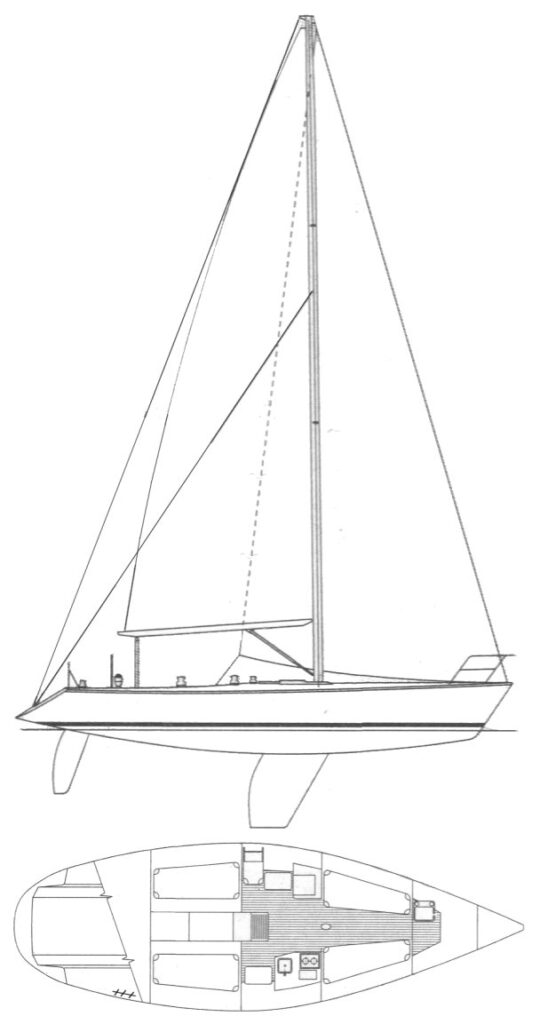
The Catalina Capri 37 was originally designed as a one-design racing sailboat for the Congressional Cup match racing series in Long Beach, California, in the early 1990s. Built by Catalina Yachts—one of the most prolific American sailboat manufacturers—the Capri 37 reflects the company’s emphasis on accessible performance and solid construction. Designed by Nelson/Marek, the boat was purpose-built for close-quarters competition, but its agile performance and clean deck layout have since attracted a second life as a fast cruiser or daysailer among private owners.
In the secondhand market, the Capri 37 has developed a niche following. Although originally produced in limited numbers, it now appeals to performance-oriented sailors looking for a capable, affordable platform for coastal cruising or club racing. It’s also occasionally found in sailing schools or charter fleets focused on advanced training. The demand tends to come from individual enthusiasts who prioritize sailing feel over interior volume
Design and Construction
The Capri 37 features a sleek, narrow hull with fine entries and a generous waterline for its era. Its fin keel with a deep draft (typically around 7.5 feet) and spade rudder configuration are hallmarks of modern race-oriented design, offering excellent lift and maneuverability. The hull and deck are built in fiberglass with balsa core construction above the waterline, which balances stiffness with weight savings.
The rig is a fractional sloop with a high aspect ratio and a tall mast, designed to carry a large mainsail and smaller headsails. This setup provides precise sail control and good upwind performance. The lack of unnecessary complexity in the rigging—combined with its open deck plan—makes it surprisingly manageable for a shorthanded crew, despite its racing heritage.
Naval architecture principles here favor performance: reduced wetted surface area, optimized foil shapes, and a clean underbody allow for speed and responsiveness. For potential buyers, this means a vessel that offers a spirited sail without sacrificing durability. However, the narrow beam and racing origins mean compromises in terms of interior space and ultimate comfort, particularly for liveaboard scenarios.
Performance
On the water, the Capri 37 is lively and responsive. It excels in light to moderate winds, where its efficient sail plan and hull shape generate impressive speed with minimal effort. In heavier air and seas, the boat’s fine entry cuts cleanly through chop, while its balanced helm makes it enjoyable to steer even when conditions build.
Close-hauled, the boat points high and tracks well, aided by its deep keel and narrow beam. Downwind, it benefits from a symmetrical spinnaker or large asymmetrical sails, particularly given its original match racing configuration. When compared to other coastal cruisers or racer-cruisers of similar length, the Capri 37 stands out for its raw sailing feel and nimbleness. It’s more responsive and quicker than a Catalina 36 or a Hunter Legend 37, though not as forgiving or spacious.
Among sailors, the Capri 37 has a reputation for being an engaging, hands-on boat—a platform where sailing is the focus, not the amenities. This makes it particularly popular among those looking for performance without the higher costs of a full offshore racing program.
Comfort and Accommodations
Interior accommodations are spartan compared to more cruising-oriented designs. Designed initially for day racing, the layout is utilitarian: minimal cabinetry, open spaces, and few creature comforts. Most boats feature basic sleeping quarters for four to six crew, a compact galley, and a single head. Headroom is limited, and finish quality reflects a racing-first philosophy.
Storage is adequate for weekend trips but not for extended living aboard. Ventilation is reasonable thanks to overhead hatches and portlights, but insulation and soundproofing are minimal. For families or couples looking to cruise for longer periods, the interior may feel too barebones unless upgraded. However, this simplicity also means the interior ages well—there’s less to break, and many owners report that the boats remain structurally sound even after decades of use.
Some Capri 37s have been refitted with more comfortable interiors or improved systems, making them more suitable for casual cruising. These examples fetch higher resale values and offer a balance between performance and comfort that’s rare in this size and price bracket.
Safety and Practicality
The Capri 37 offers solid offshore potential in the hands of experienced sailors, but its original setup is optimized for inshore and coastal use. The open cockpit and wide side decks provide safe mobility under sail, and the deck hardware is robust and well-placed. However, the low freeboard and narrow beam mean less initial stability than wider cruising yachts.
Sailing with a small crew is entirely feasible, especially with minor upgrades like a roller furling jib or autopilot. Access to mechanical systems—such as the engine, fuel tank, and steering gear—is straightforward, thanks to the race-friendly design ethos. This ease of access contributes to lower maintenance costs and simplified upgrades, which is particularly appealing to DIY owners.
That said, safety features such as lifeline height, cockpit drainage, and handholds should be evaluated carefully when purchasing a secondhand unit, especially if offshore ambitions are in mind.
Known Issues with the Catalina Capri 37
Capri 37s are now several decades old, and like any aging fiberglass boat, they come with typical wear-and-tear concerns. Osmosis is not widespread but has been reported, particularly in boats left in warm waters year-round. Deck delamination near high-load hardware is another known issue, as is rudder play due to bushing wear.
The original inboard engines (usually Yanmar diesels) are generally reliable but may require rebuilds or replacement depending on use history. Electrical systems, often race-basic, may need significant upgrades to meet cruising demands. Some owners replace the fixed two-blade prop with a folding or feathering alternative to improve performance under sail and reduce drag.
- Recommended upgrades include:
- Solar panel installations for cruising independence.
- Modern electronics and navigation systems
- Improved cabin insulation or re-lining
- Updated running rigging and winches
- Fresh water tankage and plumbing replacements
Market Availability and Pricing in the U.S.
The Catalina Capri 37 is no longer in production and only available on the secondhand market. Most hulls are found in California, particularly around Long Beach where the Congressional Cup fleet was originally based. Occasional listings appear in Florida and the Great Lakes region. Boats range in condition from fully refurbished cruisers to stripped-out racers.
Typical prices in 2025 range from $30,000 to $55,000, depending on condition, upgrades, and location. Well-kept boats with cruising modifications command the higher end, while racer-pure boats often sell for less but may require substantial interior work to suit casual use.
Compared to other 36–38 ft boats, the Capri 37 offers excellent sailing value for the price—particularly for buyers who prioritize performance. It has a somewhat limited resale market due to its niche origins but holds appeal for knowledgeable sailors..
Below is a comparison with similar sailboats from the same era:
| Model | LOA | Year | Used Price (USD) | Key Differences |
|---|---|---|---|---|
| Catalina Capri 37 | 37′ | 1990s | $30,000–$55,000 | Racing pedigree, fast, basic interior |
| Hunter Legend 37 | 37.5′ | 1987–1993 | $35,000–$60,000 | More volume, cruising-oriented, less agile |
| Jeanneau Sun Fast 37 | 37′ | 2000–2006 | $55,000–$75,000 | Newer, faster cruiser-racer, better interior finish |
| Beneteau First 375 | 37.5′ | 1985–1990 | $40,000–$65,000 | Performance cruiser, better layout, older systems |
Conclusion
The Catalina Capri 37 is a unique offering in the used sailboat market: a fast, responsive, and rewarding boat for sailors who value the act of sailing over luxurious accommodations. Its strengths lie in performance, simplicity, and ease of maintenance. However, it demands some compromise in comfort and requires thoughtful upgrades for those planning more than weekend outings.
For experienced sailors seeking a lively coastal cruiser or club racer with a strong design pedigree and solid construction, the Capri 37 is a compelling choice. It represents good value for the money and can be a smart investment for those willing to put in selective upgrades. While not a mainstream cruiser, it’s an underappreciated gem that continues to deliver impressive sailing pleasure at a manageable cost.
Specifications
| Hull Type | Fin w/ spade rudder |
| Rigging Type | Masthead Sloop |
| LOA | 37.00 ft / 11.28 m |
| LWL | 30.40 ft / 9.27 m |
| Beam | 12.00 ft / 3.66 m |
| Displacement | 11,000 lb / 4,990 kg |
| Ballast | 4,700 lb / 2,132 kg (Lead) |
| Draft (Max) | 7.00 ft / 2.13 m |
| Construction | Fiberglass (FG) |
| First Built | 1990 |
| Number Built | 31 |
| Builder | Catalina Yachts (USA) |
| Designer | Nelson Marek / Gerry Douglas |
| Engine | Yanmar 27 HP Diesel |
| Hull Speed | 7.39 knots |
| Pounds/Inch Immersion | 1,303.47 lb/inch |
| S.A. (Total) | 665.00 ft² / 61.78 m² |
| S.A. / Displacement | 21.59 |
| Ballast / Displacement | 42.73% |
| Displacement / Length | 174.79 |
| Comfort Ratio | 19.18 |
| Capsize Screening Formula | 2.16 |
| Stability Index (S#) | 3.58 |
| Rig Dimensions (I / J / P / E) | 50.10 ft / 13.90 ft / 44.30 ft / 14.30 ft |
| S.A. Foretriangle | 348.20 ft² / 32.35 m² |
| S.A. Mainsail | 316.75 ft² / 29.43 m² |
| Forestay Length (est.) | 51.99 ft / 15.85 m |
Disclaimer
The considerations and analyses presented regarding the Catalina Capri 37 sailboat are of a general nature and are based on the available information and technical data on this model, interpreted to the best of our knowledge and understanding. It is important to note that the specific characteristics of any particular sailboat may vary due to custom modifications, maintenance performed, and conditions of use over time, among other factors. Therefore, the details and performance of the boat you are considering may not exactly match the information provided here.
We strongly recommend that, before making any purchasing or usage decisions, you conduct a detailed inspection of the boat in question, consult with nautical professionals and other sailors, and consider your personal needs, expectations, and capabilities. Each sailboat may have unique particularities that affect its performance and suitability for different types of sailing and sailors.
The information contained in this analysis should be used as a general guide and not as a definitive reference. Professional evaluation and personal inspection are essential to ensure that the boat meets your specific requirements and expectations.