



The Hunter 27 is a classic American sailboat designed primarily as a coastal cruiser, introduced in the late 1970s by Hunter Marine, a builder known for producing affordable, user-friendly boats. Conceived by the accomplished naval architect John Cherubini, this model targeted the recreational sailor looking for an accessible yet capable vessel suitable for weekend getaways or short coastal passages. Over the decades, the Hunter 27 has built a solid reputation in the used boat market, attracting a diverse group of buyers, from novice cruisers and small families to sailing schools and private owners seeking an economical, manageable boat. Its popularity remains steady, largely due to its balanced blend of comfort, handling, and price.
Design and Construction
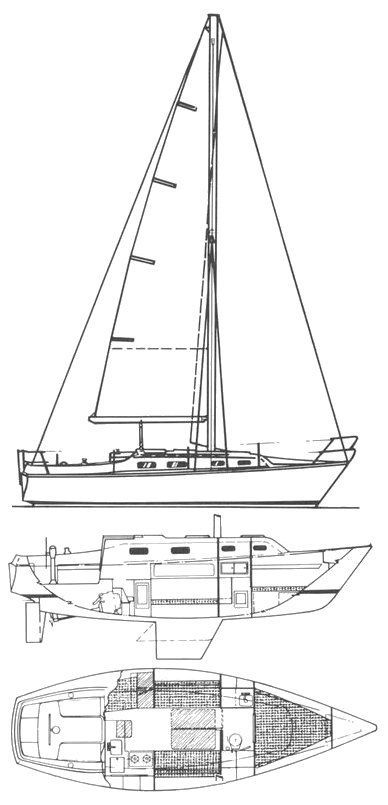
The Hunter 27 features a moderate displacement fiberglass hull with a fin keel and an internally mounted spade rudder, a configuration that emphasizes ease of handling and performance stability. The hull’s moderate beam and relatively shallow draft (usually around 3.5 to 4 feet depending on the version) support access to shallower cruising grounds, a valued trait for coastal sailing. The sloop rig, standard on this model, provides a straightforward and versatile sail plan, simplifying sail handling for small crews or solo sailors.
Built predominantly of hand-laid fiberglass with a balsa core deck, the construction reflects typical techniques of the era, balancing cost efficiency and structural integrity. This results in a hull that is robust yet repairable, with maintenance generally accessible to owners with moderate experience. The use of composite materials in the deck contributes to reduced weight aloft, enhancing stability. The internal layout prioritizes usable living space while maintaining structural soundness, with bulkheads and stringers strategically placed to distribute loads and preserve hull rigidity
Performance
On the water, the Hunter 27 is known for its predictable and forgiving sailing characteristics. It performs well in light to moderate winds, with a cruising speed averaging 5 to 6 knots, and remains stable and comfortable in choppier conditions thanks to its moderate displacement and balanced hull shape. Its ability to point reasonably close to the wind makes it competitive within its size class, though it lacks the sharpness of more racing-oriented designs.
Compared to contemporaries such as the Catalina 27 or the Alberg 27, the Hunter 27 offers a slightly more spacious interior at the expense of some upwind agility. The boat’s maneuverability under sail and power (when equipped with an outboard or small inboard engine) is well-regarded, making it a reliable choice for coastal cruising where variable conditions and confined spaces are common.
Comfort and Accommodations
The interior of the Hunter 27 is designed to maximize comfort within its compact footprint. It typically includes a forward V-berth, a convertible dinette, and a modest galley, making it well suited for couples or small families. Storage is adequate for weekend or short-term cruising, though extended liveaboard use can feel cramped. Ventilation is managed through opening ports and hatches, which generally suffice to keep the interior pleasant in warmer weather.
Ergonomically, the layout supports ease of movement below decks, and many boats on the market have undergone tasteful upgrades or refits that enhance modern comfort. The interior woodwork and fixtures, while utilitarian, tend to age gracefully when properly maintained, adding a classic charm valued by many sailors.
Safety and Practicality
Safety aboard the Hunter 27 is thoughtfully considered, with secure handholds on deck, a well-proportioned cockpit for easy crew movement, and manageable sail controls accessible to smaller crews. The boat’s moderate draft and sturdy keel provide confidence in coastal waters, though it is not designed for demanding bluewater passages without additional reinforcements.
Systems like steering, rigging, and auxiliary power are generally straightforward and easily serviced, keeping maintenance costs reasonable. Access to the water is facilitated by a small swim ladder or boarding platform, practical for recreational stops and casual swimming.
Known Issues with the Hunter 27
Owners and forums commonly report some typical issues with the Hunter 27, mostly related to its age. Osmosis can be a concern in older hulls if not treated early, while the balsa core in decks may develop soft spots from water intrusion if hatches or fittings are neglected. The original outboard motors, if present, are often replaced with more reliable units or small inboard diesels. Electronics are usually outdated but can be modernized without major rewiring.
Recommended upgrades frequently include replacing the propeller for improved thrust, upgrading navigation and communication equipment, and reinforcing deck hardware to address wear. These modifications enhance safety and value while addressing the boat’s original modest specifications.
Market Availability and Pricing in the U.S.
The Hunter 27 is no longer in production, making the used market the only avenue for acquisition. It is widely available along the U.S. coasts, particularly in regions with active coastal cruising communities such as Florida, the Mid-Atlantic, and parts of California. Many boats are well-maintained private owners’ vessels, though some ex-charter boats appear on the market, often priced lower but requiring more investment.
Typical asking prices range between $8,000 and $15,000, depending on condition, location, and included equipment, making it a competitive option for budget-conscious buyers. When compared with similar models from Catalina, Alberg, and Islander, the Hunter 27 holds its own as a practical coastal cruiser with an emphasis on comfort and ease.
Below is a comparison with similar sailboats from the same era:
| Model | LOA (ft) | Year Range | Typical Price (USD) | Key Differences |
|---|---|---|---|---|
| Hunter 27 | 27 | 1974–1984 | $8,000–$15,000 | Spacious interior, moderate draft, easy handling |
| Catalina 27 | 27 | 1971–1991 | $9,000–$16,000 | More traditional design, heavier displacement, stronger build |
| Alberg 27 | 27 | 1962–1987 | $10,000–$18,000 | Classic full keel, bluewater capable, slower but rugged |
| Islander 28 | 28 | 1970s | $7,000–$14,000 | Similar size, simpler interior, slightly less popular |
Conclusion
The Hunter 27 stands out as a sensible choice for coastal cruisers seeking a boat that balances ease of handling, reasonable comfort, and affordability. While it may not excel in racing or extended offshore voyages, its design and build quality provide a reliable platform for weekend adventures and light cruising. Its relatively spacious interior for the size and manageable systems make it particularly attractive for couples or small families.
For buyers, the Hunter 27 represents a practical investment with a stable resale market, especially when well maintained or thoughtfully upgraded. For sellers, understanding the boat’s niche and common upgrade paths can help position it competitively. Ultimately, the Hunter 27 remains a respected and often underappreciated vessel in its category — well worth considering for anyone entering or continuing their sailing journey along America’s coasts.
Specifications
| Hull Type: | Fin with rudder on skeg |
|---|---|
| Rigging Type: | Masthead Sloop |
| LOA: | 27.17 ft / 8.28 m |
| LOD: | |
| LWL: | 22.00 ft / 6.71 m |
| S.A. (reported): | 343.00 ft² / 31.87 m² |
| Beam: | 9.25 ft / 2.82 m |
| Beam WL: | |
| Displacement: | 7,000.00 lb / 3,175 kg |
| Ballast: | 3,000.00 lb / 1,361 kg |
| Max Draft: | 4.25 ft / 1.30 m |
| Construction: | FG (Fiberglass) |
| First Built: | 1974 |
| Last Built: | 1984 |
| # Built: | 2000 |
| Builder: | Hunter Marine (USA) |
| Designer: | John Cherubini |
| Auxiliary Power/Tanks (orig. equip.) | |
| Make: | Renault |
| Type: | Diesel |
| HP: | 8 |
| Fuel: | 12 gals / 45 L |
| Accommodations | |
| Water: | 35 gals / 132 L |
| Headroom: | 6.08 ft / 1.85 m |
| Sailboat Calculations | |
| S.A. / Displ.: | 15.04 |
| Bal. / Displ.: | 42.86 |
| Disp: / Len: | 293.48 |
| Comfort Ratio: | 23.73 |
| Capsize Screening Formula: | 1.94 |
| S#: | 1.74 |
| Hull Speed: | 6.29 kn |
| Pounds/Inch Immersion: | 727.13 pounds/inch |
| Rig and Sail Particulars | |
| I: | 37.67 ft / 11.48 m |
| J: | 11.25 ft / 3.43 m |
| P: | 32.33 ft / 9.85 m |
| E: | 9.92 ft / 3.02 m |
| S.A. Fore: | 211.89 ft² / 19.69 m² |
| S.A. Main: | 160.36 ft² / 14.90 m² |
| S.A. Total (100% Fore + Main Triangles): | 372.25 ft² / 34.58 m² |
| S.A./Displ. (calc.): | 16.33 |
| Est. Forestay Length: | 39.31 ft / 11.98 m |
| Mast Height from DWL: | 40.92 ft / 12.47 m |
Disclaimer
The considerations and analyses presented regarding the Hunter 27 sailboat are of a general nature and are based on the available information and technical data on this model, interpreted to the best of our knowledge and understanding. It is important to note that the specific characteristics of any particular sailboat may vary due to custom modifications, maintenance performed, and conditions of use over time, among other factors. Therefore, the details and performance of the boat you are considering may not exactly match the information provided here.
We strongly recommend that, before making any purchasing or usage decisions, you conduct a detailed inspection of the boat in question, consult with nautical professionals and other sailors, and consider your personal needs, expectations, and capabilities. Each sailboat may have unique particularities that affect its performance and suitability for different types of sailing and sailors.
The information contained in this analysis should be used as a general guide and not as a definitive reference. Professional evaluation and personal inspection are essential to ensure that the boat meets your specific requirements and expectations.