



The Catalina 27 is one of the most iconic production sailboats ever built in the United States. Introduced in 1971 by Catalina Yachts, and designed by Frank Butler, it was intended as a comfortable and affordable family cruiser, well-suited for coastal sailing and weekend getaways. The Catalina 27 became a staple of American marinas throughout the ’70s and ’80s, with over 6,600 hulls produced during a production run that lasted until 1991.
This model was aimed at sailors seeking a capable boat for local cruising that wouldn’t break the bank—especially appealing to first-time boat owners and weekend adventurers. Today, the Catalina 27 holds a firm place in the second-hand market, with strong interest from budget-conscious cruisers, sailing schools, and DIY-minded enthusiasts who value simplicity and reliability. Its timeless layout and abundant availability make it one of the most popular boats in its class.
Design and Construction
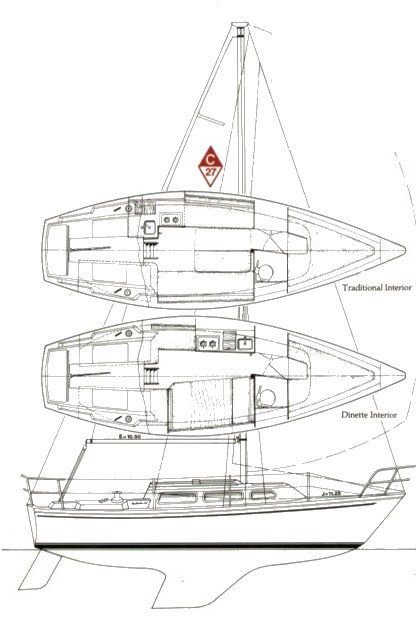
The Catalina 27 features a moderate-displacement fiberglass monohull with a fin keel (or optional shoal draft) and a transom-hung or inboard rudder, depending on the year and configuration. The rig is a masthead sloop, offering a simple and effective sail plan that balances ease of handling with sufficient power for cruising. Early models featured tiller steering, while later versions offered wheel steering as an option.
Construction is conventional for the era: hand-laid fiberglass hulls with plywood-reinforced decks and teak trim in the interior. The structural integrity of the Catalina 27 is generally considered good, though some older boats may show signs of age such as deck delamination or compression around the mast step if not properly maintained.
From a naval architecture perspective, the Catalina 27 emphasizes balance over extremes. Its moderate beam and low freeboard reduce windage and increase motion comfort, while the fin keel provides decent tracking and upwind performance. Its straightforward systems and rugged construction contribute to ease of ownership and moderate maintenance costs, though age-related refits are common on boats over 30 years old.
Performance
Under sail, the Catalina 27 offers predictable and forgiving performance, ideal for coastal cruising and casual racing. It is not a high-performance boat, but its design allows it to sail efficiently in a wide range of conditions. The boat handles well in light to moderate winds and is known for being steady on the helm. With a hull speed of around 6.2 knots, it performs adequately for its size and era.
In heavier air, reefing early is advisable, especially on older boats with worn rigging or overstretched sails. The boat’s displacement offers good motion comfort for its length, but it may pound into steep chop due to its relatively low bow and flat sections forward. Upwind performance is respectable, particularly on the deep-fin keel versions, and it compares favorably with contemporaries like the Hunter 27 and O’Day 28.
The Catalina 27 has earned a reputation as a solid coastal cruiser — not particularly fast or sporty, but safe, reliable, and easy to sail. These characteristics have helped it maintain popularity for decades among sailors who prioritize relaxed cruising over aggressive performance.
Comfort and Accommodations
One of the strongest features of the Catalina 27 is its interior volume. With nearly 6 feet of headroom and a beam carried well forward, the cabin feels spacious and airy for a boat of its length. The layout includes a V-berth forward, an enclosed head, a convertible dinette, and a quarter berth aft, allowing accommodations for up to five adults, though it’s most comfortable for two to three on extended cruises.
The galley typically features a two-burner stove, sink, and icebox, with plenty of storage for weekend provisioning. Natural light enters through several opening ports and hatches, and many boats have been upgraded with fans or solar vents to improve ventilation.
Ergonomically, the Catalina 27 works well for coastal living. The cockpit is generous and secure, and the interior arrangement allows for practical lounging and sleeping arrangements. While not designed for full-time liveaboard use, many owners have spent weeks or months aboard comfortably. Interiors tend to age gracefully, though it’s common to find boats with reupholstered cushions, replaced cabinetry, or customized layouts.
Safety and Practicality
On deck, the Catalina 27 is functional and safe, with wide side decks, lifelines, and a well-protected cockpit. Most lines are not originally led aft, though many owners have modified the deck layout to allow for single-handed sailing. Winch placement and traveler positioning vary slightly between early and later models but are generally user-friendly.
The boat handles predictably in strong winds, and the displacement helps it ride through chop with less slamming than lighter boats. Access to the water is straightforward via the transom or ladder, though retrofitting swim platforms is a common upgrade. The deck hardware is serviceable, though aging components may need to be re-bedded or replaced.
With its moderate draft (typically around 4 feet), the Catalina 27 is ideal for coastal cruising, bays, and inland waters. While it is not designed for offshore passages without significant upgrades, it has proven itself capable in serious weather under experienced hands. Engine access—usually an inboard Atomic 4 gasoline engine or later diesel—is manageable but cramped. System maintenance is straightforward and cost-effective, though age can lead to deferred upkeep in some listings.
Known Issues with the Catalina 27
Like many older fiberglass boats, the Catalina 27 is not without quirks. One of the most common issues is core rot or water intrusion in the deck and around the chainplates. Compression of the mast step, due to inadequate support beneath the deck, is another frequently reported problem.
Many early models came with the Atomic 4 gasoline engine, which—while reliable when maintained—can be difficult to source parts for. Some owners opt to repower with a small diesel or convert to electric propulsion. Fuel tank leaks and worn through-hulls are also routine inspection items.
Additional issues include outdated electrical systems, aging standing rigging, and interior water damage from leaky ports or companionway hatches. Osmosis is not a systemic problem on this model but can appear on hulls with poor maintenance histories. Popular upgrades include re-bedding all deck hardware, switching to modern LED lighting, installing shore power, and replacing heads with composting toilets.
Market Availability and Pricing in the U.S.
The Catalina 27 is long out of production but remains widely available on the used market. Boats can be found in nearly every sailing region of the U.S., especially in California (where Catalina Yachts was based), the Great Lakes, the Chesapeake Bay, and New England.
Pricing varies considerably based on condition, engine type, and upgrades. Well-maintained examples typically sell between $5,000 and $12,000, with fixer-uppers available for less and refitted boats commanding slightly more. Given their numbers, buyers can afford to be selective — though good examples tend to move quickly.
Compared to similar models like the Hunter 27, Pearson 28, and O’Day 27, the Catalina 27 often stands out for its availability, parts support, and strong owner community.
Below is a comparison with similar sailboats from the same era:
| Model | LOA | Year | Used Price (USD) | Main Differences |
|---|---|---|---|---|
| Catalina 27 | 26’10” | 1971–1991 | $5,000–$12,000 | Well-supported, spacious interior, large fleet |
| Hunter 27 | 27’0″ | 1974–1984 | $6,000–$11,000 | Similar volume; lighter build; mixed quality |
| Pearson 28 | 28’3″ | 1975–1982 | $7,000–$13,000 | Heavier; better motion comfort; fewer available |
| O’Day 27 | 26’11” | 1972–1982 | $5,000–$10,000 | Simpler design; shallower draft; less headroom |
Catalina 27 vs Hunter 27

The Catalina 27 and the Hunter 27 are both popular 1970s-era coastal cruisers, but they differ in sailing personality and owner appeal. The Catalina’s hull form is conservative with a moderate beam and relatively deep forefoot, which provides predictable handling and stability in varied conditions. The Hunter 27, by contrast, has a fuller beam aft and a more modern underbody, giving slightly better interior volume and initial stability but sometimes a stiffer, less forgiving helm in heavy air. Rigging is simpler on the Catalina, with a masthead sloop setup that makes sail handling approachable for casual crews, while the Hunter’s B&R rig (on later versions) reduces the need for a backstay but introduces more complexity in tuning. Under sail, the Catalina is slower but more forgiving and easy to balance, making it attractive for relaxed family sailing. The Hunter’s performance is sprightlier in light air but can demand more trimming attention from the skipper. Inside, the Hunter offers more usable cabin space with its beamier design, but Catalina’s interior, while tighter, is often praised for its practical galley and berth arrangement. For buyers, the Catalina suits those prioritizing simplicity, low learning curve, and wide parts availability, while the Hunter favors sailors seeking more interior volume and livelier light-air performance at the expense of added rigging complexity.
► Learn more about the Hunter 27
Catalina 27 vs Pearson 28

When comparing the Catalina 27 to the Pearson 28, the difference is one of refinement versus accessibility. The Pearson 28 carries a slightly longer waterline and a better-balanced hull, yielding steadier tracking and higher average speeds on longer coastal passages. The Catalina, by contrast, is less efficient under sail but easier for a novice sailor to manage, with gentler helm feedback. Rigging on both is straightforward masthead sloop, but the Pearson’s slightly taller rig gives it an edge in light and moderate air for club racing. Below deck, the Pearson 28 feels more solidly finished, with higher-quality joinery and a more traditional seagoing interior, whereas the Catalina favors open seating and family-friendly layouts at lower build cost. Comfort is another dividing line: the Pearson’s narrower beam translates to better offshore motion comfort, while the Catalina’s beamier hull provides more liveable weekend space but can pound more in chop. Maintenance on the Catalina tends to be simpler, with abundant spare parts and strong owner support networks, while Pearson owners may face more effort sourcing replacements due to lower production volume. Buyers focused on affordable family weekends will find the Catalina more practical, while those eyeing longer coastal cruising or modest racing gains will gravitate to the Pearson.
► Learn more about the Pearson 28
Catalina 27 vs O’Day 27
The Catalina 27 and O’Day 27 are close contemporaries, yet they reflect different design priorities. The O’Day 27’s hull is slightly narrower and deeper, making it track better upwind and feel steadier in heavier weather, while the Catalina emphasizes beamier form stability and greater interior comfort at anchor. Rigging is broadly similar between the two, but O’Day’s balance often results in better pointing ability, appealing to sailors who enjoy performance-oriented club racing. The Catalina, however, is more forgiving and easier for beginners, requiring less active trimming. In terms of interior, the O’Day’s layout is more traditional and somewhat cramped, with a smaller galley, whereas the Catalina’s interior feels more open and better suited for casual family use despite less seagoing security. Performance-wise, the O’Day is quicker upwind and in chop, while the Catalina feels livelier in light breezes and is easier to handle under reduced sail. Maintenance favors the Catalina due to higher production numbers and plentiful aftermarket parts, while O’Day owners may face sourcing challenges for certain fittings. For buyers, the O’Day suits those valuing sailing performance and weatherly qualities, while the Catalina excels for low-maintenance weekend family cruising and casual use.
► Learn more about de O’Day 27
Maintenance Costs of a Catalina 27 in the U.S.
Typical annual expenses for a Catalina 27 (costs vary by coastal region vs inland lake sailing):
- Mooring/Slip Fees: $1,500–$6,000 (cheaper on lakes and Gulf Coast, highest in New England and California).
- Insurance: $250–$700 annually, depending on coverage and sailing region.
- Engine Servicing: $300–$800 annually for an Atomic 4 or small diesel; owner maintenance can reduce this significantly.
- Antifouling Paint & Bottom Work: $600–$2,000 per season, with haul-out fees higher in the Northeast.
- Standing Rigging: Replacement every 15–20 years ($2,500–$4,000 one-time).
- Running Rigging: $300–$600 every 5–7 years depending on use.
- Sails: $2,500–$4,500 for a new set, typically lasting 10–15 years for cruising use.
One-time or periodic costs may include electronics upgrades ($2,000–$6,000 for GPS, chartplotter, AIS, autopilot), interior refits ($1,000–$3,000 depending on condition), or repowering ($6,000–$10,000 for a new diesel). Owner-maintenance is common and practical, as systems are simple and well-documented, lowering reliance on professional yards compared to newer or more complex yachts.
Overall, Catalina 27 ownership costs are low to medium for a boat in the 27-foot class, especially given strong resale demand and an active owner community. Resale values remain stable due to the huge production run and parts availability, which helps offset ongoing maintenance costs for long-term owners.
Conclusion
The Catalina 27 remains a smart and affordable choice for sailors seeking a reliable coastal cruiser with proven credentials. Its wide availability, forgiving sailing characteristics, and roomy interior make it a perennial favorite among beginners and budget-minded sailors alike.
While some effort may be required to address aging systems or cosmetic wear, the boat’s core design holds up remarkably well decades later. With a strong parts supply, vibrant owner network, and documented performance history, the Catalina 27 is more than just a starter boat — it’s a capable, character-filled cruiser that continues to earn its place at the heart of American sailing. For the right sailor, it offers exceptional value and an enduring connection to the golden age of fiberglass production yachts.
Specifications
| Hull Type | Fin w/spade rudder |
| Rigging Type | Masthead Sloop |
| LOA | 26.83 ft / 8.18 m |
| LWL | 21.75 ft / 6.63 m |
| S.A. (reported) | 342.00 ft² / 31.77 m² |
| Beam | 8.83 ft / 2.69 m |
| Displacement | 6,850.00 lb / 3,107 kg |
| Ballast | 2,700.00 lb / 1,225 kg |
| Max Draft | 4.00 ft / 1.22 m |
| Construction | FG (Fiberglass) |
| Ballast Type | Lead |
| First Built | 1971 |
| Last Built | 1991 |
| # Built | 6662 |
| Builder | Catalina Yachts (USA) |
| Designer | Frank Butler / Bob Finch |
| Headroom | 6.08 ft / 1.85 m |
| S.A. / Displ. | 15.22 |
| Bal. / Displ. | 39.42 |
| Disp. / Len. | 297.21 |
| Comfort Ratio | 24.99 |
| Capsize Screening Formula | 1.86 |
| S# | 1.64 |
| Hull Speed | 6.25 kn |
| Pounds/Inch Immersion | 686.22 pounds/inch |
| I | 34.50 ft / 10.52 m |
| J | 11.25 ft / 3.43 m |
| P | 28.66 ft / 8.74 m |
| E | 10.50 ft / 3.20 m |
| S.A. Fore | 194.06 ft² / 18.03 m² |
| S.A. Main | 150.47 ft² / 13.98 m² |
| S.A. Total (100% Fore + Main) | 344.53 ft² / 32.01 m² |
| S.A. / Displ. (calc.) | 15.33 |
| Est. Forestay Length | 36.29 ft / 11.06 m |
Disclaimer
The considerations and analyses presented regarding the Catalina 27 sailboat are of a general nature and are based on the available information and technical data on this model, interpreted to the best of our knowledge and understanding. It is important to note that the specific characteristics of any particular sailboat may vary due to custom modifications, maintenance performed, and conditions of use over time, among other factors. Therefore, the details and performance of the boat you are considering may not exactly match the information provided here.
We strongly recommend that, before making any purchasing or usage decisions, you conduct a detailed inspection of the boat in question, consult with nautical professionals and other sailors, and consider your personal needs, expectations, and capabilities. Each sailboat may have unique particularities that affect its performance and suitability for different types of sailing and sailors.
The information contained in this analysis should be used as a general guide and not as a definitive reference. Professional evaluation and personal inspection are essential to ensure that the boat meets your specific requirements and expectations.