



Jeanneau Sun Odyssey 28.1 is a compact coastal cruiser introduced in the mid-1990s as part of Jeanneau’s Sun Odyssey family — a line aimed at owners who wanted easy handling, modern ergonomics and usable accommodations in an entry-level cruising platform. Designed by Tony Castro and built by Jeanneau beginning in the mid-1990s, the 28.1 was intended for couples and small families who prioritize comfortable weekend and coastal cruising with the occasional longer passage, rather than competitive one-design racing. The model found a steady niche on the used market: it’s common in European and North American listings and attracts private buyers, flotilla/charter operators in Europe and sailors who want a relatively low-maintenance, well-appointed 28-footer. These qualities — sensible systems, modest displacement and an emphasis on ergonomics — explain why examples turn up regularly on broker sites and classifieds.
Design and Construction
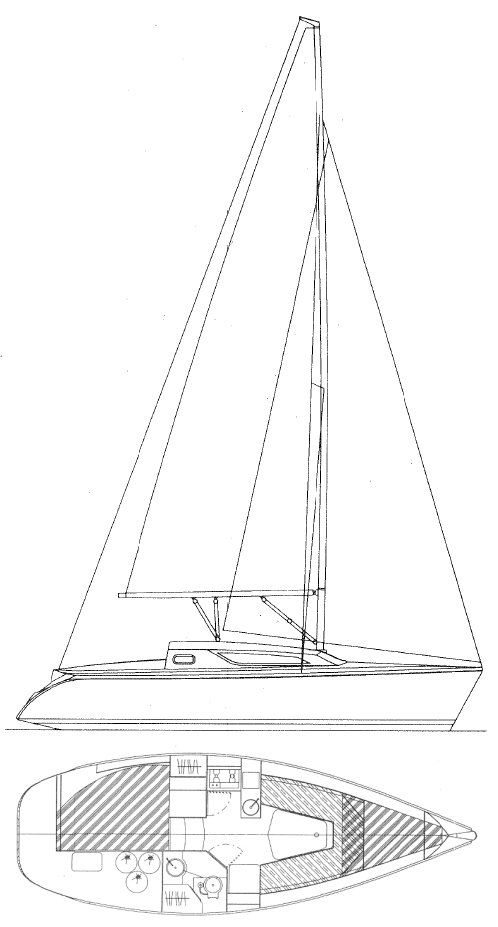
The Sun Odyssey 28.1 is a fiberglass monohull with a fin keel and spade rudder, typically rigged as a fractional sloop; Jeanneau’s factory data lists an LOA around 8.70 m (≈28′7″) with a moderate beam and a displacement in the mid-2,600 kg (≈5,700 lb) range. The hull form and underbody prioritize internal volume and responsive handling: a relatively lightish displacement for the era combined with a modern underwater profile gives a boat that accelerates readily and keeps heel angles manageable without excessive tenderness. Construction is conventional fiberglass (hand or injection molded depending on the yard run) with factory-applied systems and reasonable access to machinery and tanks; the deck and interior fitout emphasize bright, practical finishes and good natural light. From an owner’s perspective these choices make the boat straightforward to maintain — gelcoat and polyester laminates are repairable in any decent yard — while the simpler rig geometry and single-level cockpit layout reduce complexity for short-handed sailing and lower long-term service costs. The design balances resale-friendly features (two-cabin layouts, modest systems) with build practices that keep repair and upgrade paths accessible.
Performance
On the water the Sun Odyssey 28.1 tends to be described by sailors as lively and comfortable for its length: the fractional rig gives a manageable mainsail-led sailplan that is easy to reef and trim, and the hull produces good lift and steering response in moderate conditions. In light airs the boat benefits from a decent sail area and a clean underwater shape, while in stronger breeze it tends to remain well-mannered thanks to its moderate beam and controlled displacement — tracking and course stability are positive attributes for cruisers making longer coastal passages. Compared with older, heavier 28-foot cruisers the Jeanneau will usually feel sprightlier and more responsive; compared with small, race-oriented 28s it trades some raw speed for easier handling and more comfortable motions. Reviews and broker descriptions commonly note that the 28.1 is a practical performer rather than an all-out racer: fast enough for club racing in the right conditions, but primarily built to make cruising days pleasant and predictable.
Comfort and Accommodations
Belowdecks the Sun Odyssey 28.1 was arranged with a focus on usable space and light: typical layouts include two cabins, an open saloon with convertible table, and a modest but well-planned galley. Storage and tankage are better than many older 28-footers — Jeanneau factory specs frequently show water capacity near 100 L and a practical fuel tank — which makes the boat more capable for multi-day trips without constant resupply. Ventilation and natural light were priorities in the Sun Odyssey line, so owners usually enjoy a bright interior by day; ergonomics are generally modern for a 1990s design, and the interior finishes age reasonably well, meaning that modest cosmetic upgrades (upholstery, cushions, wood-refinishing) often bring a large improvement in perceived comfort. For a couple or a small family the 28.1 is comfortable for weekends and coastal cruises and, in a well-equipped example, can serve for longer cruises — though full-time liveaboard expectations should be tempered by the inherent space limits of a sub-30-foot hull.
Safety and Practicality
Deck layout and cockpit ergonomics favor safe, short-handed operation: the cockpit is compact but well-protected, winches and control leads are generally accessible, and the fractional rig simplifies headsail size management and reefing. Boarding, stepping aboard from a marina or dinghy, and access to the water are conventional for boats this size, and many owners add modest upgrades (additional handholds, non-skid renewal, or a solid transom ladder) to enhance day-to-day safety. The engine and systems are usually reachable for routine maintenance, which lowers operating friction compared with more integrated or exotic installations; for coastal cruising the 28.1 is ready nearly as-built, while serious offshore work would call for upgraded navigation/electrical gear, stronger seacocks and a thorough rig check — not because the basic platform is inadequate, but because extended offshore use imposes higher standards of redundancy. Overall, the Sun Odyssey 28.1 balances safety and simplicity in a way that suits family coastal cruising and club-level passagemaking.
Known Issues with the Jeanneau Sun Odyssey 28.1
Problems reported by owners tend to be typical for production boats of the era rather than unique design flaws: local gelcoat wear and point-leaks at deck fittings, the usual need to replace original standing rigging after decades in service, and occasional wear on older mechanical systems such as through-hulls and seacocks. Osmosis is less frequently reported on later, better-built Jeanneaus than on some 1970s/early-80s production boats, but any older fiberglass hull should be inspected for blisters or prior repairs; surveys commonly highlight the need to check plumbing, seacocks and chainplate areas for corrosion or past leaks. Electronics and sails on many used examples will be decades old and are typical refresh items; common owner recommendations include updating nav/communications gear, inspecting or replacing shrouds and forestays if original, and fitting a more modern propeller for better light-air performance. These are familiar maintenance items for a buyer of a 1990s production cruiser and are usually manageable within a planned refit budget.
Market Availability and Pricing in the U.S.
The Sun Odyssey 28.1 is no longer in production and is sold only on the pre-owned market. Examples appear periodically across the U.S., with more concentration in coastal sailing hubs where Europeans and owners trade in older Jeanneaus — listings are seen in Florida, the mid-Atlantic and on occasion in New England and the Great Lakes, with many broker descriptions emphasizing family-friendly layouts and well-kept hulls. Typical asking prices vary with year, condition and refit level; recent North American listings and valuation references suggest a used-boat bracket that often sits in the $15,000–$40,000 range depending on equipment, condition and location — well-equipped, newer or freshly refitted boats sit at the top end, while project boats appear at the low end. Compared with similar 28-foot cruisers the Sun Odyssey 28.1 usually offers a modern layout and good factory systems for the price, and its resale prospects are fair where Jeanneau brand recognition is strong.
Below is a comparison with similar sailboats from the same era:
| Model | LOA | Years (approx.) | Typical used price (U.S.) | Main differences |
|---|---|---|---|---|
| Jeanneau Sun Odyssey 28.1 | ~28.7 ft | mid-1990s (≈1994–1999) | $15,000–$40,000 | Modern 1990s ergonomics, fractional rig, lighter displacement and bright interior for length. |
| Catalina 28 MkII | ~28.0 ft | late 1980s–1990s | $15,000–$45,000 | Very common in U.S., roomy interior and multiple keel options; strong owner support network. |
| Hunter 28.5 | ~28.4 ft | mid-1980s | $9,000–$18,000 | Often lighter, sometimes livelier in light air; interior layouts favor weekend comfort and simple systems. |
| Beneteau First 285 | ~28.5 ft | late 1980s–early 1990s | $10,000–$20,000 | Leaner, more performance-oriented hull pedigree (Finot), often sharper handling and lighter displacement. |
Jeanneau Sun Odyssey 28.1 vs Catalina 28 MkII

The Sun Odyssey 28.1 leans toward a more modern 1990s approach: lighter displacement, a fractional rig and a focus on interior light and ergonomics. Those choices make the Jeanneau feel snappier to helm in moderate winds and more straightforward to single-hand when compared to many Catalina 28 MkII examples, which emphasize interior volume and a slightly more conservative sailplan.
Catalinas often win on parts availability and a broader U.S. owner community, which can reduce ownership friction (spares, advice, local knowledge) and sometimes boost resale value in U.S. markets. For buyers prioritizing interior living space and easy aftermarket support, the Catalina is attractive; for those who prize easier sail handling and a more contemporary deck layout, the Jeanneau offers a tangible operational advantage.
► Learn more about the Catalina 28 MkII
Jeanneau Sun Odyssey 28.1 vs Hunter 28.5

Compared with the Hunter 28.5, the Sun Odyssey generally presents a more refined cruising orientation: the Hunter of the era can be livelier, with taller rigs and a feel that rewards lighter-air tuning and club racing. The Jeanneau’s combination of moderate displacement and a fractional rig typically produces more forgiving reefing behavior and steadier motions in a short chop, which is an advantage for family coastal cruising.
Interiorly, Hunters often provide practical weekend layouts and a low initial refit cost, but the Sun Odyssey’s factory finish and brighter cabin atmosphere age more gracefully and make living aboard for short extended trips noticeably more comfortable. For a buyer who wants a simple, confidence-inspiring cruiser the Jeanneau slightly edges the Hunter; for a buyer seeking sportier light-air performance on a tight budget the Hunter can be compelling
.
► Learn more about the Hunter 28.5
Jeanneau Sun Odyssey 28.1 vs Beneteau First 285
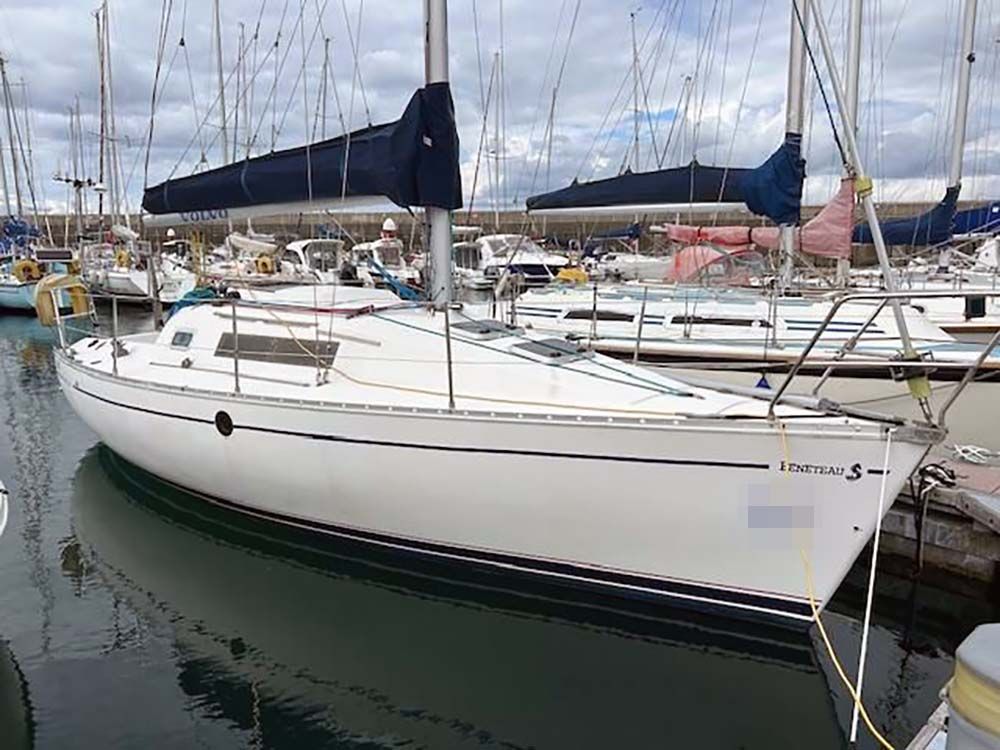
The First 285 represents a design lineage leaning toward performance: typically lighter displacement, hull shapes optimized by Finot for acceleration and pointing, and a more racing-influenced temperament. Against that background the Sun Odyssey 28.1 trades a degree of outright performance for better cruising ergonomics and more creature comforts — the Jeanneau’s interior and deck setups reflect a deliberate choice to favor family usability.
If your priority is spirited day sailing and club contesting in light airs the First 285’s sharper handling will reward you, but it also often demands a keener hand on sail trim and may be less forgiving in mixed sea states. For a buyer seeking a predictable, comfortable weekend cruiser that still sails well, the Sun Odyssey provides a more balanced and lower-stress ownership proposition.
► Learn more about de Beneteau First 285
Maintenance Costs of a Jeanneau Sun Odyssey 28.1 in the U.S.
Below are typical annual and significant one-time costs for ownership; figures are broad estimates and vary by region, condition and owner skill level.
- Mooring / Slip / Marina fees: $2,000–$8,000+ per year depending on region (lower in inland/seasonal areas, higher in high-demand coasts like New England or Florida).
- Insurance: Typically 0.5%–2% of insured value annually; older boats with modest values commonly pay several hundred to a few thousand dollars per year.
- Engine servicing and fuel: Routine service (oil, filters, impeller) and winterization roughly $300–$1,200/year depending on shop rates and usage; occasional mechanical repairs are extra.
- Bottom cleaning and anti-fouling paint: $300–$1,500/year depending on haul frequency and local labor; more in tropical or high-growth waters.
- Standing and running rigging: Inspection annually; replacement of standing rigging is a typical one-time cost of $1,000–$3,000+ when due (age dependent).
- Sails: A serviceable main or genoa can range from $1,000–$4,000 each depending on cloth and cut; many owners phase replacements to spread cost.
- Electronics & batteries: Modernization (chartplotter, AIS, VHF, battery bank, solar) is a common mid-life investment of $1,000–$6,000+ depending on scope.
- Major refit / structural (osmosis, deck core, repower): These are intermittent high-cost items — from several thousand dollars for localized repairs to $10,000–$30,000+ for major repowers or deep structural work.
Regional differentiation: marina and haul costs are highest in New England, the Pacific Coast and parts of Florida; inland or southern mid-Atlantic areas are often less expensive. Many routine jobs (cleaning, basic mechanical service, varnish touch-ups) can be owner-performed to save money, but structural repairs, expert rigging work and major electrical or engine jobs usually require professionals — choosing which tasks to DIY materially changes annual spend. Overall, for a 28-foot cruiser the Sun Odyssey’s upkeep profile can be characterized as medium: not as cheap to maintain as a very basic 20–24 foot daysailer, but significantly more affordable than larger blue-water yachts; a well-maintained example generally preserves resale value enough to make sensible investments in sails, rigging and electronics pay off at sale.
Conclusion
The Sun Odyssey 28.1 is a sensible, well-rounded coastal cruiser: modern (for its era) ergonomics, a manageable fractional rig and bright, useable accommodations make it an attractive choice for couples and small families who want straightforward, enjoyable sailing without complex systems. Strengths include good interior volume for length, easy sail handling, and an owner-serviceable layout; weaknesses are the usual age-related refresh items (rigging, sails, electronics) and the space limits inherent to any sub-30-footer for full-time liveaboard ambitions. For buyers seeking a reliable weekend and coastal cruiser that is pleasant to sail and relatively economical to refit, the Sun Odyssey 28.1 is worth considering: it usually represents good value on the used market and has a resale profile that rewards reasonable maintenance and modest upgrades.
Specifications
| Hull Type | Fin w/spade rudder |
| Rigging Type | Fractional Sloop |
| LOA | 27.89 ft / 8.50 m |
| LWL | 23.29 ft / 7.10 m |
| S.A. (reported) | 350.00 ft² / 32.52 m² |
| Beam | 9.84 ft / 3.00 m |
| Displacement | 5,732.00 lb / 2,600 kg |
| Ballast | 1,764.00 lb / 800 kg |
| Max Draft | 4.92 ft / 1.50 m |
| Construction | FG |
| First Built | 1994 |
| Builder | Jeanneau (FRA) |
| Designer | Tony Castro |
Auxiliary Power/Tanks (orig. equip.) | |
| Make | Yanmar |
| Type | Diesel |
| HP | 19 |
| Fuel | 7 gals / 26 L |
Accommodations | |
| Water | 26 gals / 98 L |
| Sailboat Calculations | |
| S.A. / Displ. | 17.54 |
| Bal. / Displ. | 30.77 |
| Disp. / Len. | 202.56 |
| Comfort Ratio | 17.08 |
| Capsize Screening Formula | 2.20 |
| S# | 2.74 |
| Hull Speed | 6.47 kn |
| Pounds/Inch Immersion | 818.86 pounds/inch |
Rig and Sail Particulars | |
| I | 33.15 ft / 10.10 m |
| J | 9.45 ft / 2.88 m |
| P | 33.63 ft / 10.25 m |
| E | 11.48 ft / 3.50 m |
| S.A. Fore | 156.63 ft² / 14.55 m² |
| S.A. Main | 193.04 ft² / 17.93 m² |
| S.A. Total (100% Fore + Main Triangles) | 349.67 ft² / 32.49 m² |
| S.A./Displ. (calc.) | 17.52 |
| Est. Forestay Length | 34.47 ft / 10.51 m |
Disclaimer
The considerations and analyses presented regarding the Jeanneau Sun Odyssey 28.1 sailboat are of a general nature and are based on the available information and technical data on this model, interpreted to the best of our knowledge and understanding. It is important to note that the specific characteristics of any particular sailboat may vary due to custom modifications, maintenance performed, and conditions of use over time, among other factors. Therefore, the details and performance of the boat you are considering may not exactly match the information provided here.
We strongly recommend that, before making any purchasing or usage decisions, you conduct a detailed inspection of the boat in question, consult with nautical professionals and other sailors, and consider your personal needs, expectations, and capabilities. Each sailboat may have unique particularities that affect its performance and suitability for different types of sailing and sailors.
The information contained in this analysis should be used as a general guide and not as a definitive reference. Professional evaluation and personal inspection are essential to ensure that the boat meets your specific requirements and expectations.