



The Dufour 31 is a compact European cruising yacht from the early 1980s that aims to balance seaworthiness, interior liveability and straightforward handling for small crews. Built by Dufour in France and commonly dated to the 1980–1984 period, this model was conceived as a coastal cruiser with enough accommodation and tankage to satisfy couples or young families who wanted comfortable weekend trips and occasional longer hops, rather than a stripped-out racer or a full-blown bluewater passagemaker.
In the used-boat market the Dufour 31 occupies a niche: it’s more common in European listings but periodically appears in North America through private imports or brokered sales; demand tends to come from private owners and cruising couples rather than heavy charter operators, with buyers attracted to classic lines and efficient use of interior space.
Design and Construction
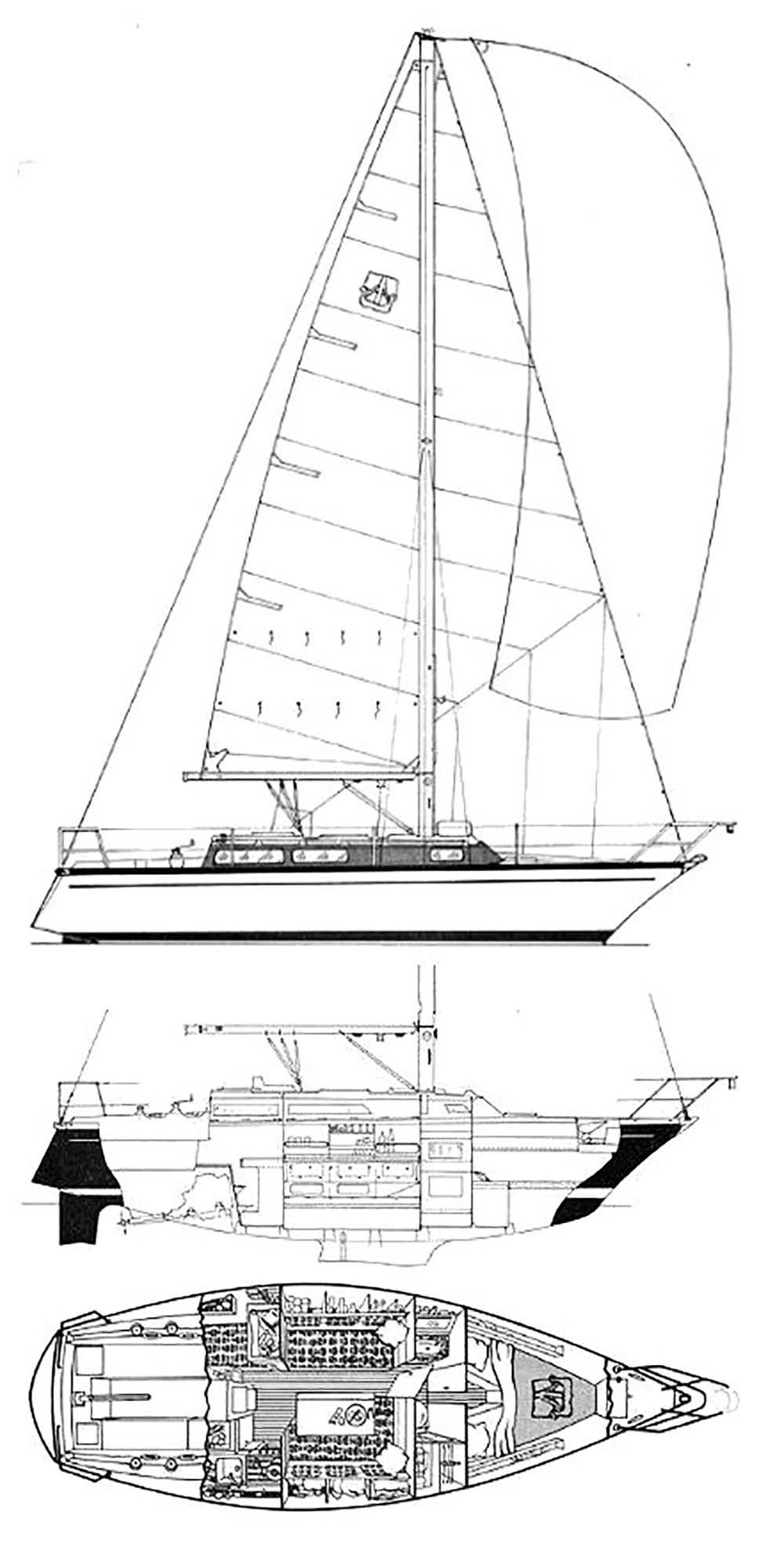
Dufour’s 31-foot design shows the hallmarks of early-1980s French production — a moderate to fine entry, a relatively narrow waterline compared with later wide-beam cruisers, and a fin keel with a spade rudder. The common rig is a masthead sloop, keeping sail inventory and deckwork simple for short-handed crews and reducing complexity when compared with cutters or ketches. Fiberglass (GRP) hull and deck construction with internal structures and bulkheads were the norm, giving a durable and repairable platform familiar to most yards.
Those choices influence ownership in predictable ways: the fin-keel / spade-rudder combo yields responsive steering and better pointing than older full-keel cruisers, but it does place more load on keel bolts and rudder bearings — items the prudent buyer will inspect. The fiberglass layup and simple structural scheme make blisters, core issues and gelcoat wear the usual maintenance focal points; on the upside, standard construction keeps repair techniques and spare parts widely supported in European and North American yards, which helps preserve resale value if systems are kept up to date.
Performance
On the water the Dufour 31 tends to reward conservative sail choices: with a moderate sail area and a reasonably slender hull it performs reliably upwind and accelerates respectably on a reach, producing comfortable cruising speeds in the high 5s to low 6s knots in typical coastal conditions. Owners and forum reports describe a boat that feels balanced and predictable rather than sporty — it points well for its era, but it will not match modern light-displacement designs in light airs.
Against contemporaries such as the Catalina 30 or Hunter 30, the Dufour often feels a touch more European in helm and motion: a little tighter in a seaway and slightly less “roomy” in cockpit ergonomics, yet the tradeoff is a hull that handles confused seas with composure and gives a confident feel when cruising. That combination makes it a solid choice for owners who prefer a steady, manageable platform rather than raw pace.
Comfort and Accommodations
The interior layout of the Dufour 31 was designed to make the most of limited length: cabins fore and aft, a practical galley and a reasonable saloon that converts to extra sleeping space. Materials and joinery in well-kept examples are tidy and durable, and owners report that the 31’s layout is genuinely usable for weekend families or couples spending weeks aboard, provided that modern comforts (fridge, updated heating and perhaps a better ventilation scheme) are added for extended liveaboard use.
Space is not generous by modern wide-beam standards, so buyers who plan long-term liveaboard life should budget for upgrades that improve storage, venting and refrigeration; for seasonal cruising and coastal passages the existing arrangement typically performs well and tends to age gracefully when regular maintenance is performed.
Safety and Practicality
Deck ergonomics and deck hardware are straightforward — a simple sloop rig with well-placed winches and cleats makes the boat manageable for shorthanded sailing, and a modest cockpit size helps crew feel secure when conditions get sporty. Access to the engine, through-hulls and major systems is generally good for the era, meaning routine servicing and small repairs are unlikely to require extensive haul-outs beyond normal antifouling cycles.
For owners contemplating passages beyond coastal cruising, the Dufour 31 is best seen as a capable coastal to near-offshore boat after sensible upgrades: modern nav and comms, recent standing rigging, and attention to seacocks and through-hull integrity will raise its suitability for longer trips without fundamentally altering the boat’s character.
Known Issues with the Dufour 31
Common issues reported by owners reflect the model’s age rather than design defects: tired standing rigging, worn engine installations (often older Volvo or similar diesels), and occasional soft spots or blisters in older gelcoat are the typical concerns. Deck-hatch seals and chainplate areas are places to inspect for past leaks, and rudder bearings or keel-bolt condition can be service items on older examples.
Buyers often budget for practical refresh items: replacement of standing rigging if older than 10–15 years, an electronics refresh (GPS, AIS, chartplotter) and sail updates. Swapping to a more efficient prop, renewing cutless bearings, and servicing the engine mounts are common, relatively low-cost improvements that materially increase safety and resale value.
Market Availability and Pricing in the U.S.
The Dufour 31 is out of production and primarily appears on the used market; listings are more concentrated in Europe but a handful of North American examples surface through private sales and brokers. Recent marketplace searches show active used listings on major broker platforms and niche listing sites, indicating that while it’s not abundant in U.S. marinas, buyers can find candidates in broker inventories and private listings.
A realistic U.S. buying range for Dufour 31 examples, depending on condition, engine/rigging state and location, is about $8,000–$30,000; clean, well-upgraded boats with recent systems will sit at the top end, while projects and cosmetically tired hulls appear near the bottom. A local example list (California) has shown asking prices in the low five-figures, illustrating how condition and geography shape value.
Below is a comparison with similar sailboats from the same era:
| Model | LOA | Approx. Years | Typical U.S. Used Price | Main difference |
|---|---|---|---|---|
| Dufour 31 | ~31 ft | 1980–1984 | $8,000–$30,000 | European hull lines, efficient interior for its length, less common in U.S. market. |
| Catalina 30 | ~29.9–30 ft | 1970s–1990s | $8,000–$35,000 | Very common in the U.S.; large support network and parts availability, often roomier in cockpit. |
| Hunter 30 | ~30–31 ft | 1980s–1990s | $7,000–$30,000 | More U.S.-focused ergonomics; some models emphasize ease-of-use and light-air performance. |
Dufour 31 vs Catalina 30

The Dufour 31 shows a European approach to hull form and interior planning, favoring a slender waterline and efficient use of cabin volume; the Catalina 30, by contrast, was designed for the North American market with a broader owner support network and cockpit-forward ergonomics. For a buyer, that means the Catalina often offers easier access to parts, widespread familiarity among U.S. yards and typically simpler resale, while the Dufour rewards owners with a tidier motion in confused conditions and a cabin feel that can seem more “continental.”
Maintenance wise, Catalina owners benefit from scale — replacement parts and peer knowledge are abundant — whereas the Dufour may require a bit more selective sourcing in the U.S., but its solid fiberglass construction keeps repair techniques standard and manageable.
► Learn more about de Catalina 30
Dufour 31 vs Hunter 30

Compared with a Hunter 30, the Dufour emphasizes traditional European lines and a somewhat firmer motion offshore; Hunters from the same era frequently adopt more modern (for the time) deck layouts and sail handling conveniences aimed at easy coastal weekends. For someone who values light-air responsiveness and a deck geared toward short-handed sailing, a Hunter can be appealing; however, if the priority is interior proportion and a composed ride in unsettled seas, the Dufour’s hull character has the advantage.
From an ownership standpoint, Hunters are often better supported in U.S. yards and can represent easier DIY maintenance; Dufour owners reap the benefit of a classic build that holds its appeal when systems are kept current.
► Learn more about de Hunter 30
Maintenance Costs of an Dufour 31 in the U.S.
Below are typical annual and periodic costs, expressed as ranges and with short comments to clarify what each item usually covers:
- Mooring / slip fees – $1,800–$8,000/year — seasonal vs year-round berths and marina class drive this range.
- Insurance – $300–$1,200/year — dependent on cruising area, declared value, and deductibles.
- Engine servicing – $300–$1,200/year — routine oil, filters and annual checks; major overhauls far higher.
- Antifouling (haul, paint, minor repairs) – $400–$1,500 every 1–2 years — labor and local haul rates are the big variables.
- Standing rigging inspection/replacement – $0–$4,000 (inspection low; full replacement a significant periodic expense) — common replacement interval 10–15 years.
- Sails (maintenance & replacement) – $200–$1,000/year for repairs; $1,500–$6,000 for new main + working headsail depending on materials.
- Electrical & electronics upgrades – $200–$2,500/year incremental; $3,000–$10,000+ for full modern refit (plotter, AIS, autopilot).
- Hull, topsides and structural contingencies – reserve $1,000–$3,500/year for small repairs, gelcoat touch-ups, seacock servicing and unexpected items.
Regional note: haul-out labor and marina fees are highest in New England and parts of California; Florida can be competitive for yard labor but may have higher insurance or hurricane-season costs. Significant one-time costs include standing-rigging replacement, a major engine repower, a full sailward refit, or addressing any discovered gelcoat/core issues.
An owner with competent DIY skills can shave material portions off the annual bill (varnish, gelcoat touch-ups, simple systems work), while owners who prefer professional services should budget toward the top of the ranges above. For a 31-foot cruiser used primarily for coastal cruising, total ownership costs are generally medium compared to smaller trailerable boats (higher) and significantly larger yachts (lower), and sensible maintenance tends to preserve resale value in this size class.
Conclusion
The Dufour 31 is a well-proportioned early-1980s European cruiser that will appeal to buyers who prioritize a composed hull, practical interior space and a boat that handles coastal conditions with confidence. Its strengths lie in a tidy, liveable cabin layout and a seaworthy hull form; its weaknesses are mostly age-related—systems, rigging and cosmetic wear—that sensible buyers will budget to refresh.
For a prospective buyer looking for an affordable, comfortable coastal cruiser under 32 feet, the Dufour 31 is worth seeking out if you can buy a vessel with a documented maintenance history and recent upgrades. It’s a pragmatic investment for coastal cruising: not the flashiest or fastest in class, but a boat that rewards careful ownership with steady performance, reasonable upkeep costs and an enduring, classic appeal on the used market.
Specifications
| General Information | |
|---|---|
| Hull Type | Fin with rudder on skeg |
| Rigging Type | Masthead Sloop |
| LOA | 30.83 ft / 9.40 m |
| LWL | 23.00 ft / 7.01 m |
| Beam | 10.50 ft / 3.20 m |
| Displacement | 9,600 lb / 4,354 kg |
| Ballast | 3,696 lb / 1,676 kg |
| Max Draft | 5.67 ft / 1.73 m |
| Construction | FG |
| First Built | 1973 |
| # Built | 900 |
| Builder | Dufour |
| Designer | Michel Dufour |
Auxiliary Power / Tanks | |
| Make | Volvo |
| Model | MD7A / MD2B |
| Type | Diesel |
| Fuel | 13 gals / 49 L |
Accommodations | |
| Water | 20 gals / 76 L |
Sailboat Calculations | |
| S.A. (reported) | 395 ft² / 36.70 m² |
| S.A. / Displ. | 14.04 |
| Bal. / Displ. | 38.50 |
| Disp. / Len. | 352.24 |
| Comfort Ratio | 25.54 |
| Capsize Screening Formula | 1.98 |
| S# | 1.20 |
| Hull Speed | 6.43 kn |
| Pounds/Inch Immersion | 862.91 lb/inch |
Rig and Sail Particulars | |
| I | 37.60 ft / 11.46 m |
| J | 11.97 ft / 3.65 m |
| P | 33.30 ft / 10.15 m |
| E | 10.20 ft / 3.11 m |
| S.A. Fore | 225.04 ft² / 20.91 m² |
| S.A. Main | 169.83 ft² / 15.78 m² |
| S.A. Total | 394.87 ft² / 36.68 m² |
| S.A. / Displ. (calc.) | 14.03 |
| Est. Forestay Length | 39.46 ft / 12.03 m |
Disclaimer
The considerations and analyses presented regarding the Dufour 31 sailboat are of a general nature and are based on the available information and technical data on this model, interpreted to the best of our knowledge and understanding. It is important to note that the specific characteristics of any particular sailboat may vary due to custom modifications, maintenance performed, and conditions of use over time, among other factors. Therefore, the details and performance of the boat you are considering may not exactly match the information provided here.
We strongly recommend that, before making any purchasing or usage decisions, you conduct a detailed inspection of the boat in question, consult with nautical professionals and other sailors, and consider your personal needs, expectations, and capabilities. Each sailboat may have unique particularities that affect its performance and suitability for different types of sailing and sailors.
The information contained in this analysis should be used as a general guide and not as a definitive reference. Professional evaluation and personal inspection are essential to ensure that the boat meets your specific requirements and expectations.