



The Hunter 30 emerged in the mid-1970s as part of Hunter Marine’s push to offer affordable, comfortable cruising sailboats to the American market. Designed primarily for coastal cruising rather than offshore passagemaking, it quickly found favor with sailors who wanted a manageable, family-friendly yacht without sacrificing basic performance. Over the years, the model has seen multiple iterations (including the original Cherubini-designed version and later Hunter 30-2 variants), but the core concept has remained the same: a practical, roomy, and easy-to-sail cruiser in the 30-foot class. Today, it is particularly popular in the used boat market among private owners and sailing schools, valued for its forgiving handling and straightforward systems. Demand is strongest among coastal cruisers and weekend sailors rather than the charter industry, though some training fleets continue to use them due to their reliability and space efficiency.
Design and Construction
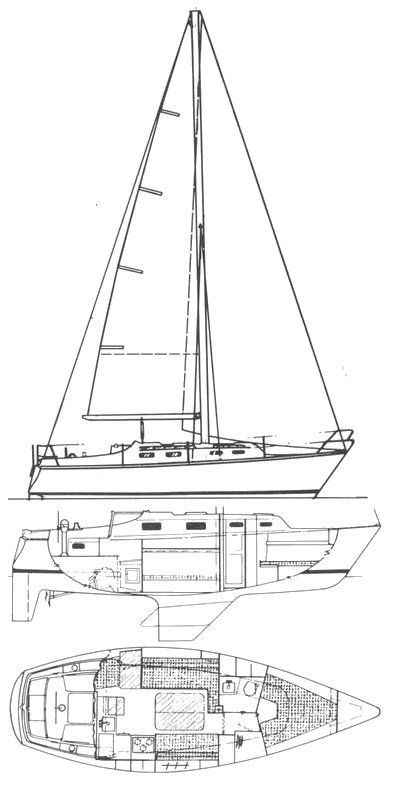
The Hunter 30 was built with a fiberglass hull, a material choice that gave it both resilience and relatively low maintenance compared to older wooden cruisers. Early models featured a moderate displacement hull with a fin keel and a skeg-hung rudder, a combination that offered a balance between maneuverability and directional stability. Later updates included spade rudders, which improved responsiveness under helm but required more attention to structural integrity.
The rig is a masthead sloop, the most common and practical configuration for boats of this size. It makes sail handling simple, parts easy to source, and tuning accessible to sailors of varying experience. From a naval architecture perspective, the Hunter 30 reflects compromises: moderate beam for interior volume, a ballast ratio that provides adequate stiffness without making the boat overly tender, and a deck layout designed for cruising comfort rather than racing efficiency. These design choices translate into manageable upkeep and decent resale value, though owners should still watch for the typical signs of fiberglass aging such as gelcoat crazing and potential osmosis.
Performance
Under sail, the Hunter 30 is regarded as solid and predictable rather than exciting. It points reasonably well to windward, though it cannot match the sharper performance of more race-oriented designs from the same era. In light air, it benefits from a well-cut genoa, while in heavier conditions the hull shape and ballast provide reassuring stability. With a moderate displacement, it is not a fast boat compared to performance cruisers, but its comfortable motion at sea has made it popular among coastal cruisers. Compared to peers like the Catalina 30 or Pearson 30, the Hunter 30 is slightly slower but often praised for being forgiving and easy to handle shorthanded.
Comfort and Accommodations
Inside, the Hunter 30 maximizes its 30 feet of length with a practical layout: a V-berth forward, a convertible saloon, and a quarter berth aft. The galley and navigation station are compact but functional, supporting both weekend use and extended stays. Ventilation is adequate with opening ports and hatches, though not as abundant as in newer designs. For a couple or small family, the boat offers enough space for comfortable cruising; for larger crews, it can feel crowded. Many examples on the used market have seen interior refits—upgraded upholstery, modernized galley equipment, or revarnished woodwork—since original interiors, while sturdy, do show their age after decades of use.
Safety and Practicality
On deck, the Hunter 30 has a safe, straightforward layout with adequate side decks and grab points. Lifelines and stanchion bases are sturdy, though on older boats these should be inspected for corrosion. The cockpit is spacious for a boat this size, with decent drainage, and offers good visibility for the helm. Systems are generally accessible, which reduces maintenance time and cost. For most owners, the Hunter 30 is best suited to coastal and near-offshore passages; while it can handle longer trips with proper upgrades, its design intent was not transoceanic sailing. With manageable sail handling and a forgiving rig, it is particularly practical for shorthanded crews or sailing couples.
Known Issues with the Hunter 30
Like many fiberglass boats of its generation, the Hunter 30 can suffer from osmotic blistering, especially if it spent much of its life in warm waters. Deck leaks around portlights and chainplates are also common, requiring rebedding. Original inboard diesels (often Yanmar or similar small engines) may now be at the end of their service life, so repowering is a frequent upgrade. Standing rigging, if original, will need replacement. Owners often recommend upgrading the original two-blade propeller to a three-blade for better maneuverability under power. Some boats also benefit from reinforcing bulkheads or updating electrical systems. These are not unusual issues for a vessel of its age, but prospective buyers should budget for them.
Market Availability and Pricing in the U.S.
The Hunter 30 is no longer in production and is only available on the used market. It is widely distributed across the U.S., with strong concentrations in Florida, the Chesapeake Bay, and New England, where active sailing communities support older production cruisers. Condition varies widely: some examples have been lovingly maintained or refitted, while others may be project boats in need of major structural or mechanical work.
As of recent listings, the price range in the U.S. market typically falls between $12,000 and $25,000, depending on age, upgrades, and location. This positions it competitively against similar 30-foot coastal cruisers. Compared to the Catalina 30, it is often slightly less expensive; compared to a Pearson 30, prices are similar but with more variation in condition; and against European imports like Jeanneau or Beneteau of the same era, it tends to be more affordable but less refined in fit and finish:
| Model | LOA | Years Built | Typical Price (U.S.) | Notable Differences |
|---|---|---|---|---|
| Hunter 30 | 30’ | 1973–1990s | $12,000–$25,000 | Spacious interior, affordable, moderate performance |
| Catalina 30 | 30’ | 1974–2000s | $15,000–$30,000 | One of the most popular 30-footers, strong community support |
| Pearson 30 | 30’ | 1970s–1980s | $10,000–$20,000 | Better upwind performance, simpler interior layout |
| Jeanneau Attalia 32 | 32’ | 1980s | $18,000–$30,000 | European design, more refined interior, slightly larger |
Hunter 30 vs Catalina 30

The Hunter 30 was conceived as an affordable, stout coastal cruiser with a relatively heavy ballast and a skeg-hung rudder, which gives it forgiving tracking and damage resistance in tight harbors; that construction choice tends to make repairs simpler and leaves owners less anxious about grounding or prop strikes. Catalina 30s, by contrast, pair a deep fin keel and a spade rudder with a higher ballast/displacement ratio and broader beam, producing a noticeably stiffer feel and a boat that holds sail power better in breeze — a practical advantage if you want to carry more sail without reefing early.
On the water that means the Catalina will feel steadier upwind and can point competitively, while the Hunter’s weight and skeg help with comfortable, predictable handling for family crews and less-experienced helms. Inside, Catalina’s long production run and incremental Mark II/III updates translated into a wide variety of layouts and later-model conveniences (open transom, improved galley), whereas Hunter interiors tend to emphasize straightforward, robust layouts that are easy to maintain and modify. For owners this translates into a tradeoff: Catalina often offers more modern creature comforts and stronger resale support because of large numbers built, while the Hunter minimizes fiddly systems and may cost less to refit. Maintenance realities flow from hull and deck construction choices: both are molded fiberglass, but Catalina’s market means parts and aftermarket upgrades are more commonly available.
Typical use follows naturally — choose the Hunter if you prioritize comfortable, low-stress weekend and family coastal cruising with simple upkeep; choose the Catalina if you want a stiffer, slightly more performance-oriented boat that still works well as a family cruiser and has large-owner support.
► Learn more about de Catalina 30
Hunter 30 vs Pearson 30

Compared with the Pearson 30, the Hunter reads as the more family-friendly cruiser: the Hunter’s heavier displacement and skeg/fin arrangement give steadier, more predictable motion and a degree of damage tolerance that reduces maintenance headaches for shorthanded family owners. The Pearson was conceived closer to a racer-cruiser ideal — lighter displacement and a more performance-oriented hull and rig make it quicker in light air and more rewarding on club race days, but that same design philosophy exposes the rudder and requires more attentive trimming and occasional gear upgrades to keep pace. For a buyer this means the Pearson can deliver more excitement per knot and lower PHRF numbers, but it usually demands more routine rig and bottom attention and a sharper eye on survey items like rudder and transom condition.
Interior and comfort differences follow from those priorities: Pearson interiors are often efficient and oriented toward performance (less volume, clever stowage), while the Hunter typically offers slightly more traditional cruising comforts and simpler systems that families will appreciate. Ownership costs reflect those choices: racers tend to have more sail changes, tuning, and gear turnover, whereas Hunters often incur lower annual refit costs but may sacrifice top-end speed. In short, pick a Pearson if club racing and spirited sailing are high on your list and you’re prepared to maintain performance gear; pick a Hunter if you prefer stable, forgiving behavior, easier maintenance, and comfortable family cruising.
► Learn more about de Pearson 30
Hunter 30 vs Jeanneau Attalia 32

The Attalia 32 comes out of a European design lineage that favors a sharper, performance-biased hull and lighter displacement than the Hunter 30, so it typically accelerates faster and rewards active sail trim — traits attractive to owners who want capable coastal passagemaking or club racing with a more lively feel. Because the Attalia was designed with performance and offshore capability in mind, its deck and keel shapes often produce crisper helm feedback and better pointing, but that performance focus also means systems and interiors were arranged for efficiency rather than maximum creature comfort; conversely, the Hunter’s layout and build choices favor ease of use and lower-stress family cruising.
From a maintenance viewpoint the Hunter’s simpler systems and heavier build can be easier for a DIY owner to keep in serviceable condition, whereas the Attalia’s lighter displacement and European fittings may require more meticulous preventive care and access to parts that are less common in North American yards. Stability comparisons show the Attalia can feel sportier while still seaworthy, but owners should expect a firmer motion and more active sail management if they push for speed; the Hunter trades some performance for a more settled motion that many cruising families prefer.
Practically, the Attalia is a strong choice if you plan to log miles, want a boat that will perform well offshore and in club competition, and are comfortable with slightly higher upkeep to preserve performance; the Hunter is better suited to buyers emphasizing weekend comfort, lower-stress maintenance, and simple, dependable handling. In ownership terms that maps to different priorities: Attalia buyers pay a performance premium in upkeep and systems attention, Hunter buyers get easier maintenance and a forgiving platform for family cruising.
► Learn more about de Jeanneau Attalia 32
Maintenance Costs of a Hunter 30 in the U.S.
Annual upkeep for a Hunter 30 is in line with other boats of its size, though condition can shift costs significantly. Typical expenses include:
- Dockage or mooring fees: $3,000–$7,000 annually, depending on region (higher in New England or California, lower in the Gulf Coast).
- Insurance: $400–$800 per year, varying by coverage and sailing area.
- Engine maintenance: $500–$1,000 annually for oil changes, filters, and minor service; higher if repowering is needed.
- Bottom paint (antifouling): $1,200–$2,000 per season, more in warmer climates with heavy growth.
- Standing rigging and sails: Rigging replacement every 10–15 years ($3,000–$5,000); sails last 7–10 years depending on use ($2,500–$4,000 for a new mainsail and genoa).
- General upkeep and systems: $1,000–$2,000 annually for pumps, plumbing, electronics, and miscellaneous parts.
While many tasks (painting, interior work, basic engine checks) can be done by the owner, professional services are often required for rigging or engine overhauls, which increases costs. Overall, maintenance costs can be considered moderate for this size class. When balanced against its relatively low purchase price and stable resale market, the Hunter 30 remains economical for budget-minded sailors.
Conclusion
The Hunter 30 is neither a racer nor a bluewater cruiser, but rather a reliable, accessible coastal sailing yacht that has earned its place in American marinas for decades. Its strengths lie in its forgiving handling, spacious interior for a 30-footer, and competitive pricing on the used market. Weaknesses include aging systems, modest performance compared to more performance-oriented designs, and the inevitability of upgrades in boats of this vintage.
For a sailor seeking an affordable, comfortable coastal cruiser—ideal for weekend getaways, casual cruising, or even extended seasonal living aboard—the Hunter 30 is a sensible choice. While it may not carry prestige or offshore credentials, its combination of practicality, availability, and value make it a model worth considering. In today’s market, it stands out as a dependable entry-level cruiser with steady resale potential for those willing to maintain it properly.
Specifications
| Hull Type | Fin with rudder on skeg |
| Rigging Type | Masthead Sloop |
| LOA | 30.40 ft / 9.27 m |
| LWL | 25.75 ft / 7.85 m |
| S.A. (reported) | 453.00 ft² / 42.09 m² |
| Beam | 10.17 ft / 3.10 m |
| Displacement | 9,700 lb / 4,400 kg |
| Ballast | 4,100 lb / 1,860 kg |
| Max Draft | 5.25 ft / 1.60 m |
| Construction | FG (solid hull and balsa deck) |
| First Built | 1973 |
| Last Built | 1983 |
| # Built | 1000 |
| Builder | Hunter Marine (USA) |
| Designer | John Cherubini |
| Auxiliary Make | Yanmar |
| Auxiliary Type | Diesel |
| Fuel Capacity | 12 gals / 45 L |
| Fresh Water Capacity | 33 gals / 125 L |
| S.A. / Displ. | 15.99 |
| Bal. / Displ. | 42.27 |
| Disp. / Len. | 253.62 |
| Comfort Ratio | 25.14 |
| Capsize Screening Formula | 1.91 |
| S# | 2.04 |
| Hull Speed | 6.80 kn |
| Pounds/Inch Immersion | 935.72 pounds/inch |
| I | 40.00 ft / 12.19 m |
| J | 12.83 ft / 3.91 m |
| P | 34.20 ft / 10.42 m |
| E | 11.50 ft / 3.51 m |
| S.A. Fore | 256.60 ft² / 23.84 m² |
| S.A. Main | 196.65 ft² / 18.27 m² |
| S.A. Total (100% Fore + Main) | 453.25 ft² / 42.11 m² |
| S.A. / Displ. (calc.) | 16.00 |
| Estimated Forestay Length | 42.01 ft / 12.80 m |
Disclaimer
The considerations and analyses presented regarding the Hunter 30 sailboat are of a general nature and are based on the available information and technical data on this model, interpreted to the best of our knowledge and understanding. It is important to note that the specific characteristics of any particular sailboat may vary due to custom modifications, maintenance performed, and conditions of use over time, among other factors. Therefore, the details and performance of the boat you are considering may not exactly match the information provided here.
We strongly recommend that, before making any purchasing or usage decisions, you conduct a detailed inspection of the boat in question, consult with nautical professionals and other sailors, and consider your personal needs, expectations, and capabilities. Each sailboat may have unique particularities that affect its performance and suitability for different types of sailing and sailors.
The information contained in this analysis should be used as a general guide and not as a definitive reference. Professional evaluation and personal inspection are essential to ensure that the boat meets your specific requirements and expectations.