


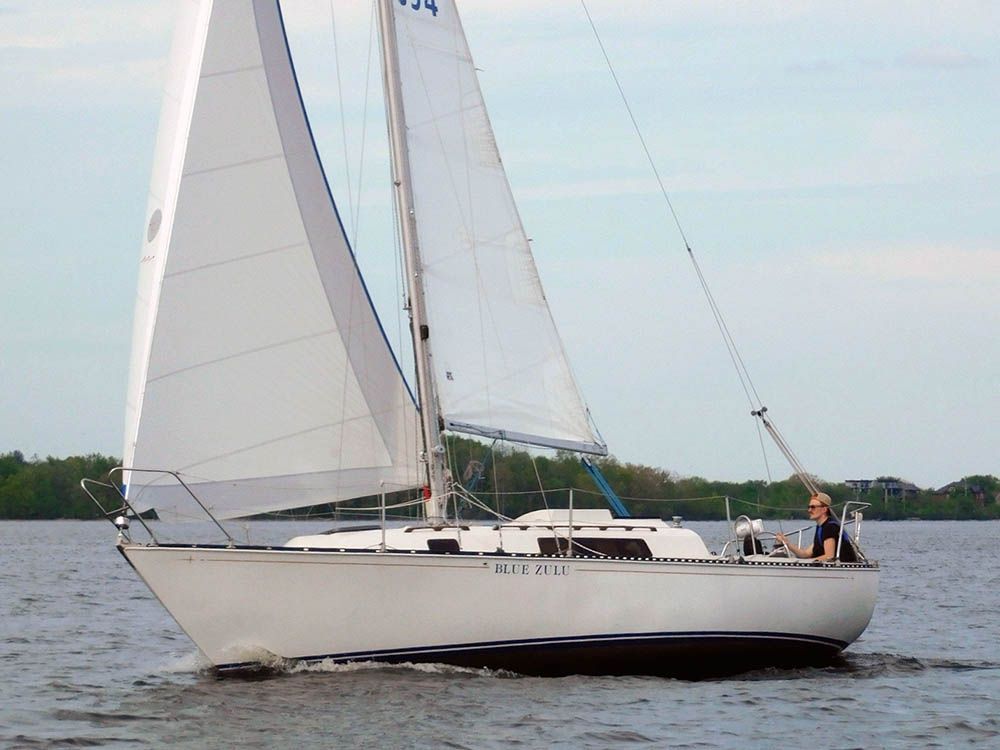
The C&C 27 Mk I is a compact racer-cruiser from the early 1970s that carved out a reputation as a nimble, well-built small yacht for sailors who wanted a boat that could be competitive on the club circuit and comfortable enough for weekend cruises. Conceived by Robert W. (Rob) Ball and built by C&C Yachts at the height of the Canadian boat-building boom, the Mk I was the first iteration of a family that would evolve through several marks — its original intent was to deliver good performance in light to moderate airs without sacrificing the accommodations required by family sailors. That dual-purpose DNA makes the Mk I attractive to buyers who value a lively helm and the possibility of modest racing, and because C&C produced many successful variants the model enjoys steady presence on the used market among private owners and small-club racers.
Design and Construction
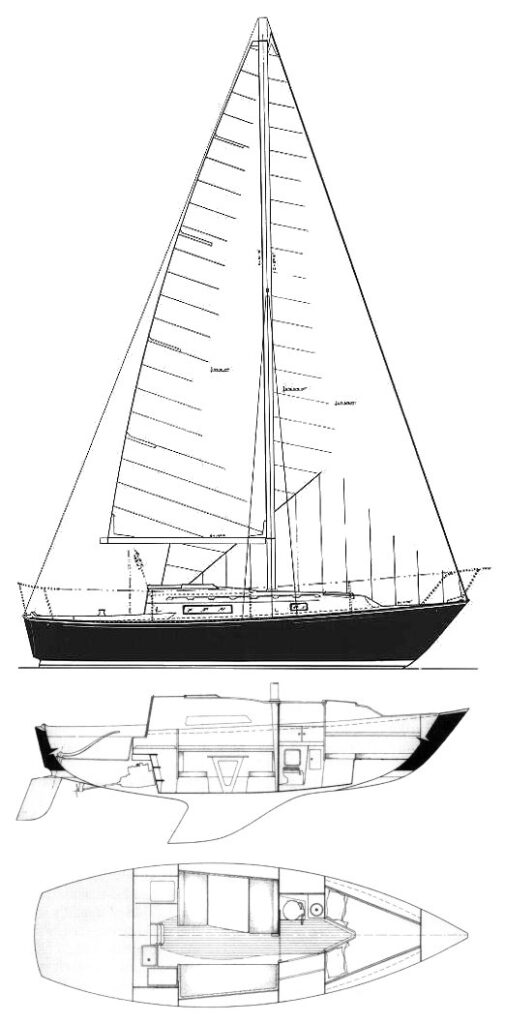
The Mk I’s naval architecture reflects its racer-cruiser brief: a relatively narrow waterline and moderate beam, a fin keel and an internally mounted spade rudder (early Mk I examples also used tiller steering), and a masthead sloop rig that balances simplicity with tuning flexibility. The hulls were laid up in solid fiberglass with many examples carrying a balsa-cored deck — a construction approach that kept topside weight down and improved stiffness, but that also requires careful inspection for core saturation when buying an older boat. C&C’s approach prioritized structural integrity and manageable systems: through-hulls, chainplates and backing pads are straightforward to access and repair, and the use of lead ballast contributed to a compact, relatively stiff righting moment for the displacement. For a buyer this means the boat is generally durable and repairable by competent local yards; the balsa-cored decks and period hardware are the main items that can drive survey-level recommendations.
Performance
Where the Mk I really earns its keep is on the water. With a relatively light displacement for its era and a tuned masthead rig, the boat accelerates cleanly in a breeze, points well upwind, and rewards a skipper who trims sails and sets a course for windward work; club racers of the period prized the Mk I for its responsiveness and ability to carry sail. In short passages and coastal races the Mk I will often outpace heavier family cruisers of similar length, while delivering a more comfortable motion relative to pure race boats — it’s quick but not brutally sporty. In heavy seas the boat’s narrower waterline and fin-keel balance can lead to a firmer motion than modern beamy cruisers, so practical owners typically respect reefing schedules rather than pushing heavy weather passageing without upgrades.
Comfort and Accommodations
Interior ergonomics are honest and efficient rather than luxurious. The Mk I usually offers a forward V-berth, a main saloon with settees that can serve as additional berths, a compact galley and a mechanical area housing the (originally) small inboard engine. For a couple or small family the layout is comfortable for weekends and short coastal cruises: storage is well considered for a 27-footer, and the joinery — while modest — is typically solid and straightforward to refinish. Headroom and tankage limit long-term liveaboard comfort, so buyers planning extended cruising should budget for tank upgrades, ventilation improvements and modern galley/electrical refits. Many Mk I interiors have been tastefully updated by owners, which makes condition highly variable and emphasizes the value of a survey and a walkthrough to gauge how much refurbishment would be needed.
Safety and Practicality
Deck layout and running rigging are compact and accessible, which aids short-handed sailing: the Mk I’s sail plan can be managed without a large crew, and deck hardware is laid out to keep lines reasonably led to the cockpit. The fin keel and moderate draft make launching, mooring and hauling manageable in most coastal harbors; however, the presence of a balsa-cored deck in many hulls means buyers should prioritize inspection of deck penetrations, stanchion bases and lifeline fittings for any sign of water ingress. Systems are typically simple — original engines were small and straightforward, through-hulls are conventional and pumps/wiring are accessible — which reduces both the learning curve for owner-maintenance and the cost of routine repairs. As built the boat is best regarded as a coastal or near-offshore cruiser; serious offshore voyaging benefits from upgrades (rigging, electronics, seacocks and safety gear) but does not require wholesale redesign.
Known Issues with the C&C 27 MK I
Owners and associations note a handful of recurring areas to watch for when evaluating a Mk I. Early production boats commonly left the factory with gasoline Atomic 4 engines, which many owners have replaced with small diesels (the cost and complexity of repowering is a common negotiation point). Balsa-cored decks — while beneficial for stiffness — can hide soft spots if deck hardware leaked; this is a maintenance issue rather than a fundamental design flaw but it commonly appears on surveys and should be addressed proactively. Other routine items are age-related: standing rigging beyond its fatigue life, corroded keel bolts or keel flange issues on poorly maintained boats, and dated electrical/electronics that owners typically modernize. Practical, widely recommended improvements include installing modern navigation electronics, replacing old wiring and plumbing, inspecting and, if necessary, servicing or replacing the mast step and chainplates, and fitting a modern prop or shaft arrangement when repowering. Those interventions are well understood in the market and keep restoration costs predictable.
Market Availability and Pricing in the U.S.
The C&C 27 Mk I is out of production and only available on the secondary market. Examples turn up sporadically in traditional sailing regions — New England, the mid-Atlantic, the Great Lakes and parts of the Pacific Northwest — and the condition range is wide: from well-maintained owner boats to project hulls. Recent listings and market snapshots suggest a typical asking range for Mk I and closely related early marks in the neighborhood of $8,000–$20,000, depending heavily on engine condition, deck/core condition and the extent of refits. That places the Mk I competitively against other classic 27-foot cruisers: it generally trades at a small premium to the most basic budget 27s when in good condition, and at a discount relative to later, more heavily equipped 27-foot designs that were built with more modern conveniences.
Below is a comparison with similar sailboats from the same era:
| Model | LOA | Year (approx.) | Typical used price (U.S.) | Main differences |
|---|---|---|---|---|
| C&C 27 Mk I | ~27.3 ft | 1970–1972 | **$8,000–$20,000** | Racer-cruiser balance; lighter, performance-biased hull for its era; often balsa-cored deck. |
| Catalina 27 | ~27 ft | 1970s–1990s | **$4,000–$15,000** | Mass-market cruiser with roomy interior and huge aftermarket support; easier to resell. :contentReference[oaicite:7]{index=7} |
| Tanzer 27 | ~26.6 ft | Early–mid 1980s | **$5,000–$12,000** | Fuller hull, conservative cruiser; simple systems and affordable restoration. :contentReference[oaicite:8]{index=8} |
| Hunter 27 (various) | ~27 ft | 1980s–2000s (variants) | **$7,500–$25,000** | Later models offer modern conveniences and more factory options; some variants prioritize cruising comfort. :contentReference[oaicite:9]{index=9} |
C&C 27 MK I vs Catalina 27

The Mk I is engineered with a performance bias: narrower waterline, fin keel and a rig tuned for pointing and acceleration give it an edge in light-air performance and upwind work compared with the Catalina 27’s more volume-oriented hull. The Catalina’s bigger interior and massive parts community make it easier to live aboard and to source replacements; for a buyer who prioritizes weekend comfort and resale liquidity, Catalina often wins.
By contrast, a buyer who values spirited sailing and a platform that responds to tuning will favor the Mk I. The tradeoff is that Mk I owners must be more vigilant about core/deck condition and accept a smaller, more performance-oriented cabin.
► Learn more about de Catalina 27
C&C 27 MK I vs Tanzer 27

Compared with the Tanzer 27’s fuller, heavier-feeling hull and conservative cruising orientation, the Mk I feels sharper and more reactive to sail trim — a characteristic that benefits club racers and owners who want lively passages. The Tanzer is often a lower-cost, lower-maintenance option for buyers who want simple systems and a stable platform for family cruising.
For someone planning to do most maintenance themselves and craving better pointing and speed in mixed conditions, the Mk I is the more rewarding ownership experience. For buyers prioritizing low initial cost and maximum interior practicality at the expense of outright performance, the Tanzer is a pragmatic alternative.
► Learn more about de Tanzer 27
C&C 27 MK I vs Hunter 27

Hunter variants tend to emphasize deck ergonomics and interior conveniences — roller furling, larger cockpits and more modern factory options — while the Mk I emphasizes hull speed and tuning potential. A family looking for factory comforts and easier short-handed cruising may prefer later Hunter models that are more “turn-key,” whereas the Mk I appeals to an owner who wants a compact performance platform that can be upgraded incrementally.
Maintenance considerations favor the Mk I when the hull and deck are sound because of relatively simple systems and a strong structural legacy; Hunters can be less demanding in terms of immediate refit needs if you find a well-equipped example, but those conveniences often come at a higher asking price.
► Learn more about de Hunter 27
Maintenance Costs of the C&C 27 MK I in the U.S.
Typical annual and periodic expenses (approximate ranges; regional variation applies):
- Mooring / slip fees: $1,200–$6,000 per year depending on location (inland lakes and southern harbors are cheaper; New England and California are at the high end).
- Insurance: $300–$1,200 per year (depends on vessel value, cruising range and owner experience).
- Engine servicing (annual): $200–$900 (small diesel repower or routine outboard servicing; original Atomic 4 gasoline engines need different servicing and may increase costs).
- Antifouling paint & haul-out: $400–$2,000 every 1–3 years (varies with local yard labor rates and hull condition).
- Standing & running rigging inspections / partial renewals: $200–$2,000 (annual inspections recommended; full standing rigging replacement commonly every 8–15 years).
- Sails (maintenance / replacement amortized): $200–$1,500 per year amortized; replacing main and headsail is typically $2,500–$6,000 as a single event.
Significant one-time costs include repowering (commonly $5,000–$15,000 for a modest diesel installation), deck core repairs or replacement of deck hardware bedding, and electronics refits (chartplotter, AIS, autopilot — $2,000–$8,000 depending on choices). Many owners can complete routine tasks (bottom paint, varnish, basic engine servicing) themselves, which keeps annual costs moderate; structural or keel/keel-bolt work and major repowers generally require professional yards and raise the budget substantially.
Overall assessment: for a 27-foot racer/cruiser the Mk I’s running costs are medium when the boat is well kept — the initial purchase prices are modest, but sensible buyers should budget for intermittent larger expenses. A well-maintained Mk I can hold value relative to peers because of its strong sailing reputation, although extensive refits are not always fully recovered at resale.
Conclusion
The C&C 27 Mk I is a compact, honest racer-cruiser that rewards a hands-on owner who values sailing performance, tuneability and sound 1970s naval architecture. Strengths include a lively hull that sails well for its size, accessible systems and a construction approach that, when properly maintained, lasts for decades. Weaknesses are the usual suspects for boats of its vintage: potential deck core issues, aging engines or rigging, and limited liveaboard conveniences compared with later beamy cruisers. For a buyer seeking a capable coastal cruiser that can be raced on weekends and upgraded over time, the Mk I is worth serious consideration; it represents a balanced investment for coastal cruising and club racing, with resale prospects that benefit from good maintenance and thoughtful upgrades.
Specifications
| Hull Type | Fin w/spade rudder |
| Rigging Type | Masthead Sloop |
| LOA | 27.33 ft / 8.33 m |
| LWL | 22.17 ft / 6.76 m |
| S.A. (reported) | 344.00 ft² / 31.96 m² |
| Beam | 9.18 ft / 2.80 m |
| Displacement | 5,180.00 lb / 2,350 kg |
| Ballast | 2,512.00 lb / 1,139 kg |
| Max Draft | 4.25 ft / 1.30 m |
| Construction | FG w/balsa cored deck |
| Ballast Type | Lead |
| First Built | 1970 |
| Last Built | 1972 |
| # Built | 167 |
| Builder | C&C Yachts |
| Designer | Rob Ball |
| Auxiliary Power | Universal Atomic 4 (Gas) |
Sailboat Calculations | |
|---|---|
| S.A. / Displ. | 18.44 |
| Bal. / Displ. | 48.49 |
| Disp. / Len. | 212.22 |
| Comfort Ratio | 17.61 |
| Capsize Screening Formula | 2.13 |
| S# | 2.72 |
| Hull Speed | 6.31 kn |
| Pounds/Inch Immersion | 727.20 pounds/inch |
Rig and Sail Particulars | |
| I | 33.00 ft / 10.06 m |
| J | 11.80 ft / 3.60 m |
| P | 28.50 ft / 8.69 m |
| E | 10.50 ft / 3.20 m |
| S.A. Fore | 194.70 ft² / 18.09 m² |
| S.A. Main | 149.63 ft² / 13.90 m² |
| S.A. Total | 344.33 ft² / 31.99 m² |
| S.A./Displ. (calc.) | 18.46 |
| Est. Forestay Length | 35.05 ft / 10.68 m |
Disclaimer
The considerations and analyses presented regarding the C&C 27 MK I sailboat are of a general nature and are based on the available information and technical data on this model, interpreted to the best of our knowledge and understanding. It is important to note that the specific characteristics of any particular sailboat may vary due to custom modifications, maintenance performed, and conditions of use over time, among other factors. Therefore, the details and performance of the boat you are considering may not exactly match the information provided here.
We strongly recommend that, before making any purchasing or usage decisions, you conduct a detailed inspection of the boat in question, consult with nautical professionals and other sailors, and consider your personal needs, expectations, and capabilities. Each sailboat may have unique particularities that affect its performance and suitability for different types of sailing and sailors.
The information contained in this analysis should be used as a general guide and not as a definitive reference. Professional evaluation and personal inspection are essential to ensure that the boat meets your specific requirements and expectations.