



The Catalina 385 arrived as Catalina Yachts’ mid-size answer to sailors who wanted a comfortable, well-built coastal cruiser with a bit more seagoing capability than the typical weekend boat. Introduced with the company’s “5-Series” family and publicly shown in 2011–2012, the 385 was penned by Gerry Douglas to be a family/cruising boat first—an easy-to-handle sloop that still rewards attentive sailors with decent performance and strong seakeeping for its class. The model found a steady following after launch: it earned attention from the sailing press as a solid domestic design and appears regularly on the U.S. used market where demand is strongest among private cruisers and owner-operators looking for a roomy, American-built boat rather than a bare-bones racer or commercial charter platform.
Design and Construction
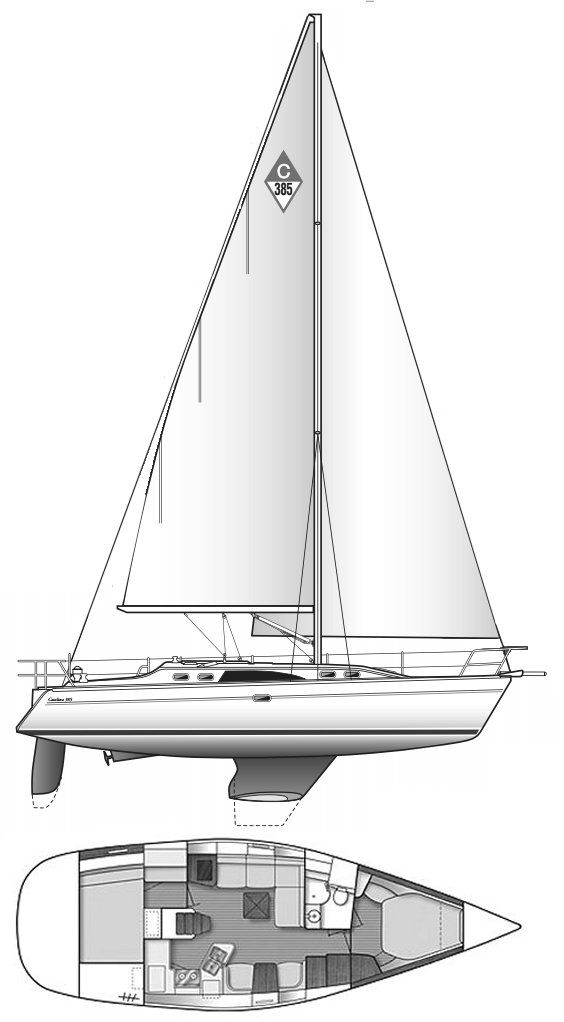
The 385 is a modern, moderate-beam hull with two keel choices (deeper fin and shallower wing), a fractional sloop rig with an inboard headstay and a spade rudder; Catalina published dimensions show about 39′10″ LOA, a 13′1″ beam and a modestly heavy displacement that favors comfort over light-air speed. The hull lines carry beam well aft to give interior volume and a large cockpit while keeping a conservative freeboard to reduce windage—a design trade that improves liveability without compromising offshore manners too severely. Catalina’s construction uses hand-laid fiberglass laminates with cored deck sections and lead or lead-bulb ballast depending on keel choice; the interior is often finished in varnished teak or a modern laminated equivalent depending on owner options.
From a naval-architecture perspective those choices place the 385 in the “comfortable-cruiser” bucket: relatively heavy displacement and a lower-aspect keel deliver a predictable righting moment and gentle motion in a seaway, while moderate wetted surface and a reasonably generous sailplan give acceptable performance in real-world cruising conditions. For buyers that matters because it trades extreme performance for lower ongoing structural stress, easier repairs (GRP laminate repairs are routine and parts/support are widely available from Catalina’s U.S. factory), and generally steadier resale value. Owners should still inspect core-to-deck interfaces and chainplate areas carefully—these are the regions that determine long-term durability on production boats and will influence maintenance bills later.
Performance
In normal coastal conditions the 385 sails like a thoughtful cruiser: it balances easily, tacks cleanly and tracks well under sail, with a comfortable motion in waves thanks to its displacement and hull sections. Test articles and owner reports describe it as better than “sluggish” for a family cruiser but not in the same performance tier as contemporary European performance cruisers; motoring speeds are adequate but not sporty (practical cruise in calm water typically in the mid-5 to mid-6 knot range under typical cruising rpm for the standard inboard). In stronger breeze the 385 will heel into a comfortable angle and carry sail well; reef early and you’ll keep a balanced helm and a consistent passage speed rather than exciting surfing. Compared with beamy modern cruisers that trade some seaworthiness for interior volume, the 385 feels more balanced and seakindly—an advantage for owners who actually go sailing rather than only show their boat.
Comfort and Accommodations
The practical payoff of the 385’s design is its interior and cockpit ergonomics. Catalina laid out a large, sheltered cockpit with angled seats and a folding wheel that makes the cockpit more usable and opens the passage from swim platform to companionway—features that favor day-to-day comfort and entertaining. Below, the interior plan tends to favor two-cabin versions for a couple or small family, with generous storage, a practical galley and a head placed for convenient access; finishes are conservative, geared toward durability and warm woodwork rather than ultra-lightweight construction. For couples or small families planning extended coastal cruising the 385 is well suited: it supports liveaboard systems (tankage, optional generator, inverter) and the cabin ergonomics age well. Many owners update electronics and upholstery over time, so it’s common to see boats with tasteful refits rather than wholesale remodels.
Safety and Practicality
Catalina engineered the 385 with practical safety choices: a solid bridge-deck to reduce cockpit-to-cabin water transfer, options for robust tankage and an interior structure that includes a crash-box bulkhead—items that increase its suitability for more serious coastal passages and, with modest upgrades, offshore work. Deck layout emphasizes single-level access and sensible winch placement, which, together with the furling headsail and optional roller-furling main, make short-handed operation realistic for a cruising couple. Systems access is generally straightforward: Catalina’s production philosophy yields serviceable engine bays and logically routed systems, but prospective buyers should verify hose ages, seacocks, and bilge pump redundancies since those are common maintenance touchpoints that affect safety and cost.
Known Issues with the Catalina 385
The 385 benefits from Catalina’s long production experience, but forums and ownership write-ups flag a handful of recurring maintenance items to check closely at survey: deck-core soft spots or water ingress where deck fittings are penetrated (a common worry on many production GRP boats), shaft/prop-alignment issues and the usual wear on standing rigging after a decade or more. Catalina-wide issues noted historically—chainplate attachment attention, mast compression post inspection and keel-to-hull interface checks—apply here as well, though most owners report these as preventable with good survey practices and routine maintenance. Typical owner improvements include replacing older standing and running rigging as preventive maintenance, upgrading electronics and instruments for navigation safety, and, in some cases, fitting a higher-pitch or feathering prop for better under-way performance. These are practical, well-documented upgrades rather than design failures.
Market Availability and Pricing in the U.S.
The Catalina 385 was introduced in 2011–2012 and is part of Catalina’s 5-Series; it has been a steady presence on the U.S. used market since then and appears frequently in broker listings from coast to coast. Typical U.S. inventory tends to cluster where owner cruising communities are largest—California, Florida (including Fort Lauderdale/Tampa areas) and the Northeast—so buyers will see boats in a range of conditions from dealer-maintained demonstrators to owner-refitted examples. Recent listing snapshots show mid-model used examples commonly offered in the $225,000–$350,000 neighborhood, with late-model or near-new dealer boats at the high end and earlier hulls available below that band; brand-new or demonstrator pricing can be higher if equipped with factory options such as generator and bow thruster.
Here’s a comparison with similar models:
| Model | LOA | Approx. Years Built | Typical U.S. used price | Main differences |
|---|---|---|---|---|
| Catalina 385 | 39′–40′ | 2012–(later production runs) | **$225,000–$350,000** | American-built, comfortable cockpit, moderate displacement; options for wing or fin keel. |
| Jeanneau Sun Odyssey 379 | 37′2″ | 2011–2015 | $150,000–$170,000 | European styling, lighter/displacement, often better light-air speed; strong dealer network for electronics and parts. |
| Dufour 382 Grand Large | ~37′ | 2014–2019 | $100,000–$160,000 | Performance-oriented hull sections with a modern underbody; typically sportier and lighter than the Catalina. |
| Beneteau Oceanis 373 / 37 | ~37′ | Mid-2000s–2010s | $75,000–$140,000 | Comfortable, family-oriented layouts; broad market of used boats makes availability and prices variable. |
Catalina 385 vs Jeanneau Sun Odyssey 379
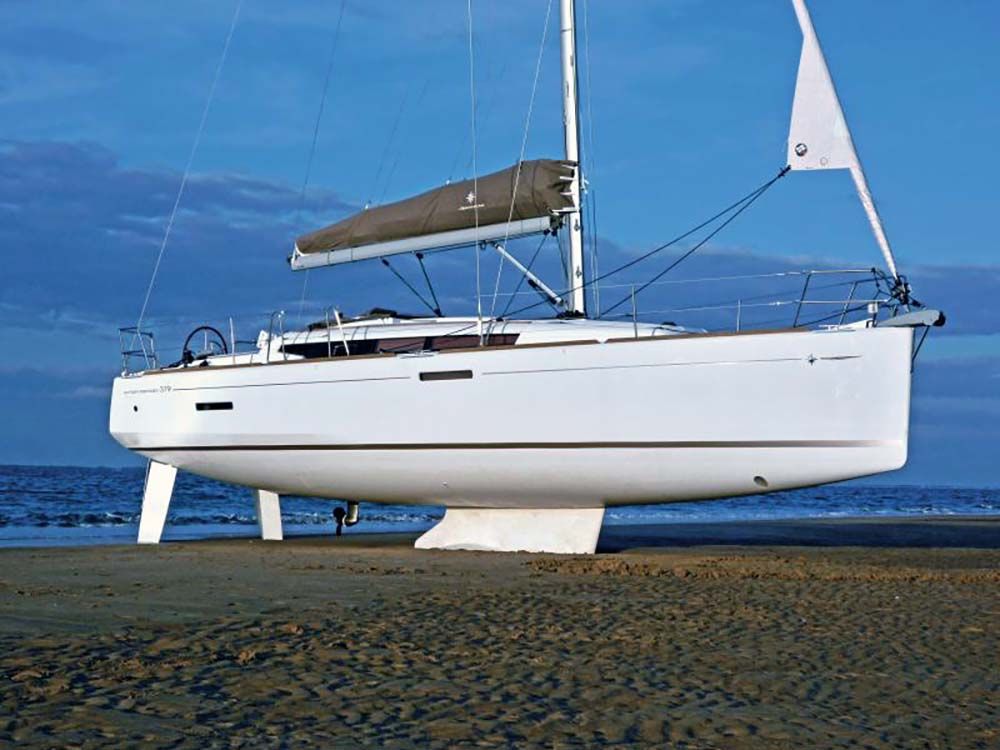
The 385 favors a slightly heavier, more conservative hull form and an interior layout aimed at long-term comfort; the Sun Odyssey 379 leans to lighter displacement and a crisper, Euro-influenced hull, which generally translates into peppier light-air sailing and a smaller feel below. In practice, that means a buyer who values a roomy cockpit, American-style ergonomics and proven durability will prefer the 385, while someone chasing slightly better passage speeds or a more compact, performance-biased package might opt for the Jeanneau.
From an ownership perspective the Jeanneau often shows lower purchase prices and can offer nimble sailing for club racing, but it can carry higher dealer/service fragmentation depending on region; the Catalina’s strong U.S. dealer/parts network and conservative systems make long-term maintenance and resale a bit easier for many U.S. buyers.
► Learn more about the Jeanneau Sun Odyssey 379
Catalina 385 vs Dufour 382 Grand Large
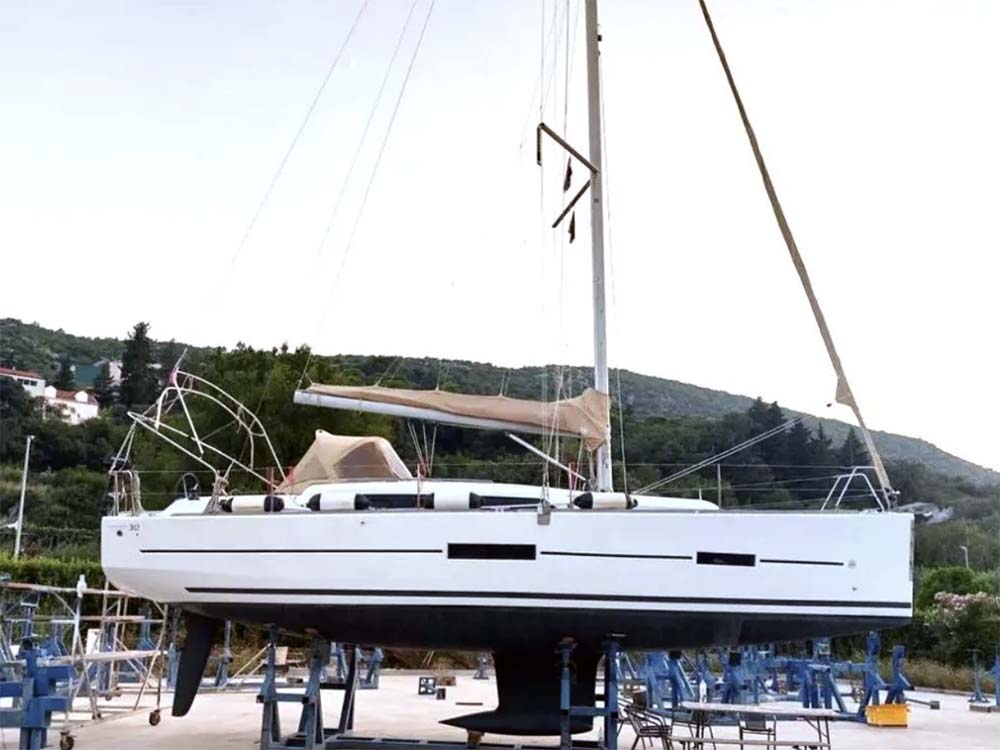
Compared to the Dufour 382, the Catalina emphasizes seaworthiness and interior comfort over outright light-air speed—the Dufour typically has sharper underwater sections and a more performance-oriented feel under sail. For a buyer who plans to race occasionally and wants a responsive helm, the Dufour can be more satisfying; for a cruising family or couple who prioritizes reserve buoyancy, cockpit comfort and straightforward systems access, the 385 is the more practical choice.
Maintenance and upgrade patterns reflect that split: Dufours often receive performance-oriented sail and rig upgrades, while 385 owners commonly invest in comfort/electrical upgrades, dockside systems and preventive structural checks—decisions that change annual costs and refit priorities.
► Learn more about the Dufour 382 Grand Large
Catalina 385 vs Beneteau Oceanis 37

Both boats are marketed to family cruisers, but the Oceanis line skews toward maximizing interior volume and ease of use in crowded marinas, often with more aggressive price competition on the used market. The 385 trades a bit of that “volume at any cost” philosophy for a hull that tracks and feels steadier in a seaway, plus a cockpit designed with longer passages in mind.
For a buyer who spends most time in coastal cruising and weekend trips and prioritizes lower initial purchase cost, the Beneteau family of 37-footers can be attractive; for owners planning serious cruising with occasional offshore legs and who want an American service network behind them, the Catalina’s layout and build choices are compelling.
► Learn more about the Beneteau Oceanis 37
Maintenance Costs of a Catalina 385 in the U.S.
Below are the typical recurring costs and reasonable ranges an owner should budget annually (regional variation noted). Each item is shown as bold with a short comment.
- Mooring / slip — $2,500–$14,400 per year. (West Coast marinas commonly charge $25–$40+/ft/month; premium slips in places like Marina del Rey or parts of San Diego can be toward the high end.)
- Insurance — $1,250–$7,500 per year (rough rule: ~1–3% of insured value is typical; specialty premiums and hurricane coverage increase cost in Florida/Gulf areas).
- Engine servicing & routine systems — $500–$2,500 per year (annual oil/filter, impeller, cooling, minor repairs; more if major work is required).
- Antifouling & haul-out — $800–$5,000 every 1–2 years depending on paint choice and haul-out prices in your region. (West Coast dockyards tend to charge more than many Gulf Coast yards.)
- Standing rigging (amortized) — $250–$700 per year when amortized; expect a $3,000–$7,000 replacement every 10–15 years.
- Running rigging & sail upkeep (amortized) — $500–$2,500 per year; a full sail replacement (main + headsail) can be $8,000–$20,000 depending on cloth and cut.
- Electronics / safety gear (amortized) — $300–$1,500 per year; major upgrades (chartplotter, radar, AIS) are one-time projects typically $2,000–$10,000.
- Miscellaneous (winterization, bottom painting touchups, spare parts) — $500–$2,000 per year.
Significant one-time costs to budget: a rig replacement (if needed) or a major sail inventory refresh ($8k–$20k); a substantial refit (deck re-core, new interior joinery, major gelcoat work) can run tens of thousands depending on scope. Whether you can do much work yourself depends on your skills and where the boat is berthed: owner-maintenance will save labor costs on tasks like varnish, canvas work, basic mechanics and some systems troubleshooting, but structural, rigging and electrical projects generally require professionals—an important determinant of total cost. Given those factors, a well-maintained 385 generally sits in the medium range of ownership cost for a 38–40′ cruising yacht: neither ultra-cheap nor exorbitantly expensive, and many owners find resale strength helps offset higher periodic refit costs.
Conclusion
The Catalina 385 is a thoughtful, practical choice for buyers who want a comfortable, American-built cruising boat that balances real-world sailing capability with liveaboard ergonomics. Its strongest points are the cockpit and interior planning, straightforward systems and a conservative hull that behaves predictably in a seaway—qualities that make it attractive to couples and families focused on coastal cruising and occasional offshore passages after modest upgrades. The tradeoffs are predictable: it’s not the lightest or fastest boat in its size band, and buyers should be disciplined about checking known production-boat wear items (deck penetrations, rigging, shaft alignment) at survey.
For a buyer seeking a comfortable coastal cruiser with good resale demand in the U.S. and a broad support network for parts and service, the 385 is worth serious consideration. It represents a solid mid-market investment for coastal and short-bluewater cruising: maintenance costs are moderate for its size, and the platform’s practical strengths—stability, cockpit comfort and a sensible systems layout—help it retain value relative to many pure-play performance or economy models. If your buying profile is “reliable, comfortable, and sensible for family cruising,” the Catalina 385 is a model that deserves a top-three spot on your short list.
Specifications
| Hull Type | Fin w/bulb & spade rudder |
| Rigging Type | Fractional Sloop |
| LOA | 39.17 ft / 11.94 m |
| LOD | 38.17 ft / 11.63 m |
| LWL | 34.42 ft / 10.49 m |
| S.A. (reported) | 802.00 ft² / 74.51 m² |
| Beam | 13.08 ft / 3.99 m |
| Displacement | 15,500 lb / 7,031 kg |
| Ballast | 5,200 lb / 2,359 kg |
| Max Draft | 6.83 ft / 2.08 m |
| Construction | Fiberglass (FG) |
| Ballast Type | Lead |
| First Built | 2012 |
| Builder | Catalina Yachts |
| Designer | Gerry Douglas |
| Auxiliary Power | Yanmar 3JH45 Diesel, 40 HP |
| Fuel Capacity | 42 gals / 159 L |
| Water Capacity | 55 gals / 208 L |
| S.A. / Displ. | 20.72 |
| Bal. / Displ. | 33.55 |
| Disp. / Len. | 169.69 |
| Comfort Ratio | 21.77 |
| Capsize Screening Formula | 2.10 |
| S# | 3.16 |
| Hull Speed | 7.86 kn |
| Pounds/Inch Immersion | 1,608.66 lb/inch |
| I | 47.58 ft / 14.50 m |
| J | 14.75 ft / 4.50 m |
| P | 43.50 ft / 13.26 m |
| E | 15.00 ft / 4.57 m |
| S.A. Fore | 350.90 ft² / 32.60 m² |
| S.A. Main | 326.25 ft² / 30.31 m² |
| S.A. Total (100% Fore + Main) | 677.15 ft² / 62.91 m² |
| S.A./Displ. (calc.) | 17.49 |
| Est. Forestay Length | 49.81 ft / 15.18 m |
| Mast Height from DWL | 54.00 ft / 16.46 m |
Disclaimer
The considerations and analyses presented regarding the Catalina 385 sailboat are of a general nature and are based on the available information and technical data on this model, interpreted to the best of our knowledge and understanding. It is important to note that the specific characteristics of any particular sailboat may vary due to custom modifications, maintenance performed, and conditions of use over time, among other factors. Therefore, the details and performance of the boat you are considering may not exactly match the information provided here.
We strongly recommend that, before making any purchasing or usage decisions, you conduct a detailed inspection of the boat in question, consult with nautical professionals and other sailors, and consider your personal needs, expectations, and capabilities. Each sailboat may have unique particularities that affect its performance and suitability for different types of sailing and sailors.
The information contained in this analysis should be used as a general guide and not as a definitive reference. Professional evaluation and personal inspection are essential to ensure that the boat meets your specific requirements and expectations.