


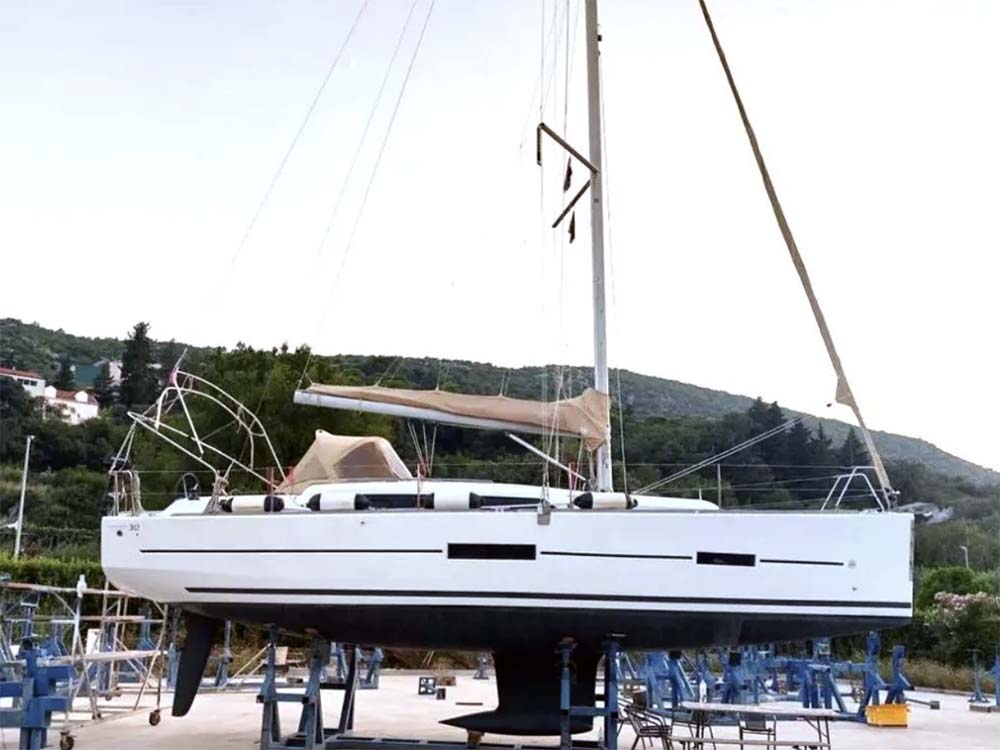
The Dufour 382 Grand Large was introduced in the mid-2010s by Dufour Yachts, a French shipyard with a long history of producing performance-oriented cruising sailboats. Designed by Umberto Felci, it was conceived as a versatile cruiser rather than a pure racing yacht, balancing ease of handling with solid sailing performance. It quickly found popularity among private owners and charter fleets, especially in Europe and North America, because it offered a modern hull shape with a user-friendly layout. In today’s used market, the 382 is particularly sought after by coastal cruisers, sailing schools, and charter companies looking for a boat that delivers both comfort and reliability without entering the luxury price bracket.
Design and Construction
The hull features a beamy design with hard chines aft, providing both interior volume and improved form stability. Buyers typically encounter two keel options: a standard fin keel or a shallower draft version, making it adaptable to different cruising grounds. The spade rudder enhances responsiveness at the helm, while the rig is a simple fractional sloop, optimized for easy sail handling with fewer crew. Built in fiberglass with reinforcing laminates, the structure is robust but light enough to maintain performance, and its deck layout is clean, with rigging led aft for convenience. These construction choices mean the 382 is durable, relatively straightforward to repair, and retains residual value thanks to the widespread availability of replacement parts.
Performance
On the water, the 382 demonstrates a good balance between speed and comfort. In moderate winds, it can comfortably reach 7–8 knots, and while it will not outperform dedicated racers, it holds its own compared to similar cruising yachts. Its chine hull and broad stern give stability when heeled, though in heavier seas it may pound more than narrower designs. The boat’s pointing ability upwind is competent, though not exceptional, making it better suited for relaxed passage-making than competitive sailing. Overall, it is widely regarded as predictable, forgiving, and efficient—qualities that appeal to families and cruisers more than to club racers.
Comfort and Accommodations
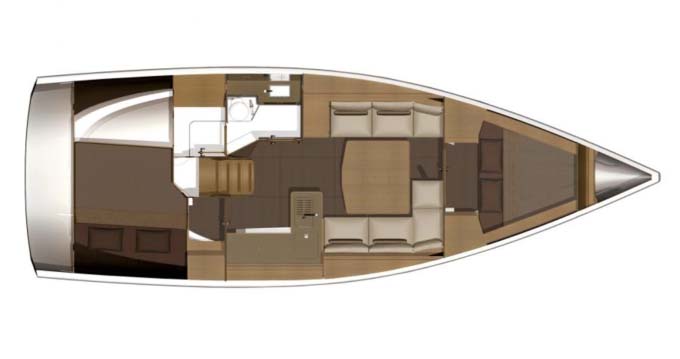
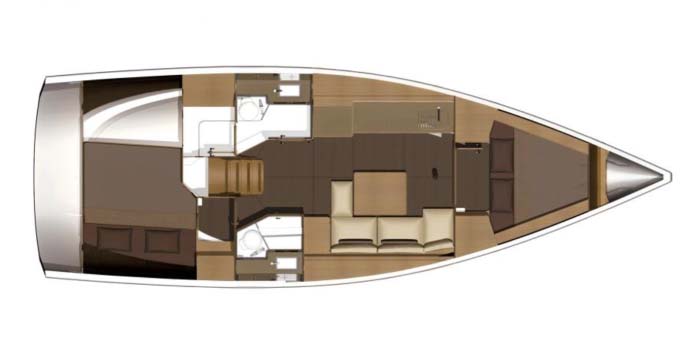
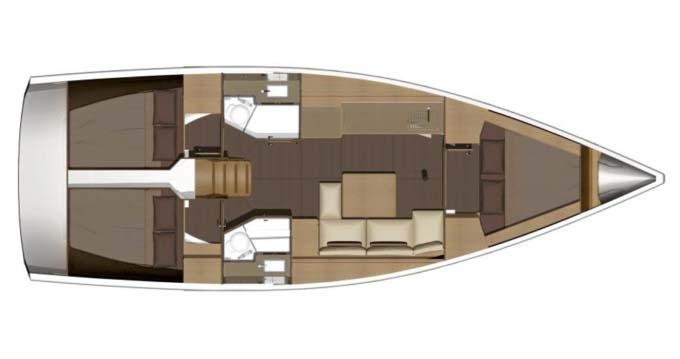
The interior of the Dufour 382 is one of its selling points. Available in two- or three-cabin versions, it can comfortably host a couple or a family, with enough storage and galley space for extended trips. Ventilation is good thanks to multiple hatches, and the salon feels bright and spacious due to the beam carried well aft. For long-term liveaboard use, it is adequate but not luxurious; many owners choose upgrades to upholstery or joinery over time. Compared to older models, the contemporary layout with an L-shaped galley and ample headroom is better suited for extended cruising.
Safety and Practicality
On deck, wide side decks and well-placed handholds improve security when moving around under sail. The cockpit is open and spacious, with twin wheels providing clear access to the transom, which doubles as a swim platform. These elements add to both comfort and safety, particularly when sailing with family or handling the boat short-handed. Systems like engine access and electrical panels are generally well thought out, simplifying maintenance. The yacht is best suited for coastal cruising but, with the right equipment upgrades (liferaft, offshore electronics), it can handle offshore passages as well.
Known Issues with the Dufour 382 Grand Large
Commonly reported issues include wear on deck fittings in high-use charter boats, occasional leaks around deck hatches, and the usual vigilance needed against osmosis in aging fiberglass hulls. Some owners report that the factory-provided propeller underperforms, and many have upgraded to a folding or feathering prop for better handling under power. Electronics from the original installations may be outdated, so buyers often invest in upgrades. None of these concerns are unusual for this class of yacht, and most can be resolved with routine maintenance or moderate investment.
Market Availability and Pricing in the U.S.
The Dufour 382 is no longer in production, so availability is limited to the used market. In the United States, listings appear most often in Florida and New England, with a few on the West Coast. Ex-charter boats are common, often priced lower but requiring closer inspection for wear. Well-kept private-owner examples hold their value better and command higher prices. As of recent listings, the typical U.S. market price falls between $150,000 and $210,000, depending on condition, year, and equipment.
When compared to competitors like the Catalina 385, Jeanneau Sun Odyssey 389, and Beneteau Oceanis 38, the Dufour 382 sits in a similar range but often represents a slightly more performance-oriented option while maintaining comfort.
| Model | LOA | Year | Typical Price (U.S.) | Key Differences |
|---|---|---|---|---|
| Dufour 382 Grand Large | 38’ | 2014–2019 | $150,000–$210,000 | Balanced cruiser with performance edge, modern design |
| Catalina 385 | 38’ | 2011–present | $160,000–$220,000 | Robust build, U.S.-focused market, slightly heavier |
| Jeanneau Sun Odyssey 389 | 38’ | 2015–2019 | $155,000–$215,000 | Comfort-oriented, versatile layouts, softer sailing feel |
| Beneteau Oceanis 38 | 38’ | 2014–2018 | $145,000–$200,000 | Open-plan interior, more focused on lifestyle than performance |
Dufour 382 Grand Large vs Catalina 385

The Catalina 385 is a sturdier, slightly heavier cruiser designed with the American market in mind, whereas the Dufour 382 emphasizes European styling and a livelier sailing experience. Under sail, the Catalina tracks well and feels stable, but it lacks the same responsiveness as the Dufour in lighter winds. For coastal family cruising, the Catalina’s conservative hull design makes it predictable, while the Dufour rewards sailors who appreciate agility.
Inside, the Catalina favors traditional layouts with ample storage and robust construction, appealing to long-term U.S. owners. The Dufour’s brighter, more modern interior is better suited for those seeking contemporary comfort with shorter maintenance cycles. Buyers deciding between the two must weigh Catalina’s longevity and conservative engineering against the Dufour’s performance edge and modernity.
► Learn more about de Catalina 385
Dufour 382 Grand Large vs Jeanneau Sun Odyssey 389
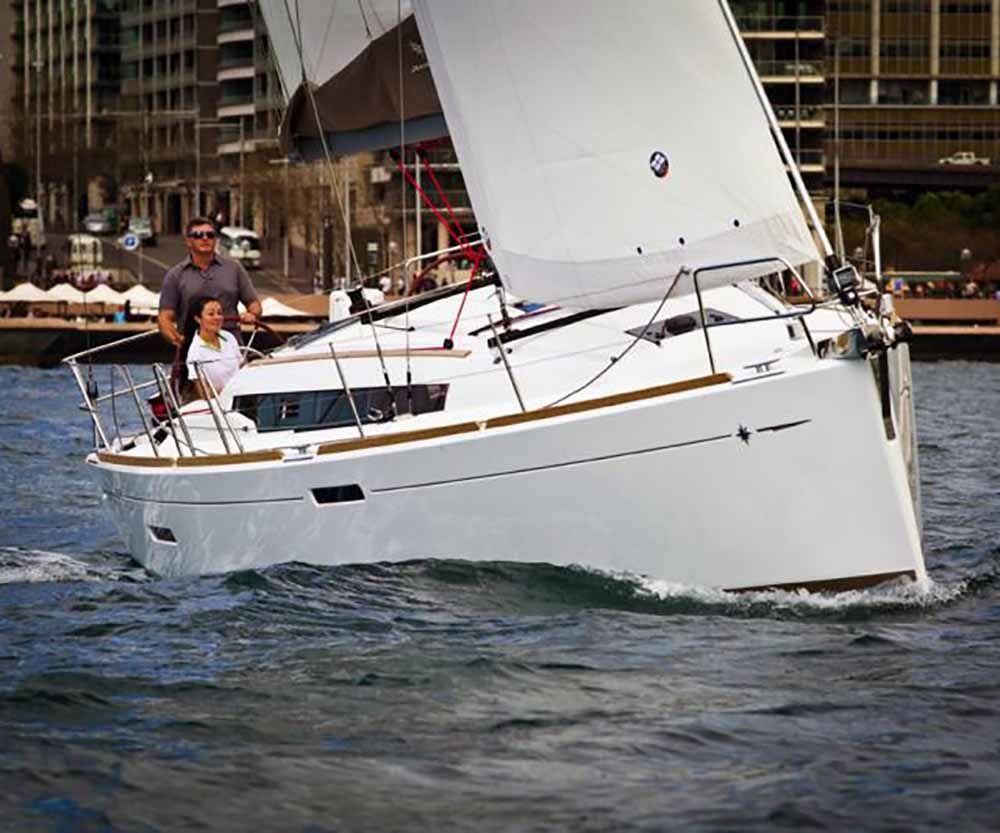
The Jeanneau Sun Odyssey 389 shares many design philosophies with the Dufour, but leans more toward comfort and versatility than performance. On the water, the Jeanneau is softer and easier for less experienced sailors, while the Dufour delivers slightly more excitement, particularly upwind and in fresh breezes. Both are manageable short-handed, but the Dufour may appeal more to sailors who enjoy trimming sails actively.
Below deck, Jeanneau emphasizes flexible layouts and ergonomic living spaces, while the Dufour opts for a balance of functionality and sleek design. The 389’s reputation for comfort makes it attractive for family cruising, while the 382 fits sailors seeking a balance between livability and spirited sailing. Overall, the Jeanneau feels like the safer choice for lifestyle buyers, while the Dufour is better for those who value sailing performance without sacrificing comfort.
► Learn more about de Jeanneau Sun Odyssey 389
Dufour 382 Grand Large vs Beneteau Oceanis 38
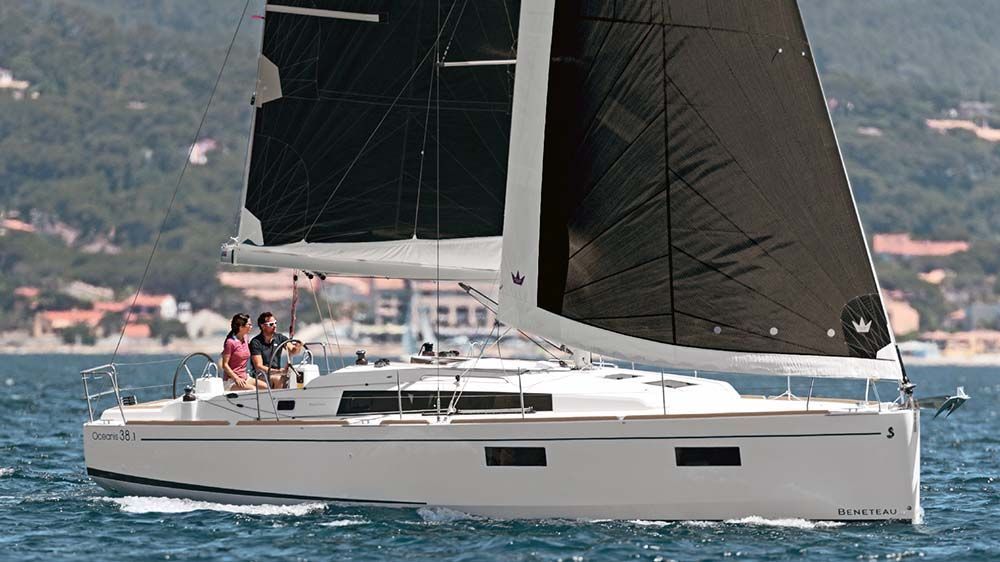
The Beneteau Oceanis 38 distinguishes itself with an innovative, open-plan interior concept, appealing to owners who prioritize lifestyle and spaciousness over performance. Its sailing characteristics are forgiving, but compared to the Dufour, it is less responsive and delivers a more relaxed pace on the water. For buyers seeking a lively helm and efficient passage-making, the Dufour clearly has the edge.
From an accommodation perspective, the Oceanis stands out for its customization options and airy interior, which can feel more like a floating apartment than a traditional yacht. However, this design sometimes sacrifices practical storage and long-term cruising functionality. In contrast, the Dufour balances a comfortable interior with practical features suited for serious cruising, making it more appealing to sailors planning extended voyages.
► Learn more about de Beneteau Oceanis 38
Maintenance Costs of a Dufour 382 Grand Large in the U.S.
Annual ownership costs vary depending on region, but a realistic breakdown includes:
- Mooring or marina fees: $4,000–$8,000 (higher in New England and California, lower in the Southeast).
- Insurance: $2,000–$3,500 annually, depending on cruising grounds.
- Engine servicing: $800–$1,200 per year for routine maintenance.
- Antifouling paint: $2,000–$3,500 every 12–18 months, influenced by local water conditions.
- Standing and running rigging: $1,000–$2,500 per year when averaged over expected lifespan and periodic replacement.
- Sails: $2,500–$5,000 every 8–10 years for replacements; annual care is modest.
Significant one-time costs may include a full electronics upgrade ($10,000–$15,000), sail replacement ($6,000+), or refits for worn interiors in ex-charter boats. Many owners with mechanical skills can handle routine upkeep, but professional services are often required for rigging and electronics. Overall, the cost of ownership falls into the medium range for a 38-foot cruiser, with resale values generally stable enough to offset long-term investment.
Conclusion
The Dufour 382 Grand Large succeeds as a modern cruiser that blends comfort and sailing enjoyment. Its strengths lie in responsive handling, contemporary design, and interior livability, while its weaknesses are mostly tied to the typical wear and tear seen in ex-charter fleets. Best suited for coastal and family cruising, it is versatile enough for longer passages with the right upgrades.
For prospective buyers, the model represents a sound investment: it holds value well, offers good resale potential, and provides a rewarding ownership experience. Those seeking a dependable, comfortable, and spirited 38-footer will find the Dufour 382 a worthy candidate in today’s second-hand market.
Specifications
| Hull Type | Fin w/ bulb & spade rudder |
| Rigging Type | Fractional Sloop |
| LOA | 36.91 ft / 11.25 m |
| LWL | 32.38 ft / 9.87 m |
| Beam | 12.63 ft / 3.85 m |
| Displacement | 15,565.00 lb / 7,060 kg |
| Ballast | 4,079.00 lb / 1,850 kg |
| Ballast Type | Cast iron |
| Max Draft | 6.23 ft / 1.90 m |
| Construction | FG (Fiberglass) |
Designer / Builder | |
|---|---|
| First Built | 2014 |
| Builder | Dufour Yachts |
| Designer | Umberto Felci |
Auxiliary Power / Tanks (original equipment) | |
| Make | Volvo |
| Type | Diesel |
| HP | 30 |
| Fuel | 53 gals / 200 L |
| Water | 100 gals / 380 L |
Sail Area / Rig & Sail Particulars | |
| S.A. (reported) | 624.31 ft² / 58.00 m² |
| S.A. Fore | 286.60 ft² / 26.63 m² |
| S.A. Main | 323.69 ft² / 30.07 m² |
| S.A. Total (100% Fore + Main) | 610.29 ft² / 56.70 m² |
| I | 45.60 ft / 13.90 m |
| J | 12.57 ft / 3.83 m |
| P | 43.86 ft / 13.37 m |
| E | 14.76 ft / 4.50 m |
| Estimated Forestay Length | 47.30 ft / 14.42 m |
Performance Metrics / Calculations | |
| S.A. / Displ. (reported) | 16.08 |
| S.A./Displ. (calc.) | 15.72 |
| Bal. / Displ. | 26.21 |
| Disp: / Len | 204.68 |
| Comfort Ratio | 24.34 |
| Capsize Screening Formula | 2.03 |
| S# | 2.50 |
| Hull Speed | 7.63 kn |
| Pounds / Inch Immersion | 1,461.26 pounds/inch |
Accommodations | |
| Accommodations (general) | See model layouts (typically 2-3 cabin options) |
Disclaimer
The considerations and analyses presented regarding the Dufour 382 Grand Large sailboat are of a general nature and are based on the available information and technical data on this model, interpreted to the best of our knowledge and understanding. It is important to note that the specific characteristics of any particular sailboat may vary due to custom modifications, maintenance performed, and conditions of use over time, among other factors. Therefore, the details and performance of the boat you are considering may not exactly match the information provided here.
We strongly recommend that, before making any purchasing or usage decisions, you conduct a detailed inspection of the boat in question, consult with nautical professionals and other sailors, and consider your personal needs, expectations, and capabilities. Each sailboat may have unique particularities that affect its performance and suitability for different types of sailing and sailors.
The information contained in this analysis should be used as a general guide and not as a definitive reference. Professional evaluation and personal inspection are essential to ensure that the boat meets your specific requirements and expectations.