



The Catalina 320 is a compact, purpose-built coastal cruiser from Catalina Yachts that arrived in the early 1990s and was updated with a Mark II refresh in the mid-2000s. Designed by Gerry Douglas, it was intended as a comfortable, easy-to-handle family cruiser that could be managed by a couple while still offering sensible accommodations for weekenders and short-distance cruising. Over its production run the 320 established a solid reputation for sensible ergonomics and straightforward systems; although Catalina has moved on to newer models, the 320 remains a common and recognizable choice on the U.S. used market because of its balance of interior volume and manageable sailing characteristics.
Design and Construction
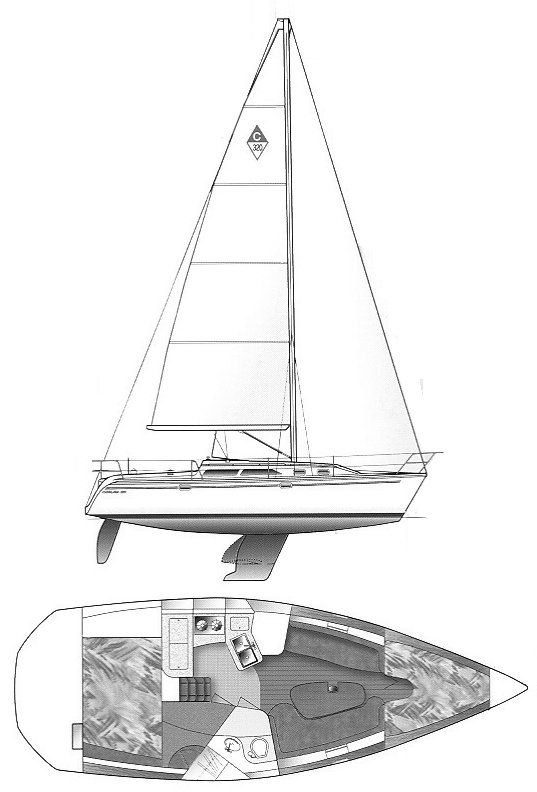
The 320’s hull is a relatively conservative, moderate-displacement monohull with a fin bulb keel (deep and wing options were offered on different builds) and a spade rudder, designed to yield predictable handling and a comfortable motion. Its rig is a masthead sloop on most original models, and the Mark II introduced modest refinements to deck layout and accommodation to increase below-deck volume and crew comfort. Construction is conventional hand-laid fiberglass with a cored deck and solid hull laminates in high-stress areas—typical production practice that simplifies repairs and preserves long-term value when maintenance is kept up. Those design choices put the 320 squarely in the “practical cruiser” camp: the bulb keel and moderate ballast favor a steady righting moment and forgiving pitch/roll behavior, while the production-oriented build makes routine GRP repairs and parts replacement straightforward for surveyors and yards across the U.S.
Performance
On the water the 320 is best described as steady and predictable rather than sporty. Owners and road-test writers consistently report it as nimble in harbor maneuvers and capable of mid-6 knot passages under power in calm conditions; under sail it tacks cleanly and points respectably for its class, with the deeper fin keel versions showing better upwind VMG and the shoal/wing keels sacrificing a degree of pointing for reduced draft. The Mark II refinements slightly altered sailing feel by increasing wetted surface and interior volume, but reviewers praised the resulting tradeoff of added liveaboard comfort without a dramatic penalty to real-world cruising speed. For buyers this means the 320 is a predictable passagemaker for coastal work and weekend regattas, but not a first choice if outright light-air performance or racing pedigree is the priority.
Comfort and Accommodations
Belowdecks the Catalina 320 is one of the model’s stronger selling points: the layout squeezes relatively generous sleeping quarters, a practical galley and a comfortable saloon into a hull just over 32 feet LOA. Headroom and storage are competitive for the size, and the Mark II updates focused on making the saloon and companionway more usable—features that matter for couples or small families who spend multiple days aboard. Ventilation and natural light are adequate for production-built boats of this era, and many 320s have aged gracefully because owners tend to undertake incremental interior updates (cushion refits, galley tweaks, electronics refresh) rather than full rebuilds. For liveaboard cruising the 320 can be made comfortable, but long-term cruising owners should expect to invest in modernizing electrical and water systems if they plan extended time away from shore services.
Safety and Practicality
The 320’s deck geometry and cockpit are arranged to make short-handed sailing realistic: reasonably placed winches, a sheltered cockpit and straightforward line runs let a couple handle most normal cruising maneuvers without complex deck choreography. The production build means engine access and through-hull placements follow conventional patterns, which simplifies maintenance and survey work; however buyers should still inspect chainplate areas, the companionway/bridgedeck interface and seacocks—common attention points on any production fiberglass boat. With modest upgrades (modern navigation electronics, upgraded ground tackle, and checked seacocks) the 320 is an honest coastal cruiser and, in many hands, capable of limited offshore work; that said, purchasers with serious bluewater plans should budget for reinforced safety gear and additional redundancy.
Known Issues with the Catalina 320
Owners’ forums and surveys point to a handful of recurring maintenance themes rather than systemic design failures. Typical items to watch for on surveys include soft spots at deck fittings if penetrations were poorly bedded, ordinary wear in running rigging and standing rigging after a decade or more, and the usual engine/shaft alignment or transmission wear on older Yanmar installations. The Mark II fixed some ergonomic points but added wetted surface that slightly altered light-air behavior—important to know when comparing earlier and later hulls. Commonly recommended buyer upgrades are preventative and practical: replace old standing and running rigging on a schedule, refit seacocks and hoses as needed, consider a modern prop (higher-pitch or feathering) for improved sailing under power, and upgrade electronics for safety and resale appeal. These are predictable surveys/maintenance items rather than red flags, and a careful pre-purchase inspection mitigates most risk.
Market Availability and Pricing in the U.S.
The Catalina 320 is a discontinued model—production peaked in the 1990s and the Mark II ran through the mid-2000s—so all examples today are found on the used market. Listings are common across the U.S., with concentrations in traditional owner-operator hotspots such as New England, the mid-Atlantic (Chesapeake), and California; Florida also shows a steady supply, especially of boats that have spent winters in the Southeast or have been part of charter pools. Available boats range from well-cared-for owner hulls to older, cosmetically tired examples; because the 320 was popular and numerous, buyers can usually find a spectrum: turnkey, lightly used models; mid-condition vessels needing modest refits; and occasionally low-priced projects. Recent broker and classifieds snapshots show asking prices typically in the $35,000–$100,000 band depending on year, equipment, and condition—older early-1990s hulls commonly list toward the low end, while late Mark II examples with updated systems and recent refits hit the top end of that range. If you need wide availability and a strong pool of comparables, the Catalina 320 has a clear advantage—resale is steady because the model is well known and parts/service channels are plentiful in the U.S. market.
Here’s a comparison with similar models:
| Model | LOA | Approx. Years Built | Typical U.S. used price | Main differences |
|---|---|---|---|---|
| Catalina 320 | 32.5 ft | 1993–2008 (Mark II c.2006) | **$35,000–$100,000** | American production cruiser; roomy interior for LOA; conservative, predictable sailing manners. |
| Beneteau Oceanis 323 | ~32.5 ft | 2007–2008 | $40,000–$70,000 | Modern lines for its era, European styling and slightly different interior ergonomics; often priced competitively. |
| Hunter 33 | ~33 ft | 2000s–2010s (various models) | $30,000–$105,000 | U.S.-focused value option; varied configurations and broad parts network; sometimes lighter construction in older series. |
| Jeanneau Sun Odyssey 33i | ~33 ft | 2008–2014 | $60,000–$110,000 | European build with contemporary hull shapes; typically sportier handling and higher factory finish options. |
Catalina 320 vs Beneteau Oceanis 323
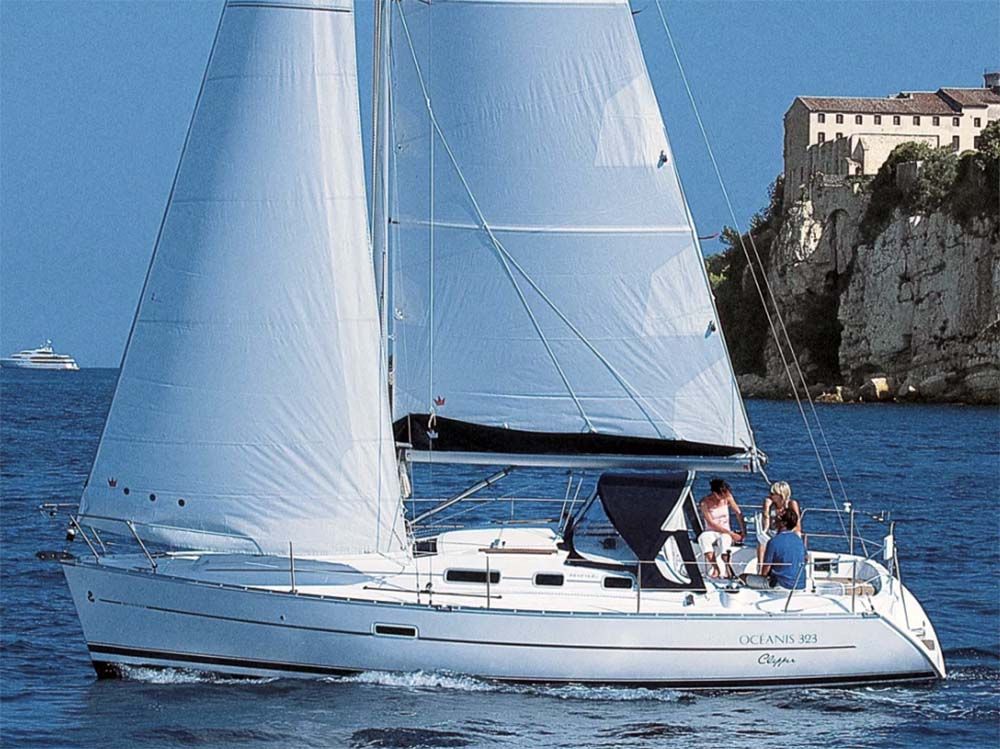
The 320 and 323 are both compact cruisers that prioritize liveability, but they take slightly different approaches: the Catalina favors conservative hull lines and an American-style interior that emphasizes straightforward systems and easy maintenance, while the Beneteau leans into European interior styling and marginally more modern hull shapes for its era. This reality is practical for buyers—if you want simpler upkeep, access to U.S. parts and a cockpit layout familiar to many American marinas, the 320 is attractive; if you value slightly younger interior design cues and a more contemporary aesthetic, the 323 may appeal more.
Performance-wise the Beneteau often feels a touch spryer in light air due to hull form differences, but the Catalina’s heavier feel delivers a steadier motion when conditions build—so the selection depends on whether calmer passages or light-air performance are your priority. From an ownership standpoint, Beneteau examples can be competitively priced but may show different service histories; the 320’s longevity and ubiquity in U.S. yards often make maintenance logistics easier.
► Learn more about the Beneteau Oceanis 323
Catalina 320 vs Hunter 33

Both models are aimed at the value-conscious family cruiser, but Hunter historically pushed for accessible systems and roomy cockpits with a U.S. buyer in mind; the 320 tends to be a touch more conservative in its finish and hull tuning. For buyers focused on budget and a large domestic service network, Hunter variants often represent strong value—but prospective owners should check construction details carefully, because build approaches vary by model year and can affect long-term durability.
Under sail the Hunter can feel lighter and more responsive in certain models, while the Catalina’s heavier disposition gives a calmer ride in confused seas; the practical takeaway is that the Hunter suits owners who prize maneuverability and lower purchase price, while the 320 suits owners who want proven steadiness and easier resale in some U.S. markets.
► Learn more about the Hunter 33
Catalina 320 vs Jeanneau Sun Odyssey 33i
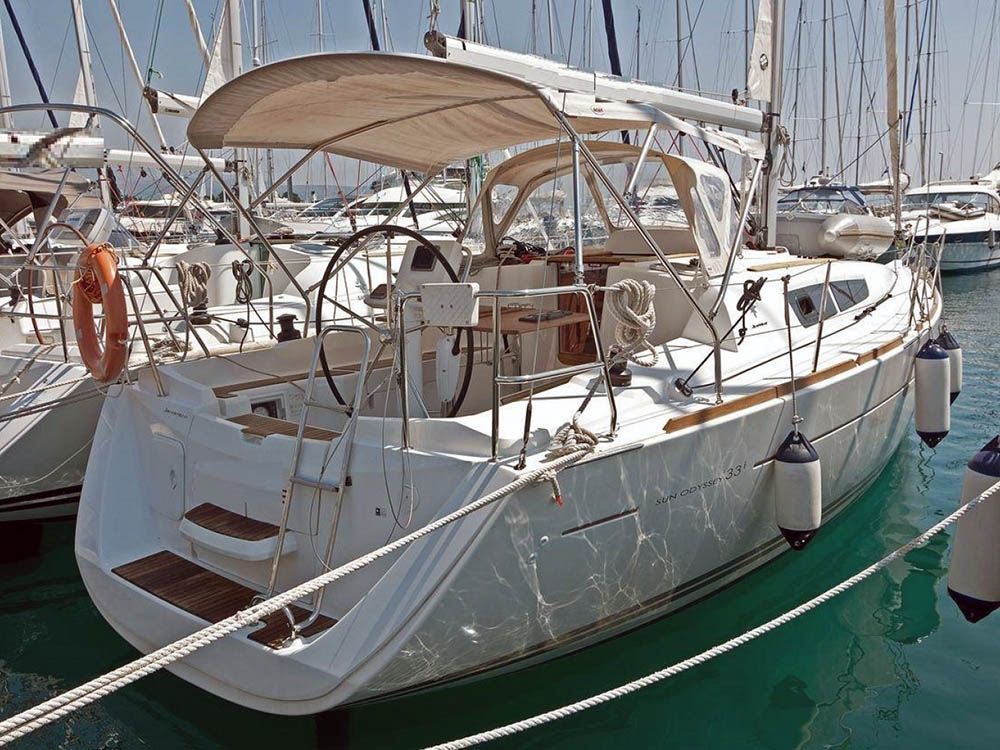
The Jeanneau brings a European emphasis on hull shape, twin-rudder options in some siblings and interior design that often skews higher on factory finish, while the 320 stays closer to the American “workable, repairable, comfortable” ethos. For sailors who expect modern helm feedback and slightly newer factory electronics or fit-and-finish, the Sun Odyssey will feel fresher; buyers prioritizing low-cost parts, simple repair paths and a cockpit that suits U.S. cruising styles may prefer the Catalina.
On maintenance and resale the Jeanneau can command a premium in markets that favor European lines, but the Catalina 320’s larger population in the U.S. typically makes finding parts, surveyors and yard experience easier—an important practical advantage when planning long-term ownership.
► Learn more about the Jeanneau Sun Odyssey 33i
Maintenance Costs of a Catalina 320 in the U.S.
Below are typical recurring and periodic ownership costs for a 32–33′ used production cruiser like the Catalina 320. Each item is bolded and followed by a concise comment.
- Mooring / slip — $1,000–$15,000 per year, depending on region and marina class; expect low municipal rates in smaller ports and significantly higher per-foot fees in prime Florida/California marinas.
- Insurance — $500–$3,000 per year (roughly 1–3% of insured value is a useful rule of thumb; location and cruising area raise costs).
- Engine servicing & routine systems — $300–$1,500 per year for oil, filters, impeller and small repairs; expect more if repowering or major engine work is required.
- Antifouling & haul-out — $600–$4,000 every 1–2 years depending on bottom condition and yard rates; complex prep or heavy growth drives cost to the high end.
- Standing rigging (amortized) — $200–$700/year amortized; full replacement typically $2,000–$6,000 depending on terminal types and labor.
- Running rigging & sail upkeep (amortized) — $300–$1,500/year; expect a full sail replacement (main + headsail) in the $3,000–$8,000 range depending on cloth and cut.
- Electronics / safety gear (amortized) — $200–$1,200/year; major installs (chartplotter, AIS, VHF, autopilot repairs) are one-time costs of $1,500–$8,000.
- Miscellaneous (zincs, hoses, canvas, winterization) — $300–$2,000/year.
Significant one-time costs to budget include rig replacement (if deferred), a major sail inventory refresh, or an extensive refit such as deck re-coring or significant fiberglass work—projects that can push totals into five figures depending on scope. The 320 is generally owner-friendly for tasks like canvas replacement, varnish, and basic mechanical maintenance, but structural, rigging and complex electrical work usually require professional yards—labor choices are the biggest driver of total ownership cost. Considering typical age profiles for 320s on the market, most owners should expect medium ownership costs for a 32′ cruiser: not as cheap as an older weekend-only daysailer, but reasonable compared with newer, more complex modern production boats. The model’s broad market recognition in the U.S. helps preserve resale value if maintenance is documented and upgrades are sensible
Conclusion
The Catalina 320 is a pragmatic, well-proven small cruiser that remains attractive to buyers who want straightforward systems, a roomy interior for its length, and predictable handling for coastal cruising. Its strengths are accessibility (many examples are available across the U.S.), ease of repair thanks to conventional GRP construction, and an interior that punches above its LOA for comfort. Its compromises are those typical of production boats of its era: older systems that may need modernization, and a design that prioritizes comfort and stability over light-air racing performance. For buyers seeking an honest, serviceable 32-foot cruiser for family weekends, club-level racing and sensible coastal passages, the 320 is a solid candidate—especially if you target well-documented, recently serviced examples. In resale terms it benefits from recognition and a broad parts/service ecosystem in the U.S., which tends to make it a resilient, practical purchase for the right owner.
Specifications
| Hull Type | Fin w/bulb & spade rudder |
| Rigging Type | Masthead Sloop |
| LOA | 32.50 ft / 9.91 m |
| LWL | 28.00 ft / 8.53 m |
| S.A. (reported) | 520.00 ft² / 48.31 m² |
| Beam | 11.75 ft / 3.58 m |
| Displacement | 11,300.00 lb / 5,126 kg |
| Ballast | 4,000.00 lb / 1,814 kg |
| Max Draft | 6.00 ft / 1.83 m |
| Construction | FG |
| Ballast Type | Lead |
| First Built | 1993 |
| Builder | Catalina Yachts (USA) |
| Designer | Gerry Douglas |
| Auxiliary Power/Tanks (orig. equip.) | |
| Make | Yanmar |
| Model | 3GM30F |
| Type | Diesel |
| HP | 27 |
Sailboat Calculations | |
| S.A. / Displ. | 16.58 |
| Bal. / Displ. | 35.40 |
| Disp. / Len. | 229.80 |
| Comfort Ratio | 22.36 |
| Capsize Screening Formula | 2.10 |
| S# | 2.33 |
| Hull Speed | 7.09 kn |
| Pounds/Inch Immersion | 1,175.55 pounds/inch |
Rig and Sail Particulars | |
| I | 43.58 ft / 13.28 m |
| J | 12.33 ft / 3.76 m |
| P | 38.00 ft / 11.58 m |
| E | 13.25 ft / 4.04 m |
| S.A. Fore | 268.67 ft² / 24.96 m² |
| S.A. Main | 251.75 ft² / 23.39 m² |
| S.A. Total (100% Fore + Main Triangles) | 520.42 ft² / 48.35 m² |
| S.A./Displ. (calc.) | 16.59 |
| Est. Forestay Length | 45.29 ft / 13.80 m |
Disclaimer
The considerations and analyses presented regarding the Catalina 320 sailboat are of a general nature and are based on the available information and technical data on this model, interpreted to the best of our knowledge and understanding. It is important to note that the specific characteristics of any particular sailboat may vary due to custom modifications, maintenance performed, and conditions of use over time, among other factors. Therefore, the details and performance of the boat you are considering may not exactly match the information provided here.
We strongly recommend that, before making any purchasing or usage decisions, you conduct a detailed inspection of the boat in question, consult with nautical professionals and other sailors, and consider your personal needs, expectations, and capabilities. Each sailboat may have unique particularities that affect its performance and suitability for different types of sailing and sailors.
The information contained in this analysis should be used as a general guide and not as a definitive reference. Professional evaluation and personal inspection are essential to ensure that the boat meets your specific requirements and expectations.