


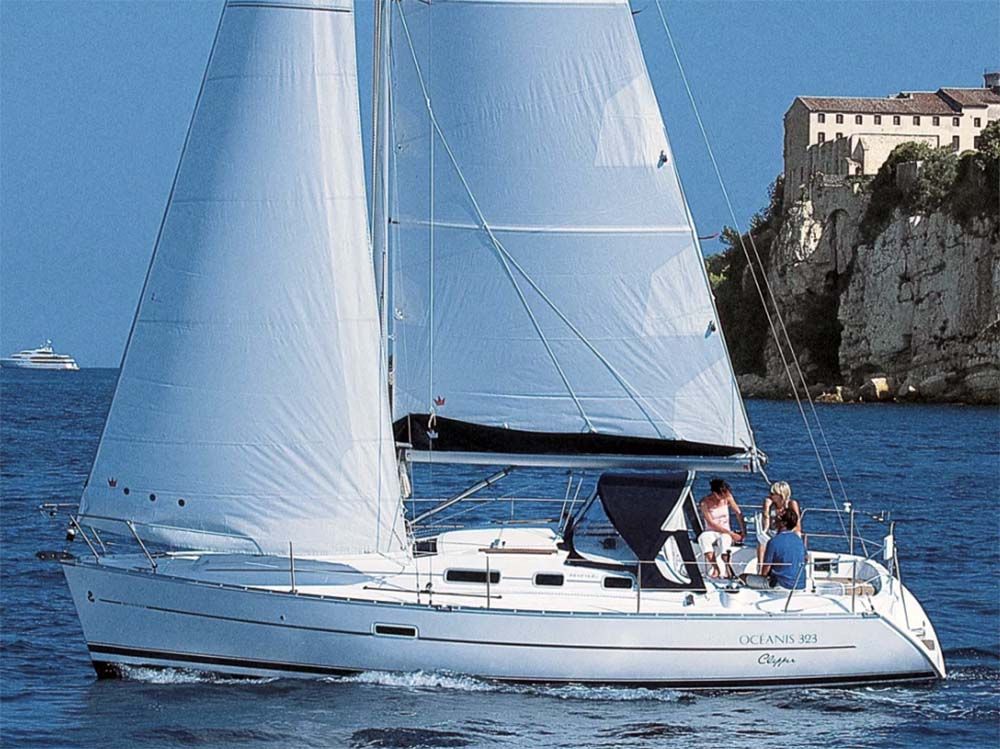
The Beneteau Oceanis 323 is a coastal cruising sailboat introduced in the early 2000s by the French shipyard Beneteau and designed by Groupe Finot. Its purpose was clear: to deliver a safe, comfortable, and manageable yacht for families, couples, or small crews who wanted to enjoy weekend sailing and medium-range coastal cruising without the complexity of larger yachts. From the moment of its launch, the 323 positioned itself as a practical alternative for sailors seeking a balance between affordability and seaworthiness. In the secondhand market, it remains a popular choice among private owners, with a solid reputation in the charter industry as well, particularly in regions with warm waters where demand for manageable cruising yachts is steady.
Design and Construction
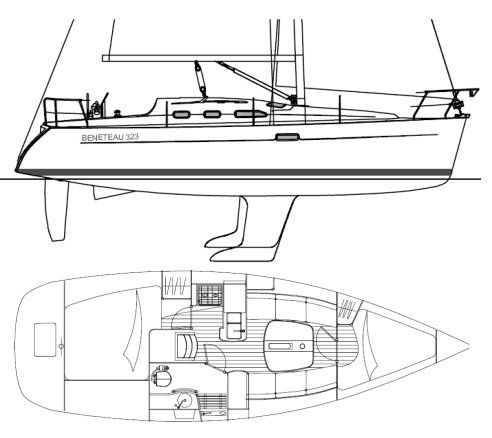
The Oceanis 323 carries the design hallmarks of Finot’s cruising line. Its hull features a moderate beam that provides interior volume and strong initial stability. The boat is fitted with a bulb keel and spade rudder, a combination that enhances maneuverability while keeping draft moderate for shallow waters. The rig is a masthead sloop, chosen for simplicity and ease of sail handling, especially when paired with roller furling headsails and mainsail reefing systems.
Construction is based on fiberglass laminates with structural liners, offering both strength and efficiency in production. This approach results in a solid hull that can withstand years of use, while still being serviceable for repairs. Owners will find that maintenance is relatively straightforward, though proper inspection of deck hardware and portlights is essential to prevent long-term issues. Overall, the design favors long-term durability and supports stable resale values compared to other boats of the same era.
Performance
Under sail, the 323 is known for being forgiving yet competent. It is not a racer, but it holds its own respectably in moderate winds, delivering a steady 5–6 knots of cruising speed and reaching its theoretical hull speed of around 7 knots in favorable conditions. In a seaway, the wide beam helps dampen rolling, making it a comfortable ride for inexperienced sailors or families. Upwind performance is respectable, though not as sharp as sportier designs like the Jeanneau Sun Odyssey 32i.
Its helm is light, responsive, and predictable, with a balanced feel that appeals to sailors looking for stress-free handling. In comparison to peers, the 323 is less performance-oriented than a Hunter 326 but more agile than a Bavaria 32 Cruiser. In practice, this makes it a well-rounded family cruiser rather than a competitive club racer.
Comfort and Accommodations
Inside, the Oceanis 323 prioritizes comfort. The layout usually includes two double cabins, a spacious saloon with convertible seating, and a functional L-shaped galley. Storage is generous for a yacht under 10 meters, and the ventilation is adequate thanks to multiple hatches and portholes. For a couple or small family, it is an excellent liveaboard for extended weekends and short coastal cruises.
While the interior can feel tight for more than four adults on long passages, for most coastal cruising scenarios, it delivers well above expectations. The materials used, while not luxurious, age reasonably well, and many boats on the secondhand market feature upgraded upholstery, LED lighting, or modernized navigation electronics.
Safety and Practicality
On deck, the 323 is built with practicality in mind. The cockpit is large and safe, ideal for families with children. Side decks are clear enough for safe movement in rough conditions, and lifelines provide an additional level of security. Access to the swim platform is straightforward, making it convenient both for leisure and for emergencies.
For short-handed crews, the sloop rig with roller furling and accessible controls from the cockpit ensures manageable handling. While it is primarily intended for coastal cruising, well-prepared examples have successfully undertaken longer passages, though ocean crossings would demand significant upgrades. System access is generally straightforward, which keeps service costs reasonable and supports owners who prefer DIY maintenance.
Known Issues with this sailboat
Owners and surveyors report a few recurring issues. Minor leaks through hatches and portlights are not uncommon with age, and like many production fiberglass boats, careful attention to deck fittings is necessary. Osmosis is not a widespread issue, but it should always be checked in older boats. The standard Yanmar 20–22 HP engine is regarded as reliable, though neglect can lead to cooling system problems.
Another frequently mentioned point is the stock fixed propeller, which some owners replace with a folding or feathering model for smoother motoring and better handling in reverse. Electronics fitted in the early 2000s are outdated, so refits are often recommended. These are not deal-breakers but practical considerations for buyers.
Market Availability and Pricing in the U.S.
The Oceanis 323 is available only on the used market, with most listings concentrated in Florida, the Chesapeake Bay, and New England. West Coast examples exist but are rarer. Prices generally range between $50,000 and $70,000 USD, depending on equipment, upgrades, and condition. Private-owner boats often show better cosmetic and systems upkeep, while ex-charter units can be priced lower but usually demand more investment.
Compared to peers, the Oceanis 323 stands out for its combination of interior comfort and easy handling. The Catalina 320 remains one of the strongest competitors in the U.S. because of its widespread support network and resale liquidity. The Hunter 326 appeals to buyers who want more interior volume but accepts some trade-off in sailing performance. The Jeanneau Sun Odyssey 32i, meanwhile, offers sleeker styling and better upwind ability, but usually with a slightly smaller interior.
| Model | LOA | Year built | Typical used price (U.S.) | Key differences |
|---|---|---|---|---|
| Beneteau Oceanis 323 | 10.0 m (32.8 ft) | 2001–2006 | $50,000–$70,000 | Balanced cruiser, simple handling, comfortable cockpit |
| Catalina 320 | 9.9 m (32.5 ft) | 1993–2003 | $45,000–$65,000 | Very popular in U.S., strong parts network, slightly heavier feel |
| Hunter 326 | 9.8 m (32.1 ft) | 2001–2006 | $48,000–$65,000 | Spacious interior, arch-mounted mainsheet, less lively under sail |
| Jeanneau Sun Odyssey 32i | 9.6 m (31.5 ft) | 2005–2008 | $52,000–$72,000 | Modern styling, better upwind performance, smaller volume below |
Beneteau Oceanis 323 vs Catalina 320

The Beneteau Idylle 11.50 stands out for its robust hull design and offshore capability. Its fin keel and skeg-hung rudder provide a balance of stability and maneuverability, making it suitable for both coastal and extended cruising. In contrast, the Catalina 36 emphasizes interior space and comfort, making it ideal for family cruising and club sailing. In terms of sailing performance, the Idylle 11.50 delivers a more dynamic and stable experience, while the Catalina 36 prioritizes ease of handling and a smooth, comfortable ride. Maintenance needs are comparable, though the Idylle 11.50 may require more frequent attention due to its offshore orientation. Overall, buyers focused on performance and versatility may favor the Idylle, whereas those seeking comfort and roomy accommodations may lean toward the Catalina. The practical choice hinges on whether the priority is spirited sailing or relaxed cruising.
► Learn more about de Catalina 320
Beneteau Oceanis 323 vs Hunter 326

The Beneteau Idylle 11.50 offers a balanced blend of speed, stability, and handling, making it well-suited for both coastal and offshore cruising. Its masthead sloop rig is straightforward and easy to manage, ideal for small crews or family outings. The Hunter 37 Cutter, with its cutter rig, provides greater versatility in sail plan management, allowing for better balance in varying wind conditions, which is an advantage on longer passages. Interior-wise, the Idylle 11.50 has an elegant and efficient layout, while the Hunter focuses on functional space, which may feel less roomy but is practical for extended cruising. The Idylle’s hull and rigging require regular maintenance to maintain performance, whereas the Hunter’s additional rigging elements demand careful attention, particularly in heavy winds. For buyers, the Idylle 11.50 excels in balanced performance and offshore capability, while the Hunter 37 Cutter shines in versatility and adaptability for varied sailing conditions. The decision largely depends on whether the owner prioritizes sailing performance or sail plan flexibility.
► Learn more about de Hunter 326
Beneteau Oceanis 323 vs Jeanneau Sun Odyssey 32i

The Oceanis 323’s Finot-derived hull gives a relatively slippery, performance-friendly underwater shape that translates to brisk off-wind speed and a lively helm — useful for owners who value straightforward sailing performance and responsive handling. The Catalina 320, by contrast, emphasizes a modern cruising hull with round bilges and generous beam for strong initial stability and roomy below-decks comfort; that makes the Catalina feel more forgiving in short-choppy seas and easier for family crews to handle. Rigging on both is simple and cruiser-oriented, but the Catalina’s masthead setup and larger genoa bias favour light-air power from headsails while the Beneteau’s package rewards trimming and sail choice for better all-round speed. For an owner this means the 323 suits couples who want a slightly sportier boat that still sleeps a family, whereas the 320 trades a bit of snap for easier day-to-day comfort, lower-tension sail handling and interior space that reduces the pressure to upgrade.
► Learn more about de Jeanneau Sun Odyssey 32i
Maintenance Costs of a Beneteau 323 in the USA
The Sun Odyssey 32i leans toward a balanced, easily driven hull with fractional-rig and the option of deeper or performance keels that improve upwind pointing and overall control — a clear advantage for owners planning coastal passages or club racing where windward performance matters. The Oceanis 323 favors interior volume and a hull form that delivers lively downwind speed and easy mooring, so it feels slightly more cruiser-oriented in everyday use while still offering spirited sailing when wanted. Internally, the Jeanneau typically trades some salon breadth for taller headroom and a thoughtful fit-out that benefits liveaboard comfort and access to systems, whereas the 323’s more compact but efficiently arranged cabins suit couples or small families who prioritise lower running costs and simpler upkeep. In ownership terms, the 32i is the better choice if you expect harder upwind sailing or want a performance-oriented cruise/racer with comfortable accommodations; the Oceanis 323 is the pragmatic pick for economical family cruising with a sporty touch.
Conclusion
The Oceanis 323 strikes a strong balance between comfort, safety, and ease of use, making it an excellent choice for coastal cruising families and first-time owners. Its strengths lie in its spacious cockpit, forgiving sailing characteristics, and wide availability on the used market at attractive prices. On the downside, buyers should expect to deal with dated electronics and potential wear in portlights or deck hardware.
For sailors seeking a manageable, comfortable cruiser with proven reliability, the 323 is a worthy option. It is not the flashiest yacht, but it represents sound value, steady resale potential, and a user-friendly design that continues to make it one of the most practical 32-foot cruisers available today.
Specifications
| Hull Type | Fin w/bulb & spade rudder |
| Rigging Type | Masthead Sloop |
| LOA | 32.83 ft / 10.01 m |
| LWL | 29.18 ft / 8.89 m |
| Sail Area (reported) | 542.00 ft² / 50.35 m² |
| Beam | 10.75 ft / 3.28 m |
| Displacement | 9,325.00 lb / 4,230 kg |
| Ballast | 2,414.00 lb / 1,095 kg |
| Max Draft | 4.75 ft / 1.45 m |
| Construction | Fiberglass (FG) |
| First Built | 2001 |
| Builder | Beneteau |
| Designer | Groupe Finot |
| Auxiliary Power/Tanks (Original Equipment) | |
| Type | Diesel |
| HP | 22 |
| Fuel Capacity | 17 gallons / 64 liters |
| Accommodations | |
| Water Capacity | 42 gallons / 159 liters |
| Sailboat Calculations | |
| S.A. / Displacement | 19.64 |
| Ballast / Displacement | 25.89 |
| Displacement / Length | 167.55 |
| Comfort Ratio | 20.13 |
| Capsize Screening Formula | 2.05 |
| S# | 3.23 |
| Hull Speed | 7.24 kn |
| Pounds/Inch Immersion | 1,120.83 pounds/inch |
| Rig and Sail Particulars | |
| I | 42.67 ft / 13.01 m |
| J | 11.06 ft / 3.37 m |
| P | 38.91 ft / 11.86 m |
| E | 13.17 ft / 4.01 m |
| S.A. Fore | 235.97 ft² / 21.92 m² |
| S.A. Main | 256.22 ft² / 23.80 m² |
| S.A. Total (100% Fore + Main Triangles) | 492.19 ft² / 45.73 m² |
| S.A./Displ. (calculated) | 17.83 |
| Est. Forestay Length | 44.08 ft / 13.44 m |
| Sailboat Links | |
| Designers | Jean Marie Finot (Groupe Finot) |
| Builders | Beneteau |
Disclaimer
The considerations and analyses presented regarding the Beneteau 323 sailboat are of a general nature and are based on the available information and technical data on this model, interpreted to the best of our knowledge and understanding. It is important to note that the specific characteristics of any particular sailboat may vary due to custom modifications, maintenance performed, and conditions of use over time, among other factors. Therefore, the details and performance of the boat you are considering may not exactly match the information provided here.
We strongly recommend that, before making any purchasing or usage decisions, you conduct a detailed inspection of the boat in question, consult with nautical professionals and other sailors, and consider your personal needs, expectations, and capabilities. Each sailboat may have unique particularities that affect its performance and suitability for different types of sailing and sailors.
The information contained in this analysis should be used as a general guide and not as a definitive reference. Professional evaluation and personal inspection are essential to ensure that the boat meets your specific requirements and expectations.