

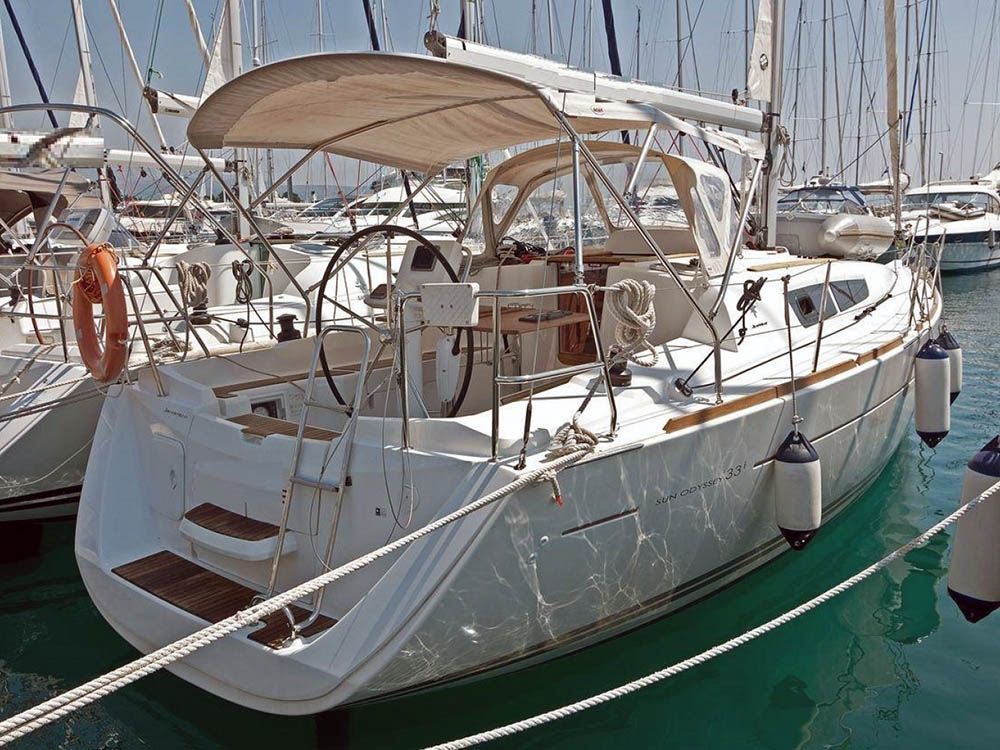
The Jeanneau Sun Odyssey 33i is a compact, modern cruiser introduced by Jeanneau in 2008 as part of the “i” family (the “i” denoting an injection-moulded deck). Designed by Marc Lombard, the 33i was aimed squarely at coastal and club cruisers who wanted contemporary hull lines, simple sail handling and an interior that maximized usable volume for couples and small families. Jeanneau built the design through the early 2010s, and it is now out of production; however, because several years of hulls were built and many ended up in owner fleets and local charter programs, clean, well-equipped examples appear regularly on the used market.
Design and Construction
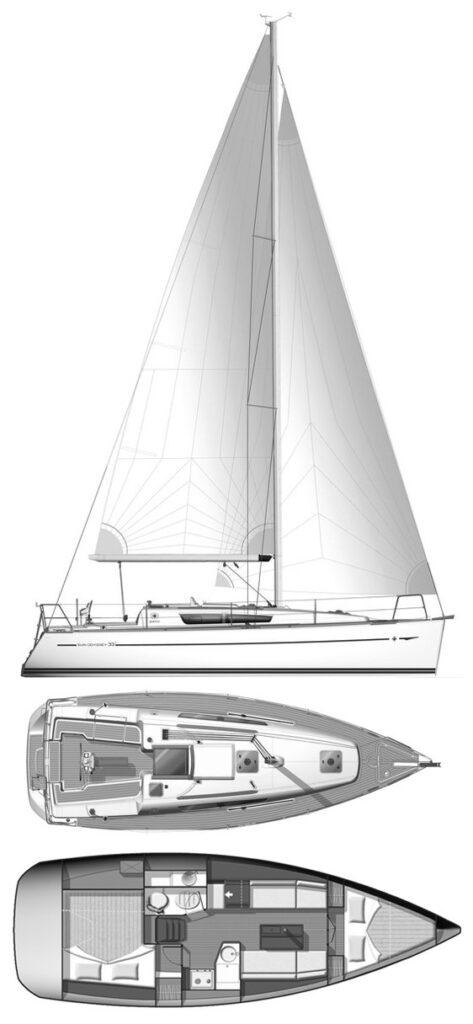
The 33i reflects Marc Lombard’s approach to efficient, safe cruising hulls: nearly plumb bow, a moderate beam carried aft and a reverse transom with integrated swim platform that enhance cockpit usability and downwind performance when comfortable sail area is carried. Construction uses a solid fibreglass hull and a sandwich/injection deck which reduces weight aloft and gives a more consistent factory finish — a manufacturing choice that typically improves production repeatability and reduces the likelihood of voids common to older layups. The model was offered with a choice of keels (standard fin with bulb, shoal and sometimes centerboard variants) and a fractional-type rig that keeps headsail sizes manageable for short-handing; those choices balance pointing ability and shallow-water access for owners cruising bays and fisheries. From an ownership perspective the materials and build method make routine GRP repairs straightforward for most yards, while the injection deck and factory hardware layout mean replacement parts and dealer support are widely available.
Performance
On the water the 33i sits in that useful middle ground between comfort and responsiveness. Its hull and sailplan allow brisk off-wind speeds and confident handling when reefed; reviewers and owner reports consistently note that the boat accelerates predictably, tracks well and has a light, balanced helm in moderate conditions. The standard fin/bulb keel version points better to windward and gives a firmer feel in seas, while the shoal/centerboard options trade a bit of upwind VMG for access to shallower anchorages — a practical trade many coastal cruisers appreciate. Compared with older production 32–34′ cruisers the 33i often feels livelier in light air and more modern in its on-deck ergonomics, making it a good choice for owners who want respectable weekend speed without sacrificing comfort.
Comfort and Accommodations
Belowdecks the 33i maximizes volume with smart furniture planning: a bright saloon with good headroom for the class, a forward cabin that works as an owner’s berth and a functional aft cabin (in two-cabin versions) that gives private sleeping for guests or children. The galley and nav area are laid out to support short cruises and weekend provisioning; practical storage and accessible systems panels make daily life aboard easier than on many older production boats. Many owners report that the interior ages well because typical upgrades are incremental — electronics, upholstery and non-structural cosmetic work — so you will often find boats with tasteful refits rather than complete rebuilds. For couples or small families intending coastal cruising and occasional multi-day passages, the 33i’s accommodations are comfortable and efficient.
Safety and Practicality
Jeanneau’s deck ergonomics on the 33i prioritize single- or two-handed operation: swept spreaders that reduce the need for running backstays, a well-protected cockpit with accessible winches and a swim platform that doubles as a practical work area for tender handling. Systems are laid out in a production-friendly way — engine access under the companionway, grouped through-hulls and obvious battery/charger placement — which keeps routine maintenance straightforward. For true offshore passagemaking you’d want additional redundancy (spare nav power, upgraded ground tackle, storm sails), but as-built the 33i is very well suited to coastal cruising, weekend passagemaking and club-level sailing without expensive structural upgrades.
Known Issues with the Jeanneau Sun Odyssey 33 Mk I
The Sun Odyssey 33i generally enjoys a good reputation, but owners and survey reports highlight standard production-boat checks that every buyer should perform. Pay particular attention to deck-penetration bedding and chainplate areas—poorly bedded hardware can lead to soft spots or leaks over time—and inspect the condition of the injection-molded deck around hatches and winches. Electrical quirks (aged wiring, corroded connections) and routine wear on running/standing rigging after a decade are the most commonly reported items; these are predictable maintenance items rather than design defects. Typical buyer upgrades are preventive and practical: replace aged standing rigging on schedule, update shore-power and batteries if original, fit modern navigation electronics and check seacocks and engine-drive components during survey. These steps make the 33i a low-surprise purchase when a good survey and service history are present.
Market Availability and Pricing in the U.S.
The Sun Odyssey 33i is out of production but plentiful on the used market; recent U.S and North American broker listings show multiple 2010–2014 hulls priced in the mid-five to low-six figure range depending on year and options. Typical asking prices observed on broker sites cluster roughly between $55,000 and $115,000 for U.S-market examples, with lower-priced older or cosmetic-project boats below that band and high-spec, low-hour examples (or boats with extensive refits) toward the top. U.S. inventory tends to concentrate where active cruising communities and brokerage houses operate — Florida, the Mid-Atlantic/New England coast and Pacific Northwest/California — so buyers in those regions will see larger selection and more recently maintained examples. Listings commonly include well-kept owner boats and occasional ex-fleet or ex-charter hulls; the latter can be value buys if the maintenance and engine hours check out, but they often require cosmetic refresh and possible sail/replacement work.
Here’s a comparison with similar models:
| Model | LOA | Approx. Years Built | Typical U.S. used price | Main differences |
|---|---|---|---|---|
| Jeanneau Sun Odyssey 33i | ~32.7 ft | 2008–2014 | **$55,000–$115,000** | Modern injection deck, multiple keel options, contemporary ergonomics for short-handed cruising. |
| Beneteau 323 | ~32.5 ft | 2005–2008 | $40,000–$70,000 | European styling of its era, competitive interior volume, often good value on the used market. |
| Catalina 320 | ~32.5 ft | 1993–2008 (MkII later) | $35,000–$100,000 | U.S. production cruiser with conservative hull and very large owner base; easy parts/support in the U.S. |
| Hunter 33 (various) | ~33 ft | 2000s–2010s (various models) | $40,000–$105,000 | Value orientated, roomy cockpit layouts; build details vary by year and model generation. |
Jeanneau Sun Odyssey 33 Mk I vs Beneteau Oceanis 323
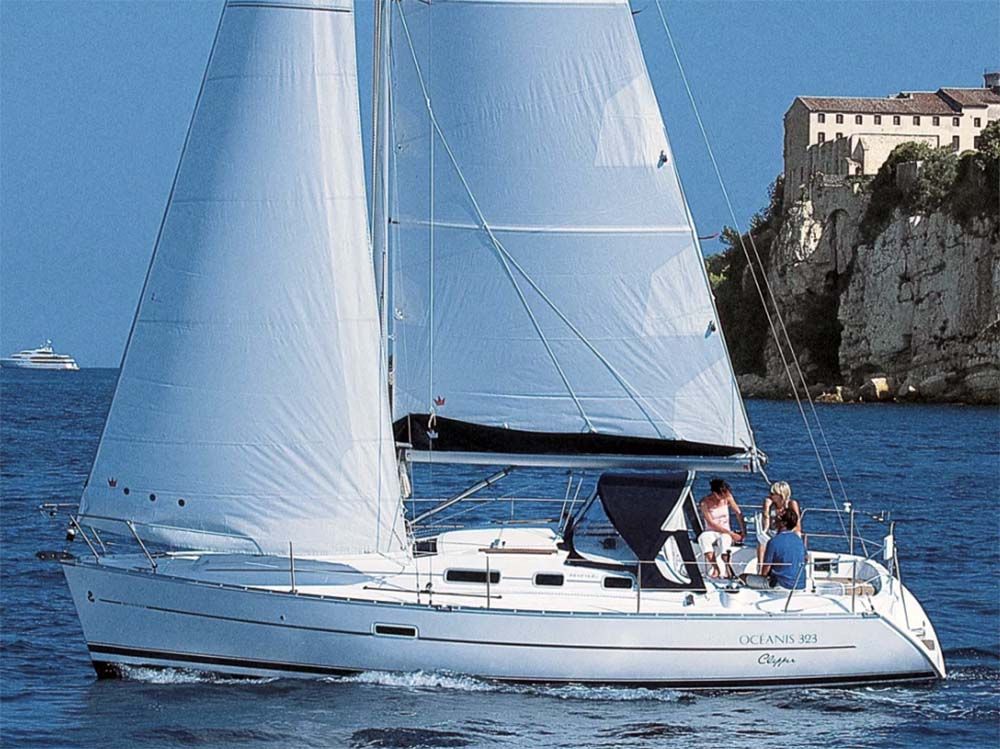
The 33i and the Beneteau 323 both aim at small family cruising, but the 33i benefits from a later design language — injection deck, slightly more modern hull sections and optional keel choices — which tends to produce a livelier feel and contemporary on-deck ergonomics. The 323 often represents good value on the used market and may appeal to buyers prioritizing price and basic cruising accommodations; however, the 33i frequently offers better factory ergonomics for single-handing and a more modern layout that buyers find easier to personalize for long weekends or week-long trips.
For maintenance and ownership the Beneteau 323 can be cheaper on purchase price, but the 33i’s popularity and parts availability from Jeanneau’s network mean that long-term ownership logistics are comparably straightforward; sailors who prioritize marginally newer hull design and deck ergonomics will typically accept the somewhat higher asking prices for the 33i.
► Learn more about the Beneteau Oceanis 323
Jeanneau Sun Odyssey 33 Mk I vs Catalina 320

These two boats answer the same buyer brief with different emphases: the Catalina 320 leans into a conservative American cruising philosophy — generous interior volume for LOA, straightforward systems and a hull tuned for comfortable motion — while the 33i pushes for modern deck ergonomics, lighter feel and more contemporary lines. In practice this means the Catalina can feel more reassuring in confused seas and offers tremendous parts/service familiarity in U.S. yards, while the 33i rewards owners who want slightly snappier handling and a layout designed for easier short-handing.
Buyers focused on low purchase price and an established U.S. owner network will find excellent options among Catalina 320s, but those who value modern sailing ergonomics, injection-deck manufacturing consistency and a more up-to-date factory fit will usually find the 33i a better match despite modestly higher entry prices.
► Learn more about the Catalina 320
Jeanneau Sun Odyssey 33 Mk I vs Hunter 33

The Hunter models in this size bracket typically emphasize cockpit comfort, easy access and a value-first approach in U.S. production markets, whereas the 33i is positioned as a slightly more performance-minded cruiser with refined on-deck controls and modern hull shaping. Hunters can be compelling bargains with large cockpits and practical fittings for family daysails and short coastal hops; the Jeanneau 33i will suit owners who want a more contemporary helm feel and marginally better light-air performance without moving into dedicated racer/cruiser territory.
From a maintenance standpoint, Hunters and Catalinas benefit from a broad domestic service ecosystem and abundant used-parts availability; Jeanneau’s European build and the 33i’s modern systems may require different sourcing paths in some regions, but overall survey and upkeep workflows are similar for all three—purchase condition and documented maintenance history are the decisive factors.
► Learn more about the Hunter 33
Maintenance Costs of a Jeanneau Sun Odyssey 33 Mk I in the U.S.
Below are typical recurring and periodic ownership costs for a 32–34′ production cruiser in the United States. Each item is bolded followed by a short comment and reasonable ranges that reflect regional variation.
- Mooring / slip — $1,500–$30,000 per year. Inexpensive municipal or small-harbor slips and seasonal moorings can be at the low end while premium year-round slips in major Florida or California marinas reach the high end.
- Insurance — $800–$3,500 per year. A typical rule of thumb is roughly 1–3% of insured value annually, but rates vary with cruising area, owner experience and coverage levels.
- Engine servicing & routine systems — $400–$2,000 per year. Annual oil/filter, impeller, belts and basic diagnostics; costs rise if saildrive or gearbox work is required.
- Antifouling & haul-out — $600–$4,000 every 1–2 years. Basic bottom paint jobs on 30–35′ boats are often several hundred to a few thousand dollars depending on prep, local labour and paint system selected.
- Standing rigging (amortized) — $200–$1,000 per year amortized; expect a full standing-rigging job to run in the low thousands up to $6,000–$10,000 depending on fittings and labour if a mast-drop or complex rig is required.
- Running rigging & sails (amortized) — $300–$2,000 per year; a practical full sail inventory replacement (main + headsail) for a 32–34′ cruiser commonly falls in the $3,000–$8,000 band depending on cloth and whether you buy stock loft sails or custom laminates.
- Electronics & safety gear (amortized) — $300–$2,000 per year; one-time upgrades for chartplotter, AIS and radar typically range $2,000–$10,000 installed.
- Miscellaneous (zincs, hoses, canvas, winterization) — $300–$2,000 per year.
Major one-time projects to budget for include a standing-rigging replacement, a full sail set, a substantial bottom-prep and repaint (especially if blisters or delamination are found), and any structural refit (deck core repairs, keel-bolt work). The Sun Odyssey 33i is owner-serviceable for many routine tasks — oil changes, basic sail handling repairs, varnish/canvas — but rigging, structural, electrical and major fibreglass projects generally require professional yards; choosing DIY versus pro labour is the single biggest lever on the total cost of ownership. Given the 33i’s size and production simplicity, expected ownership costs sit in the medium range for a modern 33-foot cruiser: not inexpensive, but reasonable, and good maintenance and documented service history usually preserve resale value
Conclusion
The Jeanneau Sun Odyssey 33i is a coherent package for the buyer who wants modern deck ergonomics, manageable sailplan options and a liveable interior in a compact coastal cruiser. Its strengths are contemporary sailing manners for the class, flexible keel choices that accommodate different cruising grounds, and production build quality that makes parts and service broadly accessible. Its compromises are ordinary for a production boat of its era: some factory systems may be basic by today’s standards and will often be first targets for sensible upgrades (electronics, batteries, sails).
For couples or small families focused on coastal cruising, weekend passagemaking and easy short-handed sailing, the 33i represents a balanced, practical choice with a steady resale market — provided you buy a hull with good survey records and realistic maintenance history. It’s not the fastest boat in light airs compared with bespoke racers, nor is it the cheapest to own if you expect near-offshore refits, but its modern layout and reasonable running costs make it a solid, resalable investment for most coastal cruisers.
Specifications
| Hull Type | Fin w/bulb & spade rudder |
| Rigging Type | Fractional Sloop |
| LOA | 32.68 ft / 9.96 m |
| LWL | 30.05 ft / 9.16 m |
| S.A. (reported) | 511.00 ft² / 47.47 m² |
| Beam | 10.96 ft / 3.34 m |
| Displacement | 10,240.00 lb / 4,645 kg |
| Ballast | 3,307.00 lb / 1,500 kg |
| Max Draft | 6.23 ft / 1.90 m |
| Construction | Fiberglass (FG) |
| Ballast Type | Iron |
| First Built | 2008 |
| Builder | Jeanneau |
| Designer | Marc Lombard |
| Auxiliary Power | Yanmar 3YM20 Diesel, 21 HP |
| Fuel Capacity | 37 gals / 140 L |
| Water Capacity | 42 gals / 159 L |
| S.A. / Displ. | 17.40 |
| Bal. / Displ. | 32.29 |
| Disp. / Len. | 168.47 |
| Comfort Ratio | 21.15 |
| Capsize Screening Formula | 2.02 |
| S# | 3.16 |
| Hull Speed | 7.35 kn |
| Pounds/Inch Immersion | 1,176.80 pounds/inch |
| Rig and Sail Particulars (I / J / P / E) | I: 41.99 ft / 12.80 m J: 12.20 ft / 3.72 m P: 39.80 ft / 12.13 m E: 12.80 ft / 3.90 m |
| S.A. Fore | 256.14 ft² / 23.80 m² |
| S.A. Main | 254.72 ft² / 23.66 m² |
| Total Sail Area | 510.86 ft² / 47.46 m² |
| S.A./Displ. (calculated) | 17.39 |
| Est. Forestay Length | 43.73 ft / 13.33 m |
Disclaimer
The considerations and analyses presented regarding the Jeanneau Sun Odyssey 33 Mk I sailboat are of a general nature and are based on the available information and technical data on this model, interpreted to the best of our knowledge and understanding. It is important to note that the specific characteristics of any particular sailboat may vary due to custom modifications, maintenance performed, and conditions of use over time, among other factors. Therefore, the details and performance of the boat you are considering may not exactly match the information provided here.
We strongly recommend that, before making any purchasing or usage decisions, you conduct a detailed inspection of the boat in question, consult with nautical professionals and other sailors, and consider your personal needs, expectations, and capabilities. Each sailboat may have unique particularities that affect its performance and suitability for different types of sailing and sailors.
The information contained in this analysis should be used as a general guide and not as a definitive reference. Professional evaluation and personal inspection are essential to ensure that the boat meets your specific requirements and expectations.