



The Sun 2500 is a compact coastal cruiser introduced by Jeanneau in the mid-2000s and conceived as an easy-to-handle pocket cruiser that blends accessible sailing with reasonable accommodation for short cruises. Designed by Olivier Petit and produced by Jeanneau’s design office, the model arrived with lift-keel and fixed-keel options to broaden its appeal to owners who wanted shallow-water access without giving up respectable windward ability; it quickly found favor in Europe as an affordable, modern small cruiser. On the used market the Sun 2500 enjoys steady interest from weekend cruisers, couples and small families who value twin rudder control, a modestly roomy cabin and the flexibility of a lifting-keel layout for varied harbors.
Design and Construction
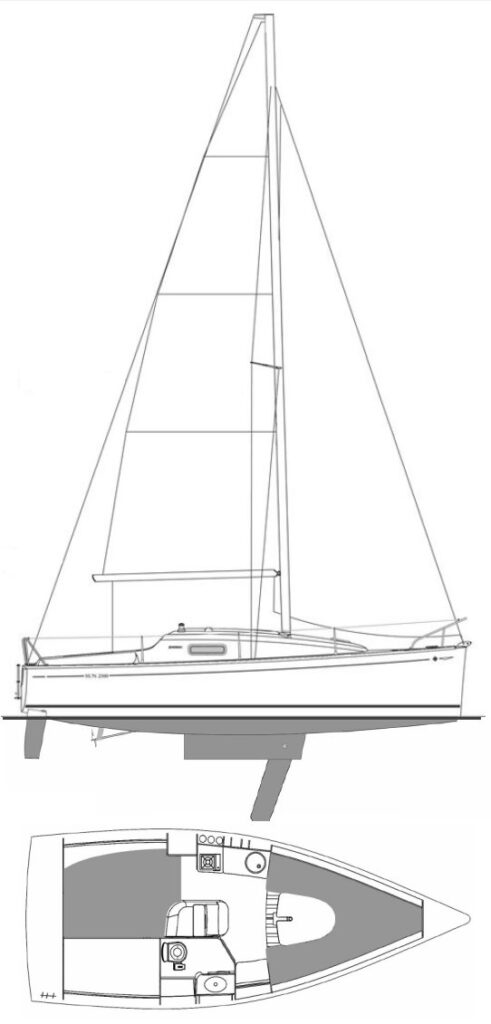
Jeanneau built the Sun 2500 in glassfibre with a balsa-cored deck and offered it with either a stub-fin plus centerboard (lifting keel) or an L-shaped fixed keel; the hull features a relatively beamy stern and twin spade rudders to preserve steering control when the boat heels. The fractional rig with swept spreaders keeps the rig simple and manageable, putting the emphasis on easy handling rather than aggressive sail tuning—an intentional choice for a pocket cruiser that sees a lot of short-handed sailing. These construction choices trade concentrated lead low in a deep keel for a lighter centerplate/keel package that eases launching, drying out and shallow-water mooring, but they do introduce systems (keel trunks, lifting gear, inspection plates and twin rudder bearings) that require sensible inspection and maintenance over the years. For prospective owners that means the hull and deck are straightforward to repair and refinish, while attention to keel trunk integrity, keel hardware and rudder bearings is central to long-term durability and retained value.
Performance
On the water the Sun 2500 is generally praised for being lively and well-mannered for a 25-foot class: with the keel down it points reasonably, accelerates cleanly in light airs and thanks to the twin rudders keeps good control when heeled. The design is not a peeling-off racer—owners report that reefing earlier in fresh conditions produces a more comfortable motion—but for coastal passages and mixed-weather weekend sailing it delivers a confident balance between performance and comfort. Compared with heavier fixed-keel pocket cruisers the Sun 2500 will feel more responsive and quicker to accelerate, while its lighter centerplate arrangement means it is somewhat less stiff at extreme heel angles than a deep-keel alternative; in practice this pushes owners toward conservative sail selection in stronger wind rather than constant reef-less flogging.
Comfort and Accommodations
Inside the Sun 2500 the layout is an exercise in efficient packaging: a forward cabin (usually a modest V-berth or open plan), a functional galley, and an open saloon that converts to berths give genuine weekend-cruise capability for two to four people without extravagant fittings. Headroom and standing space are limited by the boat’s pocket-cruiser profile, but the cabin finishes and storage arrangements are typically better than older production boats of similar length—Jeanneau leaned into a contemporary layout to make short cruises feel less cramped. For owners who favor weekend or week-long coastal trips the interior is comfortable and practical; for anyone seeking full-time liveaboard comfort the limits of tankage, headroom and storage mean the Sun 2500 is best considered a vacation-and-weekend platform rather than a full-time home.
Safety and Practicality
Deck ergonomics and the twin-rudder arrangement give the Sun 2500 reassuring control under heel and allow the boat to dry out or take the ground in tidal areas when fitted with the lifting keel—practical features for low-tide harbors and trailer-adjacent ramps. Owners should be mindful that lifting-keel systems, keel trunks and rudder bearings are service items: regular inspection of the lifting mechanism, seals and inspection plates will prevent surprises, and attention to keel bolts and bulkhead/keel-step bonding is a sensible survey priority. Systems such as the inboard diesel or small outboard, basic electrical, and through-hull fittings are generally accessible, but any buyer who plans more ambitious coastal passages must verify seacock condition, bilge pumping and navigation gear to raise the boat from weekend readiness to more demanding coastal work.
Known Issues with the Jeanneau Sun 2500
Owners and active forum communities commonly flag a handful of recurring maintenance topics: lift-keel trunks can collect mud or develop play in the lifting hardware, inspection plates and drain arrangements have been known to require attention to avoid pressure-related leaks, and twin-rudder bearings and linkages occasionally need servicing or replacement as they age. Compression-post and keel-step interfaces on some Jeanneau models have shown sensitivity to water ingress if original bedding deteriorates, so surveyors often look for signs of moisture and compression-post pad integrity. These are manageable issues—many sellers proactively fit reinforced bearings, improved drain plumbing or updated keel-seals—but they should be treated as near-term checklist items at purchase because repairs can range from simple parts replacement to more invasive keel-box or rudder work.
Market Availability and Pricing in the U.S.
The Sun 2500 is no longer in production and is more commonly found on the European used market than the U.S.; North-American listings do appear but are comparatively scarce, so buyers in the U.S. should expect to see fewer local examples and sometimes pay a premium for well-equipped imports. Recent advertised prices in dealer and broker listings in Europe and the U.K. tend to sit in the mid-teens to high-twenties in local currency (roughly equivalent to the low-to-mid five-figures USD depending on condition and location), which places the model competitively against similarly sized pocket cruisers when condition and equipment are factored in. In short: supply is steady in Europe, limited in the U.S., and pricing is best judged on a case-by-case basis with attention to the keel option, engine choice and documented maintenance.
Below is a comparison with similar sailboats from the same era:
| Model | LOA | Years (approx) | Typical US used price | Principal differences |
|---|---|---|---|---|
| Jeanneau Sun 2500 | 24.6 ft | 2004–2008 | $15,000–$35,000* | Twin rudders, lifting-keel or fixed keel options, contemporary cabin for a pocket cruiser; strong European market, lighter systems to maintain. |
| Catalina 250 | 25.0 ft | mid-1990s–2000s | $10,000–$25,000 | US-centric production, fixed or wing/centerboard keels, heavier feel and often more interior volume for family cruising. |
| Hunter 240 | 24.1 ft | 1997–2005 | $8,000–$14,000 | Trailerable water-ballast centerboard design, very ramp-friendly and budget-focused; less stiff under sail but easier to trailer and launch. |
| Beneteau First 235 | 23.3 ft | mid-1980s–early-1990s | $5,000–$15,000 | Older French racer-cruiser with lighter displacement and sporty handling; often more basic accommodations but lively performance in moderate breeze. |
Jeanneau Sun 2500 vs Catalina 250

The Sun 2500 emphasizes a modern European package—twin rudders, a beamy stern and lifting-keel options—to give shallow-water access and nimble control at heel, which benefits skippers who cruise tidal coasts and like to beach or dry out. Catalina’s 250 leans toward the American pocket-cruiser tradition with heavier displacement and simpler keel choices that provide a more planted feel and slightly more interior volume for family comfort.
For buyers, that means the Sun 2500 will feel more agile and easier to handle in confined or tidal waters, but it brings additional moving parts (keel mechanism, rudder bearings) to inspect and maintain; the Catalina 250 will usually deliver a steadier, more forgiving platform with fewer specialized mechanical systems to service, making it a pragmatic choice for buyers who prioritize low-maintenance coastal cruising.
► Learn more about de Catalina 250
Jeanneau Sun 2500 vs Hunter 240
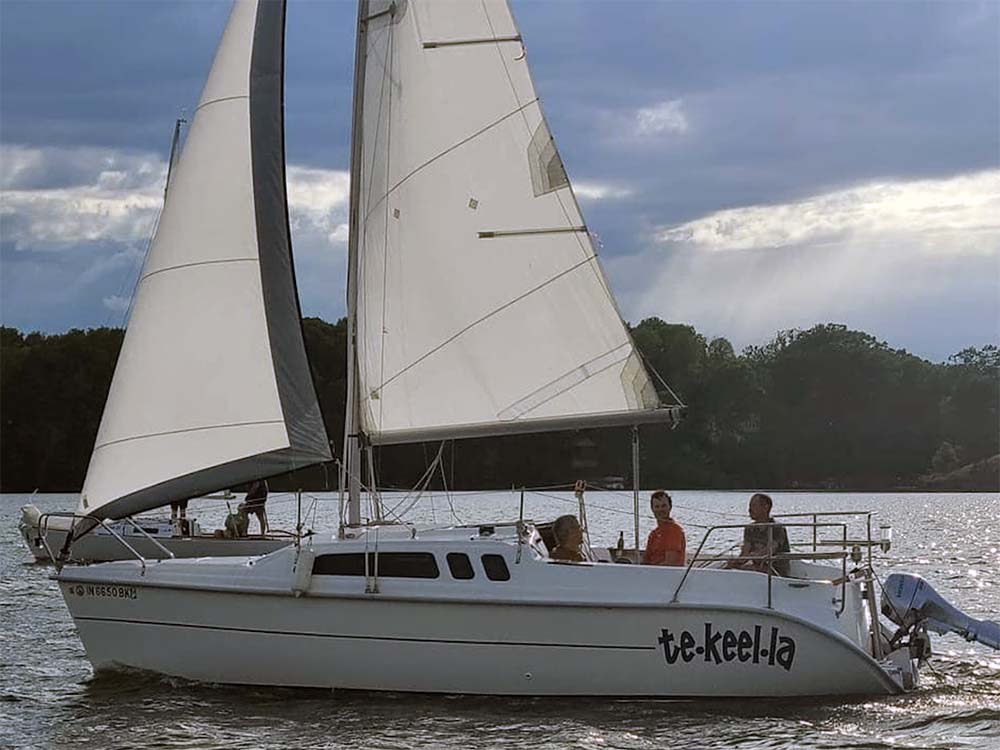
Both boats target weekend sailors, but the Hunter 240 is built around trailering convenience—water ballast and centerboard simplicity—while the Sun 2500 was designed primarily as a small cruiser with stronger emphasis on sailing manners and twin-rudder control. The Hunter’s design reduces ramp and storage friction, making it attractive to owners who prioritize mobility and low marina costs; the Sun 2500 trades some of that extreme trailering convenience for a firmer sailing feel and a more robust cruising fitout.
Practically, pick the Hunter if you plan to trailer often, launch from ramps and want the lowest possible ownership overhead; choose the Sun 2500 if you want a small boat optimized for coastal cruising performance, finer control under heel and a cabin that suits weekending in a broader range of anchorages.
► Learn more about de Hunter 240
Jeanneau Sun 2500 vs Beneteau First 235
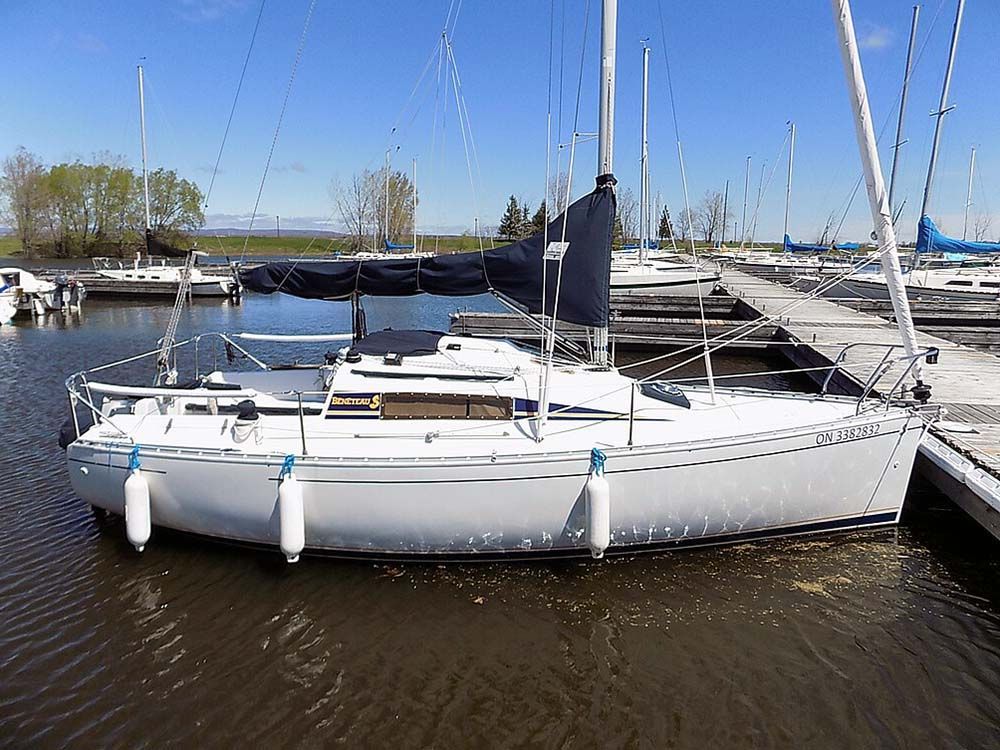
The First 235 is a slightly older racer-cruiser that prioritizes lively performance and light displacement, while the Sun 2500 presents more modern cruising compromises—better standing accommodations and options for lifting keels and twin rudders to aid control. In practice the First 235 will feel sportier and more responsive in moderate breeze, but the Sun 2500 gives a more comfortable, safer platform for less-experienced crews and provides the flexibility to enter shallow harbors or dry out more easily.
For a buyer focused on spirited day sailing and club racing the First 235’s simplicity and lighter weight are appealing; for those whose priority is family weekend cruising, easy handling in varied harbors and a newer production-boat layout, the Sun 2500 is a more rounded, practical choice.
► Learn more about de Beneteau First 235
Maintenance Costs of a Jeanneau Sun 2500 in the U.S.
Typical annual maintenance expenses (each item bolded, followed by a short explanatory comment):
- Mooring or Slip Fees: $800–$6,000 per year — inland or trailer/storage ashore at the low end; popular coastal marinas and seasonal slips in high-demand areas at the high end.
- Insurance: $300–$1,000 annually — depends on declared hull value, cruising area (coastal vs inland) and skipper experience.
- Engine Servicing: $200–$800 per year — small inboard diesel or auxiliary outboard tune, impeller, winterization; costs rise with engine age and shop labour.
- Antifouling / Haulout & Bottom Work: $400–$2,000 per year if kept afloat (haulout, bottom prep and paint); trailer-stored boats pay far less annually but still need periodic hull care.
- Standing & Running Rigging: $150–$800 annually for inspections, line replacement and small fittings; expect a major rigging refresh every 10–15 years at $1,200–$3,500 depending on scope.
- Sails (repairs and replacement): $100–$700 yearly for repairs and UV care; a full sail set replacement typically ranges $1,200–$3,500 depending on cloth and whether a performance cut is selected.
Significant one-time or occasional expenses include lifting-keel mechanism or keel-trunk repairs ($500–$3,000) if the mechanism needs rebuild or the trunk requires structural attention, rudder bearing/linkage work or rudder rebuilds ($800–$4,000) in case of water ingress or delamination, and electronics/refit projects ($1,000–$6,000) for modern chartplotters, instruments and battery systems. Many routine tasks—outboard service, sail care, small upholstery or canvas work—are owner-doable and materially reduce costs, but keel-box access, rudder structural repairs or major electrical refits commonly require a professional yard. Regional differences are large: owners who trailer and store ashore can slash haulout and slip costs, while coastal marina storage and professional yard labour (Northeast, Pacific Coast) push annual expenses higher.
Overall assessment: ownership costs for a Sun 2500 sit in the low-to-medium band for 24–26 foot cruisers if the owner is willing to do routine maintenance; a neglected lifting keel or rudder problem can push first-year outlays into the high end, so condition at purchase strongly determines near-term costs. Because the model is well regarded in Europe and has a comfortable, modern layout, sensible investments in keel/trunk integrity, rudder bearings and a good electronics package tend to preserve resale value and make those investments recoverable at sale.
Conclusion
The Sun 2500 is a thoughtfully designed pocket cruiser that balances modern hull form, twin-rudder control and lifting-keel practicality to offer capable coastal cruising in a small, manageable package. Its strengths are controllable, predictable handling, flexible shallow-water options and a cabin layout that supports genuine weekend and short-cruise use; its compromises are the added system complexity of the lifting keel and twin rudders, which require targeted inspection and occasional professional attention. For buyers who cruise tidal coasts, enjoy exploring shallow anchorages or value a modern, European pocket cruiser for weekend and week-long trips, the Sun 2500 is a strong candidate; for those who prioritize absolute simplicity, robust offshore capability or the broadest U.S. parts/support network, a conventional fixed-keel U.S. production cruiser may be a better match. In practical terms the Sun 2500 is worth seeking out when you find a well-documented example—condition at purchase, particularly keel and rudder systems, is the single biggest factor that determines whether the boat will be an economical, enjoyable ownership experience.
Specifications
| Hull Type: | Keel/CB with dual rudders |
| Rigging Type: | Fractional Sloop |
| LOA: | 24.61 ft / 7.50 m |
| LWL: | 23.46 ft / 7.15 m |
| S.A. (reported): | 288.00 ft² / 26.76 m² |
| Beam: | 9.51 ft / 2.90 m |
| Displacement: | 5,950.00 lb / 2,699 kg |
| Ballast: | 1,481.00 lb / 672 kg |
| Max Draft: | 5.74 ft / 1.75 m |
| Min Draft: | 2.26 ft / 0.69 m |
| Construction: | Fiberglass with balsa core hull & deck |
| First Built: | 2001 |
| Builder: | Jeanneau (France) |
| Designer: | Olivier Petit / Jeanneau Design Office |
| Fuel Capacity: | 7 gals / 26 L |
| Water Capacity: | 15 gals / 57 L |
| S.A. / Displ.: | 14.08 |
| Bal. / Displ.: | 24.89 |
| Disp. / Len.: | 205.72 |
| Comfort Ratio: | 19.23 |
| Capsize Screening Formula: | 2.10 |
| S#: | 2.28 |
| Hull Speed: | 6.49 kn |
| Pounds/Inch Immersion: | 797.18 pounds/inch |
| I: | 29.92 ft / 9.12 m |
| J: | 9.68 ft / 2.95 m |
| P: | 30.18 ft / 9.20 m |
| E: | 9.51 ft / 2.90 m |
| S.A. Fore: | 144.81 ft² / 13.45 m² |
| S.A. Main: | 143.51 ft² / 13.33 m² |
| S.A. Total (100% Fore + Main Triangles): | 288.32 ft² / 26.79 m² |
| S.A./Displ. (calc.): | 14.09 |
| Est. Forestay Length: | 31.45 ft / 9.59 m |
Disclaimer
The considerations and analyses presented regarding the Jeanneau Sun 2500 sailboat are of a general nature and are based on the available information and technical data on this model, interpreted to the best of our knowledge and understanding. It is important to note that the specific characteristics of any particular sailboat may vary due to custom modifications, maintenance performed, and conditions of use over time, among other factors. Therefore, the details and performance of the boat you are considering may not exactly match the information provided here.
We strongly recommend that, before making any purchasing or usage decisions, you conduct a detailed inspection of the boat in question, consult with nautical professionals and other sailors, and consider your personal needs, expectations, and capabilities. Each sailboat may have unique particularities that affect its performance and suitability for different types of sailing and sailors.
The information contained in this analysis should be used as a general guide and not as a definitive reference. Professional evaluation and personal inspection are essential to ensure that the boat meets your specific requirements and expectations.