


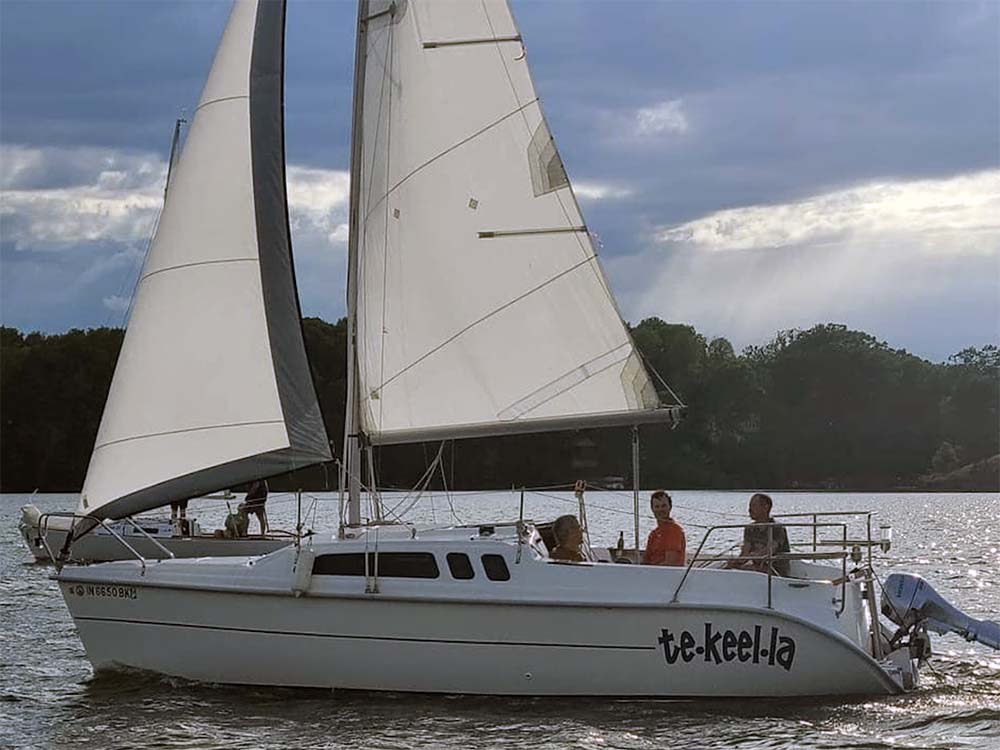
The Hunter 240 was introduced in the late 1990s as a trailerable, family-oriented weekender that aimed to make coastal cruising accessible without the hassle of a fixed-keel boat. Built by Hunter Marine and shaped by the company’s in-house design team, it paired a fractional B&R sloop with an innovative water-ballast and centerboard arrangement so owners could tow the boat on a modest vehicle and still enjoy a roomy cockpit and cabin. That combination positioned the 240 as a true trailer-sailer for owners who wanted quick launch-and-go weekends, occasional family overnighting, and the ability to store on a trailer or in shallow slips; it also left the model popular on the used market where buyers often look for affordable, easy-to-own coastal cruisers. Listings and owner discussions reflect a steady supply of well-maintained weekenders and a modest demand from part-time cruisers and owners who prize trailering convenience.
Design and Construction
Hunter built the 240 as a molded-fiberglass hull with a transom hung rudder, a retractable centerboard and roughly 1,300 lb of water ballast that is filled for sailing and drained for trailering. That choice—water ballast plus a lifting centerboard—keeps trailering weight low and simplifies launching, but it also changes how the boat feels under heel: without dense lead low down the boat is lighter and will rely more on form stability and crew weight to stay upright. The fractional B&R rig reduces standing rigging complexity and makes mast raising and tuning straightforward, which is a practical benefit for owners who rig and launch at ramps rather than slip crews. From a construction and long-term ownership perspective, the all-fiberglass, production-boat build is friendly to routine DIY maintenance (gelcoat repairs, through-hull checks, valve servicing) but the water-ballast plumbing and centerboard mechanics are systems a buyer should inspect carefully because they can be awkward to access and, if neglected, costly to fix.
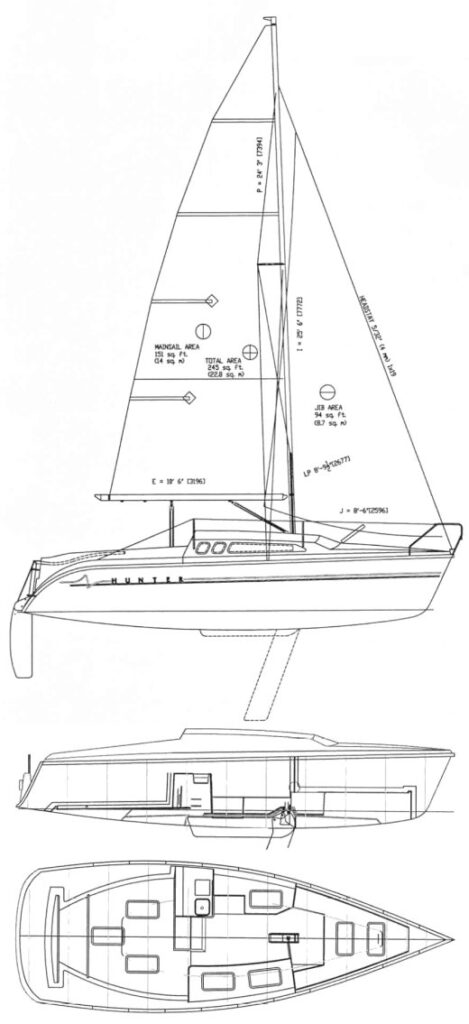
Performance
On the water the 240 shows the strengths and compromises of its design: it accelerates well in light air thanks to a generous sail plan and modest displacement, making it pleasant for gentle coastal daysails and river work. As wind builds the boat becomes relatively tender compared with a similar fixed-keel 25-footer; the water ballast improves stability compared with a completely unballasted trailer boat, but it cannot match the stiffness or pointing ability of a deep-keel cruiser, so reefing earlier and trimming conservatively are normal practices. Maneuverability and single-handed handling are real positives—the mast-raising system, cockpit layout, and lines led aft make day-to-day sailing simple—yet racing-minded buyers will find its PHRF and upwind performance modest compared with dedicated club racers. Overall, the Hunter 240 is best understood as an easy, forgiving coastal cruiser optimized for convenience rather than for maximum windward speed.
Comfort and Accommodations
Below decks the Hunter 240 punches above its length with a surprisingly open plan: a forward V-berth, a generous aft berth beneath the cockpit, a small port-side galley and provisions for a portable head create real weekend-cruising capability for two to four people. Cabin headroom is modest—typical factory figures put it in the mid-50-inch range—so tall sailors should expect crouching when moving about; however, many owners fit the pop-top or a camper tent to gain standing headroom at anchor, which is a practical retrofit for extended stays. Storage and cockpit space are strengths for a boat this size, and the layout favors people who want short cruises and easy turnarounds rather than liveaboard comfort; for that reason the 240 usually ages well cosmetically (molded interiors are simple to refresh) though buyers commonly find updates in cushions, canvas and electronics on the best listings.
Safety and Practicality
Deck ergonomics are aimed at convenience: a large, well-drained cockpit, walk-through transom and lines led aft reduce crew movement and make short-handed sailing safer. The lifting centerboard and shallow retracted draft permit beaching and trailer retrieval—useful for owners who store ashore or cruise shallow coasts—but the water-ballast valves and centerboard mechanisms are critical safety items to maintain; a leaking valve or jammed board can quickly turn a manageable knockdown into a hazardous situation. Systems are generally accessible for basic owner maintenance (outboard, bilge, fuel/vent lines), yet structural or below-waterline repairs to the ballast tanks or rudder often require professional attention; buyers should weigh how comfortable they are servicing plumbing and rudder hardware before purchase. Given its intended use, the 240 is well suited to protected-water cruising and short coastal passages after careful preparation rather than as a blue-water platform.
Known Issues with the Hunter 240
Owners and surveyors commonly point to a handful of repeat items: rudder blade damage or cracking has been reported often enough to be a recurring inspection item, and the water-ballast tank valves and seals can be sources of leaks if gaskets are old or improperly serviced. Centerboard sheaves and lifting gear sometimes require replacement or resizing to function smoothly, and original jib cleats and some deck hardware are frequent candidate upgrades for reliability and ease of handling. Those are largely repairable or upgradable issues—many owners fit stronger rudder blades or add reinforcement, replace cleats with modern rope clutches, and re-seal or rebuild ballast valves—so a prudent pre-purchase survey will usually identify cost-effective remedies rather than structural showstoppers. For a buyer, the practical takeaway is to expect a trades-work list focused on hardware and plumbing rather than on hull-scale repairs, but to factor replacement of rudder components and any accessible ballast-tank work into negotiations.
Market Availability and Pricing in the U.S.
The Hunter 240 is out of production and is traded entirely on the used market; it turns up commonly in listings across inland lakes and coastal regions where trailering is an advantage. Typical asking prices cluster in the lower end of the used small-cruiser spectrum—recent listing data show many boats priced in the $9,000–$12,000 range depending on year, equipment and condition. Boats appear most frequently in the Great Lakes, the Mid-Atlantic and inland Southeast where trailer-sailers are popular; examples offered from New England or California sometimes command a small premium when well equipped. Compared with peer models, the 240 often undercuts fixed-keel 25-foot cruisers on price while offering greater trailering convenience, which makes it attractive to buyers prioritizing low-cost coastal access over blue-water capability.
Below is a comparison with similar sailboats from the same era:
| Model | LOA | Year (approx) | Typical US used price | Principal differences |
|---|---|---|---|---|
| Hunter 240 | 24.1 ft | 1997–2005 | $8,000–$14,000 | Trailerable water-ballast cruiser with large aft berth and easy mast raising; convenient for ramp-based owners but less stiff under sail than fixed-keel boats. |
| Catalina 250 | 25.0 ft | mid-1990s–2000s | $10,000–$20,000 | Heavier, fixed-ballast options and more interior volume—generally stiffer and better suited to family cruising with higher resale recognition in the US market. |
| MacGregor 26X | 25.8 ft | 1995–2003 (26X) | $6,000–$18,000 | Sail/power hybrid with large outboard capability and water ballast; excels at speed under power and flexibility, but sacrifices sailing finesse and offshore comfort. |
| Jeanneau Tonic 23 | 23.9 ft | mid-1980s–early-1990s | $6,000–$15,000 | European trailer-sailer with lighter displacement and livelier helm; generally more responsive in moderate breeze but with less interior volume and US parts availability. |
Hunter 240 vs Catalina 250

The Hunter 240’s trailerable water-ballast and centerboard package prioritizes mobility and quick launch cycles, making it an economical choice for sailors who frequently change sailing grounds or store ashore. Its B&R rig and simplified deck layout aim at easy short-handed sailing, but the water ballast limits stiffness, so in stronger winds the 240 will heel earlier and require earlier reefing than the heavier Catalina 250.
By contrast, the Catalina 250’s heavier displacement and fixed-ballast options translate into steadier motion, stronger windward performance and more interior volume—advantages for family cruisers planning regular coastal passages rather than ramp-to-ramp outings. For a buyer, the practical choice is clear: choose the 240 if you value trailerability and low entry price; choose the 250 if you want a stiffer, more comfortable platform for family cruising and easier resale in the traditional marina market.
► Learn more about the Catalina 250
Hunter 240 vs MacGregor 26X

Both boats embrace water ballast and centerboards for trailerability, but the MacGregor 26X was designed as a true sail/power hybrid and therefore emphasizes planing under outboard power and flexibility between motoring and sailing modes. That makes the MacGregor attractive to owners who want fast transfers and the ability to use the boat like a high-powered dayboat, while the Hunter retains a more conventional sailboat feel and a more comfortable cockpit and cabin arrangement for cruising.
Practically speaking, a buyer who spends most weekends crossing open bays and wants to plane back to shore under engine will often prefer the MacGregor; a buyer focused on sailing experience, predictable handling under sail, and more conventional interior accommodations will usually opt for the Hunter 240. The 240 trades some outright speed for a less aggressive compromise between sail and motor duties, and that reflects in both maintenance patterns and expected resale audiences.
► Learn more about the MacGregor 26X
Hunter 240 vs Jeanneau Tonic 23

The Tonic 23 is a lighter, European-styled trailer-sailer with a fin keel or lifting-keel variants that generally offers a livelier helm and crisper upwind performance in moderate conditions than the more form-stable Hunter 240. Interior-wise the Tonic tends to be more compact and classically finished, while the 240 favors American open-plan space and a larger aft berth—making the Hunter more comfortable for families who need straightforward sleeping arrangements and storage.
From an ownership point of view the Tonic can appeal to sailors who prize sharper sailing characteristics and a European feel, but the Hunter 240 often wins on U.S. dealer support, parts familiarity, and the practical benefits of a very easy mast-raising and ramp operation; this makes the 240 a pragmatic buy for US buyers who prioritize convenience and weekend comfort over outright agility.
► Learn more about de Jeanneau Tonic 23
Maintenance Costs of a Hunter 240 in the U.S.
Typical annual maintenance expenses, presented as a commented list with each item in bold:
- Mooring or slip fees: $800–$4,000 per year depending on location (inland lakes and trailer storage are at the low end; popular coastal marinas and seasonal slips in high-demand areas cost more).
- Insurance: $250–$700 annually, variable with cruising area, owner experience and declared value.
- Engine servicing (outboard): $150–$500 per year for basic tune, impeller and winterization (higher if you have a larger auxiliary or inboard option).
- Antifouling / haulout: $300–$1,200 per year if kept in the water (many trailer-stored boats pay minimal or occasional antifoul costs).
- Standing & running rigging inspections / small replacements: $100–$500 annually for routine checks and minor parts; expect a major rigging refresh every 10–12 years at $1,200–$3,000 if wire or fittings are replaced.
- Sails (care and repairs): $100–$500 yearly for patching and UV protection; full sail replacement typically $1,500–$3,000 depending on cutter vs 110% genoa choices.
Significant one-time costs to budget for include rudder replacement or major repair (reported on this model and potentially $800–$3,000 depending on whether a custom blade or full stock work is needed), ballast-tank or valve repairs (variable but can be $500–$2,000 if access and plating is required), and electronics or refit projects (chartplotter, VHF, battery systems typically $1,000–$4,000). Owner-maintenance is realistic for many routine items—outboard servicing, canvas, basic gelcoat/zinc work and line replacement are commonly done by owners and substantially reduce cost—but some tasks (rudder rebuild, structural ballast repairs, complex electrical refits) are best left to professionals. That mix usually keeps annual outlay in the low-to-medium range for a 24-foot cruiser: owners who do most work themselves will be at the low end; those who keep the boat in premium marinas and hire contractors will gravitate to the higher end. Given the Hunter 240’s affordability and steady used-boat demand, resale values tend to reflect condition; a well-serviced, upgraded 240 typically sells much more quickly than neglected examples, so modest investments in rudder integrity, valve seals and sails usually pay back at sale.
Conclusion
The Hunter 240 is a pragmatic, purpose-built trailer-sailer: its construction, systems and layout consistently favor owners who want easy trailering, quick rigging and comfortable weekend cruising for a small family or couple. It is not a stiff, blue-water yacht—buyers should accept earlier reefing, be willing to inspect and maintain water-ballast plumbing and rudder hardware, and view the 240 as a coastal/nearshore weekend boat rather than an offshore passage maker. Where it shines is in accessibility: lower entry price, simple systems that many owners can maintain, and a roomy, family-friendly interior for its length. For buyers seeking economical coastal cruising with the flexibility to trailer, store ashore and launch from ramps, the Hunter 240 is worth seeking out; for those who want windward bite, offshore capability, or a resale premium tied to fixed-ballast cruising pedigree, a heavier fixed-keel 25-footer (like the Catalina 250) or a purpose-built cruiser may be the better match. In short: the Hunter 240 is a very good value for owners who prioritize mobility, simplicity and weekend comfort—and an intelligent buyer will focus on rudder and ballast-tank condition during inspection to avoid common, avoidable surprises.
Specifications
| General Specifications | |
| Hull Type: | Swing Keel |
| Rigging Type: | B&R |
| LOA: | 24.08 ft / 7.34 m |
| LWL: | 22.08 ft / 6.73 m |
| Sail Area (reported): | 236.00 ft² / 21.93 m² |
| Beam: | 8.25 ft / 2.51 m |
| Displacement: | 3,600 lb / 1,633 kg |
| Ballast: | 1,300 lb / 590 kg |
| Max Draft: | 5.50 ft / 1.68 m |
| Min Draft: | 1.50 ft / 0.46 m |
| Construction: | Fiberglass (FG) |
| Ballast Type: | Water |
| First Built: | 1997 |
| Last Built: | 2005 |
| Builder: | Hunter Marine Corp (USA) |
| Designer: | Hunter Design |
Accommodations | |
| Water Capacity: | 7 gals / 25 L |
Sailboat Calculations | |
| S.A. / Displ.: | 16.12 |
| Bal. / Displ.: | 36.11 |
| Disp. / Len.: | 149.30 |
| Comfort Ratio: | 14.75 |
| Capsize Screening Formula: | 2.16 |
| S#: | 3.24 |
| Hull Speed: | 6.30 kn |
| Pounds/Inch Immersion: | 650.88 lb/in |
Rig and Sail Particulars | |
| I: | 25.50 ft / 7.77 m |
| J: | 8.50 ft / 2.59 m |
| P: | 24.25 ft / 7.39 m |
| E: | 10.50 ft / 3.20 m |
| S.A. Fore: | 108.38 ft² / 10.07 m² |
| S.A. Main: | 127.31 ft² / 11.83 m² |
| S.A. Total (100% Fore + Main Triangles): | 235.69 ft² / 21.90 m² |
| S.A./Displ. (calculated): | 16.10 |
| Estimated Forestay Length: | 26.88 ft / 8.19 m |
| Mast Height from DWL: | 32.50 ft / 9.91 m |
Disclaimer
The considerations and analyses presented regarding the Hunter 240 sailboat are of a general nature and are based on the available information and technical data on this model, interpreted to the best of our knowledge and understanding. It is important to note that the specific characteristics of any particular sailboat may vary due to custom modifications, maintenance performed, and conditions of use over time, among other factors. Therefore, the details and performance of the boat you are considering may not exactly match the information provided here.
We strongly recommend that, before making any purchasing or usage decisions, you conduct a detailed inspection of the boat in question, consult with nautical professionals and other sailors, and consider your personal needs, expectations, and capabilities. Each sailboat may have unique particularities that affect its performance and suitability for different types of sailing and sailors.
The information contained in this analysis should be used as a general guide and not as a definitive reference. Professional evaluation and personal inspection are essential to ensure that the boat meets your specific requirements and expectations.