



The Bavaria 44 arrived in the early 2000s as a pragmatic, volume-focused family cruiser from Bavaria Yachtbau intended for owners who wanted maximum living space, simple systems and predictable sailing characteristics rather than race-bred performance. Launched during a period when production yards were scaling up to meet growing leisure demand, the 44 was aimed at couples and families planning extended coastal cruising, flotilla holidays and liveaboard use—and it quickly found popularity in charter fleets and private ownership because of its roomy three- or four-cabin layouts. On the used market the model remains in steady demand among buyers looking for value: it attracts families, liveaboard hopefuls and buyers seeking a cost-effective platform for coastal passagemaking or charter income, with many examples available in classic cruising hubs.
Design and Construction
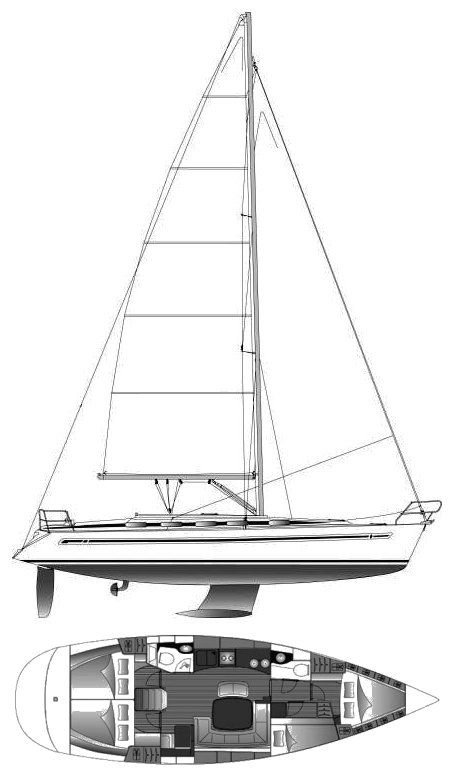
The Bavaria 44 uses a modern production hull form for its era: beamy sections carried well aft to maximize interior volume, a fin keel (standard or shoal options) and a spade rudder for responsive steering. The standard rig is a sloop—usually fractional on later builds—laid out to be manageable by a small crew, and deck hardware is organized to support short-handed sailing. Construction is typical production GRP (fiberglass) with cored decks and molded liners, structural stringers and bonded bulkheads to add stiffness without excessive weight. These choices create a boat that is straightforward to repair (GRP is widely serviceable) and relatively inexpensive to maintain compared with exotic composites, but the long-term durability depends heavily on how well deck fittings and chainplates were bedded at build and maintained thereafter.
From a naval-architecture perspective Bavaria prioritized usable interior volume and initial stability (comfort at anchor and in cruising seas) over the slender, performance-focused hulls of racer/cruisers. That tradeoff makes the 44 forgiving and comfortable for family use, but it also means owners should be aware that a high-volume hull will feel less sprightly upwind than lighter, narrower designs. For prospective buyers the construction approach usually translates into easier access to replacement parts, an extensive network of yards capable of doing surveys and repairs, and reasonable expectations for resale if the boat has been properly maintained.
Performance
The Bavaria 44 sails predictably and comfortably rather than aggressively fast. In light airs the boat’s larger wetted surface and moderate sail-area-to-displacement ratio mean you’ll be relying on momentum and light-air sails to keep moving; in 10–18 knots it will cruise efficiently and feel stable, carrying a reefed or full suit of sails without sudden tenderness. The fin keel and spade rudder provide good maneuverability in marinas and predictable tacking behavior, but the hull form favors downwind or reaching speeds rather than tight windward pointing compared with narrower, performance-leaning yachts.
Compared with contemporaries it sits squarely in the family/cruiser category: quicker and more modern-feeling than many 1980s full-displacement cruisers, but slower to accelerate and a touch less weatherly to windward than similar-length performance cruisers from Beneteau or Dufour. In practical terms the Bavaria 44’s sailing characteristics reward conservative sail choices and a crew that values comfort and simplicity—the boat will deliver steady passages more comfortably than it will win club races.
Comfort and Accommodations
Interior volume is the Bavaria 44’s headline feature. Typical layouts provide generous saloon seating, a roomy galley, large tankage and two to four cabins, making it especially attractive to families, guests and charter operators. Storage is abundant for the size, and headroom and natural light are good—features that make living aboard for extended weekend trips or seasonal cruising far less confining than on many older designs.
Ergonomically the boat is arranged for cruising life: a comfortable chart station, practical galley workspace and seating that works under way and at anchor. Many used examples show owner-driven refits focused on systems (fridge upgrades, heating, electronics) and soft goods rather than structural changes; the result is that a well-cared-for Bavaria 44 can offer immediate, turn-key comfort for owners wanting to go cruising without a major refit.
Safety and Practicality
Decks and cockpit on the Bavaria 44 emphasize easy movement and safe handling for family crews: wide side decks, guardrails of reasonable height and clear lines for halyards and sheets reduce the need for risky cockpit-to-foredeck movement under way. The large cockpit is sheltered and social, but owners who prioritize serious offshore work often add dedicated jacklines, stronger lifelines and additional handholds as prudent upgrades. Access to water via transom steps (on later or modified versions) and a powerful enough auxiliary engine for harbor work make day-to-day ownership practical.
Systems are generally accessible for routine service—engine bays and tanks are reachable through companionway hatches and inspection panels—so competent owner-mechanics can manage much of the maintenance. For offshore work some owners invest in redundancy (autopilot upgrades, redundant charging systems, deeper-waterproofing of electronics), but for coastal cruising the stock arrangement is functional and cost-effective.
Known Issues with the Bavaria 44
Owners and surveyors commonly report a set of recurring issues that are neither unusual nor catastrophic but important for buyers to understand. The most frequent concerns revolve around bedding quality of deck fittings and chainplates—improper bedding can lead to leaks and, over time, water intrusion into core materials. Other common topics include occasional soft spots around older deck penetrations if previous owners skimped on proper sealing, aging of running rigging and furling gear, and the typical wear-and-tear items on engines and sail inventory.
Practical, widely recommended improvements include re-bedding or re-sealing critical deck fittings, inspecting and—if needed—replacing standing rigging at age intervals, upgrading to a more efficient propeller for better motoring economy, and refreshing electronics to modern standards for safety and resale appeal. A disciplined pre-purchase survey focused on core integrity, keel bolts, rudder bearing condition and evidence of past osmosis or repairs will identify most problems and estimate remediation costs.
Market Availability and Pricing in the U.S.
The Bavaria 44 is no longer in current production and is available on the used market. In the U.S., examples are most commonly found in Florida, the southeastern seaboard, California and pockets of New England—areas with active cruising communities and charter turnover. Listings vary from owner-maintained boats with recent refits to former charter yachts that may require immediate upgrades; condition and documentation strongly influence asking price.
Typical asking prices for sound, well-equipped Bavaria 44s in the U.S. market commonly range $70,000–$150,000, with lower-priced project boats and higher-priced, lightly used or refitted examples at the top end. That price band positions the 44 as a value proposition relative to similarly sized European-built cruisers with premium finishes; it tends to be easier to buy into than higher-trim Mediterranean brands, and resale is reasonable in active cruising hubs where buyers value interior volume and turnkey cruising readiness.
Here is a comparison with three similar models commonly considered by cruisers:
| Model | LOA | Approx. Years | Typical US Used Price | Key Differences |
|---|---|---|---|---|
| Bavaria 44 | ≈44 ft | Early–mid 2000s | **$70,000–$150,000** | Spacious interior, simple systems, strong value in used market; common in charter fleets. |
| Beneteau Oceanis 411 / 43 | ≈41–43 ft | Early–mid 2000s | $80,000–$160,000 | Slightly more modern deck ergonomics on some models; strong dealer presence and options for refit. |
| Jeanneau Sun Odyssey 45 | ≈45 ft | Late 1990s–2000s | $90,000–$220,000 | Often higher finish and refined ergonomics; balanced sailing and living characteristics. |
| Catalina 42 / 445 | ≈42–44 ft | 2000s | $70,000–$160,000 | Strong U.S. owner network; conservative hulls with focus on ease of ownership and resale liquidity. |
Bavaria 44 vs Beneteau Oceanis 411 / 413
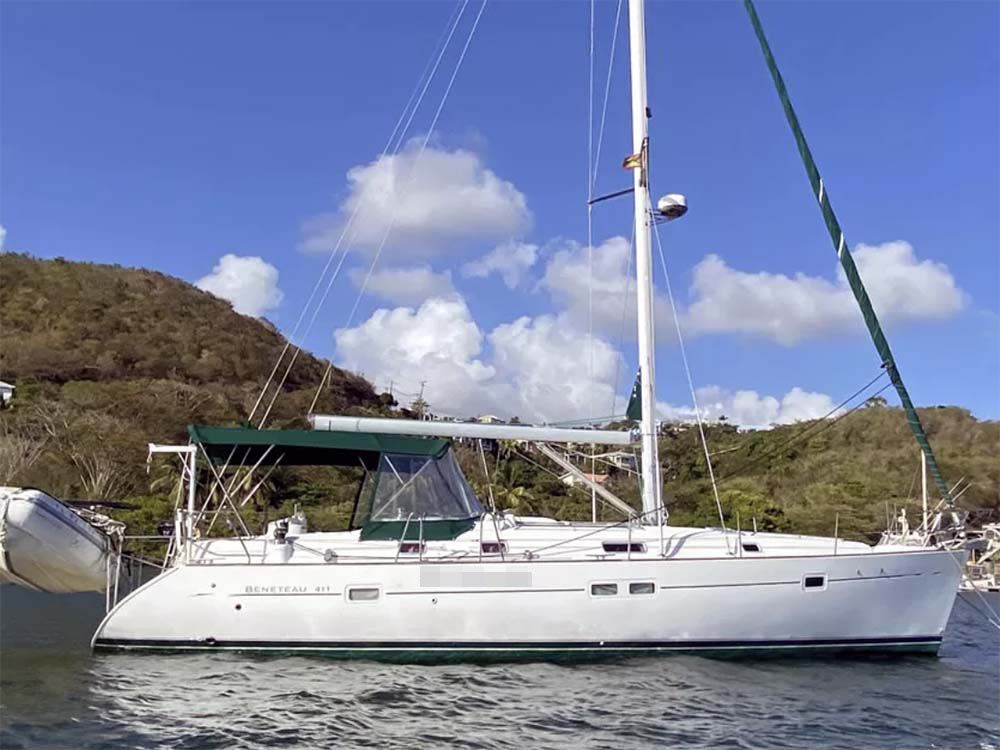
The Bavaria emphasizes interior volume and straightforward systems, often arriving on the market with a no-nonsense approach to cruising gear; Beneteau’s Oceanis variants tend to feature slightly more refined deck ergonomics and a wider variety of factory layout options. That means buyers who prioritize immediate liveaboard comfort and simple maintenance often prefer Bavaria for value, while buyers seeking slightly newer ergonomics or easier dealer support for parts and systems may skew toward Beneteau.
From an ownership perspective, the Oceanis can command a premium for upgraded trim or newer installations but may cost a bit more to keep in original high-spec condition; the Bavaria trades some of that premium for a lower purchase price and a larger secondary market of charter-upgraded examples.
► Learn more about de Beneteau Oceanis 411
► Learn more about de Beneteau Oceanis 413
Bavaria 44 vs Jeanneau Sun Odyssey 45
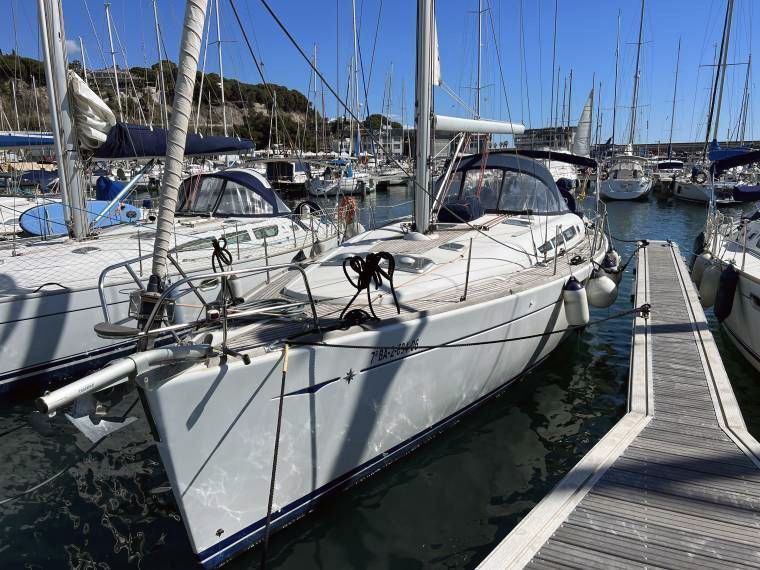
The Sun Odyssey 45 typically brings a touch more attention to sailing ergonomics and onboard finish in many examples, whereas the Bavaria 44 doubles down on interior volume and economy of systems. Practically this makes the Jeanneau feel a bit more polished and rewarding to sail in variable conditions, while the Bavaria rewards owners who want simple, roomy accommodation and fewer immediate cosmetic expectations.
Buyers focused on passage-making finesse and potentially higher resale in premium cruising hubs may favor Jeanneau; buyers wanting immediate space for family or charter operations often find Bavaria’s package more cost-effective.
► Learn more about de Jeanneau Sun Odyssey 45
Bavaria 44 vs Catalina 42 / 445
Catalina models prioritize conservative, easy-to-maintain systems and a massive U.S. owner base that supports parts and informal knowledge sharing; Bavaria tends to offer more interior volume for the money and a European production finish. In day-to-day ownership that translates into easier sourcing of parts and hands-on advice for Catalina owners in the U.S., while Bavaria owners benefit from larger cabins and often a lower purchase price for similar usable space.
For buyers the decision often comes down to priorities: choose Catalina for a broad support network and predictable motion, choose Bavaria for value and interior space—both are sensible choices for family cruisers, with maintenance and refit costs driven more by condition than by brand.
► Learn more about de Catalina 42
► Learn more about de Catalina 45
Maintenance Costs of a Bavaria 44 in the USA
- Mooring/Slip fees — $2,000–$15,000+ per year depending on region (marinas in New England and California at the high end).
- Insurance — $800–$4,000+ per year depending on declared value and cruising range.
- Engine servicing — $400–$1,500 per year for routine service; major overhauls are more expensive.
- Antifouling/Haulout — $800–$4,000 every 1–3 years (professional vs. DIY).
- Standing rigging replacement — $3,000–$8,000 every 10–15 years depending on configuration and size.
- Running rigging & sails — $1,000–$10,000+ depending on the extent of new sails and repairs.
- Electronics & batteries — $800–$10,000+ for a modern refit (chartplotter, AIS, autopilot, house batteries).
- General consumables & repairs — $500–$3,000 annually (anodes, hoses, seacocks, minor gelcoat or woodwork).
Regional differences matter: Florida and the Southeast can be moderate for haulout but often cheaper for labor, while New England and California typically push costs higher for slips and haulouts.
Significant one-time costs likely to arise include a full sail inventory replacement, standing rigging change, major engine work, or thorough deck re-bedding—each of which can run into several thousand dollars.
The Bavaria 44 is broadly owner-maintainable for routine systems if you’re comfortable with diesel service and basic fiberglass work, but rig replacements, major engine repairs, and complex electrical refits usually require professional shops.
Overall, cost of ownership for a well-kept Bavaria 44 is medium within its size class: not inexpensive, but often justified by its interior volume and a usable, turnkey platform that holds reasonable resale value where demand is steady.
Conclusion
The Bavaria 44 is a sensible, down-to-earth choice for buyers who value interior volume, straightforward systems and good value on the used market. Its strengths lie in roomy, family-friendly accommodations, easy-to-service construction and a layout that performs reliably for coastal cruising and charter-style use. Weaknesses are the predictable trade-offs—less windward bite and a larger turning radius than sportier hulls, and a dependence on good deck-fitting maintenance to avoid long-term moisture issues—yet these are manageable through a careful survey and sensible upgrades. For families, liveaboards and those seeking a cost-effective platform to start cruising, the Bavaria 44 represents a pragmatic buy: it won’t win many races, but it will take you and your gear comfortably where you want to go, and a well-documented example will usually retain decent resale value in active cruising regions.
Specifications
| Hull Type | Fin w/bulb & spade rudder |
| Rigging Type | Fractional Sloop |
| LOA | 45.70 ft / 13.93 m |
| LWL | 37.50 ft / 11.43 m |
| Sail Area (reported) | 945.00 ft² / 87.79 m² |
| Beam | 13.90 ft / 4.24 m |
| Displacement | 21,164 lb / 9,600 kg |
| Ballast | 6,620 lb / 3,003 kg |
| Max Draft | 6.40 ft / 1.95 m |
| Construction | Fiberglass (FG) |
| First Built | 2002 |
| Last Built | 2004 |
| Builder | Bavaria Yachts (GER) |
| Designer | J&J Design |
| Auxiliary Power (original) | Volvo Penta Diesel, 55 HP |
| Fuel Capacity | 55 gals / 208 L |
| Water Capacity | 95 gals / 360 L |
| S.A. / Displ. | 19.84 |
| Bal. / Displ. | 31.28 |
| Disp. / Len. | 179.17 |
| Comfort Ratio | 24.60 |
| Capsize Screening Formula | 2.01 |
| Hull Speed | 8.21 kn |
| Pounds/Inch Immersion | 1,862.48 lb/inch |
| I | 54.20 ft / 16.52 m |
| J | 16.80 ft / 5.12 m |
| P | 54.10 ft / 16.49 m |
| E | 18.10 ft / 5.52 m |
| S.A. Fore | 455.28 ft² / 42.30 m² |
| S.A. Main | 489.61 ft² / 45.49 m² |
| Total Sail Area (100% Fore + Main) | 944.89 ft² / 87.78 m² |
| S.A./Displ. (calculated) | 19.84 |
| Estimated Forestay Length | 56.74 ft / 17.29 m |
| Mast Height from DWL | 60.40 ft / 18.41 m |
Disclaimer
The considerations and analyses presented regarding the Bavaria 44 sailboat are of a general nature and are based on the available information and technical data on this model, interpreted to the best of our knowledge and understanding. It is important to note that the specific characteristics of any particular sailboat may vary due to custom modifications, maintenance performed, and conditions of use over time, among other factors. Therefore, the details and performance of the boat you are considering may not exactly match the information provided here.
We strongly recommend that, before making any purchasing or usage decisions, you conduct a detailed inspection of the boat in question, consult with nautical professionals and other sailors, and consider your personal needs, expectations, and capabilities. Each sailboat may have unique particularities that affect its performance and suitability for different types of sailing and sailors.
The information contained in this analysis should be used as a general guide and not as a definitive reference. Professional evaluation and personal inspection are essential to ensure that the boat meets your specific requirements and expectations.