



The Albin Vega 27 is a compact, robust cruiser first introduced in the late 1960s by Albin Marine, a Swedish boatyard renowned for solidly built fiberglass yachts. Designed by Per Brohäll, the Vega was intended for sailors seeking an affordable yet capable bluewater cruiser. Its reputation stems from a blend of seaworthiness, simplicity, and accessibility for small crews or solo sailors. Over the decades, the Vega has developed a devoted following in the used boat market, particularly among coastal cruisers and adventurous sailors who value reliability over luxury. Today, it maintains steady demand from private owners, sailing schools, and charter operators looking for a practical, manageable boat.
Design and Construction
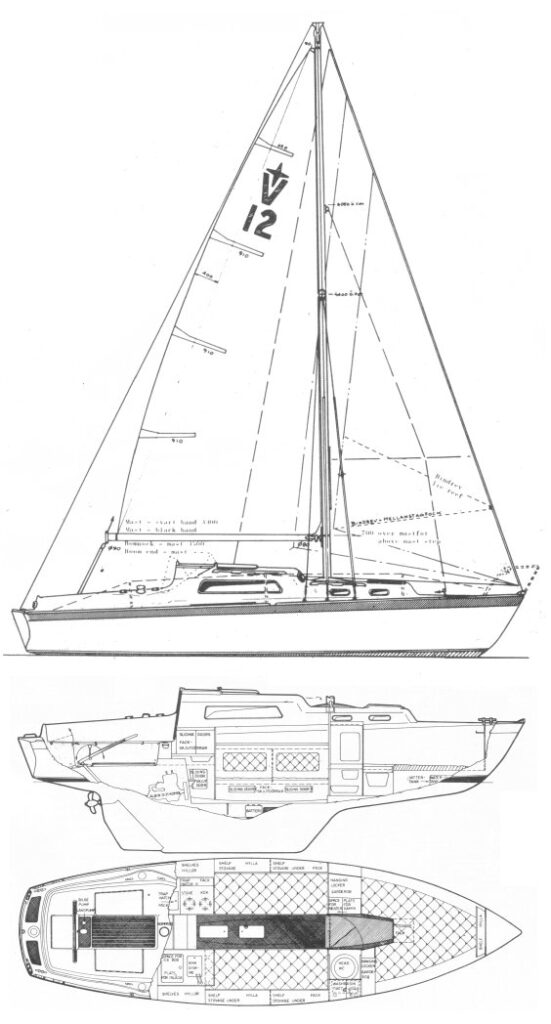
The Vega features a full keel with a keel-mounted rudder, contributing to its straight tracking and forgiving handling under sail. Its sloop rig is straightforward, making sail management easier for small crews. The hull is solid fiberglass with encapsulated ballast, offering both durability and relatively low maintenance compared to wood or composite construction. Interior layouts are simple and efficient, with modest but functional accommodations. The emphasis on seaworthy proportions, moderate beam, and a fine entry at the bow reflect classic naval architecture principles prioritizing stability, motion comfort, and structural longevity. These design choices make the Vega resilient to hard usage and preserve its value in the second-hand market..
Performance
Despite its modest 27-foot length, the Vega sails impressively well in a variety of conditions. It handles light to moderate winds efficiently, and its full keel provides a steady ride in choppy seas, making it highly predictable for coastal and offshore passages. The boat is not a racer, but it can hold a fair windward angle and exhibits remarkable tracking and momentum in heavy air. Compared with contemporaries like the Westsail 32 or Contessa 26, the Vega is lighter and more responsive, though it trades some interior space for seaworthiness. Its reputation among sailors is that of a reliable, forgiving cruiser rather than a high-performance vessel, ideal for those prioritizing safety and ease of handling over speed.
Comfort and Accommodations
Inside, the Vega offers a practical layout for couples, small families, or a crew of three, with a V-berth forward, a compact galley, and a small but functional head. Storage is adequate, ventilation reasonable, and ergonomics focus on usability rather than luxury. For weekend cruises, the interior is entirely comfortable, and with careful planning, it can accommodate longer passages. Interiors often show their age gracefully, and many owners opt for modest refurbishments such as upgraded cushions, minor carpentry repairs, or new cabin hardware, rather than extensive redesigns.
Safety and Practicality
The full keel and keel-mounted rudder contribute to exceptional directional stability, making it easy to steer and safe in rougher conditions. Deck layout and cockpit dimensions support mobility even in adverse weather, and its manageable sail plan allows a single-handed sailor or a small crew to operate efficiently. The Vega is suitable for both coastal cruising and limited offshore passages, provided maintenance and equipment are up to date. Systems access is straightforward, and replacement parts remain relatively easy to source, keeping operational costs reasonable.
Known Issues with the Albin Vega 27
Common issues among older Vegas include deck hardware corrosion, aging rigging, and occasional hull osmosis, though the latter is less frequent than in other fiberglass boats of the era. Engines, typically small diesels like Volvo or Yanmar, require routine care, and original electronics are often outdated. Recommended upgrades include modern navigation systems, new sails, and occasionally a propeller replacement for improved performance. These measures are mostly preventative rather than corrective, and a well-maintained Vega is generally structurally sound and reliable.
Market Availability and Pricing in the U.S.
The Albin Vega 27 is no longer in production and is available exclusively on the secondary market. It is commonly found in New England, the Mid-Atlantic, and parts of Florida. Most listings are for well-maintained private vessels rather than ex-charter or abandoned boats. Current prices in the U.S. typically range between $15,000 and $25,000, reflecting its solid build, historical reputation, and usability. When compared to similar vessels like the Catalina 27, Hunter 27, or Jeanneau Sun Fast 26, the Vega is often more seaworthy but less spacious and less performance-oriented.
Here is a comparison table of comparable models:
| Model | LOA | Approx. Year | Typical Price (U.S.) | Key Differences |
|---|---|---|---|---|
| Albin Vega 27 | 27 ft | 1967–1980 | $15,000–$25,000 | Robust, seaworthy, less interior space |
| Catalina 27 | 27 ft | 1971–1994 | $12,000–$22,000 | More interior volume, moderate performance, common in U.S. |
| Hunter 27 | 27 ft | 1974–1984 | $10,000–$20,000 | Lightweight, easier handling, less offshore capability |
| Jeanneau Sun Fast 26 | 26 ft | 1975–1985 | $18,000–$28,000 | Performance-oriented, lighter, less heavy-duty for bluewater |
Maintenance Costs of a Albin Vega 27 in the USA
Annual maintenance typically ranges from $3,000 to $6,000, depending on marina fees, insurance, engine servicing, antifouling, and general upkeep. Sail replacement, new electronics, or rigging refits are occasional costs ranging from $1,500 to $4,000. Owners in high-cost regions such as the Northeast or California may face higher dockage and service fees. Many Vega owners perform routine maintenance themselves, reducing labor costs, but specialized repairs may require professional help. Overall, upkeep is considered moderate relative to the boat’s size and capabilities, and resale value generally compensates for the investment due to its strong reputation.
Conclusion
The Albin Vega 27 stands out as a small yet capable cruiser, ideal for sailors seeking a manageable, seaworthy, and reliable vessel. While it may not offer the interior space or speed of contemporary cruisers, it excels in stability, durability, and ease of handling. It suits coastal and light offshore cruising, weekend adventures, or solo passages. For prospective buyers, the Vega offers strong value for money, moderate maintenance costs, and a proven track record. It remains a compelling choice for sailors who prioritize seaworthiness and long-term reliability over luxury or speed, representing a solid investment in the used boat market.
Specifications
| Hull Type | Fin Keel |
| Rigging Type | Masthead Sloop |
| LOA | 27.08 ft / 8.25 m |
| LWL | 23.00 ft / 7.01 m |
| S.A. (reported) | 296.00 ft² / 27.50 m² |
| Beam | 8.08 ft / 2.46 m |
| Displacement | 5,070 lb / 2,300 kg |
| Ballast | 2,017 lb / 915 kg |
| Max Draft | 3.67 ft / 1.12 m |
| Construction | Fiberglass (FG) |
| First Built | 1965 |
| Last Built | 1979 |
| # Built | 3,450 |
| Builder | Albin Marine AB (SWE) |
| Designer | Per Brohäll |
| Auxiliary Power | Volvo Penta MD6A Diesel, 13 HP |
| Fuel | 9 gals / 34 L |
| Water | 17 gals / 64 L |
| S.A. / Displ. | 16.09 |
| Bal. / Displ. | 39.78 |
| Disp. / Len. | 186.03 |
| Comfort Ratio | 20.00 |
| Capsize Screening Formula | 1.88 |
| S# | 2.77 |
| Hull Speed | 6.43 kn |
| Pounds/Inch Immersion | 664.03 lb/in |
| I | 30.80 ft / 9.39 m |
| J | 10.17 ft / 3.10 m |
| P | 25.92 ft / 7.90 m |
| E | 10.83 ft / 3.30 m |
| S.A. Fore | 156.62 ft² / 14.55 m² |
| S.A. Main | 140.36 ft² / 13.04 m² |
| S.A. Total | 296.98 ft² / 27.59 m² |
| S.A. / Displ. (calc.) | 16.15 |
| Estimated Forestay Length | 32.44 ft / 9.89 m |
Disclaimer
The considerations and analyses presented regarding the Albin Vega 27 sailboat are of a general nature and are based on the available information and technical data on this model, interpreted to the best of our knowledge and understanding. It is important to note that the specific characteristics of any particular sailboat may vary due to custom modifications, maintenance performed, and conditions of use over time, among other factors. Therefore, the details and performance of the boat you are considering may not exactly match the information provided here.
We strongly recommend that, before making any purchasing or usage decisions, you conduct a detailed inspection of the boat in question, consult with nautical professionals and other sailors, and consider your personal needs, expectations, and capabilities. Each sailboat may have unique particularities that affect its performance and suitability for different types of sailing and sailors.
The information contained in this analysis should be used as a general guide and not as a definitive reference. Professional evaluation and personal inspection are essential to ensure that the boat meets your specific requirements and expectations.