


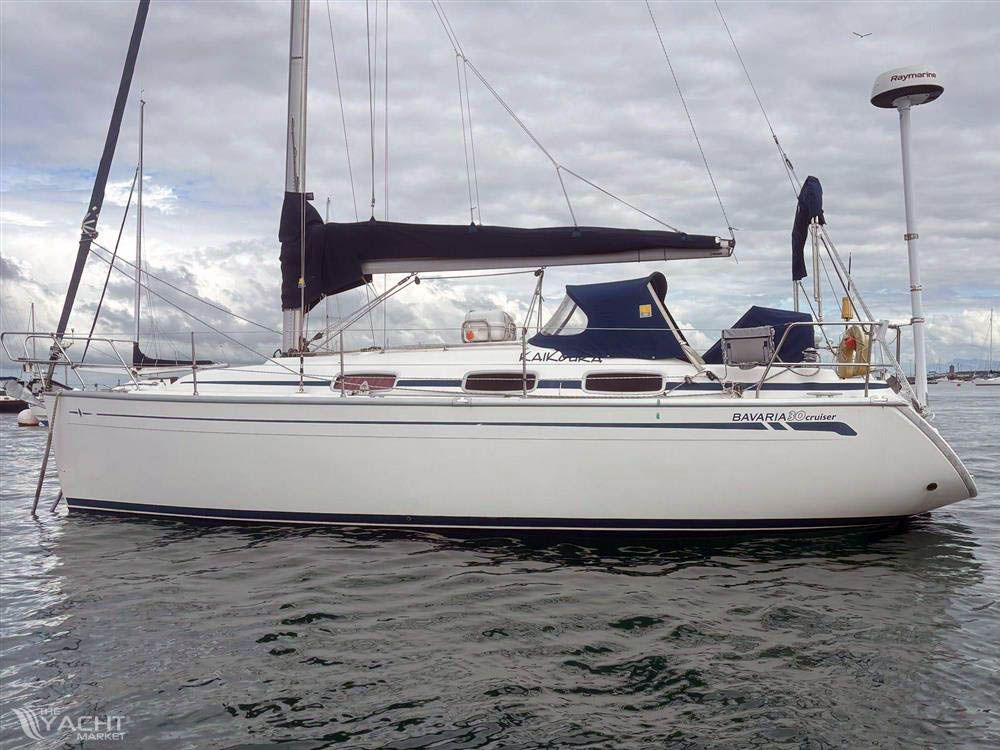
The Bavaria 30 Cruiser is a compact family cruiser from Bavaria Yachts that launched in the mid-2000s as part of the brand’s push to offer value-packed, easy-to-sail production cruisers designed by J&J Design. Built for couples and small families who wanted an economical, comfortable 30-foot yacht that would be easy to handle and maintain, the boat balances modern deck ergonomics with a roomy cockpit and a livable interior. Since its introduction it has become a common sight on European brokerage pages and appears regularly on international used-boat markets; in the U.S. it turns up less often than Beneteau or Jeanneau equivalents but commands steady interest from owners seeking a dealer-built cruiser with a modern feel.
Design and Construction
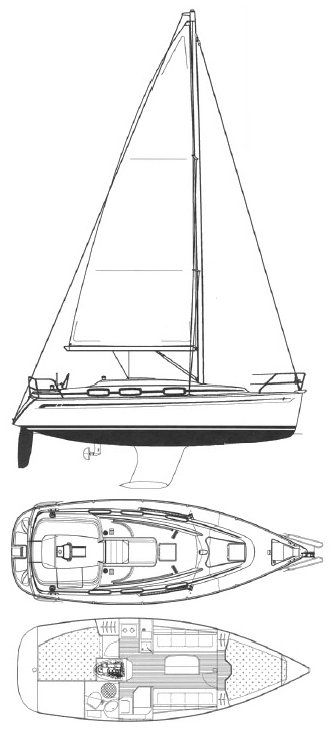
Bavaria and J&J chose a modern production-cruiser recipe: a fin keel (often with a bulb), a spade rudder and a hull with beam carried aft to maximise cockpit and interior volume. Construction is conventional GRP (fiberglass) with production lamination techniques geared for repeatability and cost efficiency; decks and certain models use coring to save weight and increase stiffness while the ballast is typically lead or cast lead in a bulb. The rig is a fractional sloop on many examples, laid out to make short-handed sailing straightforward and to reduce loads on deck hardware. For a buyer this means the boat trades some light-air, race-boat responsiveness for interior volume, simple systems and easier repairs — structural issues are usually familiar to yards used to production boats, but attention to bedding of deck fittings and regular checks of rig attachments are important for long-term durability.
Performance
On the water the Bavaria 30 Cruiser generally feels like a modern cruising 30: stable, with a forgiving motion and a helm that is engineered for predictable feedback rather than razor-sharp performance. Testers and owners note a direct feel through the wheel and a hull that will cruise comfortably in the high-5 to mid-6 knot band in moderate conditions; in very light airs it will be outpaced by lighter, race-oriented boats, and its relatively full stern can accentuate prop drag and stern-down trim in some loading conditions. The deeper keel option tightens up windward performance and reduces leeway, while the shoal or moderate drafts provide access to shallower anchorages at the cost of pointing ability. Overall the boat is seen as a competent coastal cruiser that can be pressed into club racing for casual events but is happiest as a family passage or weekend platform.
Comfort and Accommodations
Bavaria’s priority on the 30 Cruiser was liveable interior space: the hull form and beam aft translate to a roomy cockpit and cabins that feel larger than many classic 30-footers. Typical layouts offer two cabins plus a convertible saloon, a U-shaped galley and a sensible nav station — tankage and storage are sized for multi-day cruising rather than minimal weekend use. Interiors from the factory are functional and fairly plain, which makes them straightforward to update; many brokerage boats show owner refits (new cushions, electronics, small joinery updates) rather than full rebuilds. For a couple or small family the boat is comfortable for extended weekends and coastal passages; full-time liveaboard life is possible but buyers should evaluate ventilation, tank capacity and storage if planning long stints aboard.
Safety and Practicality
Deck layout emphasizes safe, easy movement: broad sidedecks, well-placed handholds and a cockpit designed for protection and social use. The moderate draft on many examples keeps marina and anchorage options flexible, and hardware and systems are conventional — meaning replacement parts and service knowledge are widely available in production-boat markets. The combination of predictable helm characteristics, simple engine installations and accessible through-hulls makes routine maintenance reasonable for an owner who does some work themselves, while major structural or system jobs are well understood by yards familiar with mass-produced European cruisers. In short, the 30 Cruiser is practical for coastal cruising and short offshore passages when properly prepared and upgraded where necessary.
Known Issues with the Bavaria 30 Cruiser
Owners and reviewers consistently flag a few recurring themes rather than any single design flaw. Because the design pushes volume aft, some boats can feel stern-heavy when poorly loaded and a fixed prop can increase drag — a reason why several owners opt for a folding or feathering prop. Corrosion around deck fittings, poorly bedded stanchions and the usual wear-and-tear on standing rigging and seacocks are the typical service items seen on surveys for mid-2000s production yachts. Practical, widely recommended improvements include upgrading to a low-drag prop, checking and re-beding all deck penetrations during ownership transitions, and refreshing electronics and plumbing to modern standards; these interventions address the common issues without fundamentally changing the boat’s character.
Market Availability and Pricing in the U.S.
The Bavaria 30 Cruiser is no longer in production and is available only on the used market, most commonly in Europe but occasionally listed for sale in the U.S., commonly via brokerage imports or relocation sales. Current listing snapshots show asking prices clustered in the mid tens of thousands up into the low six-figures for newer or heavily refitted examples; a practical range for brokers and buyers in the U.S. is roughly $40,000–$75,000 depending on year, equipment, refit level and location. Bargain projects and older models may appear below that band, while well-equipped, turnkey boats (recent electronics, engine service, bottom work) fetch toward the top. Availability is strongest in regions with active brokerage traffic and European imports; in the U.S. you’re most likely to find examples or transportable brokers in the Northeast, Florida and West Coast gateway marinas.
Below is a comparison with similar sailboats from the same era:
| Model | LOA | Year (approx.) | Typical used price (U.S.) | Main differences |
|---|---|---|---|---|
| Bavaria 30 Cruiser | ~30–31 ft | 2005–2007 | **$40,000–$75,000** | Production-built, roomy cockpit and interior, modern deck ergonomics, practical systems. :contentReference[oaicite:7]{index=7} |
| Beneteau Oceanis 311 | ~31 ft | Late 1990s–early 2000s | **$35,000–$60,000** | Roomier interior, broad U.S. resale pool, mainstream dealer/support network. :contentReference[oaicite:8]{index=8} |
| Jeanneau Sun Odyssey 29.2 | ~29 ft | Late 1990s–2000s | **$25,000–$45,000** | Often lighter, options for shallow/lifting keels, focused on easy family cruising. :contentReference[oaicite:9]{index=9} |
| Dufour 30 Classic | ~29–30 ft | Late 1990s–early 2000s | **$18,000–$45,000** | Crisper handling for size, often balsa-cored decks, strong value on import markets. :contentReference[oaicite:10]{index=10} |
Bavaria 30 Cruiser vs Beneteau Oceanis 311

Bavaria’s 30 tends to push more cockpit and deck social space through its hull form, while the Oceanis 311 generally optimizes interior volume and systems accessibility — the Oceanis often reads as the more spacious liveaboard choice in the same size class. Those differences matter in ownership: the Oceanis typically has a larger support network in U.S. waters and resells readily, whereas Bavaria offers slightly more modern deck ergonomics and a cockpit that favors cruising comfort and social sailing.
For a buyer who prizes interior living space and ease of resale, the Oceanis is often the safer bet. For a buyer who values cockpit comfort, a fresh factory finish and a European production aesthetic, the Bavaria 30 Cruiser offers a compelling, slightly more modern alternative.
► Learn more about the Beneteau Oceanis 311
Bavaria 30 Cruiser vs Jeanneau Sun Odyssey 29.2
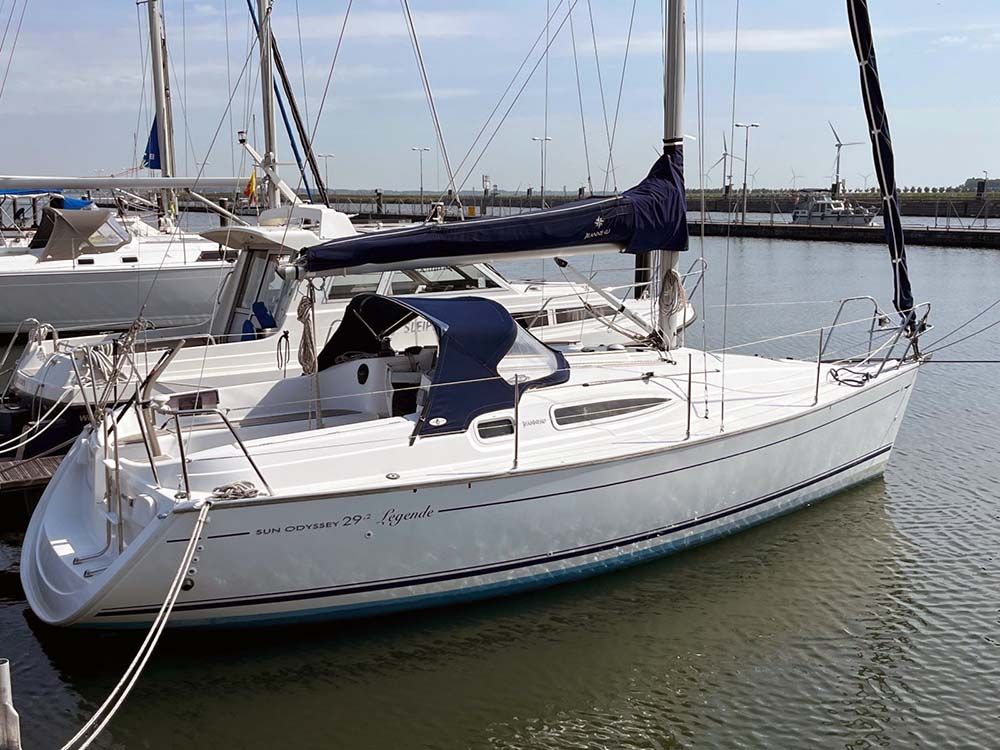
The Sun Odyssey 29.2 is usually a touch lighter and sometimes offers lifting or shallower keel options, which make it appealing in shallow-water cruising grounds; by contrast the Bavaria emphasizes a fixed-keel, production-built simplicity and a wider cockpit. On the water the Jeanneau may feel a hair more nimble in light airs and in shoal situations, while Bavaria’s layout gives better protected cockpit space and potentially more creature comforts for cruising couples.
If your sailing ground includes shallow anchorages and you prioritize trailering/harbor flexibility, Jeanneau’s options are attractive. If you want more fixed cockpit comfort, an easily understood production checklist and a hull designed around family cruising, Bavaria is likely the better match.
► Learn more about the Jeanneau Sun Odyssey 29.2
Bavaria 30 Cruiser vs Dufour 30 Classic
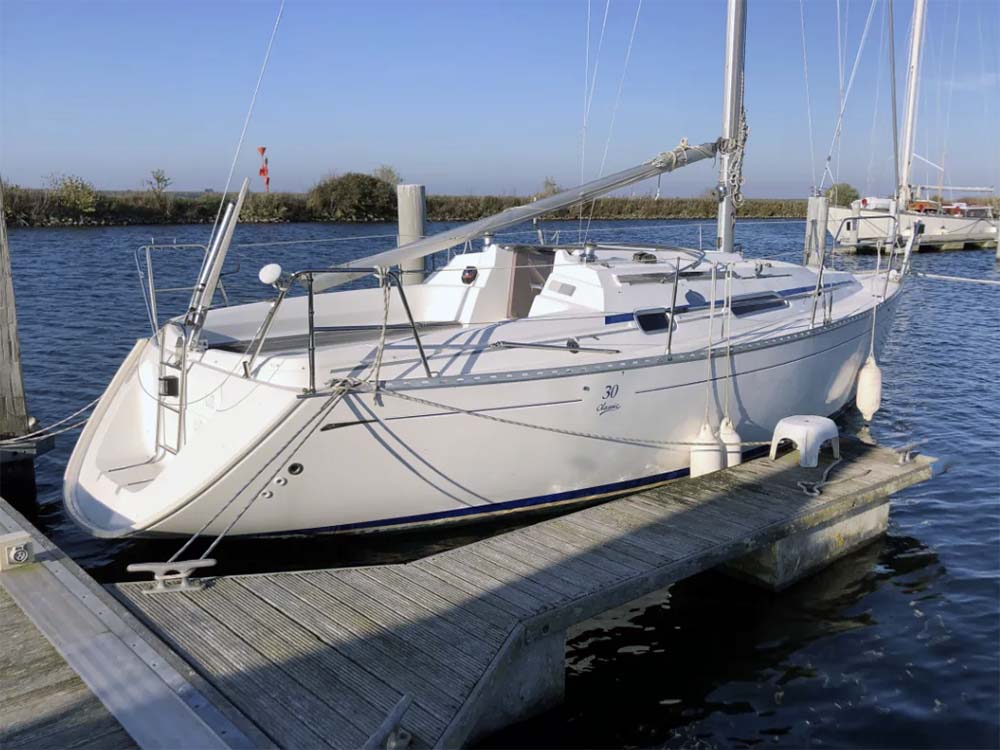
The Dufour 30 Classic tends to be perceived as a slightly more performance-tuned cruiser with a tauter helm, while Bavaria’s 30 is focused more on maximizing usable deck and cabin volume in a straightforward, production-oriented package. Owners who favor sharper windward performance and a potentially sportier feel will clue into the Dufour’s lighter displacement and tuning potential; those who prioritize interior comfort, cockpit social space and dealer serviceability often prefer the Bavaria.
From a maintenance and ownership standpoint, both boats are similar in that they rely on conventional GRP construction and widespread, replaceable parts; the Dufour may require more attention to deck core details on older examples, while Bavaria examples benefit from a clear factory service history when bought through brokerage networks.
► Learn more about de Dufour 30 Classic
Maintenance Costs of a Bavaria 30 Cruiser in the U.S.
Typical annual and periodic expenses (approximate ranges; regional variation applies):
- Mooring / slip fees: $1,200–$6,000 per year depending on marina and region.
- Insurance: $350–$1,500 per year (value, cruising area and owner experience drive premiums).
- Engine servicing (annual): $300–$1,000 (routine diesel servicing; saildrive or shaft checks as required).
- Antifouling paint & haul-out: $500–$2,500 every 1–3 years (labor and local yard rates vary widely).
- Standing & running rigging inspections / partial renewals: $250–$2,000 (annual inspections recommended; full rig replacement commonly every 8–15 years).
- Sails (maintenance / replacement amortized): $300–$1,500 per year amortized; a full main + headsail replacement typically $3,000–$7,000 as a one-time cost.
Significant one-time costs to budget for include prop upgrades (folding/feathering to reduce drag), medium engine repower or major sail inventory replacement, and any deck-core repairs discovered during survey. Many routine jobs (bottom painting, battery and pump swaps, cosmetic joinery) are owner-doable for a handy purchaser, but core repairs, keel work and major repowers require professional yard time and raise costs substantially. Overall, expect medium ongoing ownership costs for a 30-footer of this type; the initial purchase price and the strength of condition documentation (surveys, service records) will be the main determinants of whether resale value compensates for any major refits.
Conclusion
The Bavaria 30 Cruiser is a practical, well-executed production cruiser that delivers roomy cockpit ergonomics, sensible systems and a comfortable interior in a compact, easy-to-handle package. Its strengths are clear: modern deck layout for social cruising, straightforward GRP construction that most yards understand, and a usable cockpit and cabin that make coastal cruising and weekend life pleasant. The tradeoffs are predictable for its class — it is not the lightest or most race-oriented 30-footer, and some owners will need to address prop drag, bedding of deck fittings or occasional coring issues on older boats. For a buyer who wants a comfortable family cruiser that’s straightforward to maintain and enjoyable to sail around the coast, the Bavaria 30 Cruiser is a sensible option and, when purchased with a recent survey and service records, represents a solid value in the market of compact production cruisers.
Specifications
| Hull Type | Fin w/bulb & spade rudder |
| Rigging Type | Fractional Sloop |
| LOA | 31.08 ft / 9.47 m |
| LWL | 27.08 ft / 8.25 m |
| Sail Area (reported) | 400.00 ft² / 37.16 m² |
| Beam | 10.75 ft / 3.28 m |
| Displacement | 9,240.00 lb / 4,191 kg |
| Ballast | 2,220.00 lb / 1,007 kg |
| Max Draft | 4.58 ft / 1.40 m |
| Construction | FG |
| First Built | 2005 |
| Last Built | 2007 |
| Builder | Bavaria Yachts |
| Designer | J&J Design |
| Auxiliary Power | Volvo Penta Diesel, 18 HP |
| Fuel Capacity | 25 gals / 95 L |
| Water Capacity | 40 gals / 151 L |
| S.A. / Displ. | 14.58 |
| Bal. / Displ. | 24.03 |
| Disp. / Len. | 207.72 |
| Comfort Ratio | 21.36 |
| Capsize Screening Formula | 2.05 |
| Hull Speed | 6.97 kn |
| Pounds/Inch Immersion | 1,040.17 lb/inch |
| Mast Height from DWL | 46.25 ft / 14.10 m |
Disclaimer
The considerations and analyses presented regarding the Bavaria 30 Cruiser sailboat are of a general nature and are based on the available information and technical data on this model, interpreted to the best of our knowledge and understanding. It is important to note that the specific characteristics of any particular sailboat may vary due to custom modifications, maintenance performed, and conditions of use over time, among other factors. Therefore, the details and performance of the boat you are considering may not exactly match the information provided here.
We strongly recommend that, before making any purchasing or usage decisions, you conduct a detailed inspection of the boat in question, consult with nautical professionals and other sailors, and consider your personal needs, expectations, and capabilities. Each sailboat may have unique particularities that affect its performance and suitability for different types of sailing and sailors.
The information contained in this analysis should be used as a general guide and not as a definitive reference. Professional evaluation and personal inspection are essential to ensure that the boat meets your specific requirements and expectations.