



The Beneteau Oceanis 311 arrived in the late 1990s as Beneteau’s compact, performance-minded cruiser: a design by Groupe Finot (Jean-Marie Finot) intended to give couples or small families a boat that felt larger under sail than its length might suggest. Built from roughly 1997 into the early 2000s and produced in large numbers, it was sold both as a standard Oceanis 311 and in better-equipped “Clipper” versions; the hull was also adapted for related models (First 310, First 31.7, Stardust 311). Those facts explain why the 311 shows up frequently on the used market: many were campaigned as private coastal cruisers, some saw charter use, and the model remains a familiar sight on broker sites in Florida, the Southeast and California.
Design and Construction
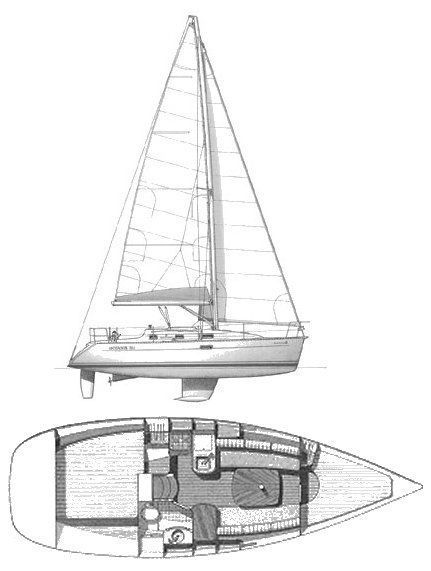
The Oceanis 311’s hull is a relatively modern, moderate-displacement monohull with a bulb-tipped fin keel (and an optional lifting-keel/centerboard arrangement with twin rudders on some boats), a spade rudder and a fractional sloop rig — a package that favors easy sail handling and respectable pointing without the complexity of older cutter rigs. The hull is solid fiberglass while the deck typically uses a balsa core; spars are aluminum with 1×19 stainless standing rigging. These choices give a competitive mix of stiffness, light weight and internal volume, but they carry predictable maintenance tradeoffs: a cored deck brings risk of water intrusion at penetrations (stanchions, cleats, chainplates) unless those details have been well-sealed, and cast-iron keels (on some versions) can need attention for corrosion. Beneteau’s production approach made repairs generally straightforward — accessible stringers and common construction techniques — which helps keep long-term ownership costs realistic, but buyers should insist on a careful survey focused on core condition, chainplate beds and keel attachments.
Performance
On the water the 311 sails like a slightly sportier cruiser: its sail area, fractional rig and relatively long waterline for the length give it good performance in light to moderate airs and tidy upwind ability relative to many older 30–32-foot cruisers. PHRF ratings for the design sit in a middle band that reflects its cruiser-performance intent rather than pure racing pedigree; in beam and quartering seas it tracks cleanly, while in steep, confused seas its lighter displacement means a livelier motion than heavier full-keel cruisers. Maneuverability under sail and power (the typical small Yanmar auxiliary) is reasonable for close-coastal work, and the wheel-steered cockpit layout makes single-handing possible with basic cruising-familiar setups (roller furling, reefing mainsail options). For buyers who value passage speed on coastal hops and easy handling over ocean-crossing robustness, the 311 tends to be well regarded.
Comfort and Accommodations
Where the 311 gains points is in making the most of its length: beam carried fairly aft and a long waterline create a companionway and cockpit that feel larger than the nominal LOA, while below decks Beneteau’s two-cabin layouts are optimized for liveability — practical galley to port or starboard, a forward V-berth, and a modest but serviceable head. Storage is decent for weekend and coastal cruising; ventilation and natural light are acceptable by period norms, though owners often modernize hatches and fans during refits. For a couple or a small family cruising weekends and summer weeks, the interior is comfortable enough for extended stays if systems (hot water, refrigeration, heating) are upgraded where needed; true live-aboard or blue-water voyaging, however, usually requires heavier structural and systems work before trusting long passages.
Safety and Practicality
Deck ergonomics and the cockpit are arranged with cruising practicality in mind: wide sidedecks, a relatively protected cockpit and straightforward line runs (on the Clipper versions many controls are more neatly led aft). The lifting-keel option increases versatility for shoal waters and trailer-or-beach situations but adds complexity (windlass, lifting mechanism) that can be a maintenance focus. Access to through-hull systems, the engine bay and tankage is generally reasonable for a 32-foot boat, which reduces the cost and hassle of routine service; nonetheless, potential buyers should verify the condition of seacocks, stuffing boxes and keel-fixing points, since these are common trouble-spots on any boat of this vintage. With conscientious upgrades (good seacocks, redundant bilge pumping, modern electronics), the 311 is well suited to costal cruising and can be prepared for offshore passages, but it is not a turnkey blue-water cruiser out of the box — preparation matters.
Known Issues with the Beneteau Oceanis 311
Owners’ forums and service reports highlight a handful of recurring themes: water entry into the deck/core around hardware and hatches, occasional delamination or stress near chainplate beds, and some failures or wear in lift-keel mechanisms on boats so equipped. Corrosion of raw-water fittings and ordinary Yanmar service items show up in threads as typical age-related maintenance rather than design fatal flaws. Some owners have reported structural repairs around chainplates or local hull cracking after heavy loads; while not universal, these stories underscore why a focused survey is essential. Commonly recommended improvements include re- bedding of deck hardware, upgrading seacocks and raw-water systems, inspecting and, if necessary, refurbishing the lift-keel mechanism, and investing in modern electronics and a good sail wardrobe to extend the boat’s utility and resale appeal.
Market Availability and Pricing in the U.S.
The Oceanis 311 is out of production and circulates on the used market; U.S. listings show a steady trickle of boats offered in Florida, California and parts of the Southeast and Mid-Atlantic, consistent with its popularity among coastal cruisers. Condition varies: available inventory includes well-maintained private boats, a number of ex-charter or lightly upgraded boats, and some examples sold for restoration. Based on current listing snapshots and broker sites, a practical price window for U.S. buyers is $35,000–$60,000 depending on year, equipment and condition — older, well-used examples can sit below that band while fully refitted boats at desirable locations can exceed it. Against alternatives of similar length and era, the 311 generally offers good value for buyers seeking a nimble, roomy 32-foot cruiser with reasonable resale prospects.
Here’s a comparison with similar models:
| Model | LOA | Approx. years | Typical U.S. used price | Main differences |
|---|---|---|---|---|
| Catalina 320 | ~32.5 ft | 1993–2009 (various marks) | $35,000–$80,000 | Heavier displacement, roomy cockpit, American-style interior; generally more forgiving motion and robust keels. |
| Hunter 31 (31.5 family) | ~31 ft | 1980s–2000s (various models) | $10,000–$55,000 | Often a lower purchase price, variable build eras, focused on easy handling and comfort; less performance than the 311 in some trims. |
| Jeanneau Sun Odyssey 32.2 | ~32 ft | Late 1990s–early 2000s | $45,000–$70,000 | European styling and finish, similar builder pedigree to Beneteau, often slightly pricier on resale and with comparable sailing performance. |
Beneteau Oceanis 311 vs Catalina 320

The 311 and the Catalina 320 occupy the same buyer sweet spot — compact cruisers with enough room for a couple or small family — but they approach it differently. The Catalina trends toward heavier displacement, a broader, more traditional American interior and often a feel that is gentler in a chop; the 311 trades a bit of that heft for a drier, snappier performance and somewhat better pointing thanks to its Finot hull shape and fractional rig.
From an ownership perspective the Catalina’s older-school construction can mean fewer surprises under deck cores, and its domestic support network can simplify parts and upgrades; the 311, meanwhile, rewards buyers who want slightly better sailing performance and who will pay attention to deck-penetration detail work during surveys.
► Learn more about the Catalina 320
Beneteau Oceanis 311 vs Hunter 31

Compared with the Hunter 31 family, the Oceanis 311 usually feels more modern under sail and often carries a bit more upwind speed. Hunters of similar length can be very appealing on price and comfort, but their build and performance characteristics vary widely across model years, meaning that individual surveys matter more with Hunter purchases.
For a buyer choosing between them, the 311 is typically the pick if you prize a crisp sailing feel and a European hull form; the Hunter can be attractive if immediate interior comfort and a lower initial price are the priority, though you may trade some sailing efficiency and resale steadiness.
► Learn more about the Hunter 31
Beneteau Oceanis 311 vs Jeanneau Sun Odyssey 32.2
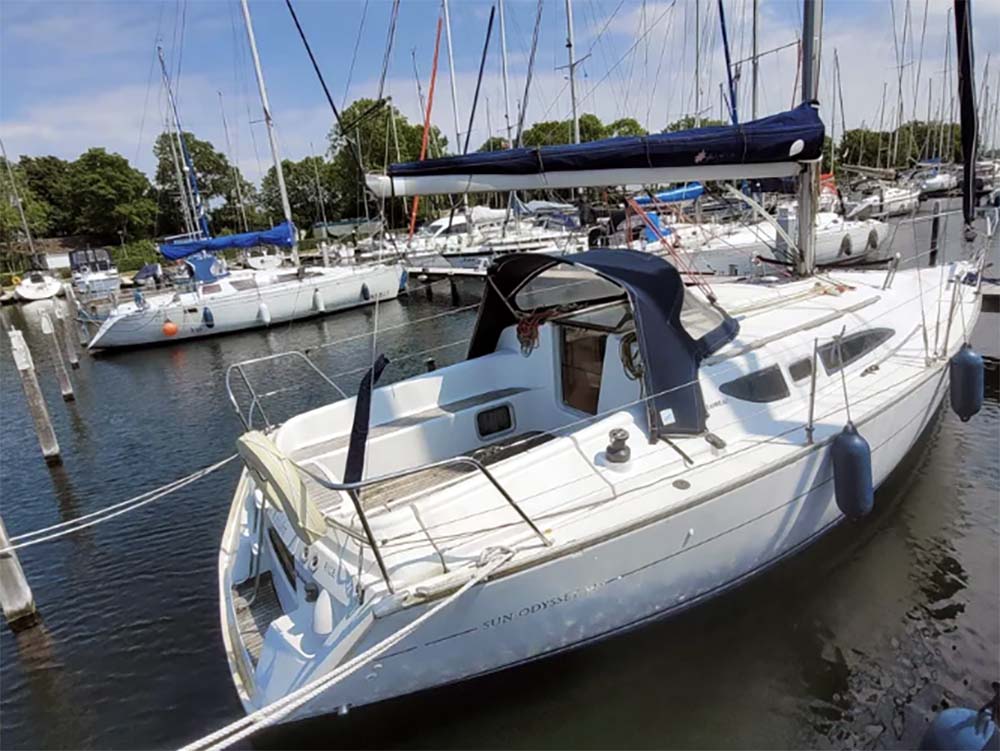
Jeanneau’s Sun Odyssey 32.2 is the closest spiritual sibling: similar era, similar European approach to hull form and interior ergonomics. The two are often neck-and-neck on sailing behavior — both are designed for coastal to moderate offshore passages — but Jeanneau interiors sometimes aim a touch higher on finish, which can translate into slightly stronger resale prices.
Practically speaking, the buyer choosing the 311 over a Sun Odyssey model may do so for marginally different sailing characteristics (Finot’s hull lines) or for specific layout/equipment found on the particular listing; either way, both boats reward a careful survey and sensible upgrades rather than blind purchase for appearance alone.
► Learn more about the Jeanneau Sun Odyssey 32.2
Maintenance Costs of a Beneteau Oceanis 311 in the U.S.
A realistic annual and lifecycle budget helps a prospective owner separate attractive listings from lemons. Typical recurring costs for a 31–33-foot cruiser in the U.S. look like this:
- Mooring / slip fees: Expect $1,000–$6,000+ per year depending on region and marina level (Florida/New England/California on the high end).
Comment: premium marinas and big-city slips push costs up significantly; seasonal haul-out requirements add to the total. - Insurance: Typically 1–2% of boat value per year; for a $50k boat that’s roughly $500–$1,000.
Comment: rates depend on cruising area, owner experience and installed safety gear. - Engine servicing: $300–$1,000 per year for routine service and small repairs (dependent on hours and brand).
Comment: small Yanmar diesels are economical but need regular attention (cooling, filters, impellers). - Antifouling & hull care: $1,000–$3,000 every 1–3 years for haul, bottom work and paint (varies by location and labor rates).
Comment: frequency increases in warm, fouling-prone waters; diver cleaning between haulouts reduces long-term costs. - Standing and running rigging: Standing rigging replacement every 10–15 years can be $2,000–$5,000; routine checks and turnbuckle work are yearly small-ticket items.
Comment: older boats often need a rig check and possible mast service during a pre-purchase refit. - Sails: A serviceable set of main and headsail can last 8–15 years; replacement costs range $3,000–$10,000+ depending on cloth and cut.
Comment: for a coastal cruiser most owners cycle in new canvases on a decades timescale or sooner if racing or heavy use.
Significant one-time costs to budget for include standing-rigging renewal, full electronics refit, shaft/prop work, and any major core/deck repairs — each of which can range from a few thousand to well over $10,000 depending on scope. The 311’s systems are generally owner-accessible, so a capable hands-on owner can reduce service bills by taking on bottom paint, varnish and many mechanical jobs; for structural core work, keel refastening or major rig overhauls professional work is strongly advised. Overall, for a boat of this size and class the Oceanis 311 sits in a medium cost tier: not as cheap to maintain as a small daysailer but less demanding than larger yachts, and the boat’s reasonable resale potential helps justify sensible maintenance spending.
Conclusion
The Oceanis 311 is a coherent package for buyers who want an energetic coastal cruiser with more interior volume than older 30-footers and a sailing character that rewards attention to trim. Its strengths are sensible performance for its length, a roomy and practical interior for couples or small families, and broad market familiarity (which helps resale). The tradeoffs to accept are age-related maintenance items you must watch closely (deck penetrations, seacocks, lift-keel mechanisms where fitted) and a lighter-displacement motion in big seas compared with heavier traditional cruisers.
For someone whose mission is weekend-to-week coastal cruising, club racing and occasional overnight passages, the Oceanis 311 is absolutely worth seeking out — particularly examples with thorough maintenance records and sensible upgrades. If your ambitions are extended offshore passagemaking out of the box, budget for structural and systems upgrades; if you want a comfortable inexpensive daysailer with minimal work, a simpler American cruiser of the same length may make more sense. In short: the 311 is a good investment as a coastal cruiser with fair resale prospects — provided you do the homework at purchase and keep up sensible maintenance thereafter.
Specifications
| Hull Type | Keel/CB w/dual rudders |
| Rigging Type | Fractional Sloop |
| LOA | 32.25 ft / 9.83 m |
| LWL | 28.67 ft / 8.74 m |
| S.A. (reported) | 539.00 ft² / 50.07 m² |
| Beam | 10.50 ft / 3.20 m |
| Displacement | 7,716.00 lb / 3,500 kg |
| Ballast | 2,425.00 lb / 1,100 kg |
| Max Draft | 4.67 ft / 1.42 m |
| Construction | FG |
| First Built | 1998 |
| # Built | 1042 |
| Builder | Beneteau |
| Designer | Groupe Finot |
Auxiliary Power/Tanks | |
|---|---|
| Make | Yanmar |
| Type | Diesel |
| HP | 18 |
| Fuel | 18 gals / 68 L |
Accommodations | |
| Water | 52 gals / 197 L |
Sailboat Calculations | |
| S.A. / Displ. | 22.16 |
| Bal. / Displ. | 31.43 |
| Disp. / Len. | 146.17 |
| Comfort Ratio | 17.49 |
| Capsize Screening Formula | 2.13 |
| S# | 3.76 |
| Hull Speed | 7.17 kn |
| Pounds/Inch Immersion | 1,075.63 pounds/inch |
Rig and Sail Particulars | |
| I | 40.35 ft / 12.30 m |
| J | 11.35 ft / 3.46 m |
| P | 36.61 ft / 11.16 m |
| E | 13.19 ft / 4.02 m |
| S.A. Fore | 228.99 ft² / 21.27 m² |
| S.A. Main | 241.44 ft² / 22.43 m² |
| S.A. Total (100% Fore + Main Triangles) | 470.43 ft² / 43.70 m² |
| S.A./Displ. (calc.) | 19.34 |
| Est. Forestay Length | 41.92 ft / 12.78 m |
Disclaimer
The considerations and analyses presented regarding the Beneteau Oceanis 311 sailboat are of a general nature and are based on the available information and technical data on this model, interpreted to the best of our knowledge and understanding. It is important to note that the specific characteristics of any particular sailboat may vary due to custom modifications, maintenance performed, and conditions of use over time, among other factors. Therefore, the details and performance of the boat you are considering may not exactly match the information provided here.
We strongly recommend that, before making any purchasing or usage decisions, you conduct a detailed inspection of the boat in question, consult with nautical professionals and other sailors, and consider your personal needs, expectations, and capabilities. Each sailboat may have unique particularities that affect its performance and suitability for different types of sailing and sailors.
The information contained in this analysis should be used as a general guide and not as a definitive reference. Professional evaluation and personal inspection are essential to ensure that the boat meets your specific requirements and expectations.