



The Hunter 326 is a purpose-built coastal cruiser introduced by Hunter Marine in 2001 and designed by Glenn Henderson to give couples and small families a modern, easy-to-handle 32-foot platform with sensible accommodations and straightforward systems. It sits in the “cruiser with a performance bias” category: not a racer, not a heavy offshore boat, but a contemporary family cruiser that can be pushed for club events and still be comfortable for weekend passages. The model was produced in the early 2000s and remains a regular sight on the used market in North America—appealing to budget-conscious buyers who want a roomy cockpit, a well-laid-out interior and the convenience of an arch-mounted mainsheet traveler and furling systems that simplify short-handed sailing.
Design and Construction
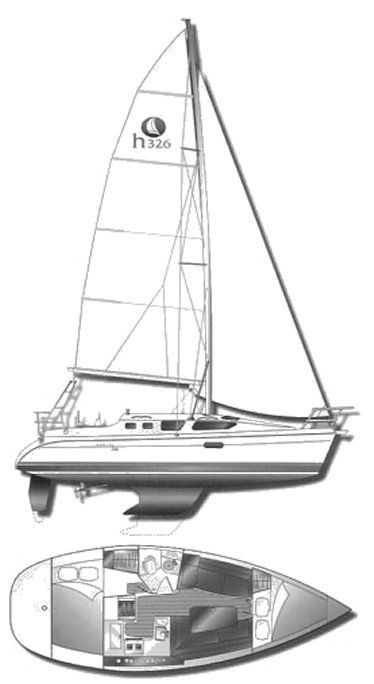
Hunter chose a relatively modern hull form for the 326 with a broad stern and a fin keel, paired with the company’s B&R fractional rig and an integrated stainless-arch mainsheet traveler—decisions that favor cockpit ergonomics, simple sail handling and a clean deck plan. The hull was produced in fiberglass with reinforcements and a production-boat fit-out that emphasizes marketable finishing (teak interiors, molded liners, practical joinery) over bespoke naval architecture details, which makes cosmetic repairs and interior refreshes straightforward for owners. Those choices mean the boat is easy to keep looking good and is cheaper to repair after dings or cosmetic wear, but some structural service items (rudder bearings/steering components, keel bolts and decks around hardware) remain survey priorities because they control the boat’s long-term durability and value. In short: the Hunter 326 trades some heavyweight redundancy for owner-friendly systems and lower routine upkeep costs, but buyers should pay close attention to steering and keel attachments at survey.
Performance
On the water the 326 sails with an emphasis on easy handling and steady coastal performance—she accelerates well off the wind and is forgiving in puffy conditions, but she is not a point-and-winch racer. The relatively light displacement for a boat of this length and the fractional B&R rig produce a responsive helm and good acceleration in light to moderate airs, while the fin keel and balanced underwater profile give predictable tracking and decent windward performance for cruising needs. Owners frequently note that factory auxiliary power is modest for the displacement (the typical Yanmar inboard around 18–20 hp is economical but can feel underpowered when motoring against tide or in tight marina maneuvers), so buyers who expect frequent motoring in strong currents sometimes upgrade propellers or accept conservative passage planning. Overall, the 326 sits squarely as a coastal cruiser with better-than-average maneuverability for owners who value comfort and simple sail handling over outright racing performance.
Comfort and Accommodations
Inside the 326 the layout favors liveability: a roomy saloon with a genuine dining table, a comfortable forward berth and an aft cabin option give flexible sleeping arrangements for families or couples cruising with guests. Hunter’s use of molded cabinetry and efficient joinery yields generous storage, an accessible galley and comfortable, well-proportioned seating areas that make weekend and week-long cruises pleasant without extravagant stowage complexity. Headroom and ventilation are in line with other modern 32-foot cruisers—enough for comfortable movement but not comparable to larger cruising yachts—and the factory fit tends to age well cosmetically; many used examples show owner upgrades (electronics, cushions, canvas) rather than structural fixes, which is encouraging for buyers who want to personalize without big expense.
Safety and Practicality
Deck ergonomics and a protected cockpit (plus the arch mainsheet arrangement) reduce cockpit clutter and make short-handed sailing safer—lines are commonly led aft and the steering feels balanced in most conditions. Accessibility to systems is generally good: engine spaces, tanks and electrical panels are reachable for routine maintenance, but steering linkage and rudder bearings are service items that require inspection because reports of play or clunks in the steering have surfaced in owner forums. The 326 is best employed as a coastal and near-offshore cruiser when properly outfitted; for true offshore work owners typically add redundancy (improved nav electronics, stronger lifelines, inspected keel bolts and steering) rather than relying on the factory fit as delivered.
Known Issues with this sailboat
A pragmatic reading of owner comments and surveys highlights a few repeat inspection items: (1) steering-system wear—owners report play, clunking or the need to service rudder bearings and linkages; (2) modest factory auxiliary power that is sometimes upgraded or re-proped for better helm authority under power; and (3) cosmetic or fit-and-finish items (factory canvas, dodger/bimini attachments) that many owners replace with sturdier aftermarket gear. These items are generally maintenance or upgrade work rather than structural failures—typical fixes include renewing steering bearings or cables, improving transom attachments and tuning the propeller/shaft for better motoring—but they are exactly the kinds of issues a thorough pre-purchase survey will identify and which should be negotiated into the price.
Market Availability and Pricing in the U.S.
The Hunter 326 is out of production and appears regularly on the used market; asking prices vary widely with condition, equipment and region but current U.S. brokerage listings commonly place clean, well-equipped examples in the $35,000–$60,000 band. Active listings on major broker sites show asking prices in that range, with lower-end boats needing work and turnkey examples at the higher end—supply is steady where coastal cruising is popular (Mid-Atlantic, Southeast, Florida and the Great Lakes) and demand is strongest among private owners seeking a comfortable family cruiser at a reasonable price. Compared with peers like the Catalina 310 or Beneteau 323, the 326 often offers a slightly more contemporary cockpit layout and a competitive interior volume for the length, which helps its resale appeal in buyer markets that value ease of handling and livability.
| Model | LOA | Years (approx) | Typical US used price | Principal differences |
|---|---|---|---|---|
| Hunter 326 | 31.92 ft | 2001–2006 | $35,000–$60,000 | Modern B&R fractional rig, arch-mounted traveler, emphasis on cockpit comfort and easy short-handed sailing; production-boat finish and owner-serviceable systems. |
| Catalina 310 | 31.00 ft | 1999–2011 | $45,000–$70,000 | US-centric production cruiser, heavier displacement and lead ballast options; simpler keel choices and wide parts/network support in the U.S. |
| Beneteau 323 (Oceanis 323) | 32.83 ft | 2001–2006 | $50,000–$75,000 | European hull form with a strong emphasis on interior volume and balanced cruising manners; generally higher used pricing and good resale where supplied. |
| Jeanneau Sun Odyssey 32 / 32i | 31.50 ft | 2002–2006 | $40,000–$70,000 | Comfort-oriented French cruiser with solid build and good helm balance; often comparable equipment levels but variable U.S. availability. |
Hunter 326 vs Catalina 310

The Hunter 326 places a premium on cockpit ergonomics, easy sail handling (B&R rig, arch-mounted traveler) and interior livability in a contemporary package, so owners who value a modern deck layout and simpler short-handed sail control often prefer it. Catalina’s 310, by contrast, emphasizes conservative ballast, a heavier displacement and a strong dealer/parts network in the U.S., which translates into a steadier motion in confused seas and potentially lower long-term worry about exotic systems.
From a buyer’s standpoint the 326 will usually feel more nimble and user-friendly for a small crew, while the Catalina 310 will appeal to purchasers who want a more traditional, possibly more robust cruising platform with wider after-sales support—an important consideration if you plan extended cruising away from your home region.
► Learn more about de Catalina 310
Hunter 326 vs Beneteau Oceanis 323
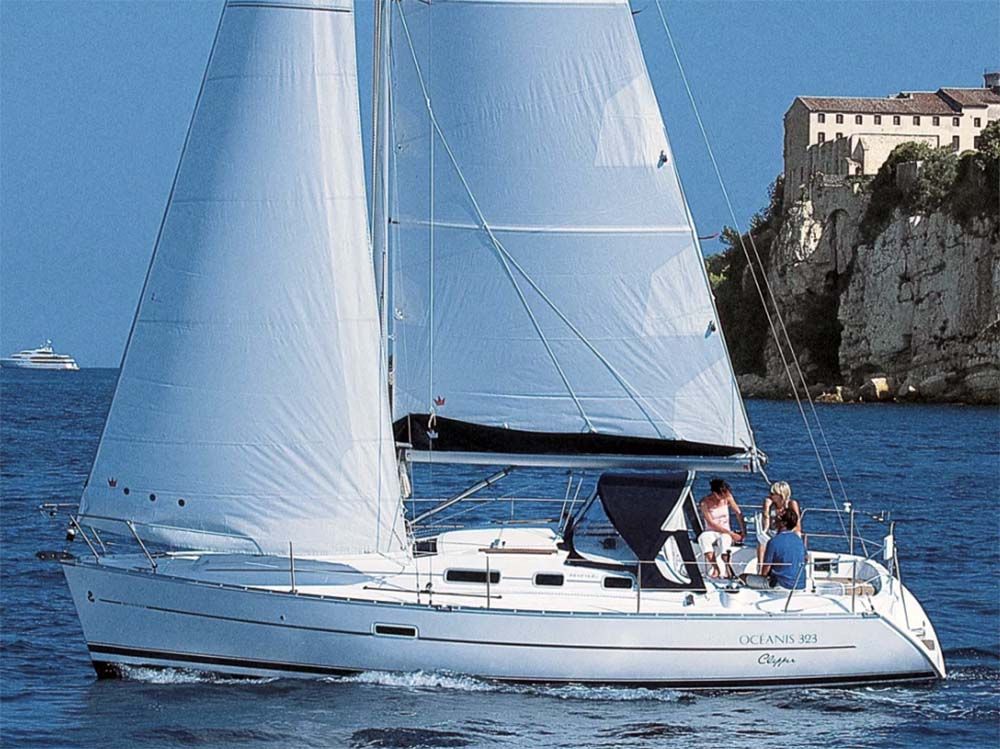
Both the Hunter 326 and the Beneteau 323 aim at the comfortable coastal cruiser segment, but the Beneteau skews toward maximizing interior volume and a composed offshore demeanor, often commanding higher used prices where buyers prize that space. The 326’s strengths are its cockpit ergonomics and simplified sail controls that favor short-handed family cruising; the 323’s strengths are slightly more refined seaworthiness, greater tankage and scale that better supports longer coastal passages with heavier crews.
Practically, choose the 326 if you prioritize a livable cockpit, easy maintenance and lower purchase price; choose the 323 if interior volume, perceived offshore capability and stronger resale in certain markets are higher priorities.
► Learn more about de Beneteau Oceanis 323
Hunter 326 vs Jeanneau Sun Odyssey 32i

The Sun Odyssey 32 brings European hull lines and a design focus on comfortable, balanced cruising with a heavier feel in rougher seas; the Hunter 326 tends to be lighter, more cockpit-centric and optimized for uncomplicated short-handed use. In handling the Hunter often feels more immediate and accessible to a novice or small crew, while the Jeanneau offers a quieter motion and often better tankage/layout for longer trips.
For buyers who sail mostly coastal weekends and want a boat that’s easy to manage from a marina slip, the 326 is an efficient choice; for those targeting longer coastal hops or who prefer the “European” balance of space and motion, the Sun Odyssey family typically presents a more comfortable baseline.
► Learn more about de Jeanneau Sun Odyssey 32i
Maintenance Costs of a Hunter 326 in the USA
Typical annual maintenance expenses (each item bolded with a short comment):
- Mooring or Slip Fees: $1,000–$6,000 per year — inland and trailer/storage are at the low end; premium coastal marinas, seasonal slips and popular regions (Northeast, Florida, California) push costs to the high end.
- Insurance: $400–$1,200 annually — depends on declared value, owner experience, and cruising area.
- Engine Servicing (inboard diesel): $400–$1,200 per year for regular service, impeller, fuel filters and winterization; more if injectors or transmission work is required.
- Antifouling / Haulout & Bottom Work: $500–$2,500 per haulout cycle depending on yard rates, hull condition and number of coats applied.
- Standing & Running Rigging / Inspections: $200–$800 annually for inspections, lines and small fittings; expect a full rigging refresh every 10–15 years in the $1,200–$4,000 range.
- Sails (repairs and replacement): $200–$800 per year for repairs and UV care; full replacement of main and headsail commonly $1,500–$4,000 depending on cloth and cut.
Significant one-time costs can include a steering/rudder bearing rebuild or major rudder work ($800–$4,000) if play or water ingress is discovered, propeller/shaft tuning or repitching ($400–$1,200) to improve under-power motoring, and electronics refit or nav upgrade ($1,000–$6,000) for modern charting and safety systems. Many routine jobs (canvas, sails small repairs, cabin cushions, oil changes) are owner-doable and materially reduce lifetime cost; however, steering/rudder, keel-bolt inspection and any major hull or structural work will usually require professional yards. Regional differences are meaningful: owners who trailer or store ashore can keep annual costs low, while full-service marina owners will see the higher end of the ranges.
Overall assessment: for a well-maintained 32-foot production cruiser the Hunter 326’s ongoing costs sit in the medium band—higher than a very small trailerable boat but lower than larger blue-water yachts—because many maintenance items are owner-serviceable and replacement parts are generally available. A carefully presented, surveyed 326 with recent steering and engine service typically resells well against similarly priced competitors, so sensible, documented maintenance usually pays back at sale.
Conclusion
The Hunter 326 is a pragmatic, modern 32-foot cruiser that blends a livable cockpit, easy sail handling and a sensible interior into a package that serves weekend families and couple cruisers very well. Its advantages are approachable systems, comfortable ergonomics and an ownership profile that rewards owners who want to sail short-handed without complex procedures; its tradeoffs are modest factory auxiliary power and the need to watch steering and rudder systems as the boat ages. For buyers prioritizing comfortable coastal cruising, simple handling and good interior utility at a reasonable used price, the Hunter 326 is a strong candidate—provided a pre-purchase survey confirms healthy steering, keel and engine condition. For those who want heavier offshore capability or the broadest dealer support in the U.S., the Catalina and larger-volume European alternatives may fit better; nonetheless, a tidy 326 represents a very practical, cost-effective option for coastal cruising and family use.
Specifications
| General Specifications | |
| Hull Type: | Fin w/spade rudder |
| Rigging Type: | B&R |
| LOA: | 31.92 ft / 9.73 m |
| LOD: | 30.83 ft / 9.40 m |
| LWL: | 28.33 ft / 8.63 m |
| Sail Area (reported): | 540.00 ft² / 50.17 m² |
| Beam: | 10.83 ft / 3.30 m |
| Displacement: | 8,300.00 lb / 3,765 kg |
| Ballast: | 3,200.00 lb / 1,451 kg |
| Max Draft: | 5.83 ft / 1.78 m |
| Construction: | Fiberglass (FG) |
| First Built: | 2001 |
| Builder: | Hunter Marine (USA) |
| Designer: | Glenn Henderson |
Auxiliary Power / Tanks (Original Equipment) | |
| Make: | Yanmar |
| Type: | Diesel |
| HP: | 18 |
| Fuel Capacity: | 28 gals / 106 L |
Accommodations | |
| Water Capacity: | 50 gals / 189 L |
| Headroom: | 6.33 ft / 1.93 m |
| Sailboat Calculations | |
| S.A. / Displ.: | 21.14 |
| Bal. / Displ.: | 38.55 |
| Disp. / Len.: | 162.96 |
| Comfort Ratio: | 18.27 |
| Capsize Screening Formula: | 2.14 |
| S#: | 3.20 |
| Hull Speed: | 7.13 kn |
| Pounds/Inch Immersion: | 1,096.28 lb/in |
Rig and Sail Particulars | |
| I: | 36.83 ft / 11.23 m |
| J: | 12.00 ft / 3.66 m |
| P: | 34.33 ft / 10.46 m |
| E: | 12.58 ft / 3.83 m |
| S.A. Fore: | 220.98 ft² / 20.53 m² |
| S.A. Main: | 215.94 ft² / 20.06 m² |
| S.A. Total (100% Fore + Main Triangles): | 436.92 ft² / 40.59 m² |
| S.A./Displ. (calc.): | 17.11 |
| Estimated Forestay Length: | 38.74 ft / 11.81 m |
| Mast Height from DWL: | 46.75 ft / 14.25 m |
Disclaimer
The considerations and analyses presented regarding the Hunter 326 sailboat are of a general nature and are based on the available information and technical data on this model, interpreted to the best of our knowledge and understanding. It is important to note that the specific characteristics of any particular sailboat may vary due to custom modifications, maintenance performed, and conditions of use over time, among other factors. Therefore, the details and performance of the boat you are considering may not exactly match the information provided here.
We strongly recommend that, before making any purchasing or usage decisions, you conduct a detailed inspection of the boat in question, consult with nautical professionals and other sailors, and consider your personal needs, expectations, and capabilities. Each sailboat may have unique particularities that affect its performance and suitability for different types of sailing and sailors.
The information contained in this analysis should be used as a general guide and not as a definitive reference. Professional evaluation and personal inspection are essential to ensure that the boat meets your specific requirements and expectations.